
Inheriting a Michelin star must feel a little like inheriting a house full of ghosts. Not malicious ghosts—just the kind that whistle softly, “this is how it used to be done.” Rodolfo will still hear them, no doubt—mainly because we, critics and press alike, help amplify those echoes. A year from now, perhaps he won’t.
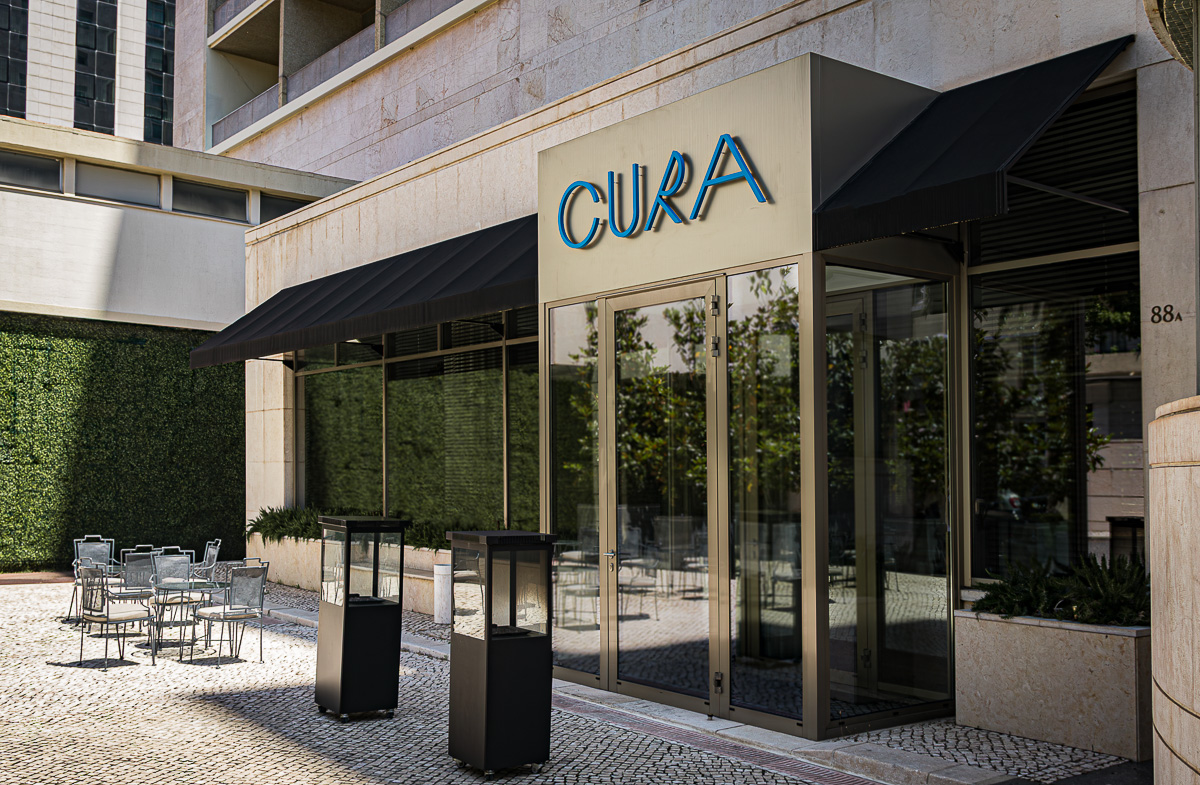
The Ritz has stood since 1959 with the confidence of a place that never needed to reinvent itself. But in 2020, on the ground floor and in the middle of a pandemic, CURA opened under Pedro Pena Bastos. The name comes from “curatorship,” and the concept was clear: a fine dining restaurant that belonged to Lisbon as much as to the hotel, selecting ingredients, techniques and references with the care of a curator arranging an exhibition—much like the Almada Negreiros panels that line the room. A few months later, a Michelin star arrived. Swift recognition for a chef who had long been chasing (and deserving) that validation.
But in February 2025, Pena Bastos announced on Instagram that he was stepping away. Five years. One Michelin star. Mission accomplished. Time for a new chapter. Lisbon felt the tremor.
Questions quickly emerged: Would CURA survive without its creator? Would the star remain? Would the Four Seasons take a risk—or play it safe? The answer came from within. Rodolfo Lavrador, the restaurant’s long-time sous-chef, stepped into the lead role. An internal promotion, signalling continuity. A vote of confidence. Or, more cynically, a controlled transition while the search for a bigger name unfolded.
An Evening at CURA
We arrived on a Tuesday in June, four months into the transition. Too soon to erase the imprint of the previous chef, but long enough for a team and its ideas to begin settling. We wanted to see what lingered from the past—and what was already pointing toward the future.
The first impression is one of comfort without ostentation. Quiet luxury, as it’s now fashionably called.
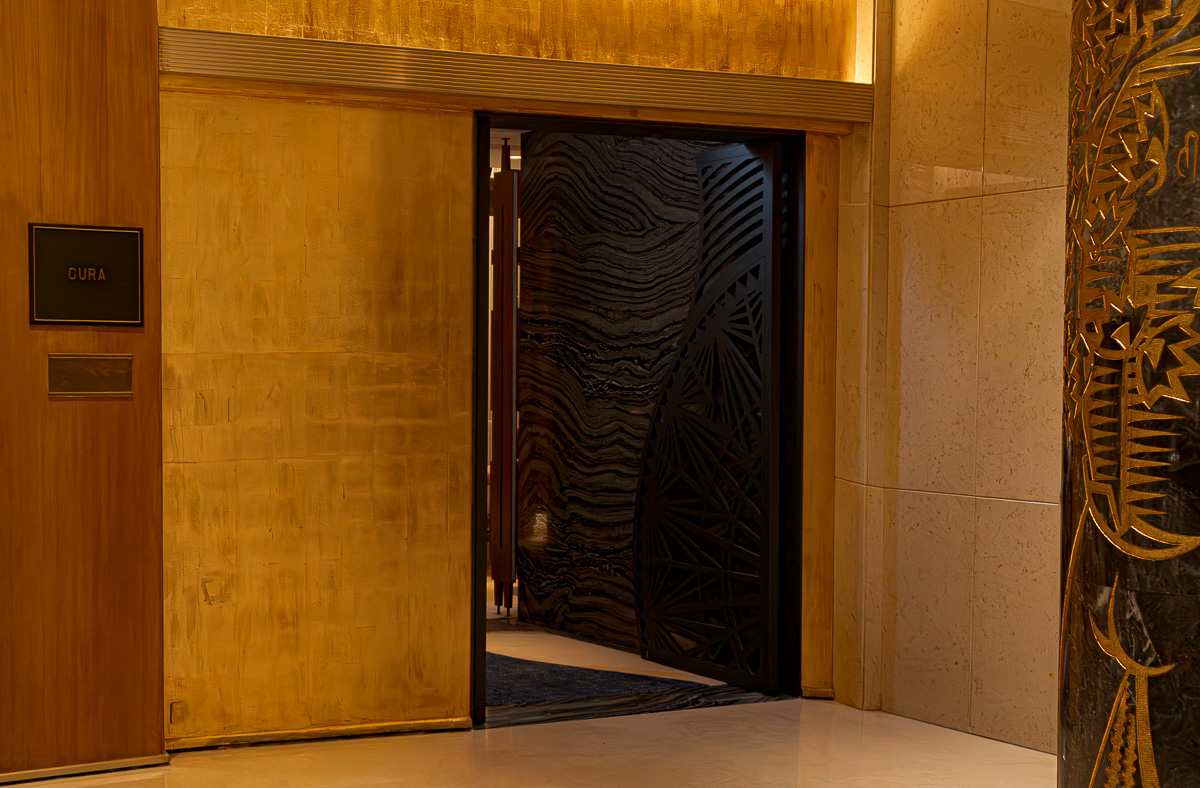
Push open the door, and suddenly you’re no longer inside the Ritz. A small dining room, no more than thirty seats, fully occupied: business pairs, travelling families, a couple clearly celebrating something, and us—a table of gastronomic tourists speaking Portuguese, Spanish, English, French, and a melodic Brazilian lilt drifting across the conversation.
We sat. Outside, the city’s perpetual traffic; inside, the natural light gradually dimming until the room surrendered to artificial glow. The atmosphere shifted—more intimate, more cosmopolitan, and undeniably more serious.
Crispy rice, buckwheat and olives
In the kitchen, Rodolfo leads with firm yet restrained movements. Still without the showman side that his predecessor cultivated early on. Rodolfo is technical, precise—almost surgical—unsurprising for someone who spent years in that role. Beside him, Marina Garcia was promoted to sous-chef at the same time.
As if inheriting an award-winning restaurant weren’t pressure enough, he must also step out from the shadow of a celebrated predecessor—all while working in an open kitchen that dominates the room. Not tucked behind glass, but right there: exposed, accessible, vulnerable. Every movement on display. Not scrutinised out of malice, but curiosity. Watching a well-orchestrated kitchen is more addictive than any ASMR clip.
We chose the twelve-course menu, including both the wine and non-alcoholic pairings. We wanted a complete picture of what they’d been working on. A wise decision—it was likely the best and most thoughtful non-alcoholic pairing I’ve had in Portugal.
Tuna, pecan, finger lime and “coscorão”
The Opening Movements
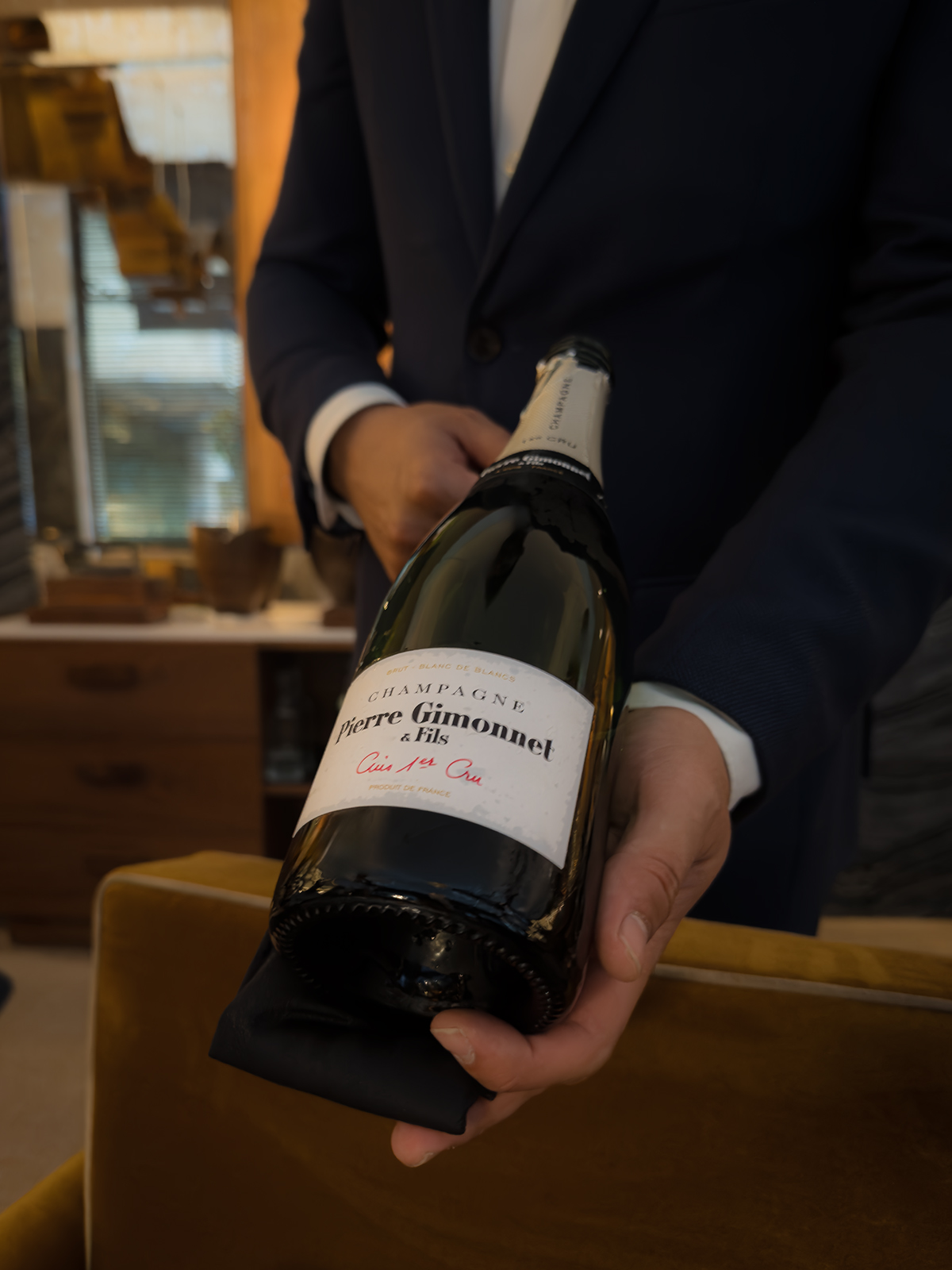
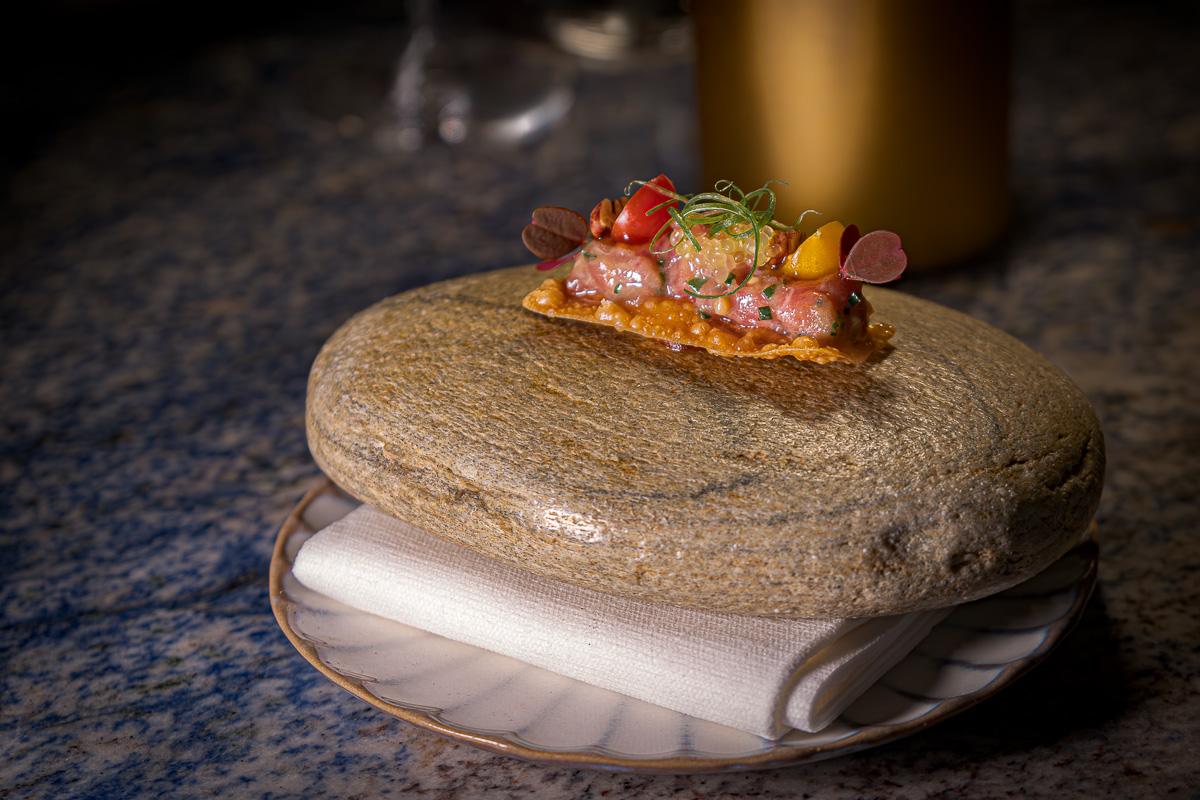
Champagne first—Pierre Gimonnet & Fils—followed by the initial snacks. Bluefin tuna with pecan and finger lime atop a crisp “coscorão”-like shell. An unexpected collision of Portugal and the world. The pecan—an ingredient no traditional Portuguese chef would place near tuna—offered toasted sweetness that amplified the fish’s richness; the lime caviar burst into tiny, bright detonations. It worked.
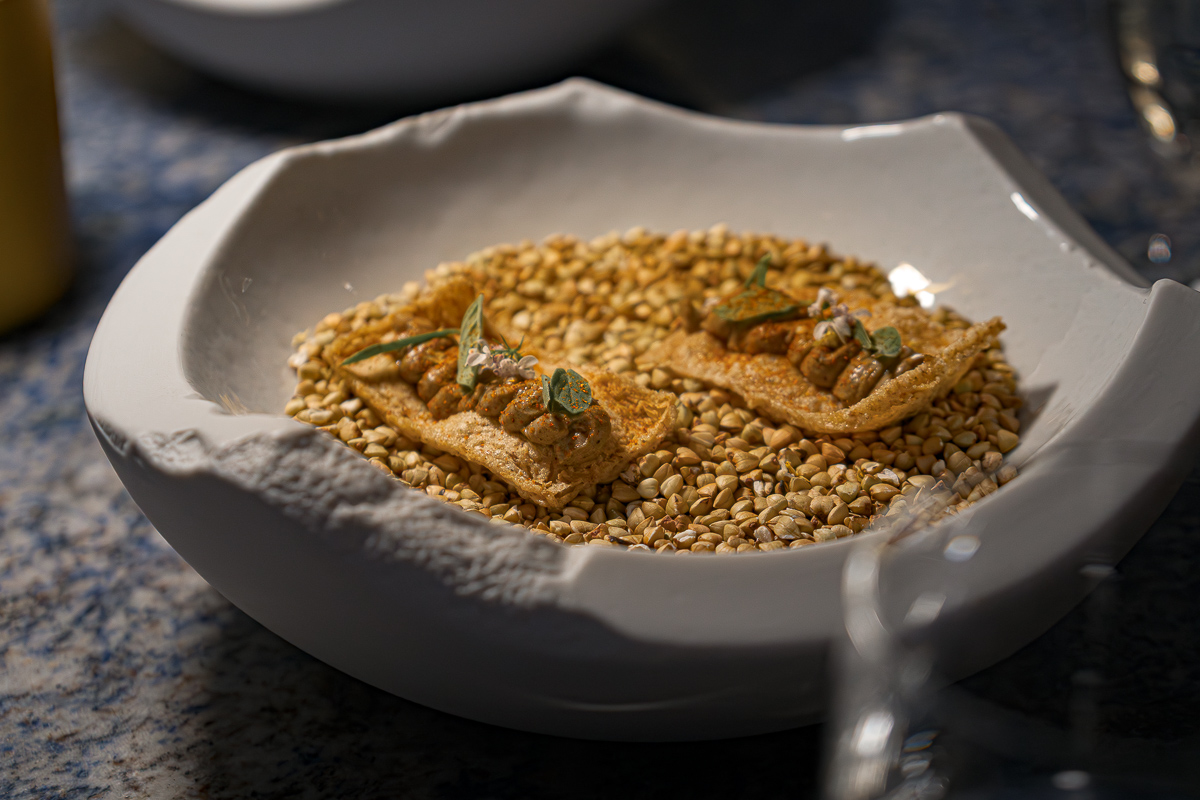
A rice crisp that snapped with a dry crack. Buckwheat and olives rounded it out, but the effect was like hearing a joke you already know—you smile politely, not out of surprise.
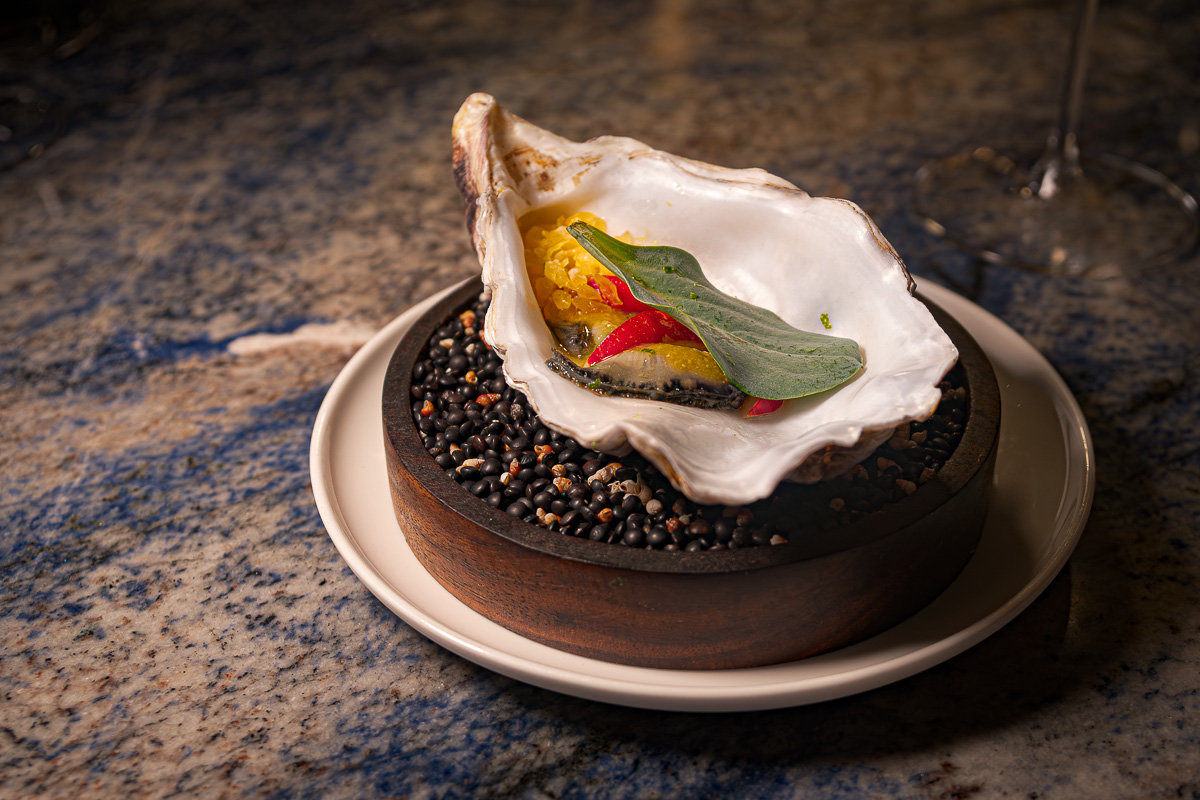
The oyster
Oyster with citrus and horseradish. The horseradish awakened the palate without overpowering; the citrus added acidity and balance—a reset dish—cleansing the path for what came next.
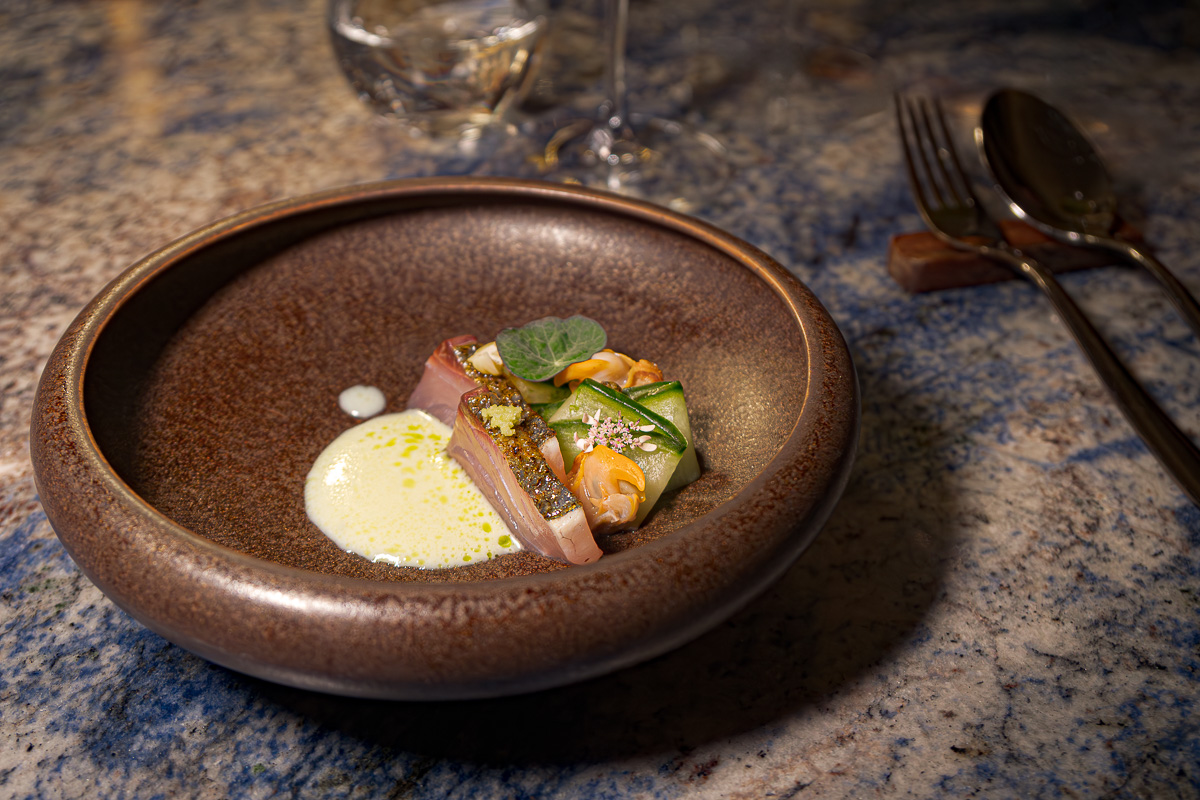
Guelly Jack, cockles, cucumber and wasabi
Maritime Dominion
Guelly Jack with cucumber, cockles and fresh wasabi. The skin was toasted, offering a delicate crunch beneath the knife; the flesh beneath remained moist, translucent at the centre—classic, immaculate Japanese precision. The cockles added salinity and texture, and the cucumber added a clean, green freshness. The fresh wasabi brought just enough heat to awaken and perfume the palate. A leche de tigre beneath tied everything together with acidity. One of the night’s standout dishes.
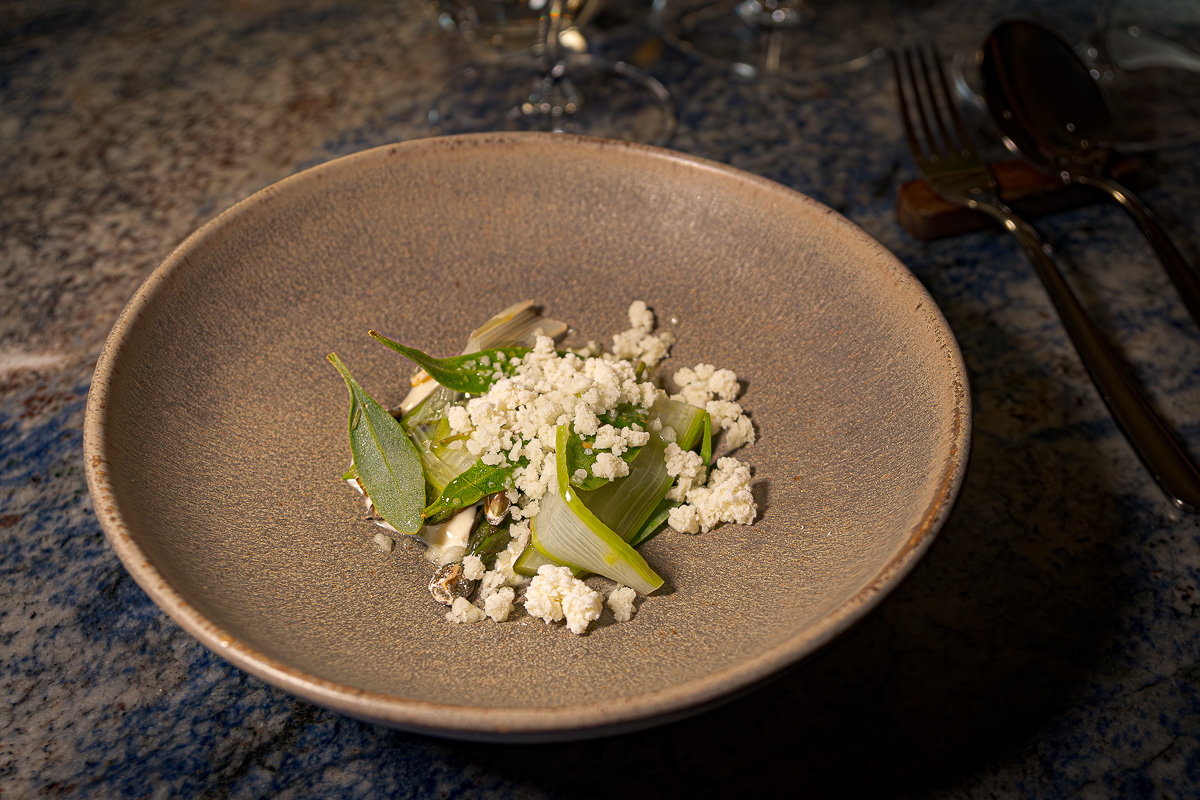
Green Asparagus, juniper, purslane and pumpkin seeds
Green asparagus with juniper, purslane and pumpkin seeds—pretty, fresh, but forgettable. A necessary vegetal pause without a lasting imprint.
The accompanying drink—an asparagus, spinach, and parsley blend—was impeccable, easily surpassing its wine pairing, M.O.B. Vinha Senna 2023.
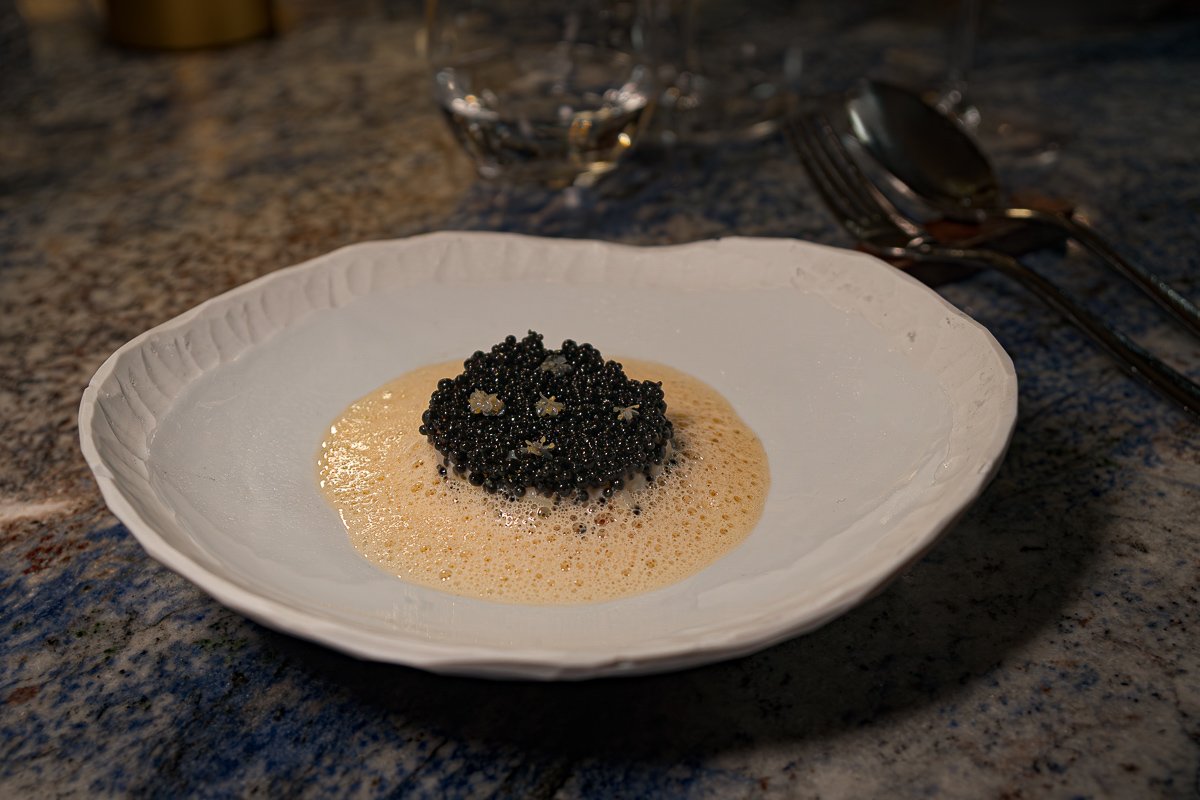
Squid and Indulgence
Squid with bago de arroz beans (a shorter variety of feijão frade), elderflower and kombu. The beans evoked coastal stews; the elderflower added a sweet, almost ethereal perfume; the kombu contributed a deep oceanic umami.
The squid was perfect—tender yet resilient. Comforting and indulgent in the best possible way: generous, satisfying, memorable. And no, what looked like caviar wasn’t caviar at all.
Here came one of the wines of the night: Insula 2019—dry, focused, with excellent citrus-driven acidity that beautifully balanced the dish’s umami notes.
Trend or Future?
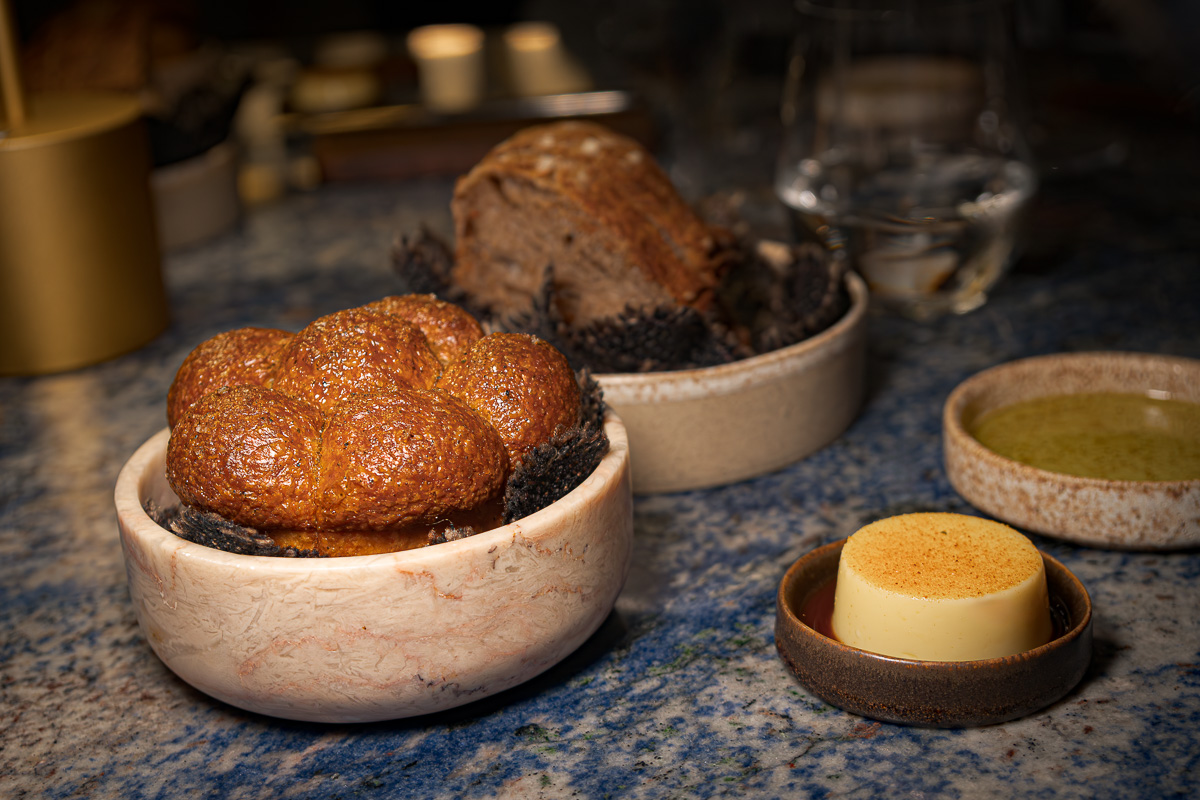
Following the current trend of serving bread mid-menu—as though it were a standalone course rather than a companion—CURA delivered something remarkable.
Serving bread midway through the menu as a “moment” is the culinary equivalent of calling an Instagram post “content”—marketing dressed up as creativity. Bread isn’t a course; it’s a companion. This trend needs to end. But CURA’s bread was so good it almost redeemed the gimmick.
The milk bread roll could wake me up at home every morning. Soft, lightly sweet, with a thin crust that cracked gently when torn. Served with Azorean butter—dense, golden, tasting of Atlantic pasture—and a vivid green olive oil, herbaceous and peppery, it became a comforting interlude. The timing, however, is debatable; for me, it should arrive after the snacks and remain on the table. Bread is not a moment. It’s a connection—sometimes sponge, sometimes salvation.
Wreckfish with pepper sauce and caviar
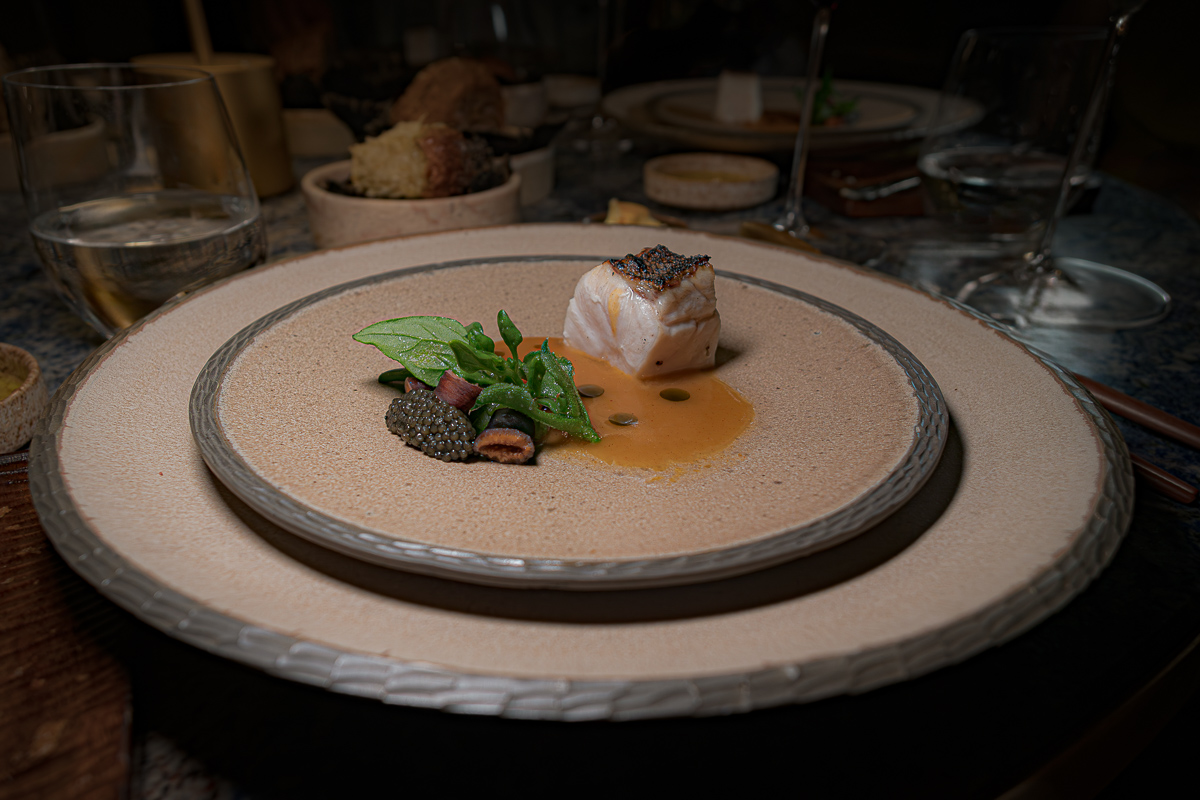
From squid to bread, and from bread back to the sea. Wreckfish with pepper sauce, goose barnacles and caviar. The fish—king of Portugal’s deep waters—was cooked with precision. The pepper sauce, creamy and lightly smoked, provided an earthy foundation; the goose barnacles stood out with mineral texture and clarity. The caviar was no afterthought. There was a latent Portuguese spirit in this dish that stirred memories of summer, embers and childhood flavours.
The wine was a bold choice: Niepoort Charme 2023—young, but with enough character and elegance to stand up to the fish. It matched both the marine elements and the vegetal notes beautifully.
Reading the description, I expected not to enjoy the non-alcoholic pairing—peanut, lupin bean, wasabi and passionfruit—but it turned out to be an unexpected revelation. An improbable combination that worked seamlessly.
Galician Ox
A Portuguese Pattern
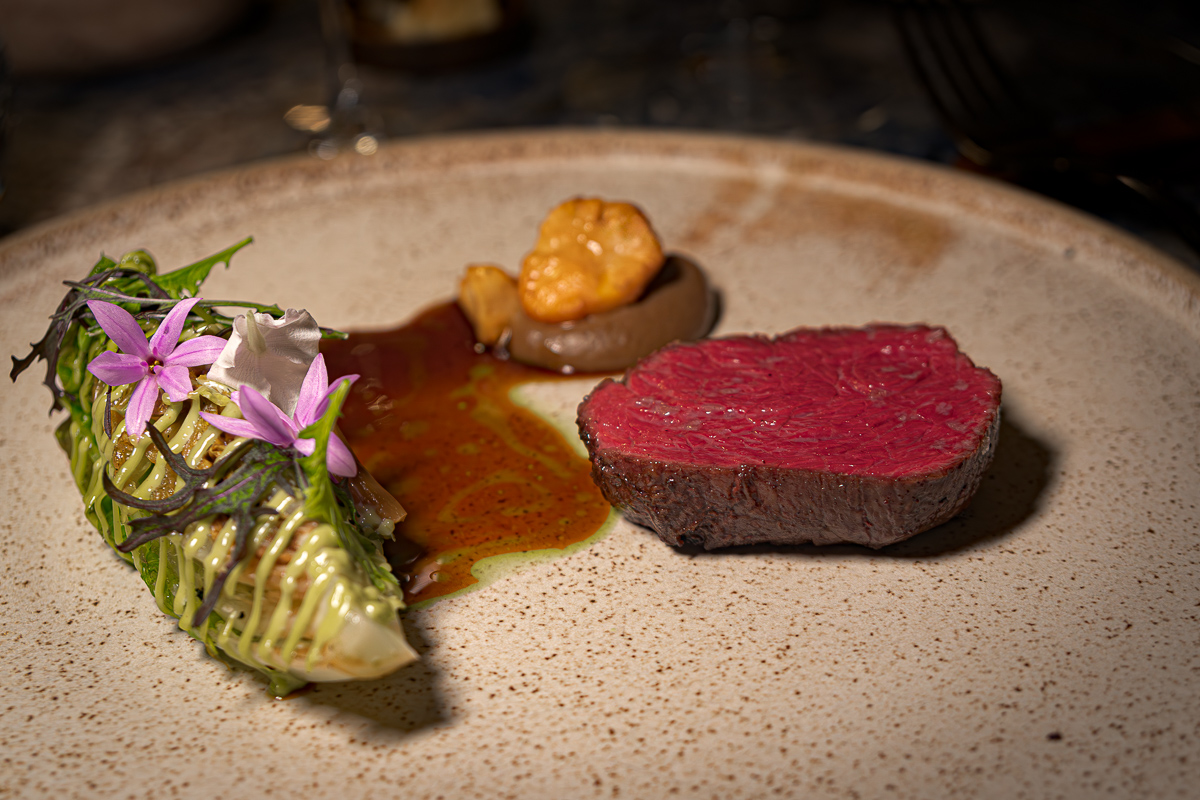
After a beautifully orchestrated progression of fish dishes, the Galician beef arrived with lettuce, mushrooms and wild garlic. The beef—matured, flavourful, the kind only well-raised animals can yield—was also the problem. Served warm beside cold lettuce, the dish felt disjointed; only part of it truly worked. Where was the aesthetic continuity, the memory, the surprise?
It’s a familiar phenomenon in Portuguese fine dining: after exceptional work with fish, the meat course often falls short. Sometimes it’s the simplicity of the preparation; other times, the cut itself isn’t suited to the fine-dining spotlight. Here, Rodolfo played it safe—perhaps too safe.
Once again, the non-alcoholic pairing—beetroot, hibiscus, cardamom and clove, balanced and expressive—outshone the wine: a still-young, somewhat muted Quinta do Monte D’Oiro 2020.
Cauliflower and apricot
Redemption
If the meat was timid, the desserts were the opposite. Pineapple with chamomile and sparkling wine arrived in multiple textures and temperatures, floral and effervescent at once. Refreshing, complex and unexpectedly sophisticated.
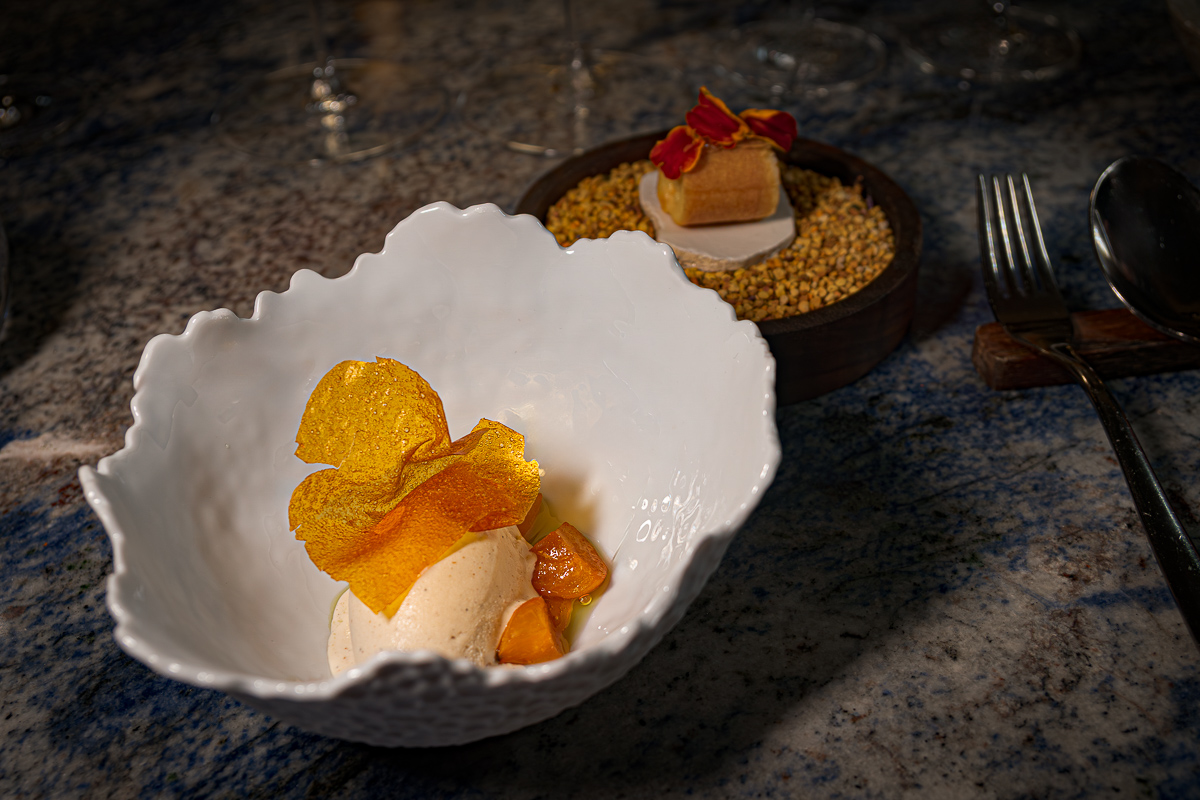
The genuine surprise was the cauliflower with apricot, black tea and lavender. Cauliflower in a dessert could have been a conceptual misstep—but it was a revelation. Worked to reveal its natural sweetness, it became a remarkably creamy ice cream. Apricot brought acidity and summer fruit; black tea added tannic depth; lavender, used sparingly, contributed only a gentle aromatic lift. Simple, on paper. Memorable, in execution.
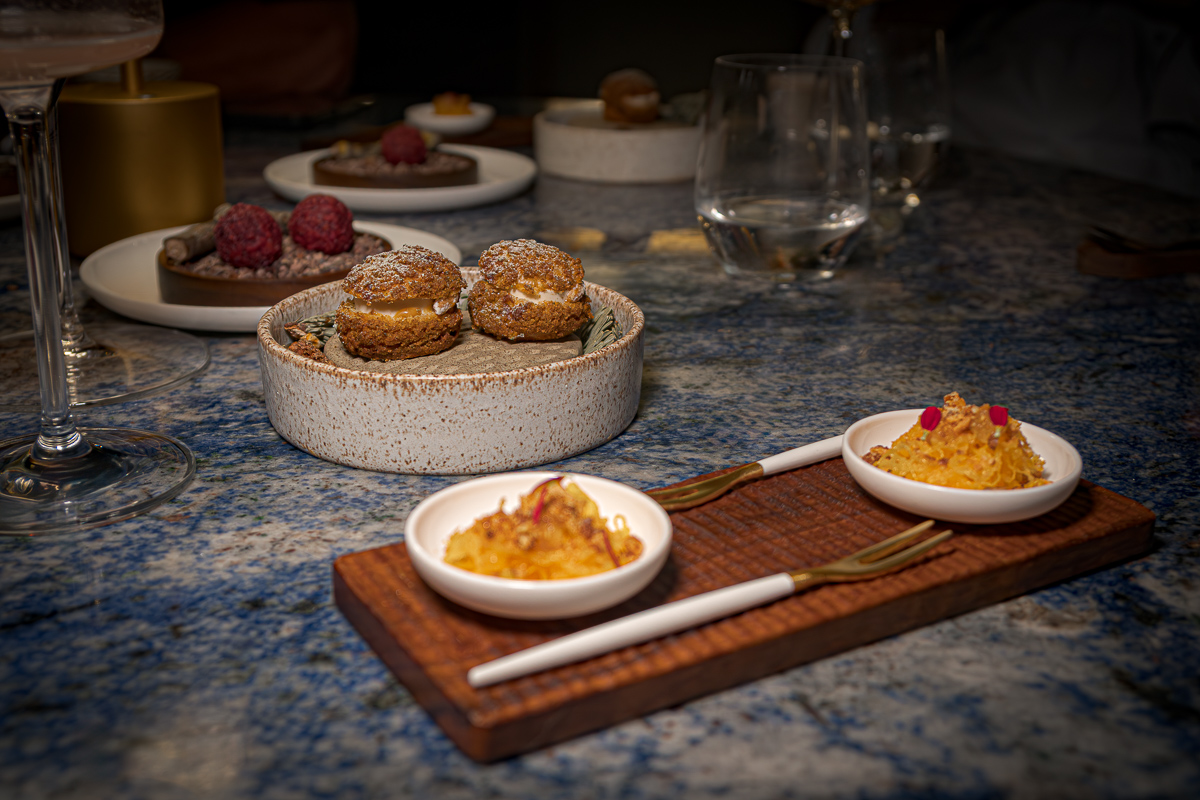
Petit Fours: A Crescendo
Egg threads with bitter almond, pine and pine nut, and cheese with raspberries closed the meal in a register of reinterpreted Portuguese confectionery. The egg threads were notable—less sweet than the traditional version, with bitter almond adding a more adult counterpoint. Petit fours rarely rise above polite formality. These did.
The Non-Alcoholic Pairing: A Masterclass
Here was one of the night’s great surprises: the non-alcoholic pairing, easily among the best in Portugal—perhaps even beyond. The green tea whey with nori, sudachi and peppers was remarkably complex: vegetal umami, citrus brightness and herbal freshness in perfect balance. The beetroot with hibiscus, cardamom and clove brought earthy, spiced depth. And the peanut with lupin bean—a pairing that could only be Portuguese in spirit yet global in execution—was both comforting and unexpected.
This is a poorly explored territory in Portugal, where alcohol-free offerings are often taboo or reduced to hurried juices and kombuchas. Here, they were treated with real seriousness. Marina Garcia’s signature is unmistakable—the hand of a cook visible even in the orchestration of beverages.
The Wines
The wine pairing was competent, with several strong pairings. Insula 2019 from the Azores was at a beautiful stage—enough character and structure to support even the more robust fish dishes. But there were weaker choices, such as Quinta do Monte d’Oiro Reserva 2020, its youth working against it. It lacked the maturity one expects from a Michelin-level pairing. Minor missteps, but noticeable in an experience that strives for cohesion.
Service
The dining room team is young but well-tuned, relaxed in just the right measure. The open kitchen means the chef must occasionally step into the role of host. Rodolfo does so naturally—still without expansive charisma, but with the quiet confidence of someone who has embraced a defining challenge.
A Final Note
Transitions of this magnitude are rarely smooth. Many national and international examples haven’t escaped harsh comparisons or heavy inheritances—from Fifty Seconds to Chef’s Table at Brooklyn Fare. The challenge placed before Rodolfo was immense: keep the star alive and continue the upward trajectory established by Pedro Pena Bastos. The weight of the responsibility alone would be enough to knock out half of Generation Z.
Four months into his leadership, traces of his predecessor were still visible—in the vision, in the structure of certain dishes, in the curatorial spirit. But Rodolfo was beginning to introduce his own nuances, managing what few chefs can: keeping the house open, the team stable, and the star intact while searching for his own voice.
Since then, we’ve seen this slow, careful evolution become increasingly pronounced. The Four Seasons’ bet is paying off.
The menu offered genuine highs—encharéu, squid, wreckfish, bread and desserts. The work with carefully chosen national producers pays dividends. The non-alcoholic pairing was exceptional. But there were imbalances: the meat fell short, and some dishes played it safe. Growing pains that do not invalidate the proposition.
CURA remains one of Lisbon’s best restaurants. It isn’t perfect, but it is evolving—and in a Michelin-starred restaurant in transition, evolution matters far more than stagnant perfection.
Given time, Rodolfo Lavrador will build CURA into something greater than what he inherited. For now, it is a restaurant learning to walk on its own. That isn’t a flaw. It’s a promise.
Address: R. Rodrigo da Fonseca 88, 1070-051 Lisbon (Four Seasons Hotel Ritz Lisbon)
Reservations: +351 21 381 1401
Hours: Daily, 7:00 PM–10:00 PM
Prices: From €155 (without wine)
Not to Miss: The bread, guelly jack, squid, wreckfish, desserts, and excellent non-alcoholic pairing
Chef: Rodolfo Lavrador
Sous-Chef: Marina Garcia
Accolades: 1 Michelin Star, 2 Repsol Suns, 50 Best Discovery
Nearby: Hotel Ritz, Ritz Bar
Dress code: Smart casual