
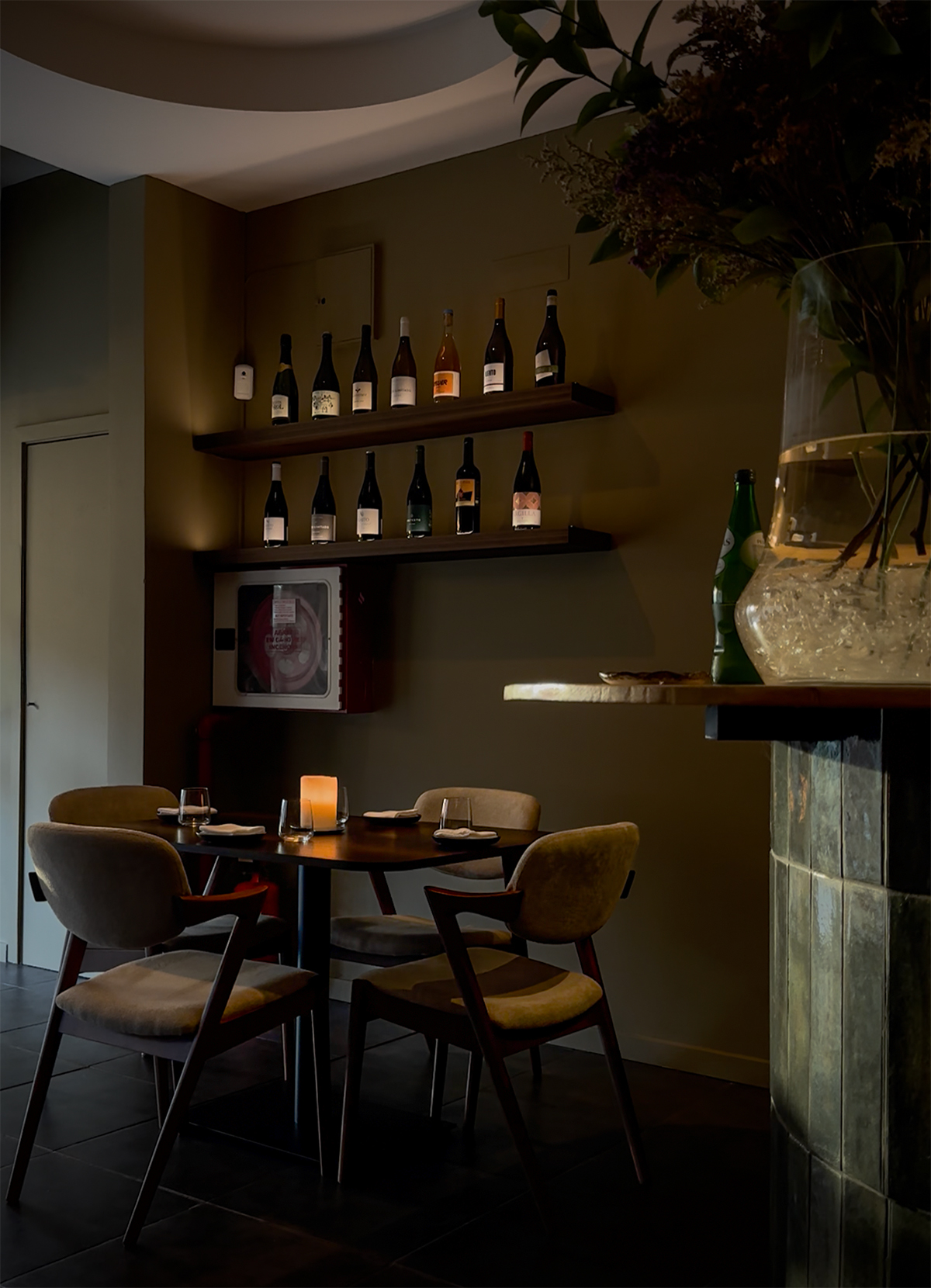
 Rua de Mota Pinto has no tourists. Pinheiro Manso is not Foz or Baixa, there are no tiles to photograph, no amplified fado drifting through the air, no terraces selling questionable versions of “Portuguese authenticity,” no rhythm of a city on holiday. There are neighbours, apartment blocks, and cars moving with clear destinations. There is a discreet door that opens into a small dining room with eighteen seats and a counter that serves as a stage. This is where Daniel Carvalheira decided to put everything he has on the table.
I have known Daniel for a few years. We crossed paths in other people’s kitchens, he always carrying that relaxed irreverence of someone who has more to offer than he lets on. That moment has arrived. Where Manso once failed, Liz was born – named after his daughter, Maria Liz, born around the same time as the restaurant. As if one of them did not already cost enough sleepless nights, choosing that name means placing everything on the table – or being very certain of what you are doing.
I went with Cíntia and Francisca for a family dinner, months before writing these lines – my usual delay in publishing, which by now should be accepted as a literary habit.
The Formation of an Accent
Daniel Carvalheira’s path reads like a map of influences marked by curves and long journeys. Born in Mozambique, he moved to the United States as a child, returned to Portugal at eight, settling in Vila do Conde, where he eventually realised — like many of his generation — that business management was not for him. Another desk and corporate life lost someone, not to influencing or YouTube, but to the heat of a kitchen.
A latecomer to cooking who nonetheless built his foundations in serious kitchens. At Pedro Lemos and The Yeatman, he learned French grammar, the depth of sauces, the importance of flavour in fine dining – the beurre blanc and jus we tasted that evening are direct reflections of that training. From Noma came the obsession with fermentation and an open mind. From Euskalduna, creative freedom. Technique, discipline, and creativity became tools for building a personal accent. What none of those kitchens taught him was how to make curry or use spices. That he brought from home. And it is precisely that Mozambican accent that separates Liz from yet another “contemporary author-driven restaurant” in Porto.
The Space
The team is deliberately small. André Cavaco, in the dining room, handles service, wine, and the presentation of dishes that Daniel does not bring himself. One or two more work behind the counter. There is no brigade, no sommelier with a lapel pin. There are simply people who do everything.
The room is informal enough, dressed in dark neutral tones that quiet the city outside. Clean like modern fine dining, but relaxed, almost domestic at times. Daniel steps out of the kitchen to present dishes with the expression of a child showing a successful school project. No theatre. Just a man clearly pleased with what he has done.
The night we visited, the restaurant was not even half full. We felt comfortable, but I would have liked to sense that compressed energy of good Parisian bistros – those born from the bistronomie wave of the 2000s – where noise is part of the experience, and the room simmers, pushing the kitchen forward. Liz needs bodies at the table; it needs that agitation, and yes, the food deserves that audience!
Clear Pronunciation, Steady Hand
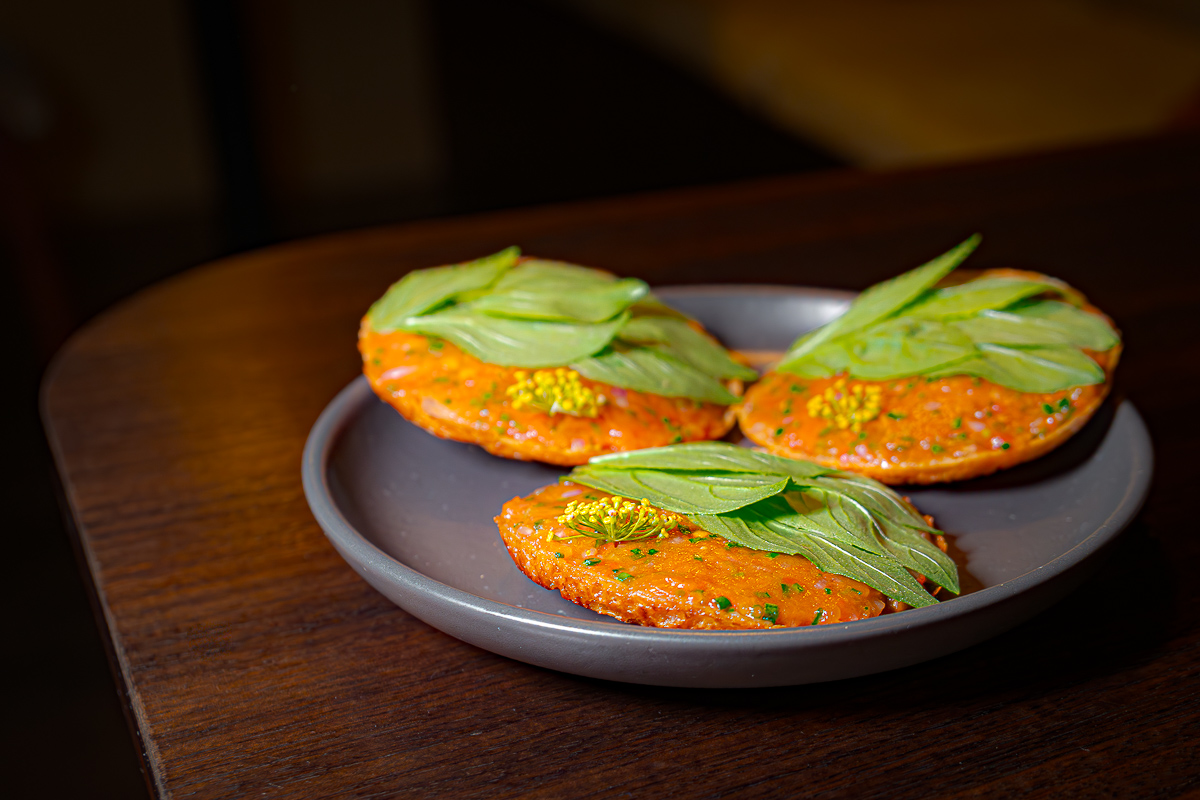
We began with snacks. The tomato tartare with shallot, chives, and Thai basil over crisp panko set the tone immediately: concentrated flavour, ripe tomato, basil cutting through sweetness with a fresh, aniseed sharpness I did not expect so early in the meal. A strong opening.
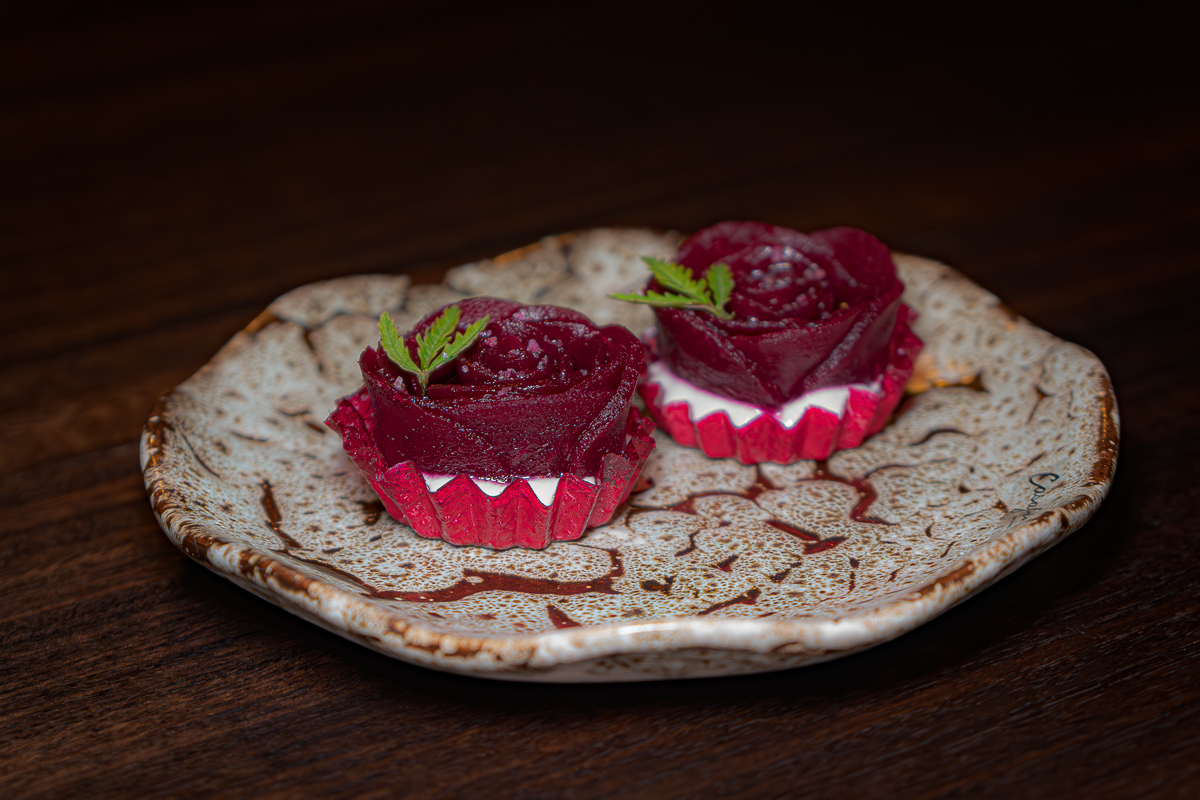
The beetroot tartlet with goat’s cheese and cumin oil is aesthetically impeccable, easily at home in any Michelin-starred dining room — and I am not a great fan of repeated identities. It honours the classic beetroot–chèvre pairing without making it predictable, cumin adding a kick that nudges it beyond completely safe territory. Competent, beautiful, not transformative — and that is not a fault.
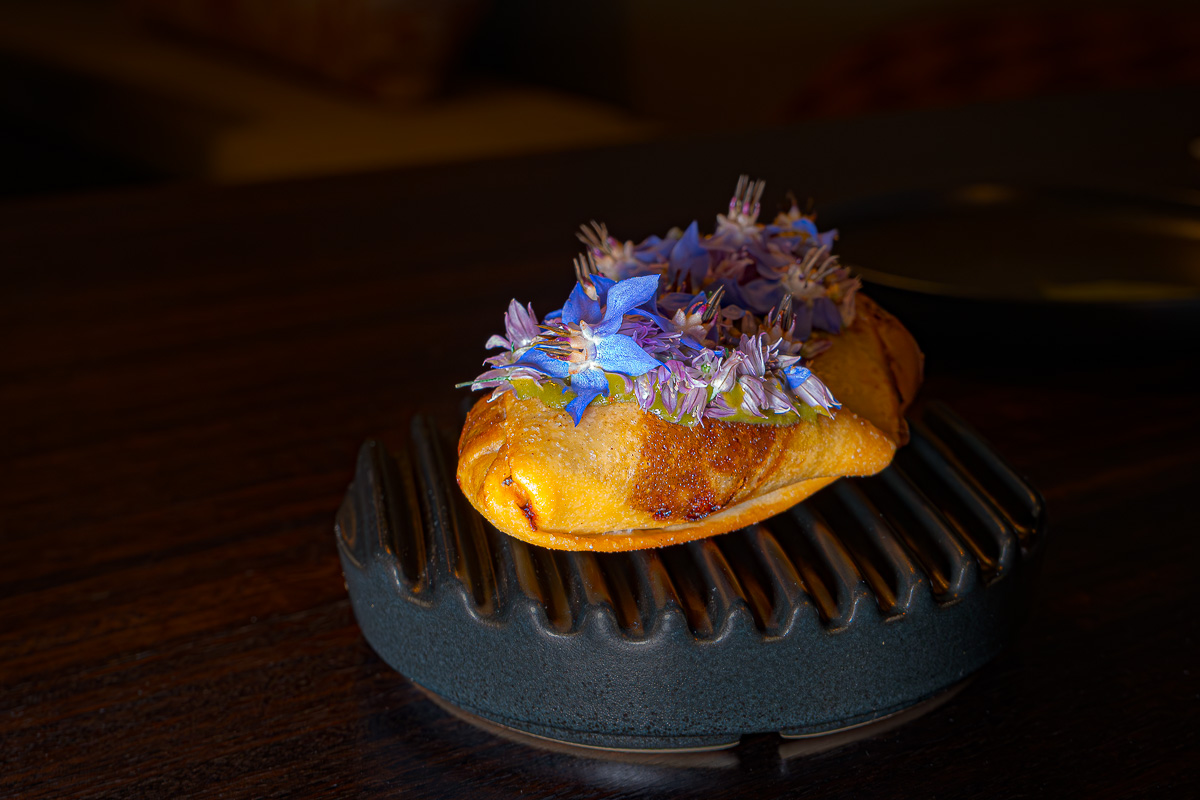
The “cabidela” samosa with chutney and borage flower was the best of the three. Here, Daniel reveals the Mozambican accent we were waiting for. The samosa, which entered Mozambique through Portuguese colonisation and migration from the Indian subcontinent, filled with cabidela, is not a gesture of cultural appropriation but of precise translation. The spice, the inherent acidity of cabidela, the sweetness of the chutney — everything worked in unison, including the borage flower, which here was far more than decoration.
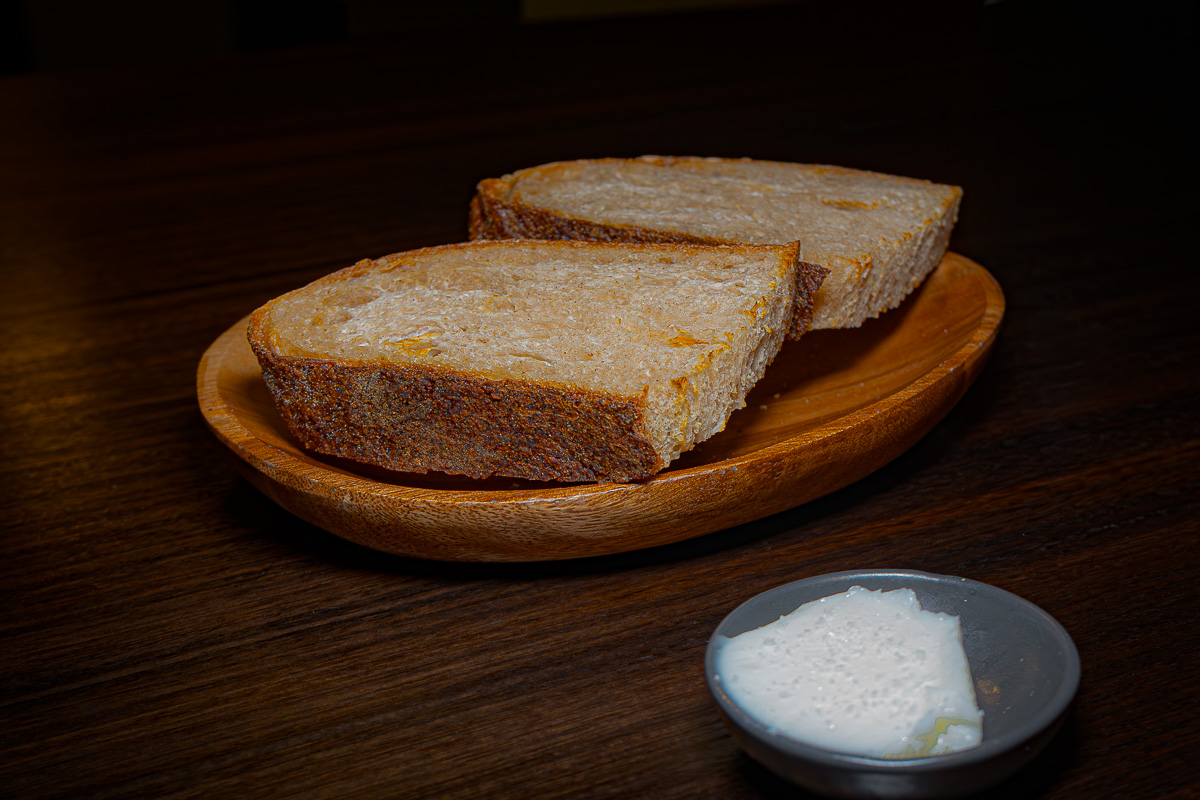
The sourdough from Bicho Pão, the bakery from Póvoa de Varzim that has since opened in Porto, arrived warm and sliced. The texture hinted at prior freezing, without compromising flavour. One of the most interesting bakeries in the city, and a bread choice that says as much about Liz as the menu itself.
 Territory on the Plate
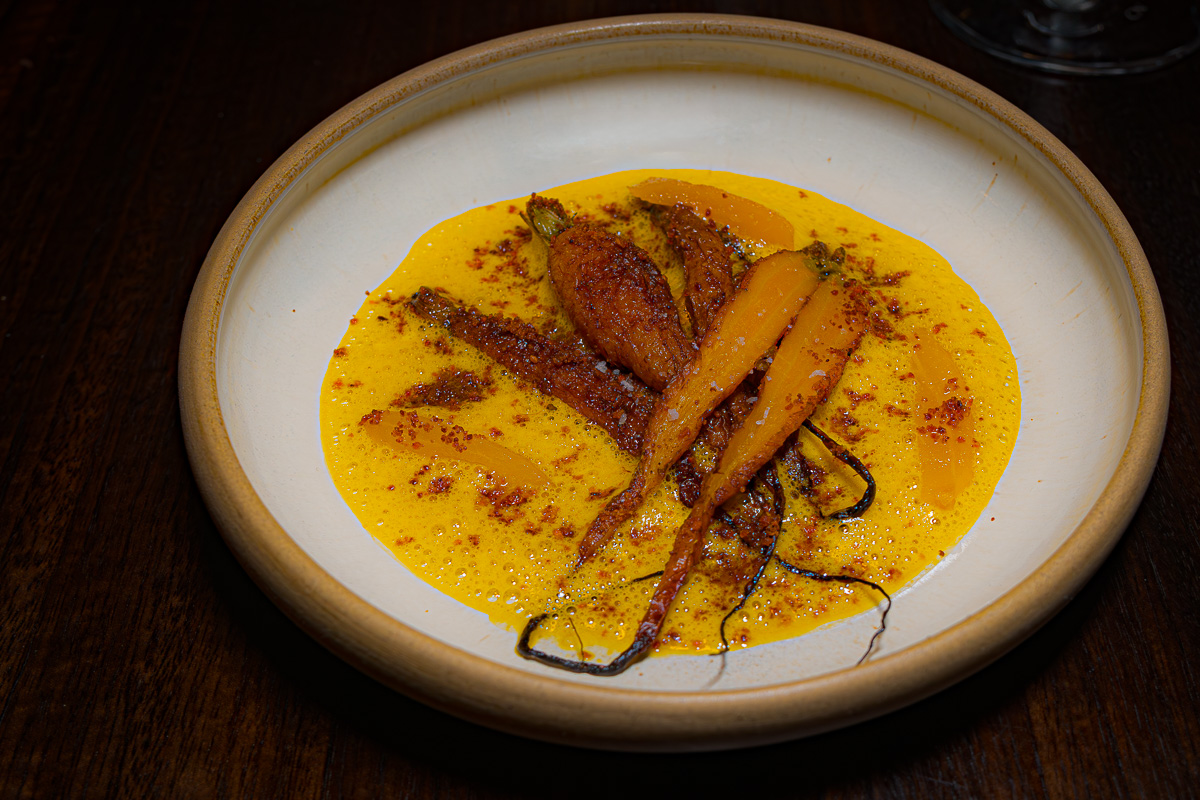
Carrot with apricot — roots sourced from Formiga Gloriosa, a small regenerative farm — forced me to reconsider a few prejudices. Carrots are not my vegetable. They never have been, likely never will be. Yet here, the sweetness of roasted carrot, intensified through varied cooking techniques and lifted by apricot’s acidity, resulted in a balanced dish that stands on its own without relying on protein. I will not say I now love carrots. But I respect this one.
The Algarve prawn with guanciale and curry is the signature dish every article mentions, and it has been on the menu since the restaurant opened. It is easy to see why. A recipe and memory from Daniel’s mother translated into fine dining: raw prawns cloaked in velvety curry, the heat rounded by coconut milk, guanciale adding fat and crunch. The sauce is extraordinary: creamy, deep, yet light. The prawn was impeccable. I could have eaten another dozen, which is the highest praise I can offer.
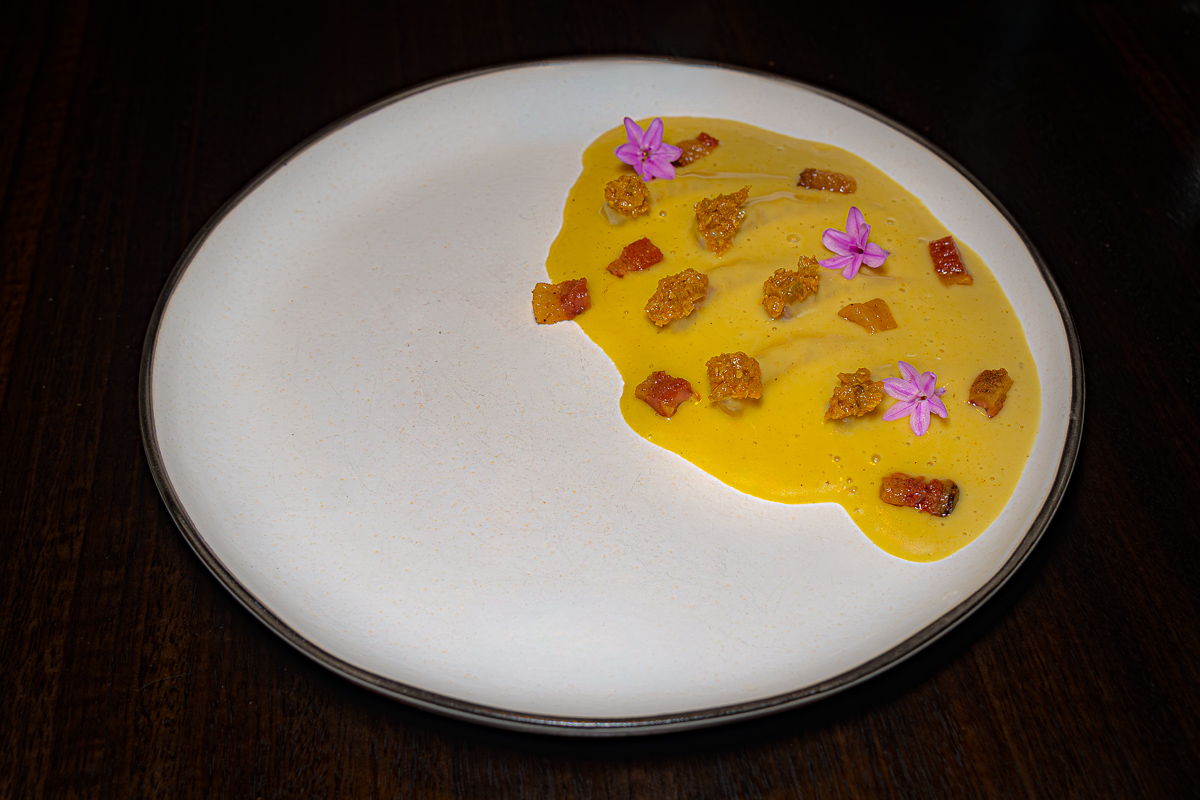
The kind of dish that justifies a drive to Pinheiro Manso on a rainy evening, parking uncertainties included. It proves that family memory, filtered through serious technique, can evolve without losing emotional temperature.
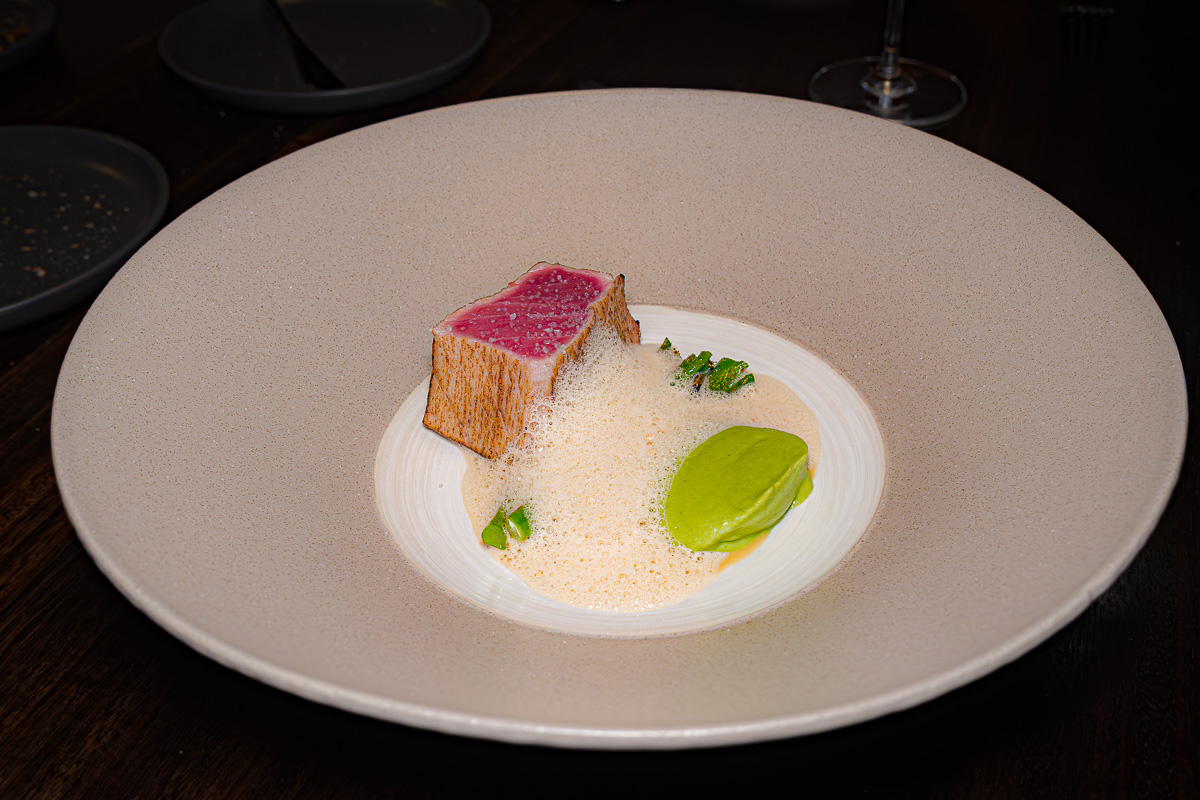
Tuna with bimi and beurre blanc shifts register. Still visually aligned with the rest of the menu, but structurally European and classically precise. Tuna, lightly seared on the outside, rosy within. Bimi presented two ways: grilled with pleasant bitterness, and puréed to soften the vegetal edge and add body. The beurre blanc – properly executed – ties everything together with the elegance of someone who had good teachers. Simple, generous, correct.
Finally, the beef entrecôte with kimchi-stuffed leek, pea purée, and jus was the most “bistro” plate of the night. Meat cooked perfectly, clean jus — the kind that calls for bread at the end, without shame. But the brilliance was on the side: leek stuffed with kimchi, the element that lifted what could have been a conventional steak-and-sauce into something more. Fermented heat inside sweet leek is a small idea that elevates the whole.
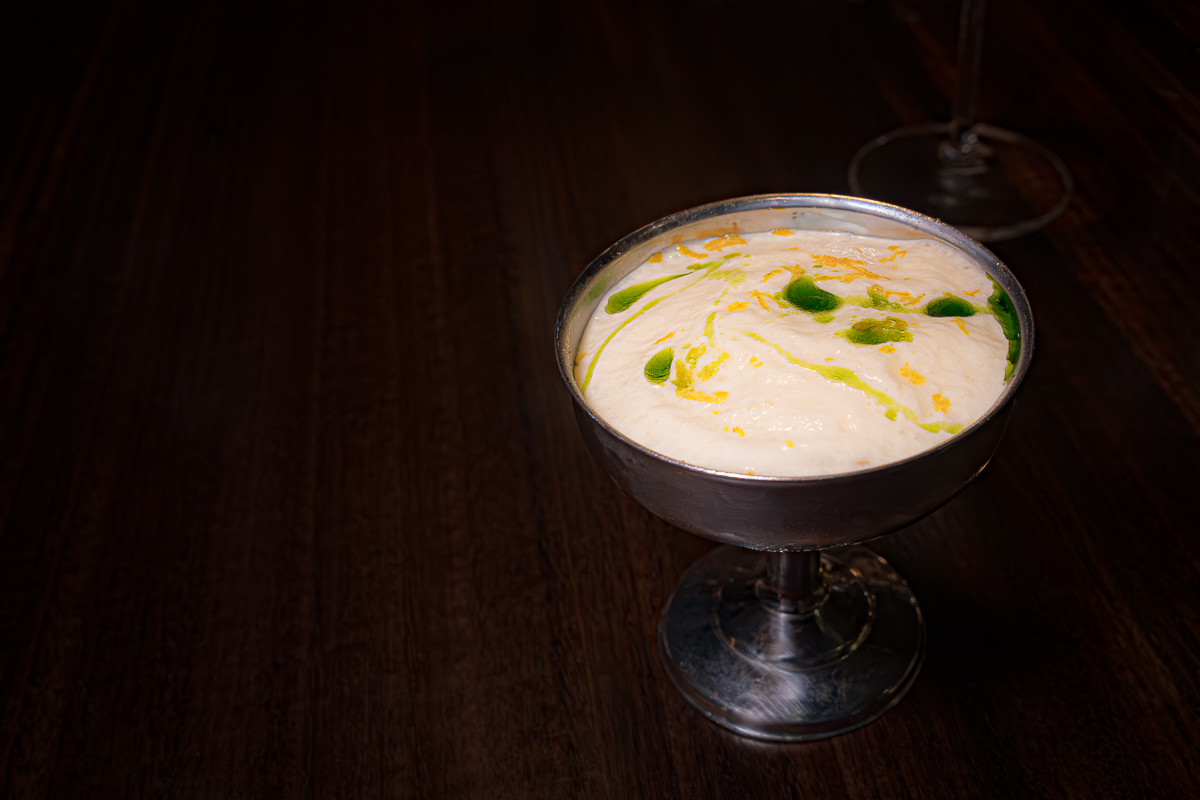
Sweet and Acid
The citrus foam with grapefruit and basil oil does what it should: cleanses, refreshes, and prepares.
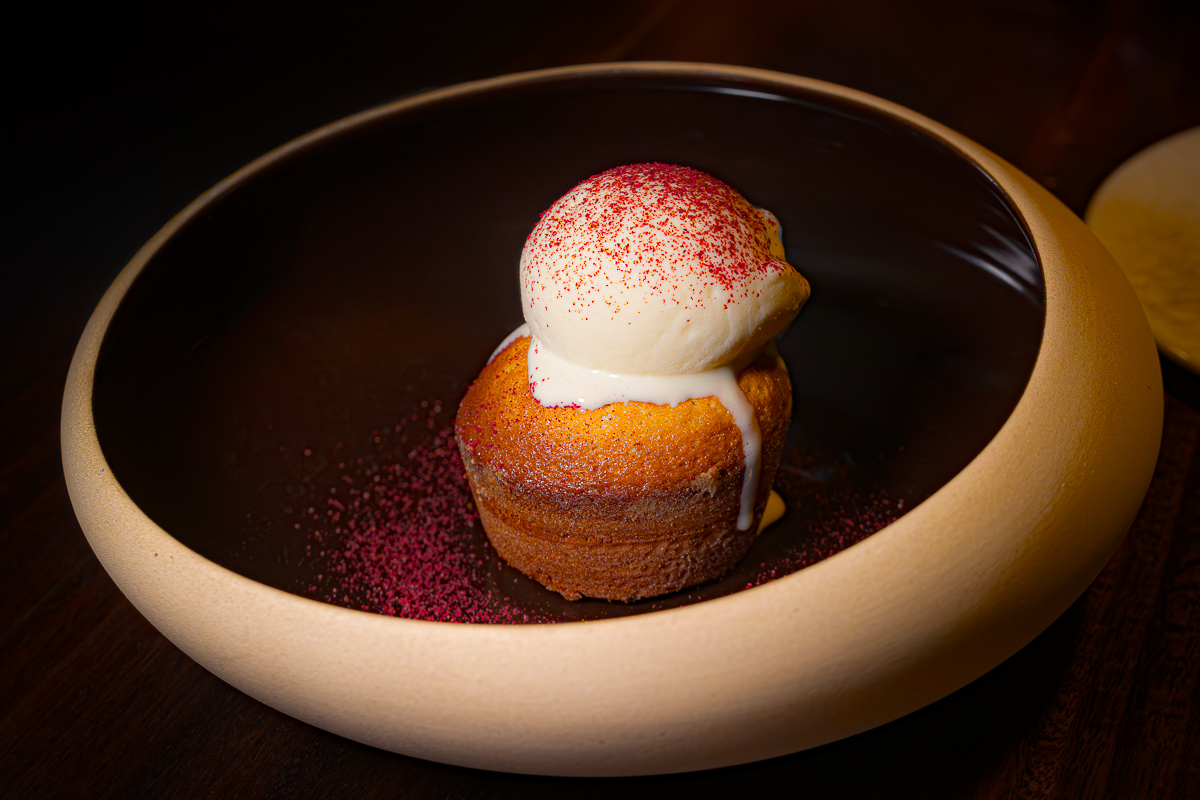
The white chocolate petit gâteau with vinegar ice cream and powdered redcurrant will divide the room — and Daniel knows it. The cake itself is well-made, liquid at the centre, without a twist. The surprise lies in the vinegar ice cream. Alone, it is sharp, almost aggressive. Paired with the dense sweetness of white chocolate, it works like a gloved slap – it wakes you, reorganises the palate, forces you to choose a side. It will not be for everyone. Francisca’s expression required no caption. But Daniel chose the harder path, and that deserves respect, even when my daughter’s face suggests otherwise.
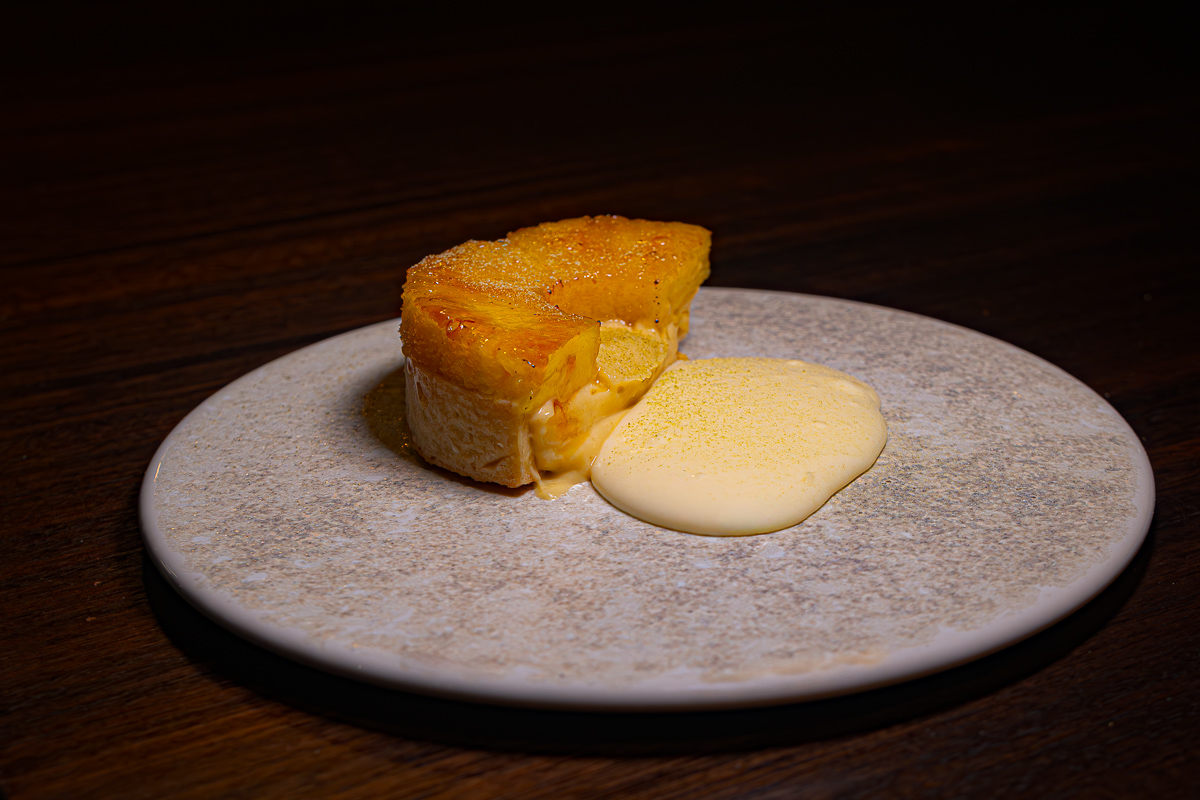
The best dessert was Azorean pineapple with São Jorge cheese. Elegant on the plate, precise on the palate. Caramelised pineapple balancing sweetness and acidity, the São Jorge cream proving the old adage that what grows together works together. When two island products meet on a well-considered plate, nothing else is needed.
The Glass
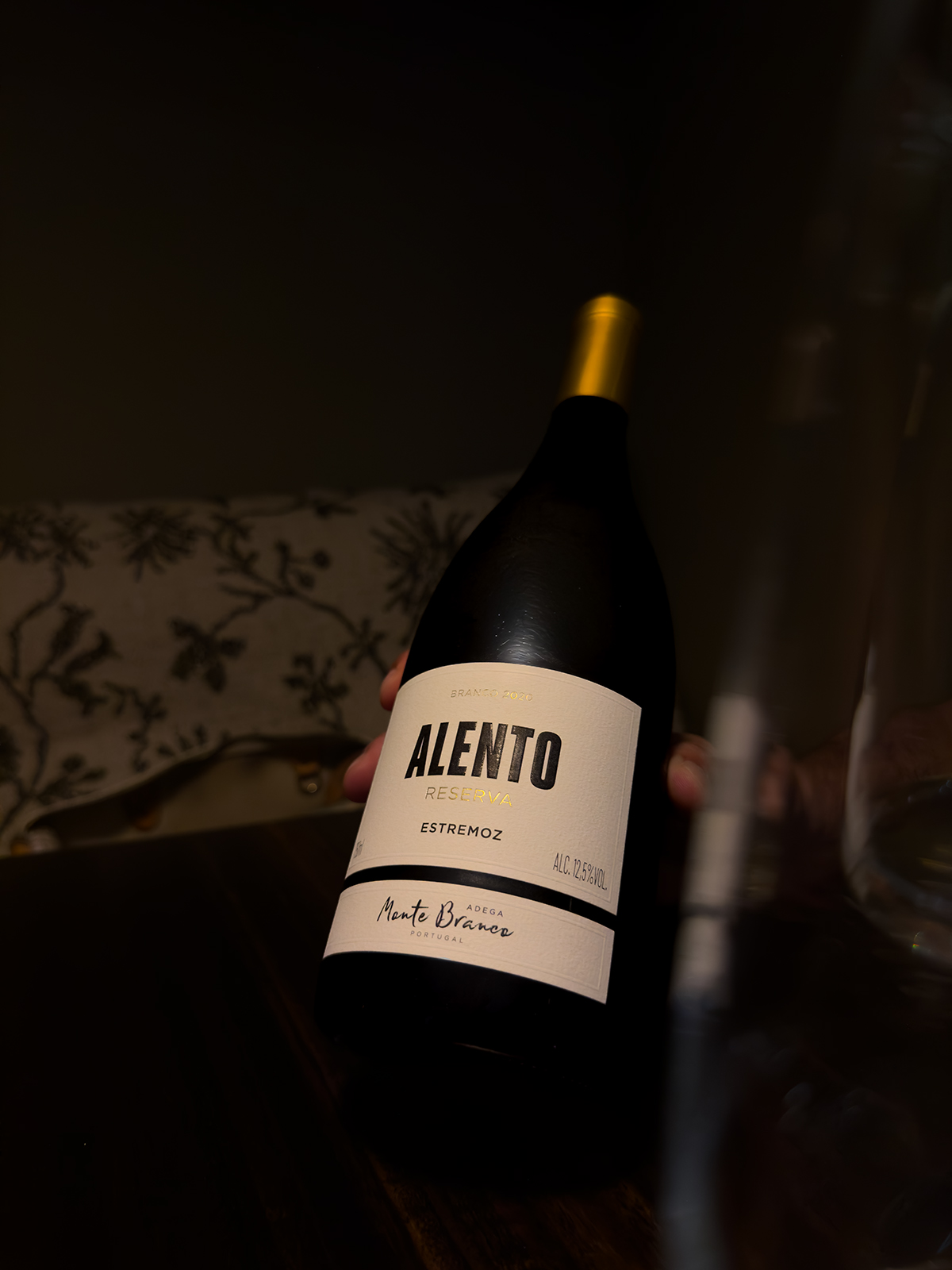
We followed Luís’s suggested pairing: Quinta do Rol Grande Reserva sparkling to open — correct, lively acidity for the snacks. Then Uivo Vinhas Velhas white, textured enough not to disappear beside the tuna, elegant enough not to compete with the prawn. We finished with Alento Reserva 2020, an Alentejo white of unusual freshness for the region, capable of accompanying the meat without compromise.
 A Final Note
A new generation of cooks in Porto deserves more eyes, more forks, more ink. The problem is that public attention tends to rest on the same names — those with stars, those with Instagram fame, those at the top according to influencers. Daniel Carvalheira is not in that race. He is on Rua de Mota Pinto, with a small team and food with its own accent.
I likely tasted the more conservative side of Liz — the restaurant now operates exclusively with a tasting menu. I hope to return for sweetbreads and quail, to see how far audacity goes when the reins are loosened. But that night made one thing clear: there is serious cooking here, the right balance of restraint and courage.
Liz is a bistro that wants to be fine dining without its rigidity — drawing from technique, precision, and careful sourcing, but without stiffness, without stopwatch pacing, without the dull solemnity that sometimes weighs down certain starred dining rooms in the country.
What would I like to see? A stronger push into spice, with boldness and precision. Dishes unlike anything else in the city, carrying the heat and fire of Mozambique that runs through Daniel’s veins. And a full house!
That will come. With the same ease as watching Liz grow at the pace of a young daughter!
Address: Rua de Mota Pinto, 170, Porto
Phone: +351 226 168 024
Hours: Tuesday to Saturday, 7:00pm–10:30pm
Prices: From €65 (drinks not included)
Chef: Daniel Carvalheira
Must-try: Cabidela samosa; Algarve prawn with guanciale and curry; Azorean pineapple with São Jorge cheese.
Nearby: Serralves Foundation, Parque da Cidade, Casa da Música, Madan Bakery