
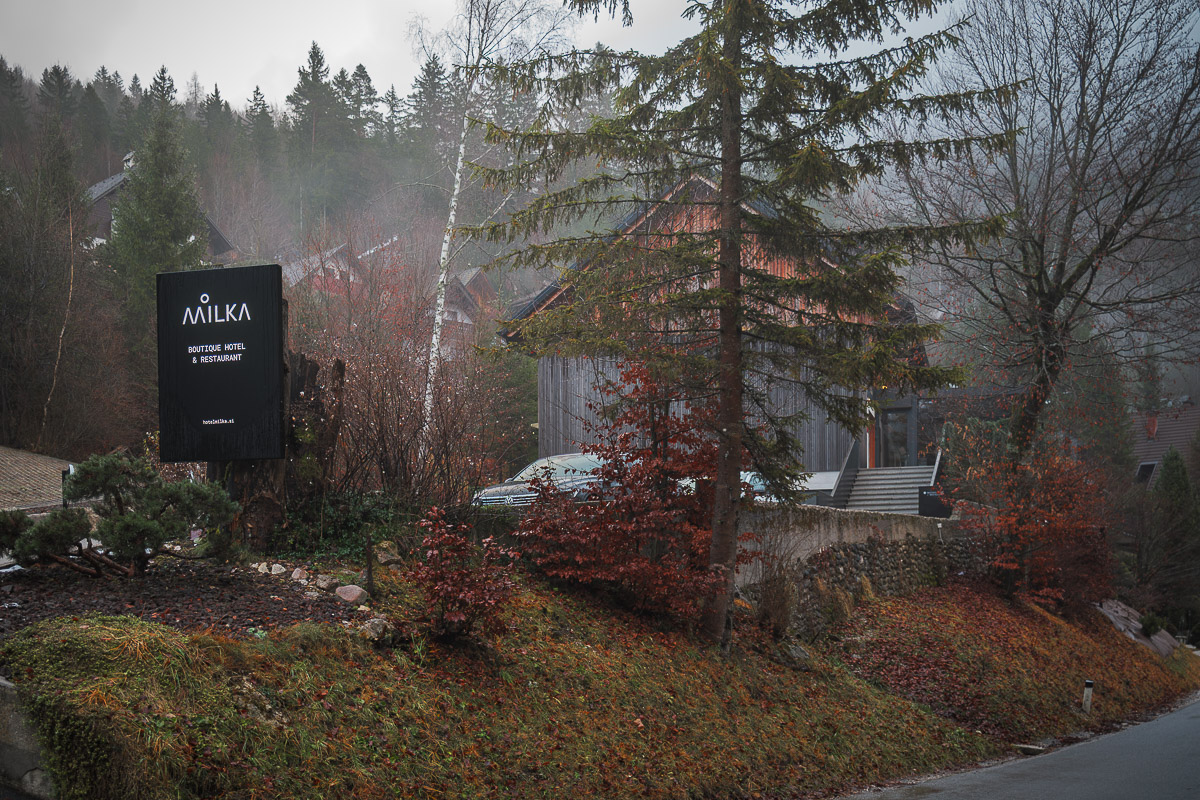
 Many of my colleagues and friends insist that the best restaurants should be visited in summer, when the light is right, and the landscape reveals itself in full. I agree, in theory. In practice, I travelled in December to Vršiška cesta 45, Kranjska Gora, in the north-west of Slovenia, deep in the Julian Alps, twenty kilometres from Italy and within reach of Austria. Alone, in the rain and cold, with Slovenia’s natural beauty hidden behind clouds and a grey sky, yet certain I had made the right decision. Sometimes the right place is simply the right place, regardless of the weather outside.
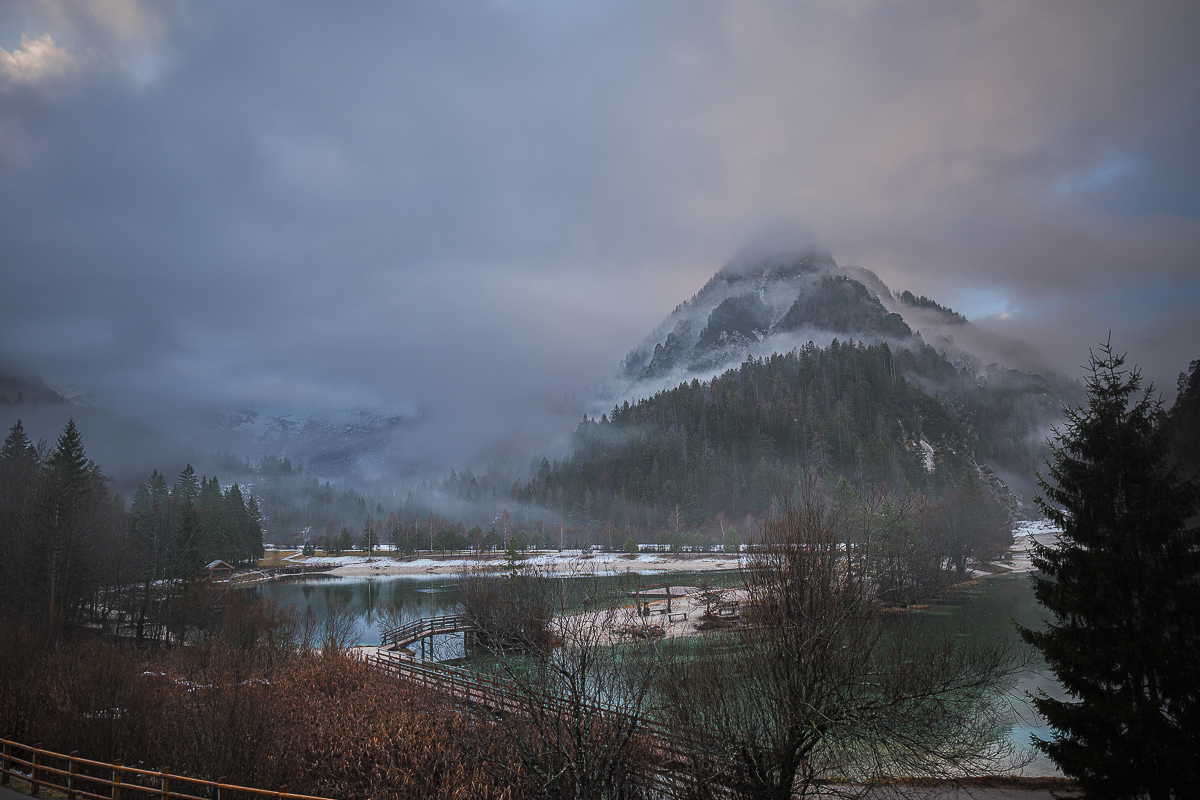
This is particularly relevant when a restaurant exists because of its location. Milka makes sense there, only there, and for that reason it was the sole purpose of this journey — that, and the celestial blue of Lake Jasna. But the lake, too, remained out of reach, concealed behind the grey of those days.
Dining alone in a fine dining restaurant is an exercise in total, almost forced attention. Without company, the focus sharpens, the eye searches for details that would otherwise be lost: the angle at which a bottle is poured, the timing between kitchen and dining room, the exact moment a dish shifts in temperature before reaching the mouth. For once, absence became the most effective instrument of observation.
The Man Behind Milka
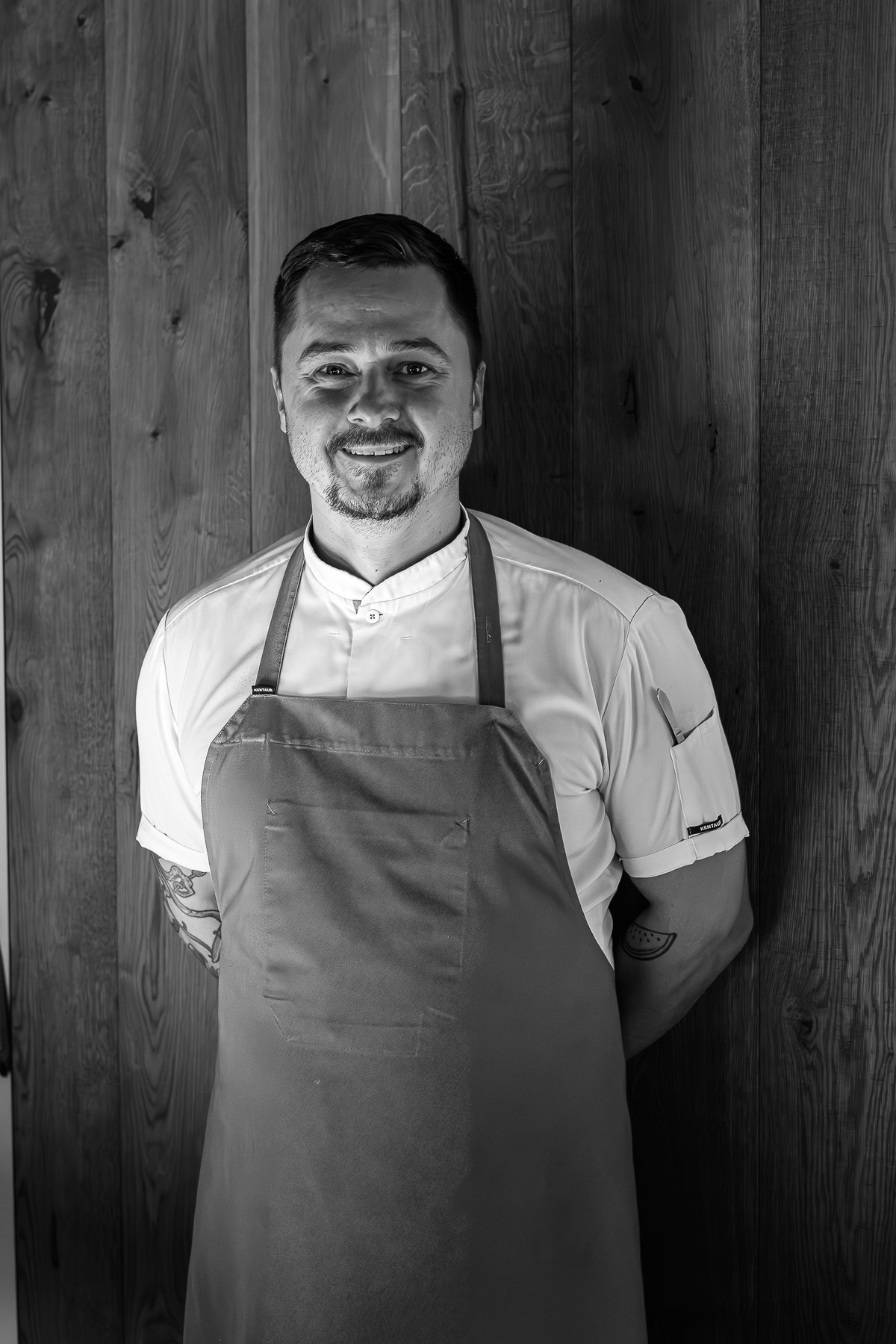
David Žefran is in his early thirties and has followed an unconventional path for a two-Michelin-starred chef. He studied sociology, worked as a DJ, flipped burgers in Ljubljana to pay for his studies, and discovered — inconveniently — that the kitchen was where thought and matter truly met.
A period at Frantzén in Stockholm — three Michelin stars and a vision of hospitality that extends far beyond any conventional idea of a menu — broadened his perspective. Returning to Slovenia during the pandemic, he opened Milka in June 2022, a small restaurant paired with a boutique design hotel. The stars followed faster than he could have anticipated: the first after just three months, the second a year later.
There is something distinctly Slovenian about this model. Ana Roš, at Hiša Franko — three stars and the country’s most celebrated restaurant — is also self-taught, also chose the countryside over the capital, and also built a cuisine without a manual. The finest Slovenian gastronomy lives far from the city, rooted in its territory, shaped by people who learned to cook because they chose to, not because anyone told them how. In France, this would be almost unthinkable. In Slovenia, it appears to be the right method.
In the afternoon, I observed both the kitchen and dining room as the team prepared for service. The kitchen is small — the kind of space that suppresses ego and demands efficiency. Here, a multicultural team produces vinegars, fermented products of all kinds, bread, and summer preserves intended for winter. Not as a statement of principle or a zero-kilometre narrative, but out of genuine necessity: survival logistics, where summers are short and winters unforgiving, and what is not captured in August does not exist in December. The team preserves between 70 and 80 percent of its produce during the warmer months to sustain the winter menus. And that presence is felt at the table.
The Invisible Choreography
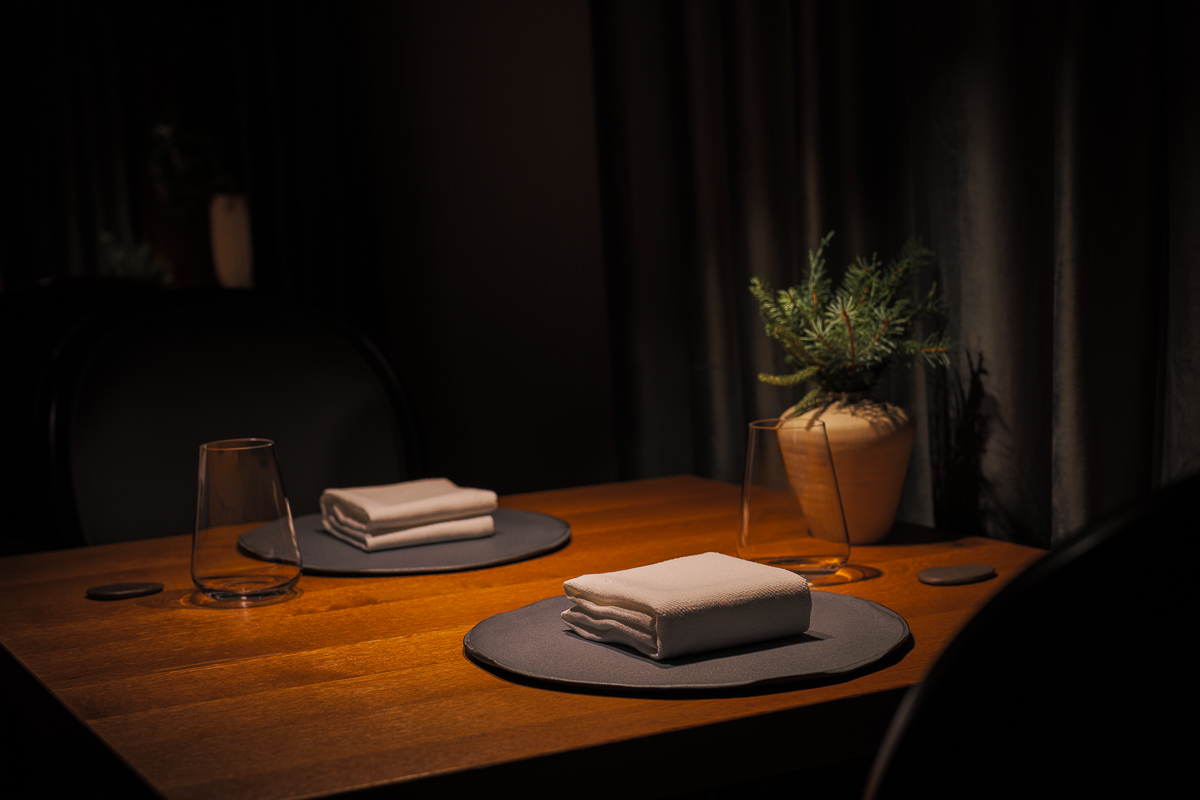
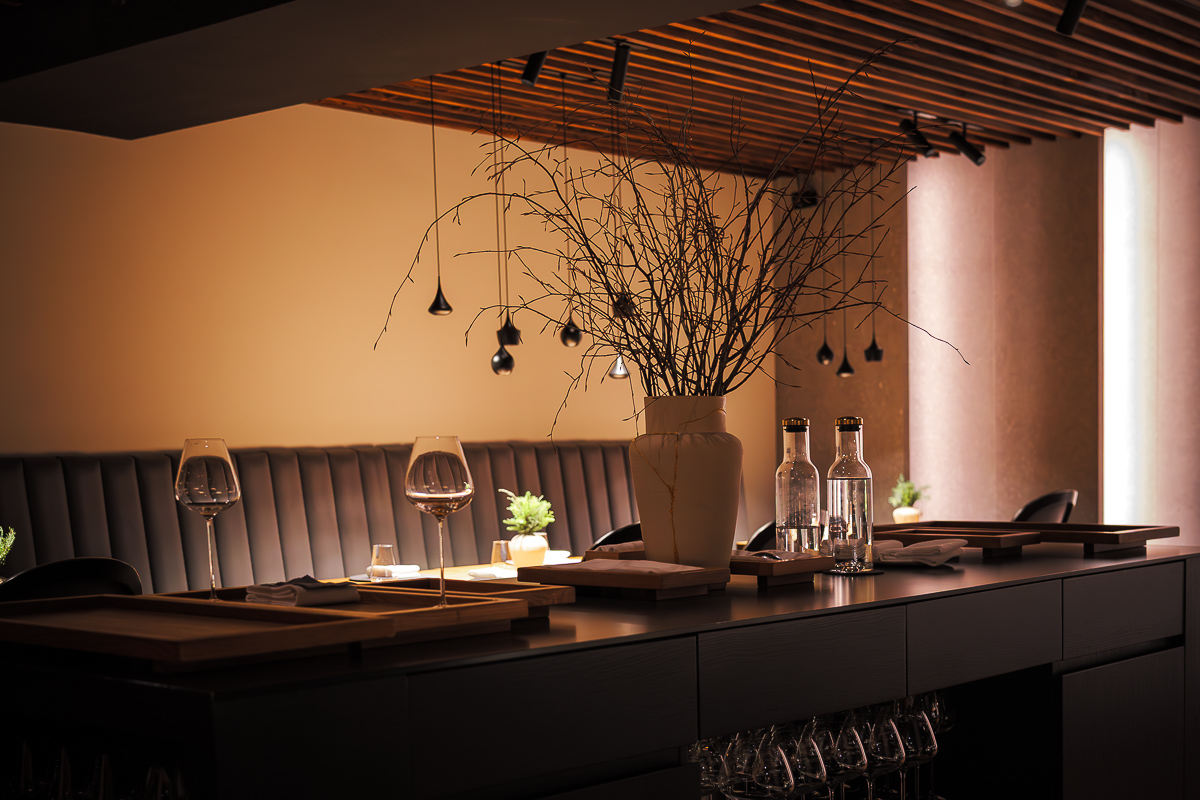
Dinner begins in the lounge. Seated in comfort, slightly reclined, with a darkness in the background drawing you into a more immersive dimension of dining. First, a Slovenian sparkling wine — Penina Blanc de Blancs 2018 — alongside a non-alcoholic pairing of strawberry and jasmine, both served with a warm, deep broth built on cabbage and fermented butter.
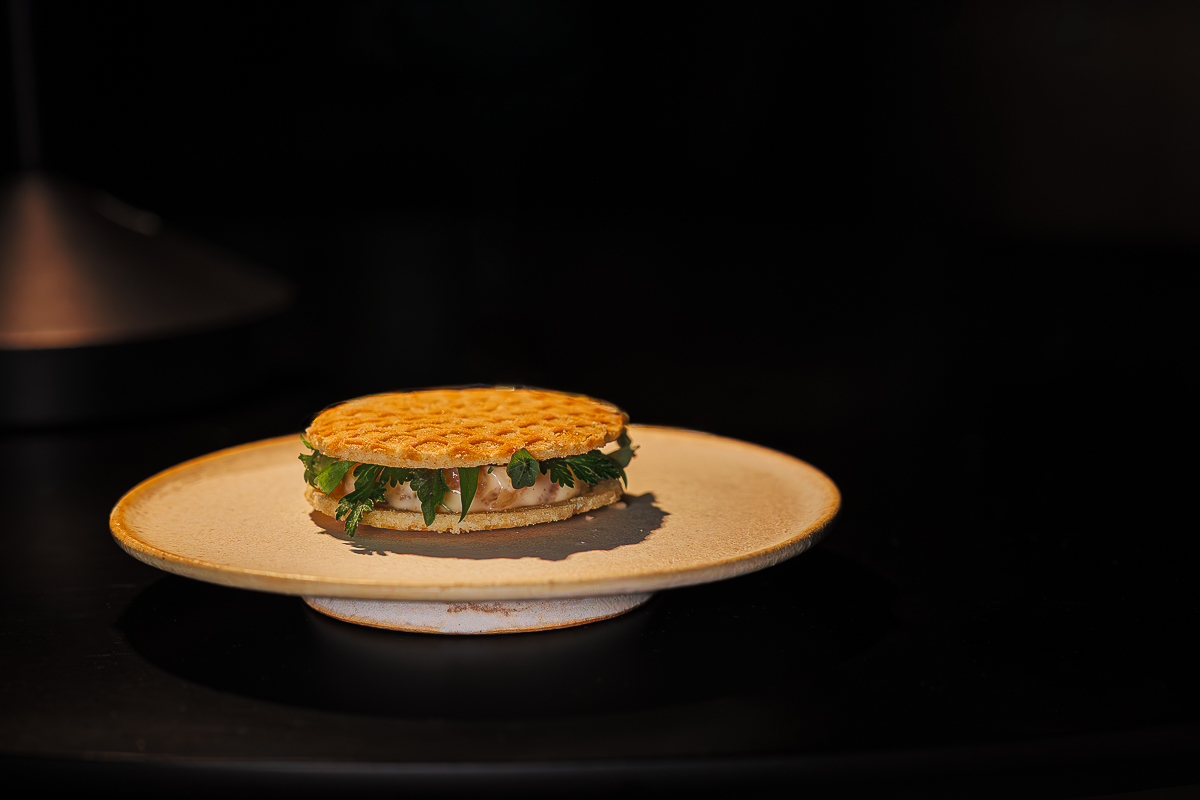
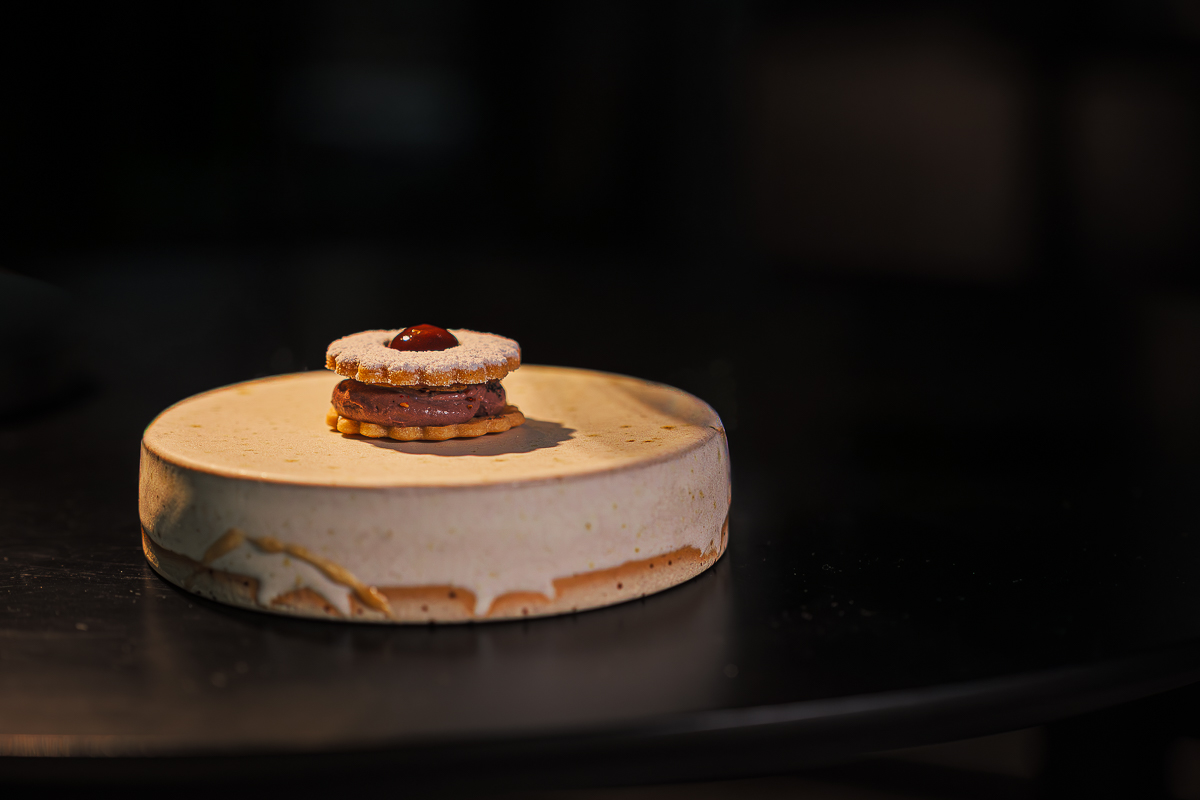
A moment of comfort before the more intricate snacks. First, a savoury interpretation of the Austrian Linzer eye biscuit, here filled with a chicken liver cream and barberries. Trout belly with trdinka corn and horseradish — the first sign that this would be a different kind of evening. Trdinka corn is an old Slovenian variety, stone-ground and dried, with a texture that resists the bite in an unexpected way. The horseradish, fresh and assertive, cuts through the richness of the trout with a rawness that makes no pretence at subtlety. I paused, lifted my glass, and began to understand that this would be a long night.
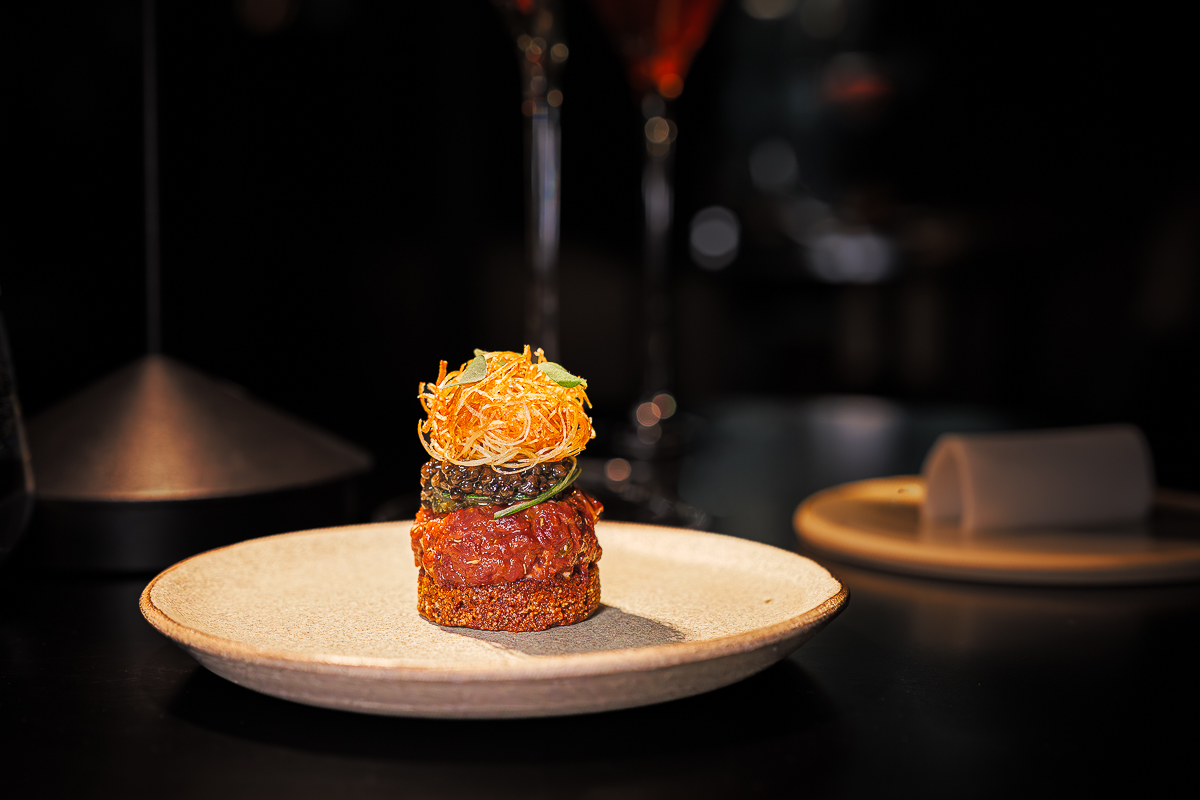
The aesthetic and composition stood out in the chamois tartare with smoked ricotta, leek and a generous portion of caviar. This is the particular cruelty of snacks — when they are too good and vanish in a single bite. We were then invited into the kitchen for another aperitif and a gin-based kitchen martini, while the team moved fluidly through its preparations. It sounds marvellous in description; in practice, it resembles interrupting a surgeon mid-operation to ask for a selfie. The langoustine with pickles and pork brawn? Excellent. The martini, an even better toast.
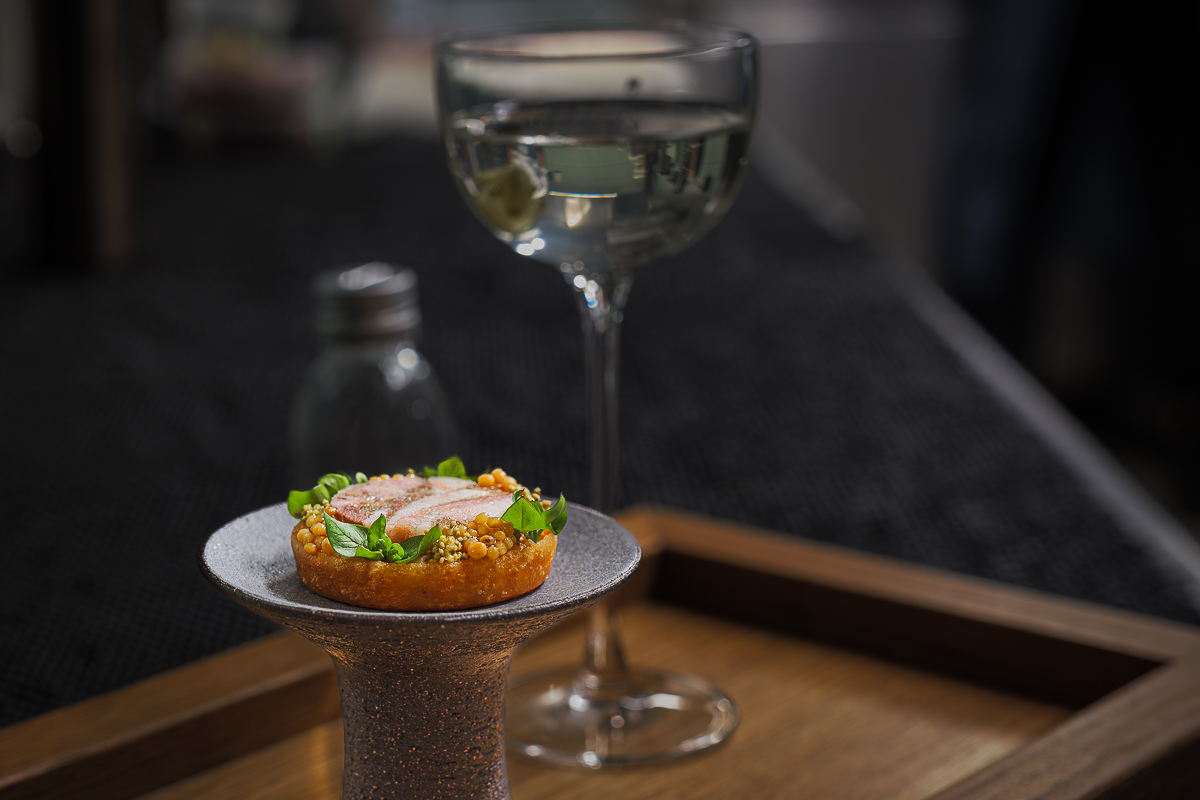
Back at the table, Danube salmon with potato, whey and walnut leaf oil arrived to mark the tempo — a dish of fluvial terroir that places Milka within a geography broader than the surrounding Alps.
 The Political Dish
The dish that made Milka famous worldwide is not on the menu. It comes as a supplement — worth every cent — and was brought to the table by David Žefran himself.
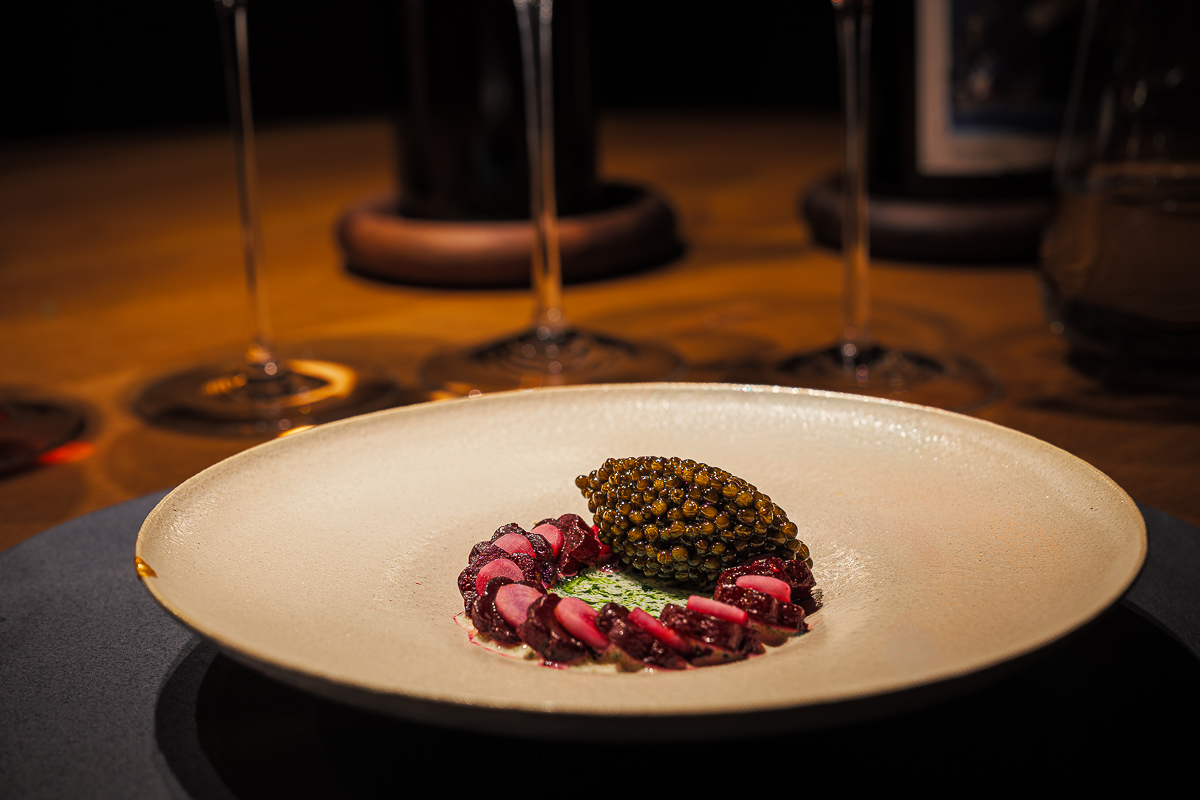
Beetroot in different preparations. White, marinated in spruce vinegar. Dark beetroot, cooked in a spruce crust and marinated in beet juice and wild berry vinegar. On top, a generous portion of one of the finest caviars available — Kristal caviar by Kaviari. At the core of the dish, the sauce, made from brown bear fat: legally hunted and regulated by the Slovenian state as part of the management of an ecosystem that sustains one of Europe’s largest bear populations.
Žefran does not serve the meat. He uses the fat — subtly, conceptually, with great precision.
The dish carries acidity. It carries opulence. Resinous notes from the spruce create a strange and unmistakable aromatic texture — as though the forest had entered the plate. The bear fat works beneath everything, like a basso continuo in an opera. The caviar delivers salinity and sudden bursts of flavour. The beetroot — so often placed on menus as decoration without true intent — is here the gravitational centre of everything. I keep a short mental list of dishes that change the way I see an ingredient. This one belongs on it without hesitation!
It is a political dish. It speaks of bears, of spruce, of mountain acidity. There is nothing more to explain.
The Continuation
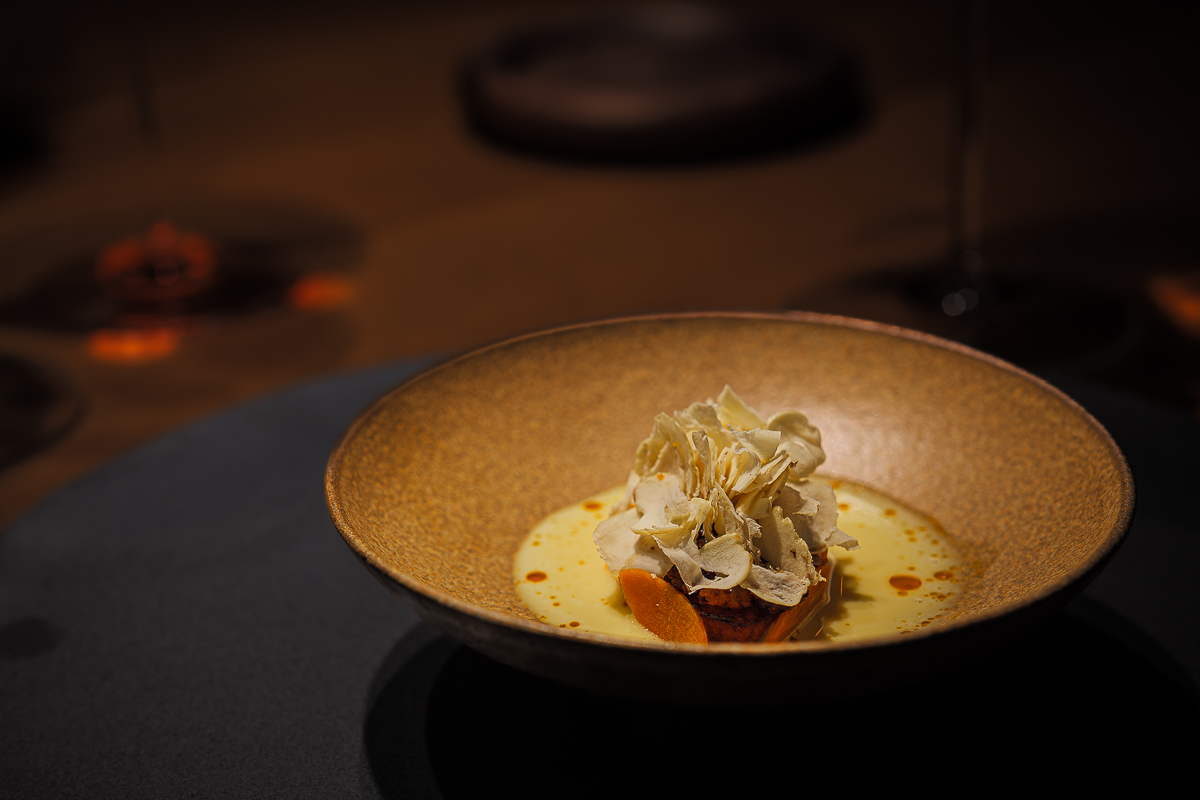
After such a defining moment, the menu continued at a confident pace. First, an elegant seasonal dish: pumpkin, quince and pork crackling, with a beurre blanc built on hay-infused butter. Technique and refinement placed upon something apparently humble, revealing itself as one of the strongest moments of the tasting. Flavour, texture, balance — nothing was missing, including the impeccable pairing with the Klinec Gardelin 2020.
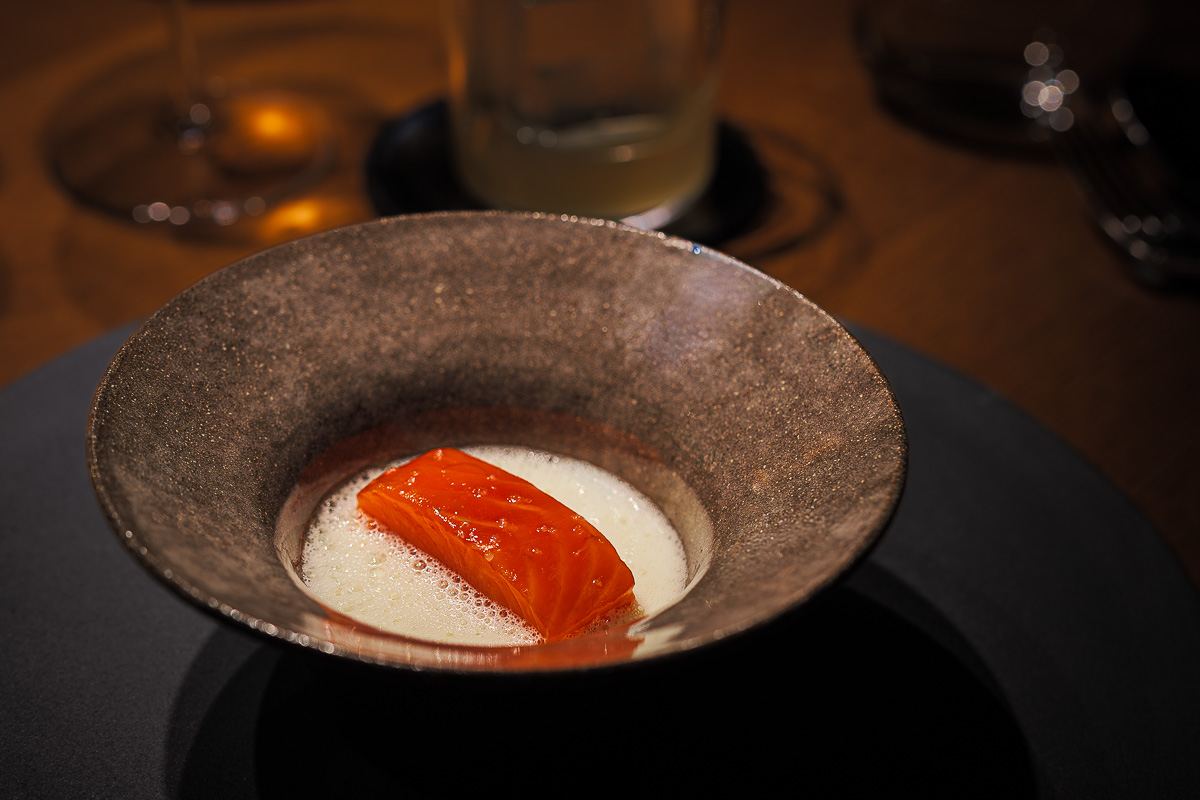
From the vegetable we moved to fish: rainbow trout with chanterelles and chamomile. The trout, cooked in confit with precision, with chamomile and a sauerkraut sauce perfuming the dish delicately, while the chanterelles brought the forest floor to the plate.
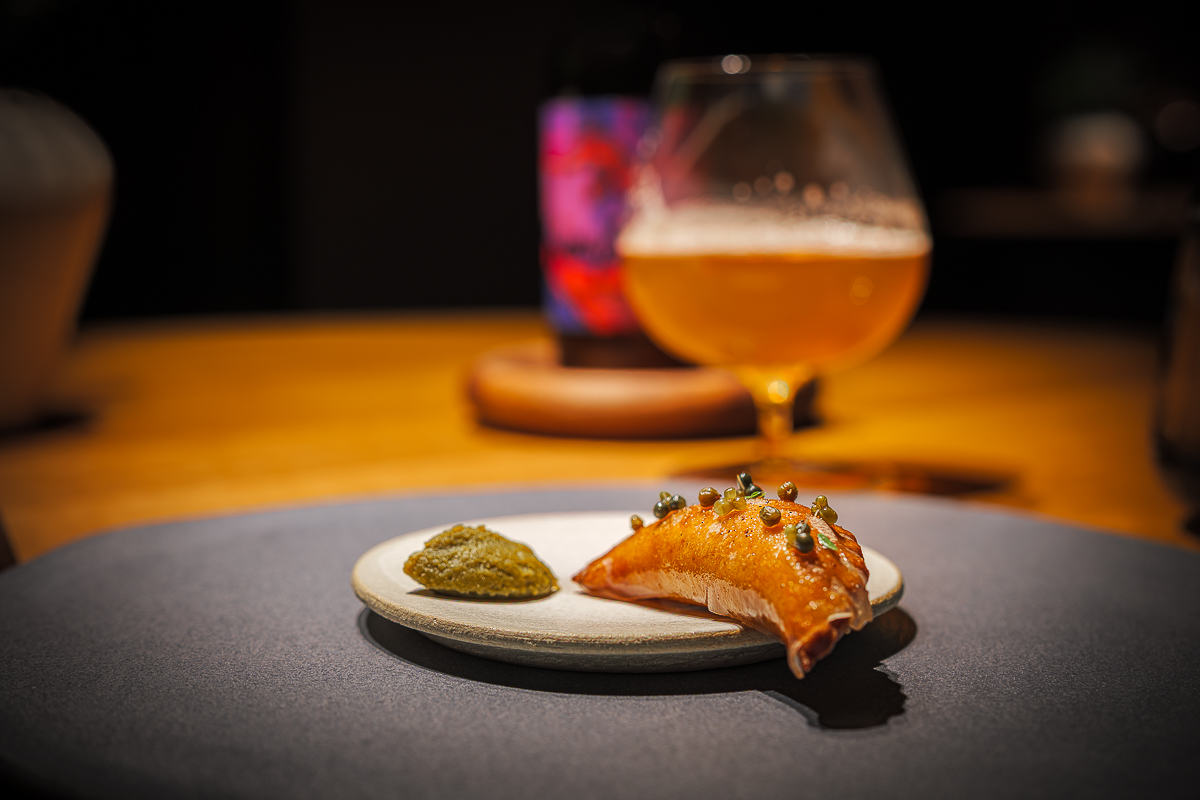
Then came a touch of Portuguese and South American inspiration: a fermented potato empanada filled with gizzards, complemented by lardo, wild capers and a pepper paste. Not what I expected from the Portuguese gizzard tradition that inspired the chef. Another compelling moment, surprising not for the rarity of its ingredients but for the confidence of its conception.
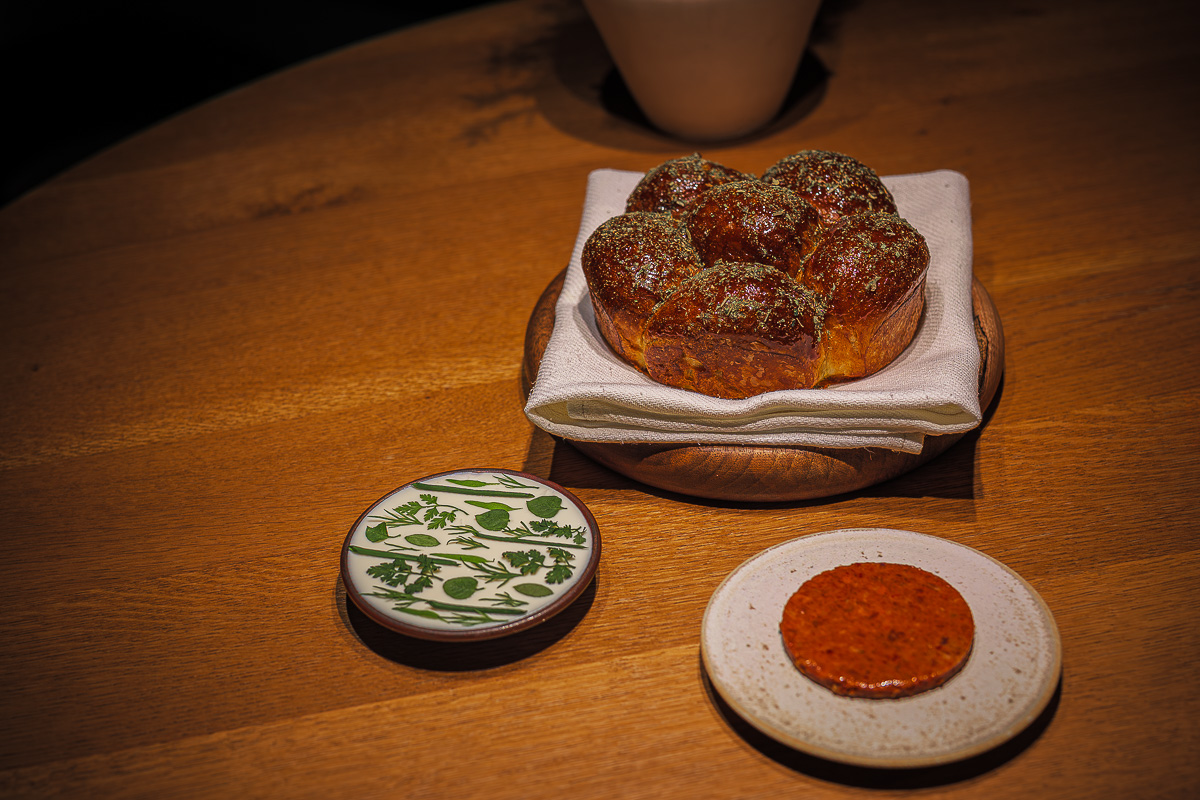
Then, the bread. A brioche served with wild boar nduja and cream cheese. Fine dining once again admitting its desire to be comfort food — and convinced it can be both. The exterior is sticky, brushed with a honey-and-herb combination I could not quite identify, which prompted me to lick my fingers more than once. The herb cream and the wild boar paste coexist without cancelling each other out. Together or separately, everything is addictive. The only honest word.
The Near End
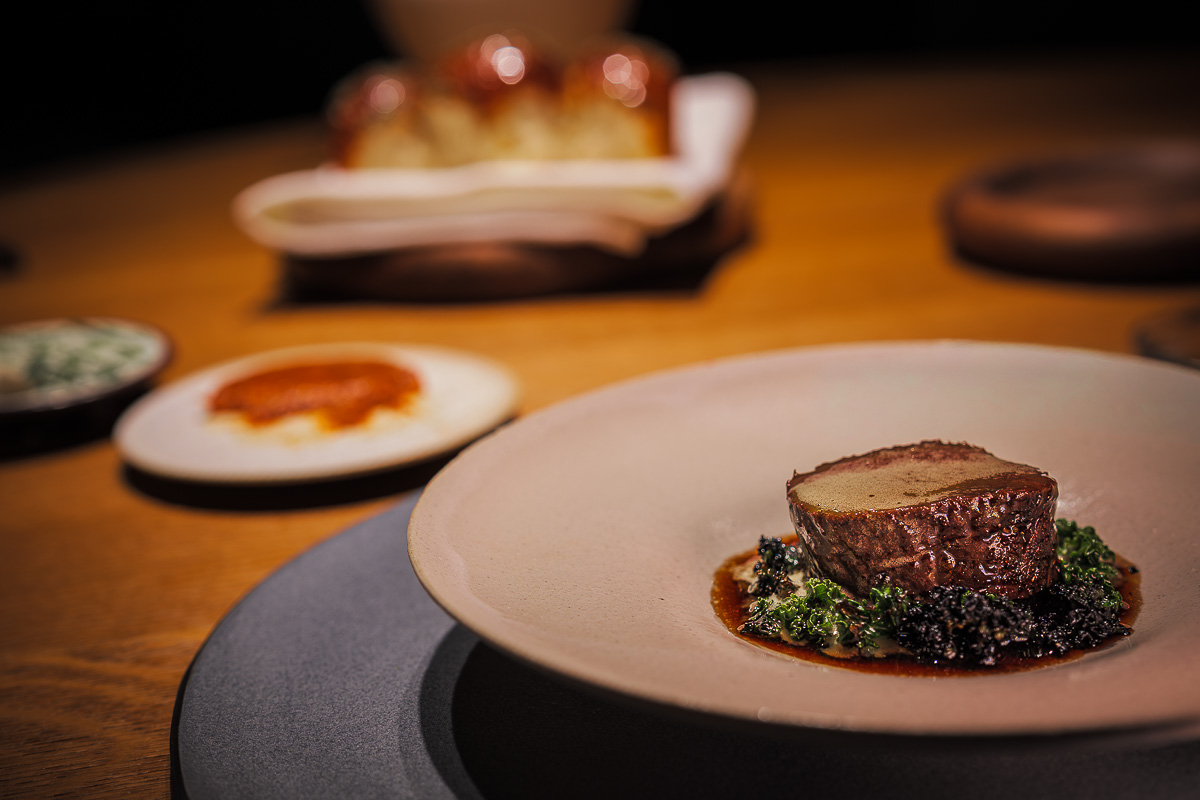
Venison with preserved wild berries and river crayfish arrived at the right point — that precise point at which game retains its personality, flavour and texture. As the knife entered, the meat yielded with exactly the right resistance. The sauce was rich and deep, the result of hours of invisible work, yet without the weight that can overwhelm, kept in check by the freshness and acidity of the berries. The river crayfish, an unexpected companion to the meat, arrived in a zabaglione that introduced a subtle aquatic note to balance the dish’s deep earthiness — like a second voice in a choir that does not seek the foreground, but without which the whole would feel incomplete.
A Menu That Refuses to End
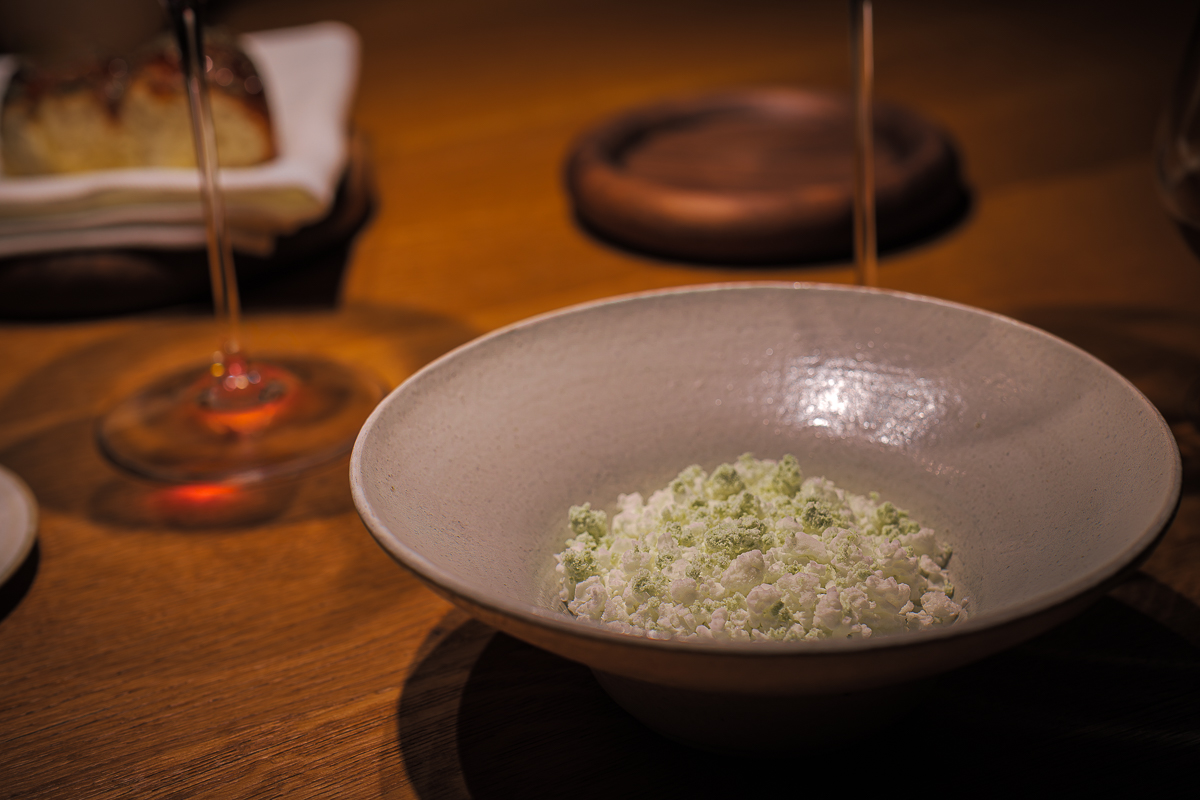
The transition into the sweet phase began, as it should, with cheese — though not in any conventional form. Sheep’s cheese with juniper and green tomato, served as a parfait with pumpkin seed praline, chilled yoghurt foam and dill powder. Acidity and freshness to reset the palate after the meat and bread, with the juniper introducing a resinous note that, following the beetroot and spruce dish, begins to feel like a signature of both the kitchen and the forest that surrounds it.
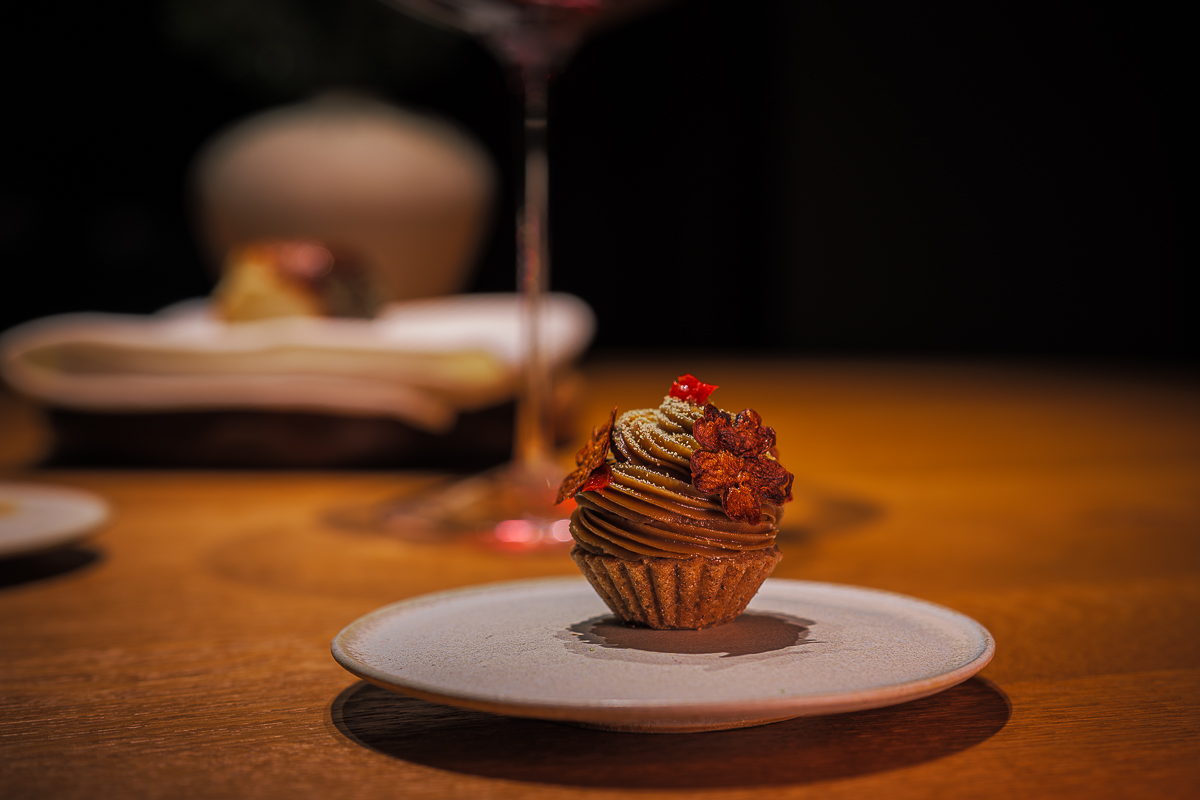
Jerusalem artichoke with sea buckthorn and buckwheat was the most surprising moment of this stage: sea buckthorn carries an almost aggressive acidity — the sort of fruit that nature did not design to please at first encounter — and that was precisely what made it memorable. The tension between bitterness and grain built something I had not expected to enjoy so much.
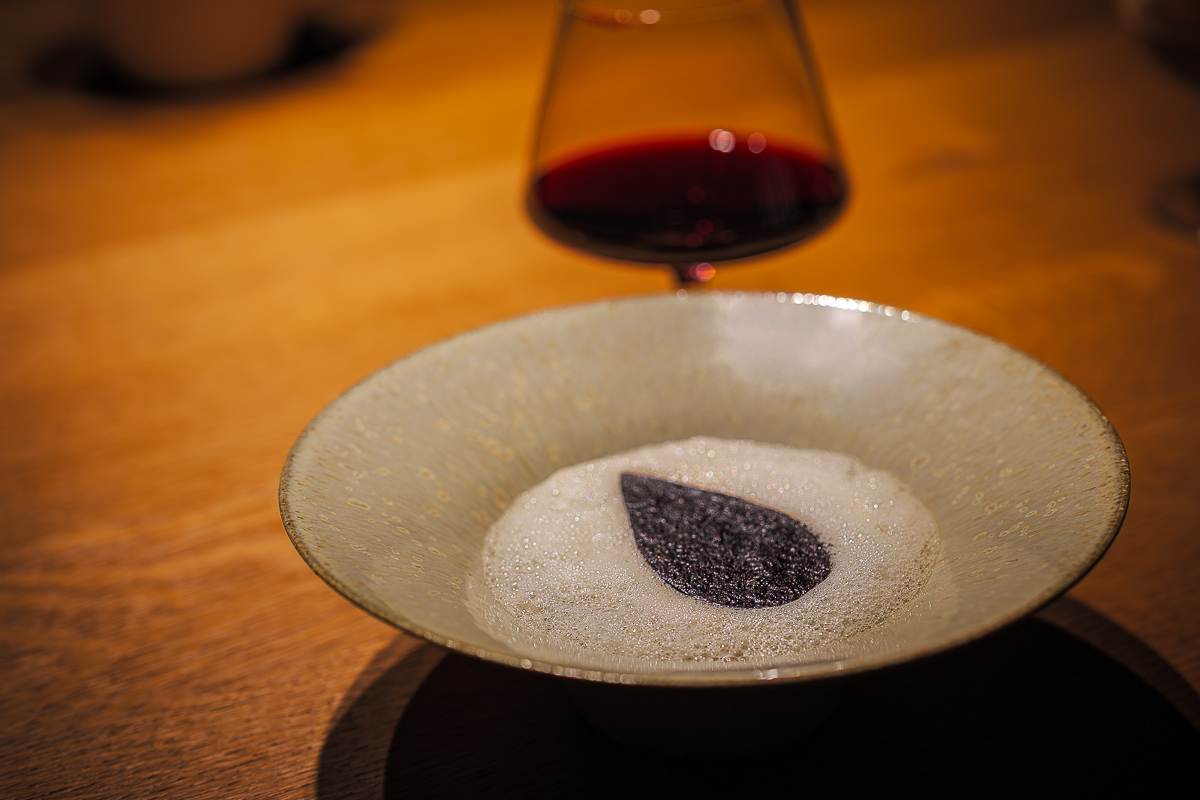
Then came an interpretation of Godlja, a traditional pork blood soup typical of the Slovenian slaughter season — here reimagined with bread caramel and wheat — followed by sweet potato with star anise and cured egg yolk, closing the savoury-sweet arc with two moments of calculated comfort. Godlja shows real intelligence in its use of bread — the same bread that the kitchen fermented, preserved and transformed — as the base of a dessert, with a coating of “Milka chocolate” that, again, appears to be something it is not. Zero waste down to the last fragment.
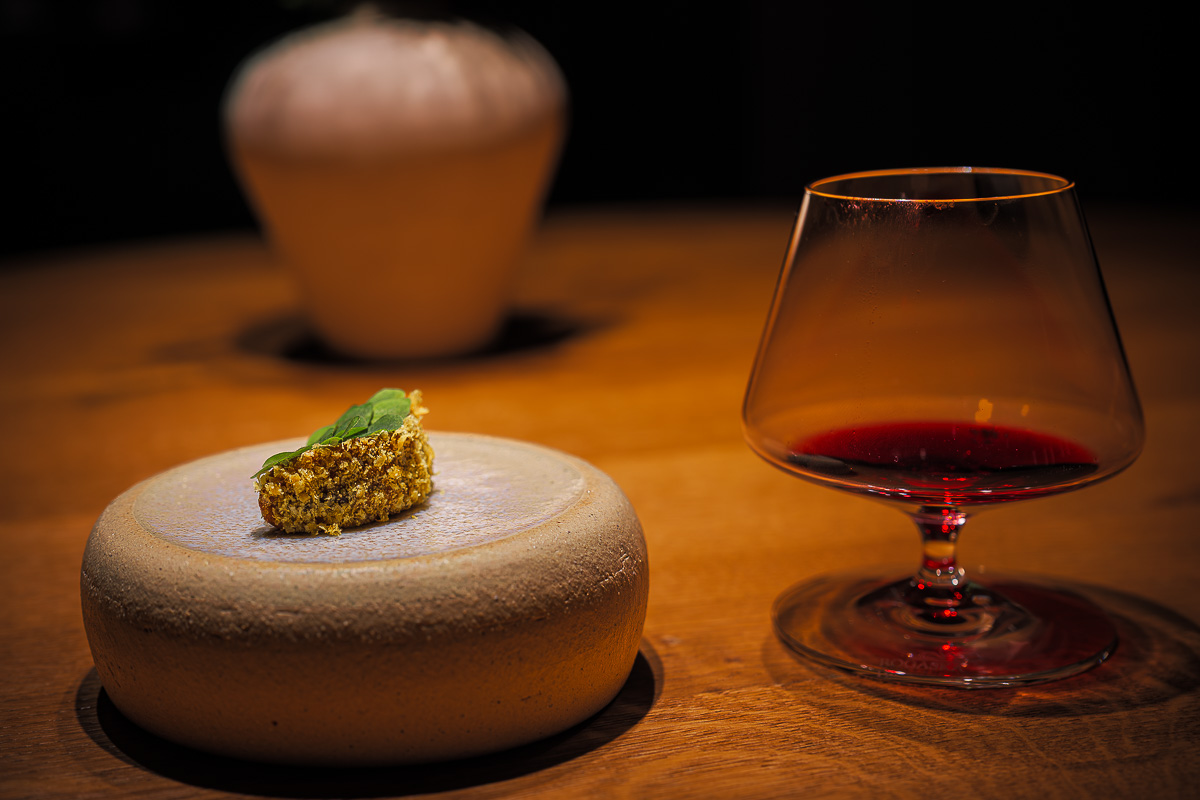
Sweet potato with anise was the most unexpected dish of the sweet phase: the cured yolk adding richness, the anise and sorrel perfuming without dominating. Two dishes light enough to prepare the way for what was to follow.
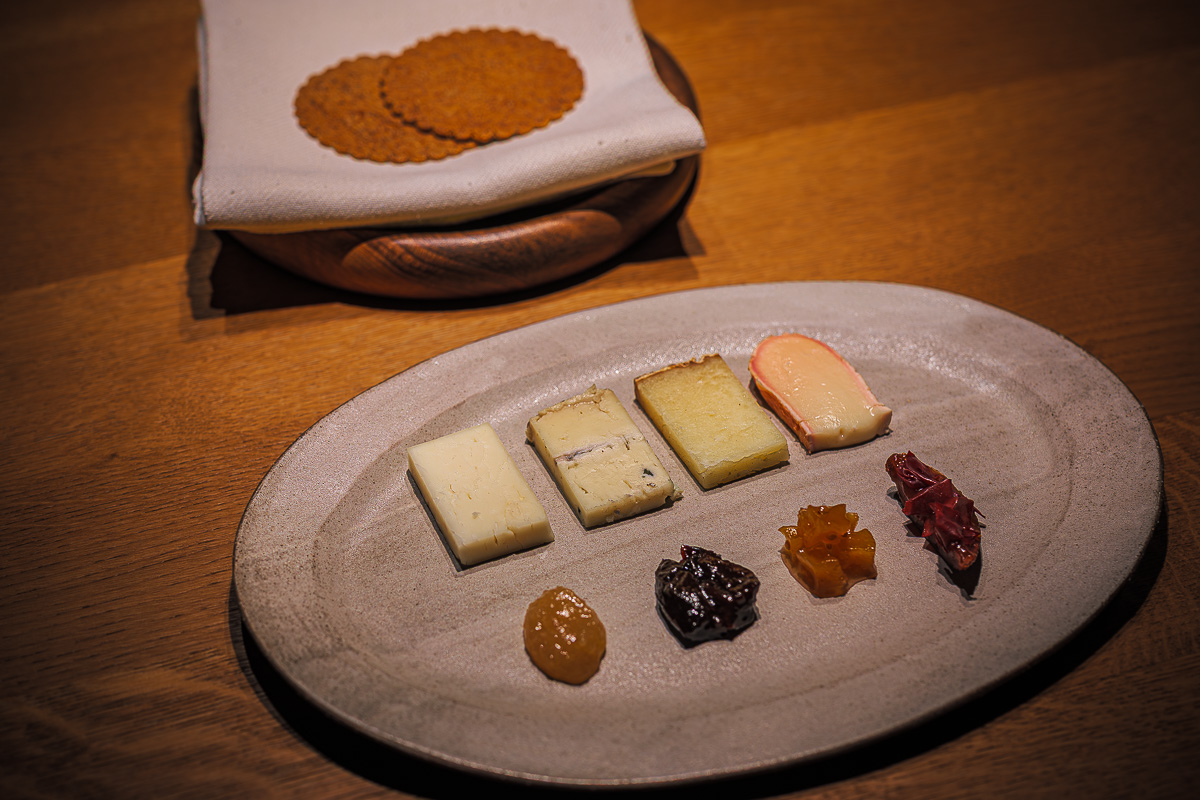
A selection of Slovenian cheeses arrived next, each accompanied by mustards, pickles and a honey of such quality as to genuinely dignify them.
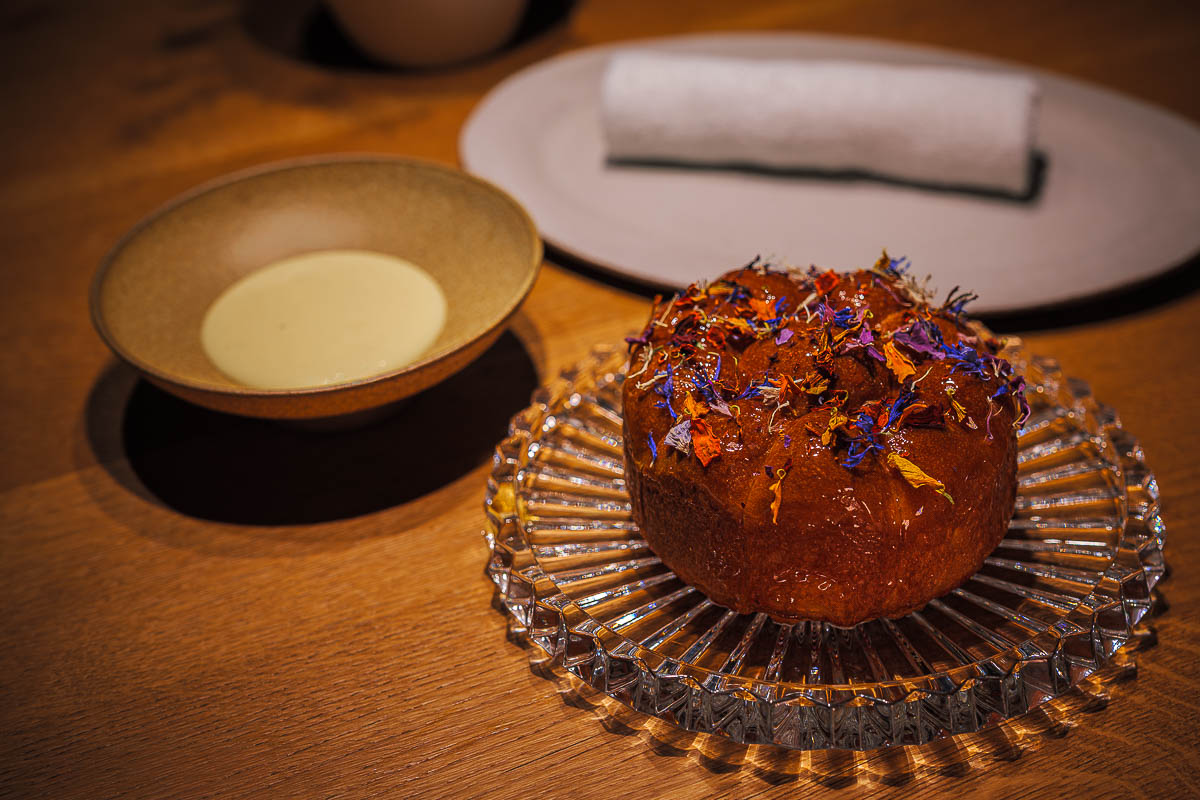
Then, the Buhtelj. One of the finest endings to a meal I had in 2025 — and it was a bun. Not a seven-texture construction, not a table-side preparation with liquid nitrogen. A Slovenian cake, the kind any Slavic grandmother could have made, served with lingonberry and venison fat, in a portion that assumed I had eaten nothing for the previous three hours.
I ate almost all of it, and considered saving the rest for the following morning. The lingonberry, sharp and clean, ensured there was no heaviness at the end — or at least the perception of it. Without meticulously designed petit fours, this was a conclusion worth applauding!
A Pairing with Name and Character
“Our Story” is Milka’s enological journey — a combination of wines, craft beers and cocktails conceived as a parallel narrative to the menu. I followed the full pairing, crossing it with several selections from the non-alcoholic programme.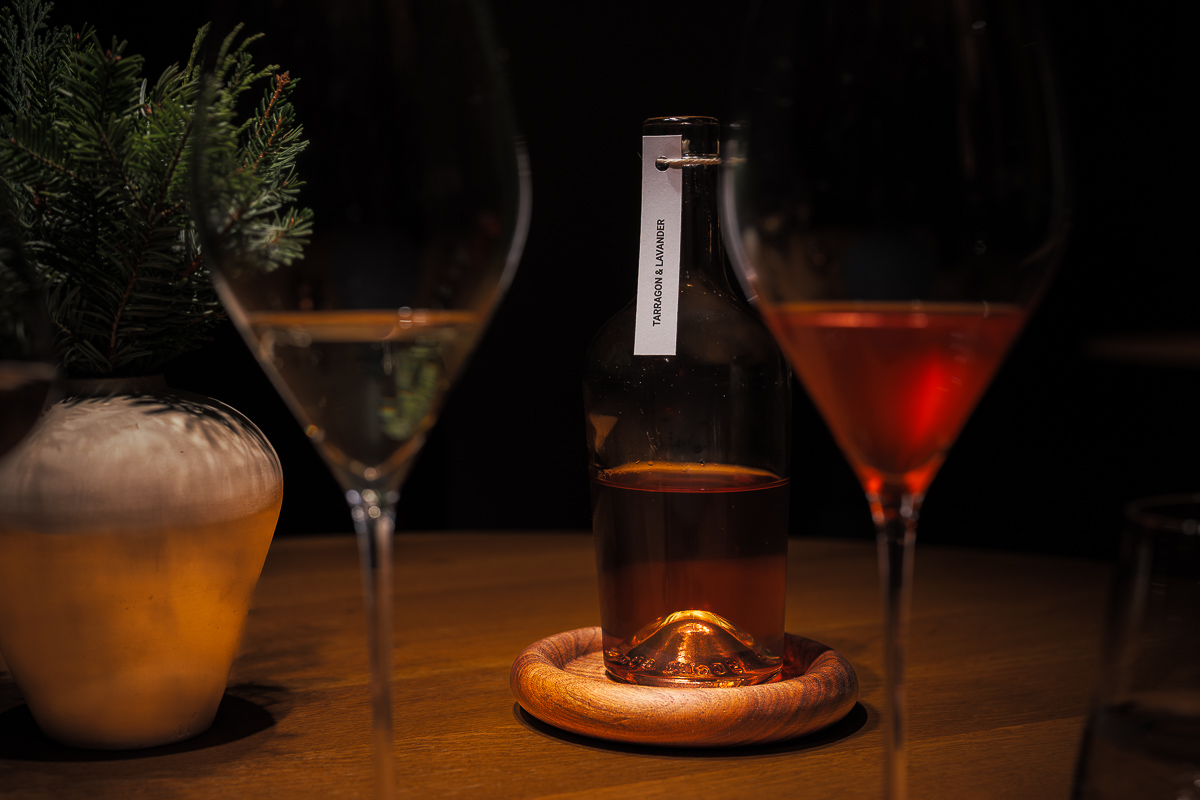
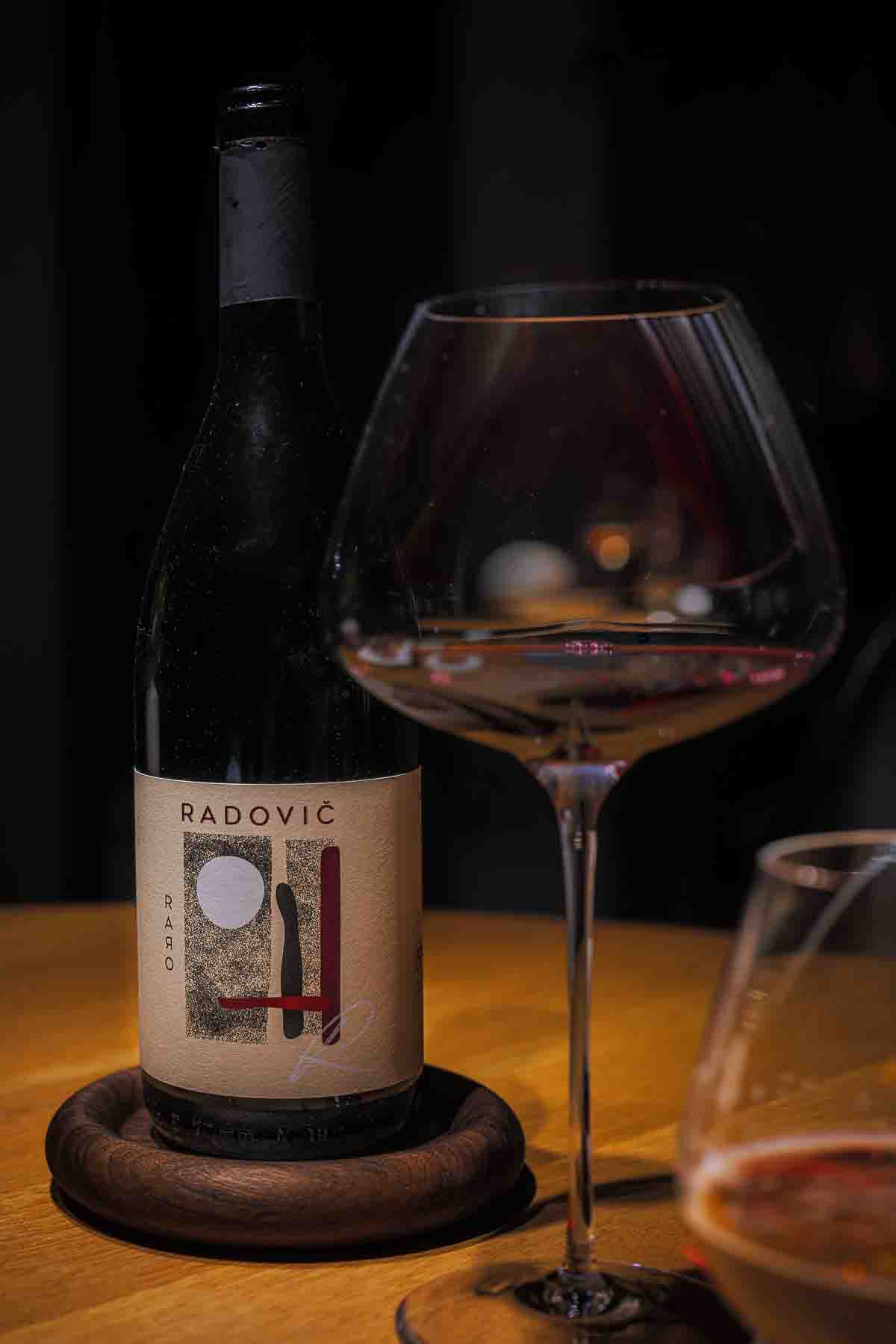
With the beetroot and bear fat, Champagne Chavost Paradox ’19, from the Vallée de la Marne, marked the first real peak of the pairing — linear elegance cutting through the richness with surgical precision. Raro 2021 by Peter Radovič, from the Karst — a geological and cultural frontier between Friuli and Slovenia, a region that merits an article of its own — offered the mineral depth the meat dishes demanded, pairing beautifully with the venison.
 Klinec Gardelin ’20 from Medana, one of the finest examples of Slovenian orange wine, completed the territorial representation with genuine character and identity. Along the way, there was also beer — Reservoir Dogs by Crazy Sister — another surprising local product that paired beautifully with the empanada, offering a fully realised take on elevated street food.
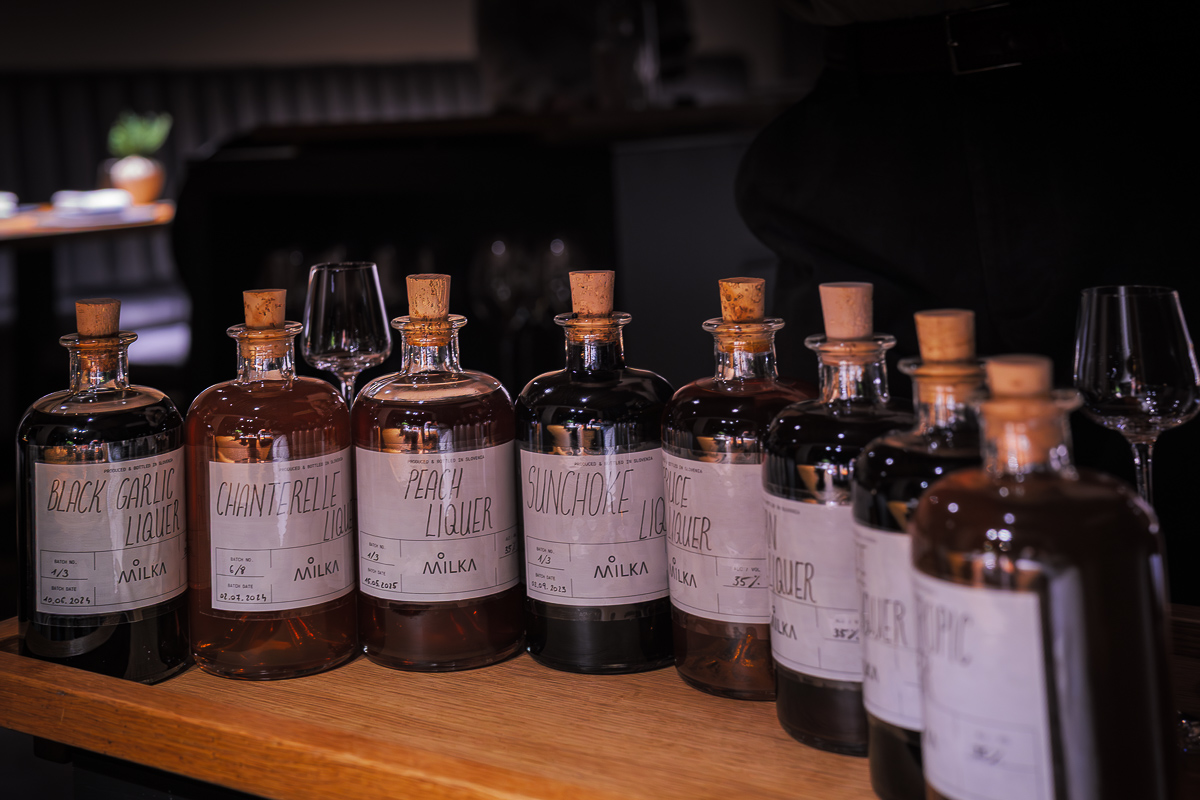 The non-alcoholic pairing shows real technique and considered construction. A highlight was the interpretation of a Ruby Port — its colour, depth and flavour momentarily bringing me home. Other notable combinations included blackcurrant with lilac and tarragon with lavender. Across the various pairings, there is a coherent thread and a clear path towards rivalling the best international programmes. What is needed is a little more intensity, a touch more boldness in certain moments. The foundation is strong and well-made — now it needs to go further!
 A Final Note
Žefran is in his early thirties, holds two Michelin stars, and leads a kitchen that is still discovering what it wants to become. This is not criticism — it is the best possible news. Chefs who already know everything they are rarely become more than they already are. Milka is still young — a restaurant that knows its direction but is still searching for its defining voice. That voice is beginning to emerge in the way the chef integrates comfort cooking and local resources into his interpretation of fine dining.
 The bear, the fish, the Buhtelj — they are Slovenian to the core. They are memory, landscape and pantry, rooted in a mountain home. They are the dishes that point to where this kitchen can go once it fully embraces the southern Alpine identity it belongs to. For now, the Nordic shadow remains visible, particularly in the minimalism of presentation. It is a legitimate influence, well absorbed — not imitation. What is missing is precisely that signature that only time can provide: the ability to look at a dish and recognise it as something that could only come from one place — Milka!
When that moment arrives — and it will — Milka will no longer be simply a destination for those visiting Slovenia. It will be the reason for the visit itself.
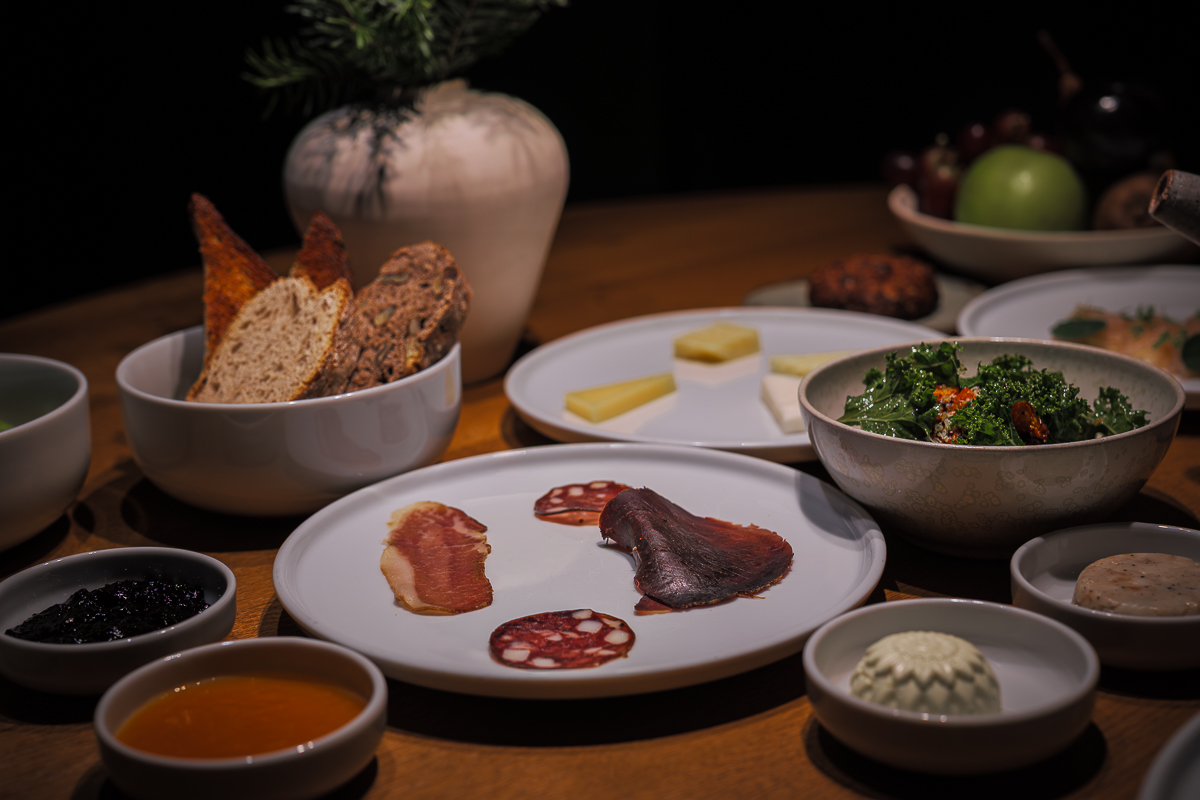
I left the following morning, after a breakfast as refined and as regionally rooted as the tasting menu itself. The rain was still falling, and Lake Jasna continued to hide, quiet and withdrawn behind the grey of the clouds, as though reluctant to compete with Milka’s kitchen.
The mountains remained unseen — which gives me a perfectly non-gastronomic excuse to return!
Address: Vršiška cesta 45, 4280 Kranjska Gora, Slovenia
Reservations: +386 (0)59 77 9590 | restaurant@hotelmilka.si | hotelmilka.si/restaurant
Hours: Thursday to Saturday, 18:00–22:30 | Lunch – Saturday, 12h00-16h00.
Price: From €285 (without pairing).
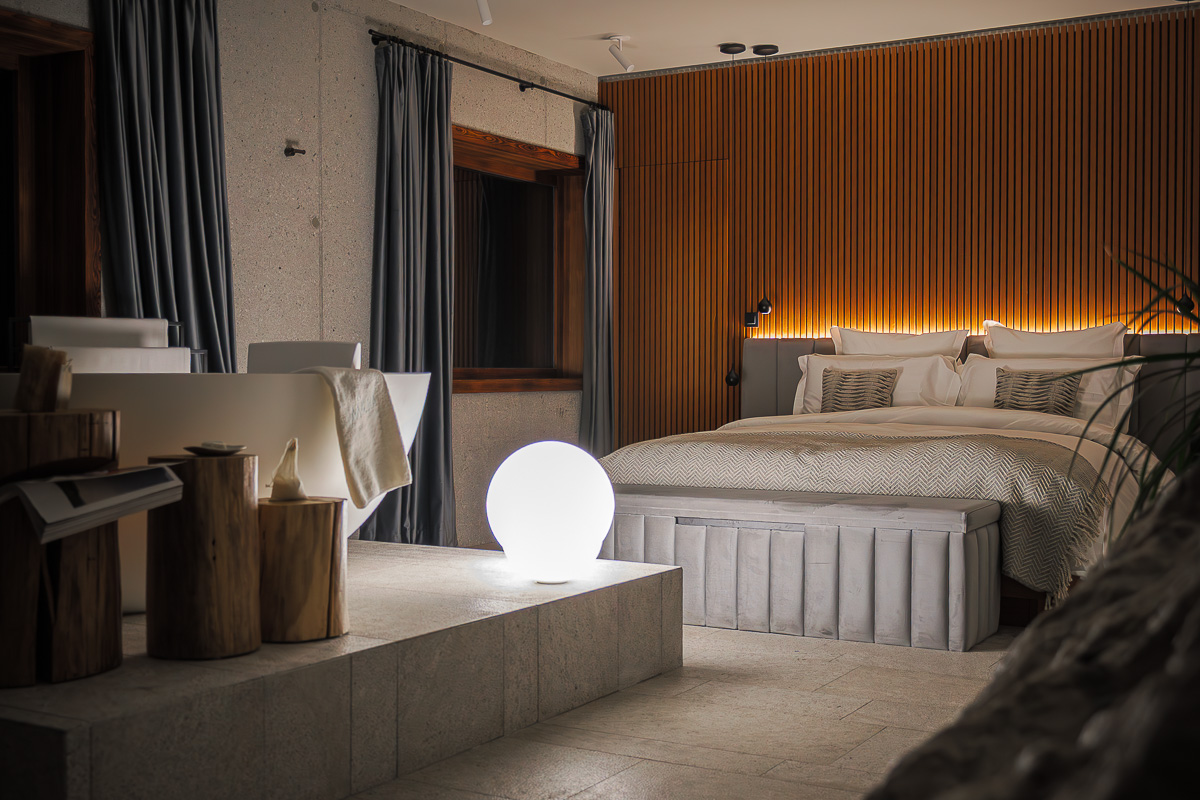
Hotel: Integrated boutique hotel, 6 rooms | hotelmilka.si
Chef: David Žefran
Distinctions: 2 Michelin Stars, 4 Gault&Millau toques, 50 Best Discovery, 2 Knifes at The Best Chef Awards
Not to Miss: Beetroot, bear fat and Kristal Caviar by Kaviari, Buhtelj with lingonberry and venison fat, Brioche with wild boar nduja, Pumpkin, quince and pork crackling
Nearby: Lake Jasna, Triglav National Park, Vrata Valley.
Getting there: By car — Ljubljana ~1h; Ljubljana Airport ~1h15; Italian border at Tarvisio ~20 min.
Note: Book well in advance.