
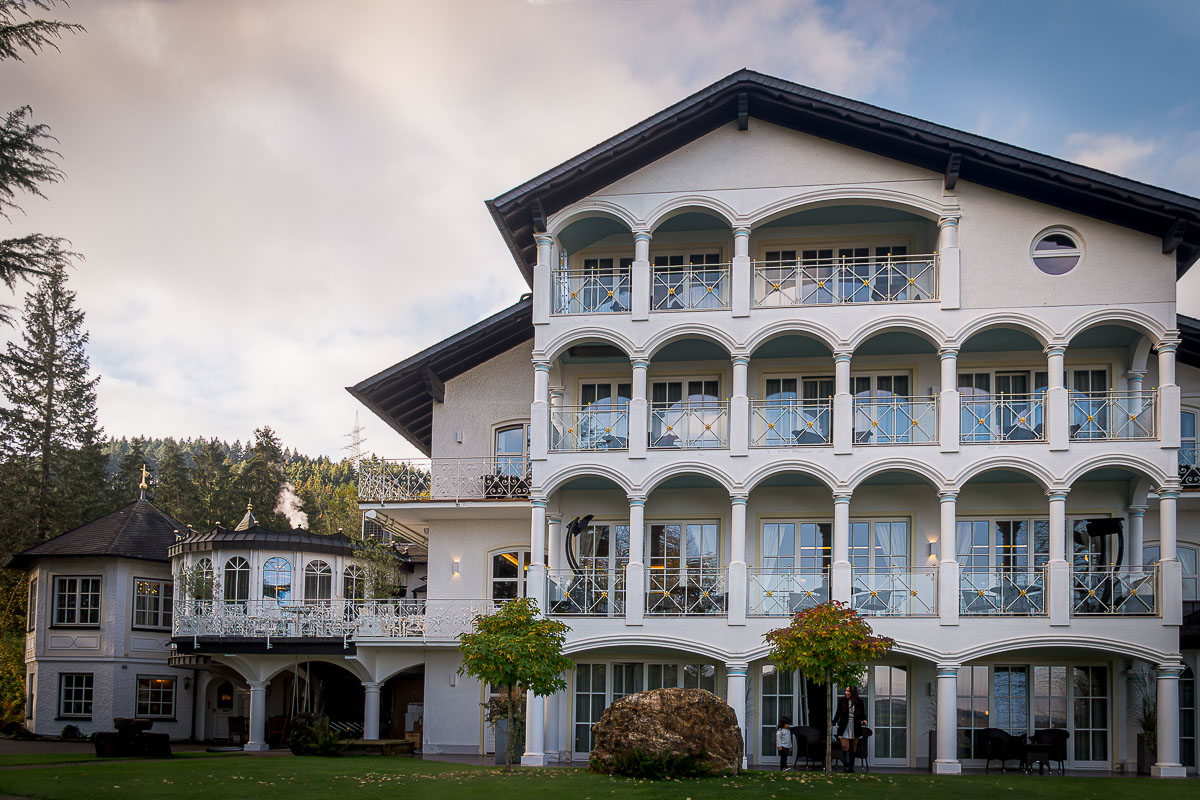
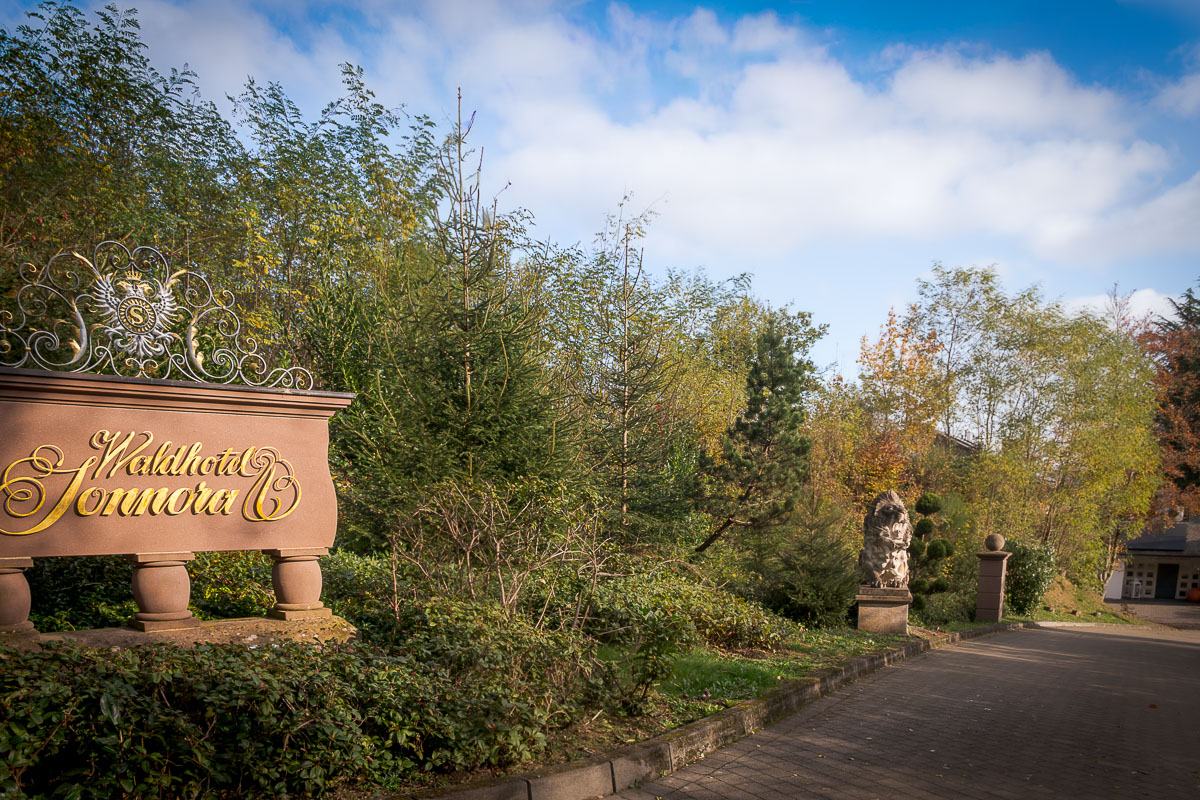
The road that winds from the Mosel valley up to Dreis is an exercise in shedding layers. We leave behind the vertiginous Riesling vineyards, castles worthy of postcards, river-cruise tourists and camper vans, and are left with this: a clearing, a solitary white house at the top, and the quiet echo of the forest that surrounds it. At the entrance, the sign leaves no room for doubt — we have finally arrived at Waldhotel Sonnora. We had wanted to visit for years, eventually fitting it into a trip through Luxembourg and the Mosel wine region, with its immaculate villages and singular Rieslings we have always admired. In truth, Sonnora was the reason for everything else; the rest was merely the pretext we give ourselves to claim we don’t travel just to eat.
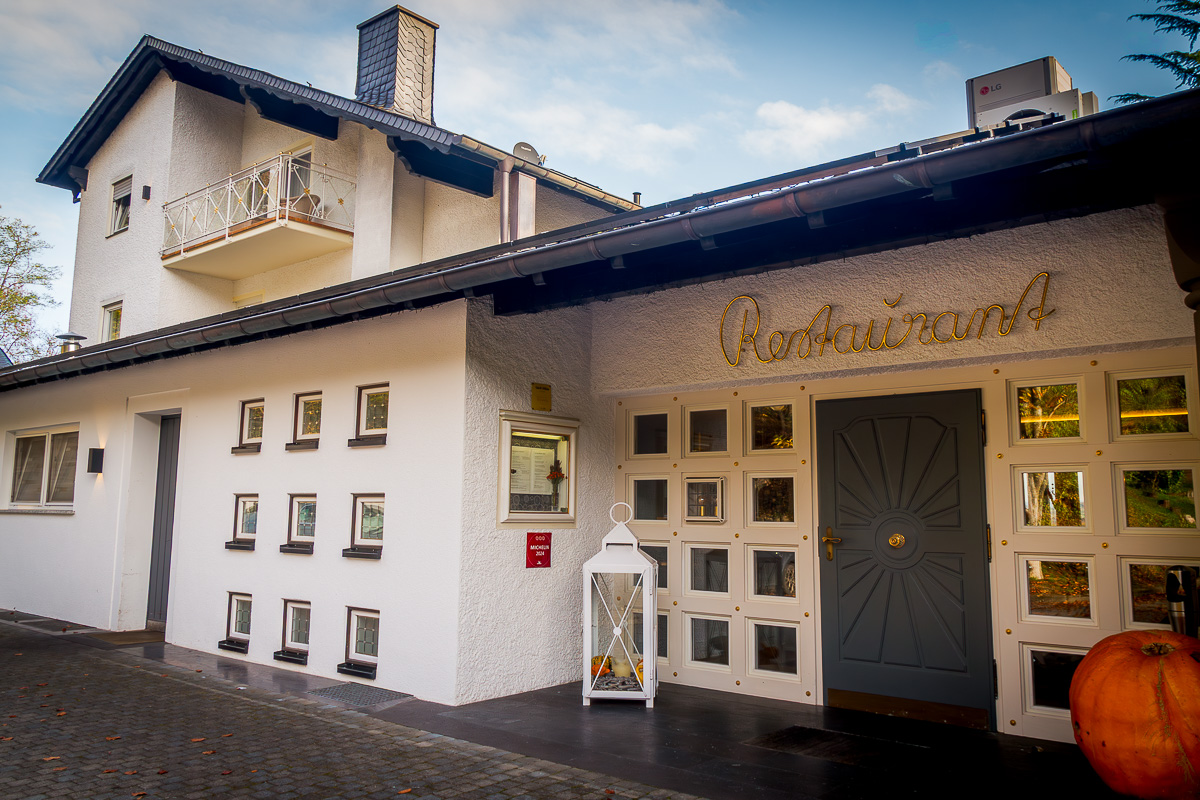 Given its secluded location, we chose to stay overnight at the property and enjoy the rooms recently renovated by Clemens and Magdalena Rambichler. Check-in done, bags unpacked, and after a deep breath — a kind of preparation ritual — we made our way to the lounge. For Francisca, just weeks before turning four, this would be her first three-Michelin-star restaurant. I confess my sin: in these situations, the nerves are always ours, never hers. She tends to surprise us every time.
The Weight of Legacy
One cannot write about Sonnora without speaking of Helmut Thieltges, who passed away suddenly in August 2017 at the age of 61. He opened the property in 1978 with his parents, transforming a simple guesthouse for hikers into a temple of Franco-German cuisine. One star in 1981, two in 1991, three in 2000. Twenty-five years of flawless consistency in a village of just 1,500 inhabitants in the middle of the Eifel forest. The phrase he hung as the house philosophy — “Classical music is the true art. It is the basis of everything. Anyone who insists on doing something else can call themselves modern.” — became the guiding idea behind the rise of Clemens Rambichler. A Bavarian from Bad Reichenhall, born in 1988, he arrived at Sonnora in 2011 as an apprentice, absorbed everything Thieltges had to teach, and eventually became sous-chef.
He was only 29 when he inherited the three stars and the responsibility of keeping a legend alive. Ordinarily, one would call it a heavy burden. Yet regular guests increased their visits, the Michelin Guide confirmed the three stars, and Clemens was named Chef of the Year in Germany in 2018.
Since 2021, Clemens and his wife, Magdalena, sommelier and herself a long-standing and decorated member of the Sonnora team, have taken over as owners — a new generation determined to keep the family story alive. They renovated the rooms, brightened and opened up the dining room, but preserved the essentials: an obsession with product, sauces, precision, and a hospitality that goes far beyond words.
The Snacks — Or, A Meal Before the Meal
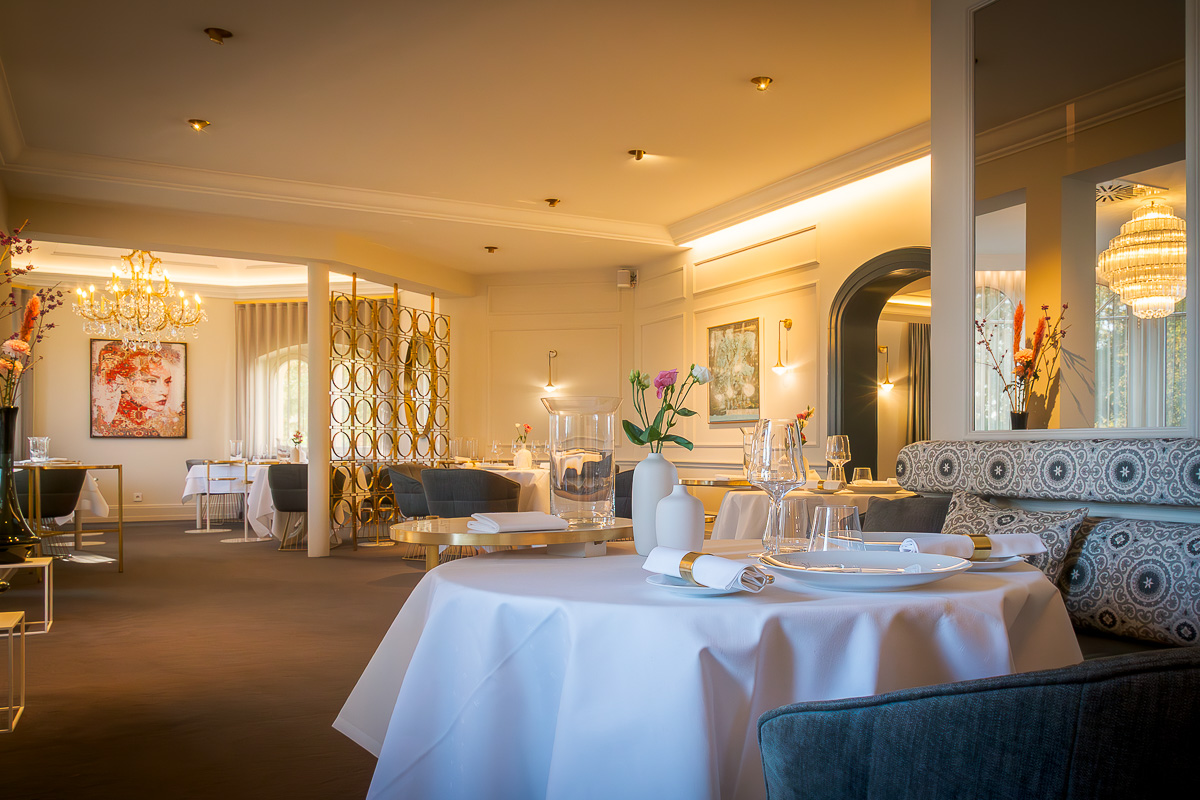
From the lounge we moved into the dining room without ceremony or theatricality. The light does not change, the music does not shift, and no cloud of smoke appears before us. We simply move from one room to another, as if in someone’s home. Someone close to us, someone who wants the best for us. Magdalena made sure of that — with the restaurant already full and a smile that clearly needed no rehearsal, she made Francisca feel like the most special guest in the room that day. Even though we were clearly the unusual note in the dining room, the team made it feel like the most natural thing in the world.
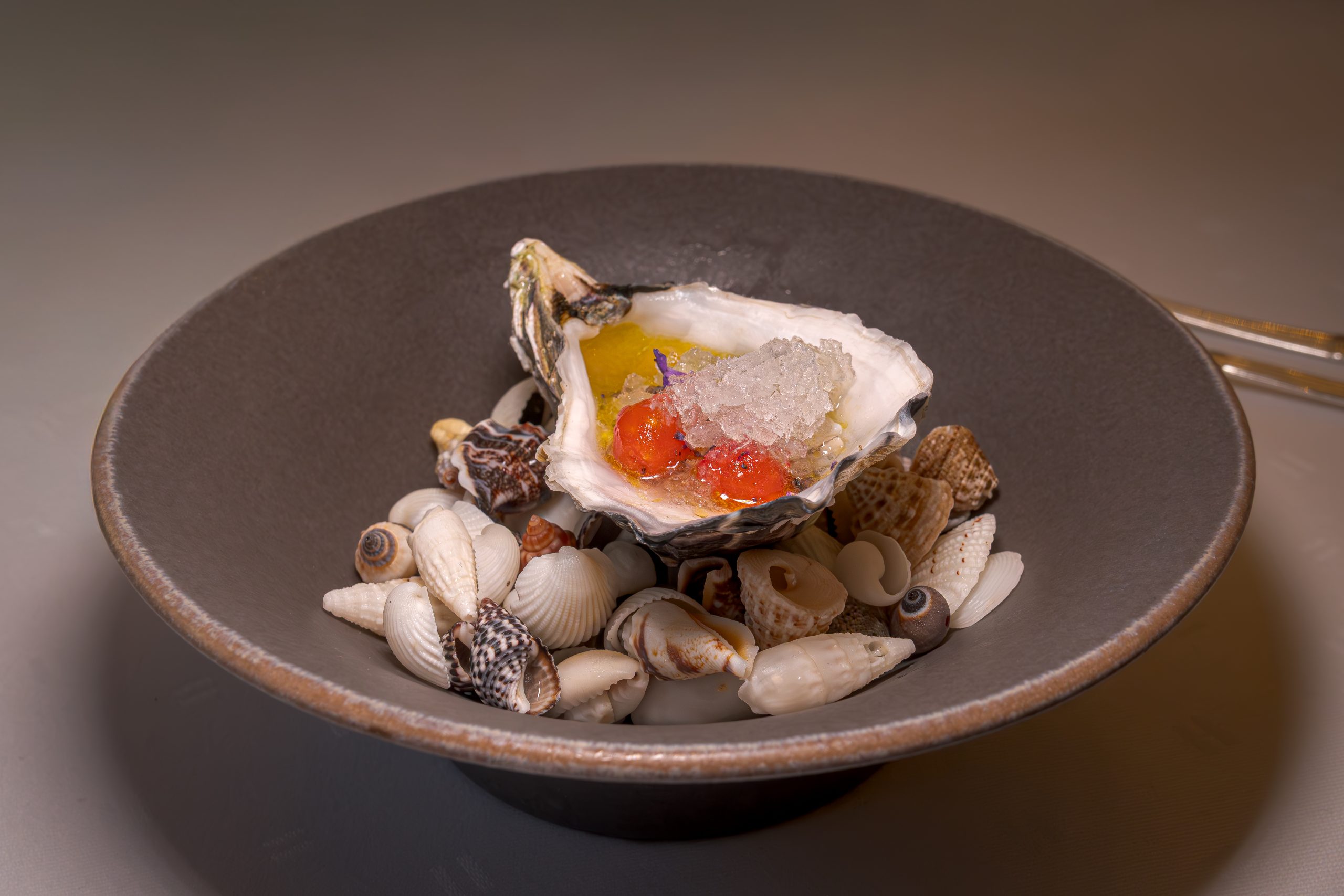
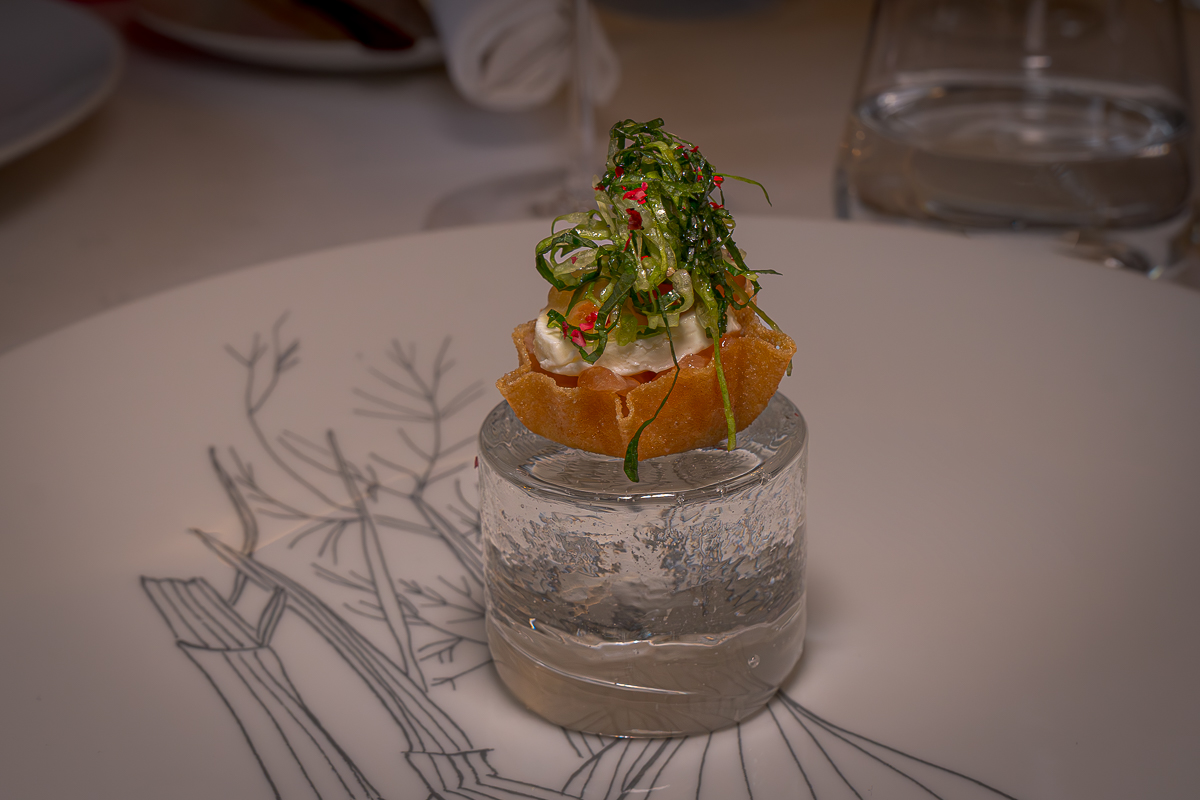
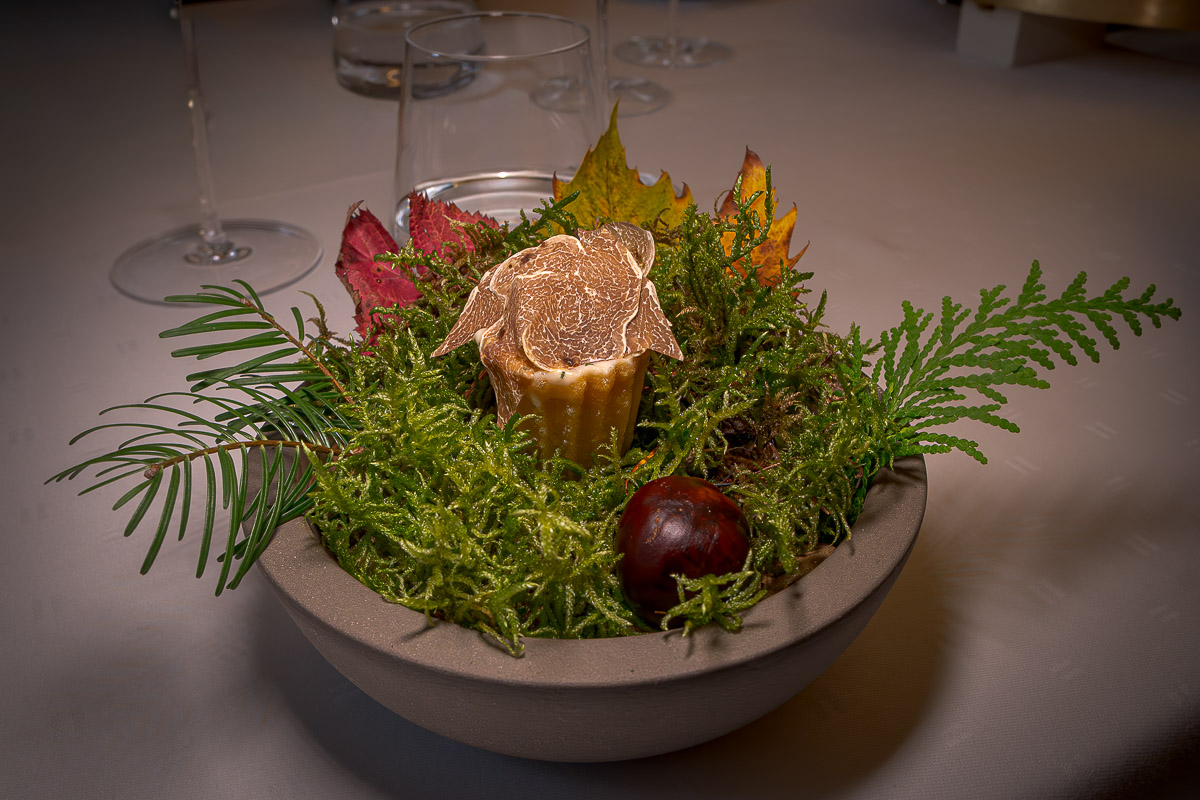
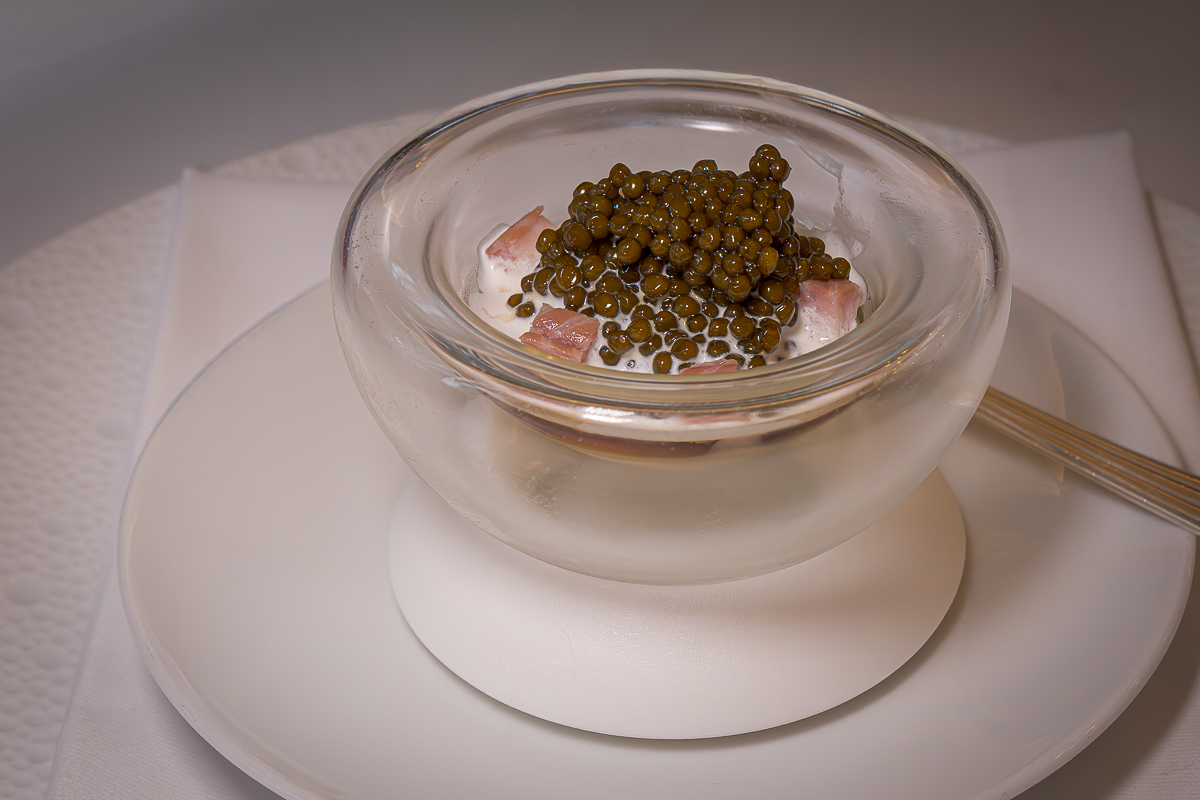
We began with a salmon tartlet — simple, fresh, and full of texture. Then came a crisp cannelé filled with mushrooms and white truffle — and here we paused. From the second bite, it became clear: the truffle was not decoration. It was fresh, aromatic, with that unmistakable perfume that fills a room and exists only when the product is at peak freshness. Next, an oyster with sea-water granita, tomato and raspberry — a composition that in less certain hands could have been absurd, but here worked as a perfectly clean, acidic counterpoint to the warm, earthy notes that preceded it. Soon after, we picked up a spoon for a velvety vichyssoise with smoked eel and a generous portion of N25 caviar selected specifically for the restaurant. The smokiness of the eel set against the salinity of the caviar created a flavour axis strong enough to carry the dish on its own.
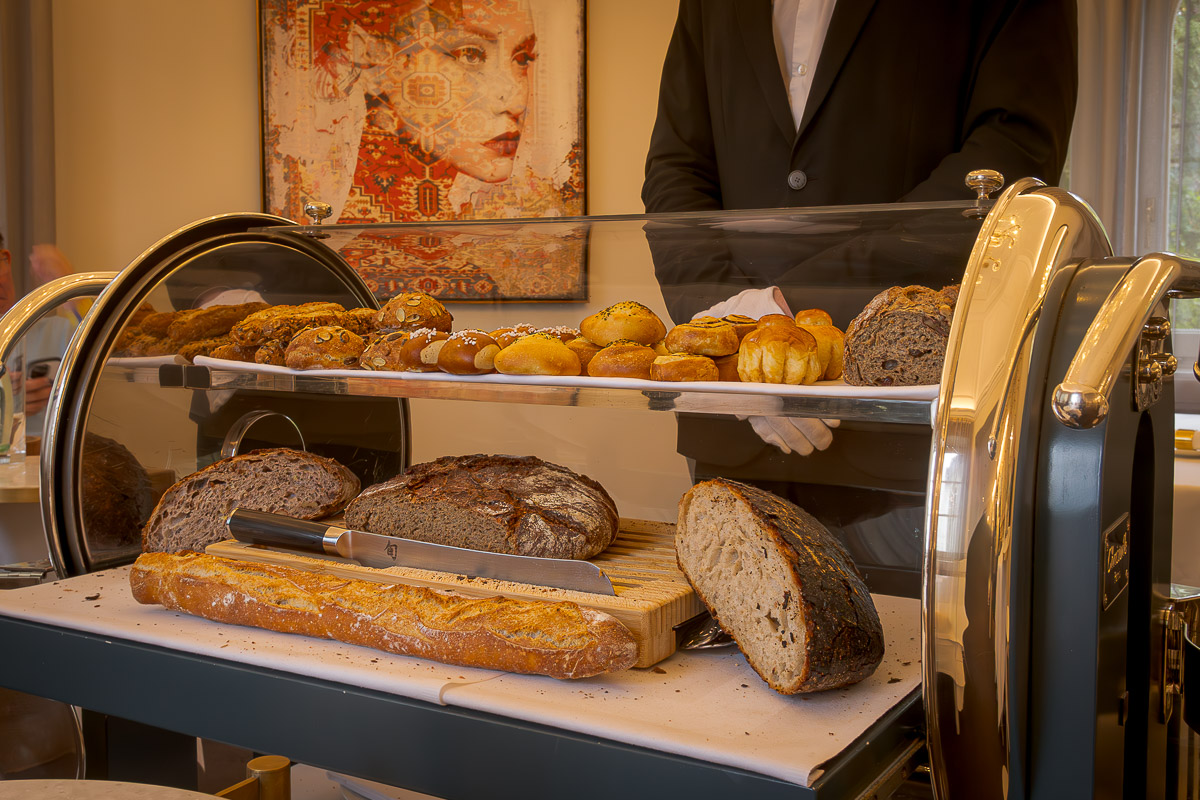
Meanwhile, the bread trolley arrived — a timeless Sonnora classic, baked in-house every morning with around eleven varieties for every preference. And of course, a few more necessary calories before the crab with wasabi and avocado and the egg royal with razor clam.
Six snacks, each generously portioned — in many starred restaurants, they would easily form a complete menu. Technically flawless, unconcerned with the aesthetics dominating social media, focused entirely on flavour. Several dishes served with a spoon — because when something is good, it deserves to be repeated rather than vanish in a single bite.
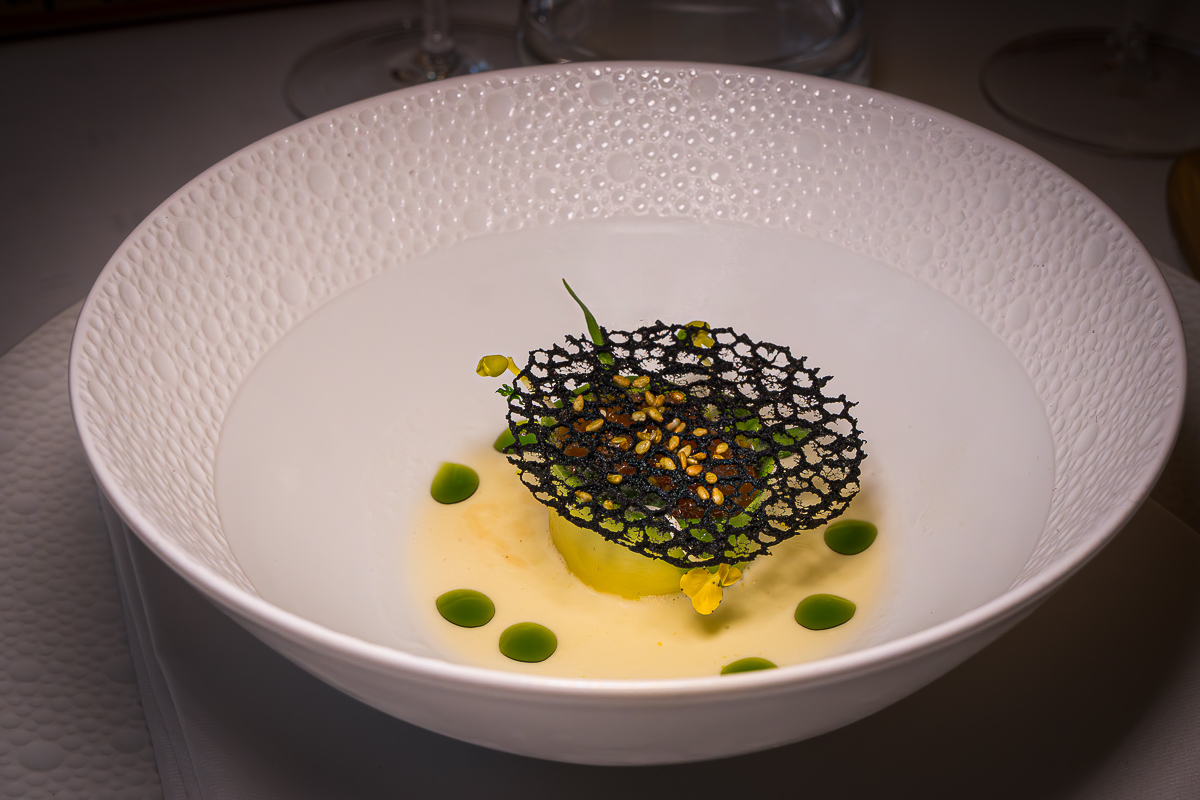
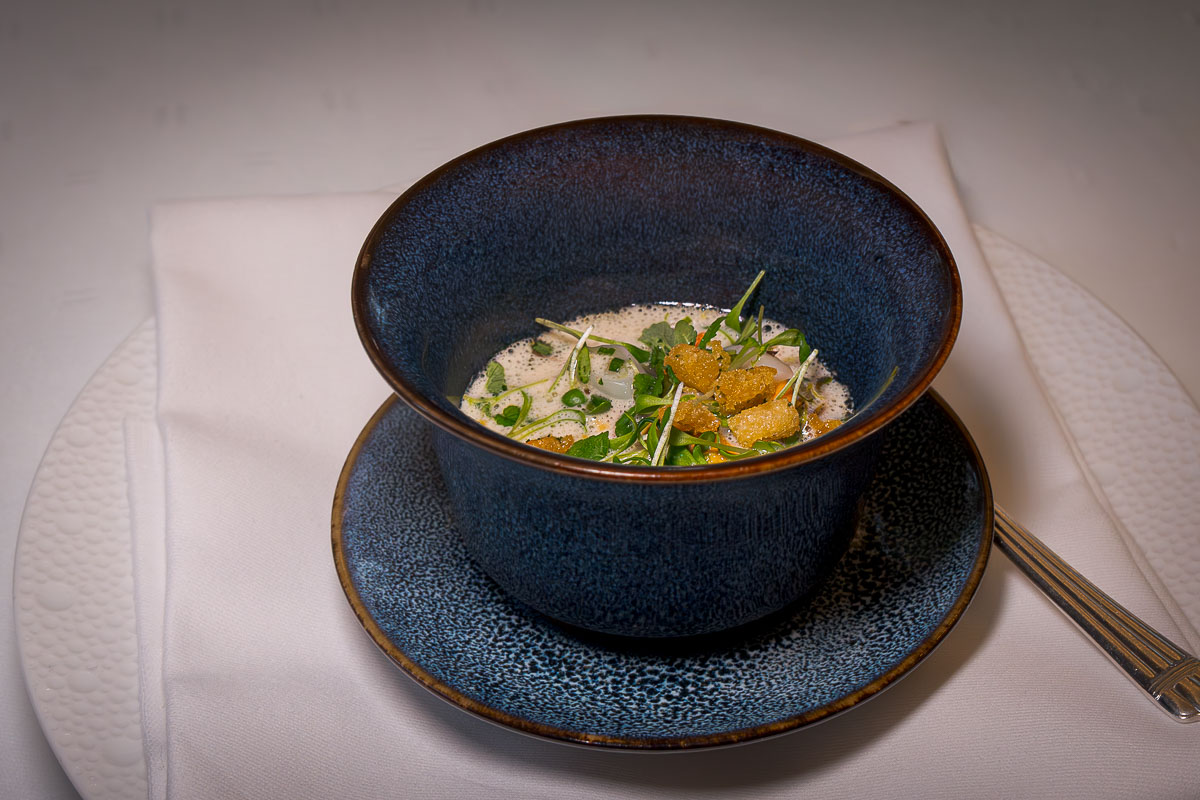
The quality of the ingredients, already visible in the snacks, makes the intention clear: we were not here for just another meal. We were here to fulfil everything we had imagined and to taste some of the finest ingredients available anywhere. No hollow speeches about food ethics. No storytelling about love for producers or kilometre-zero.
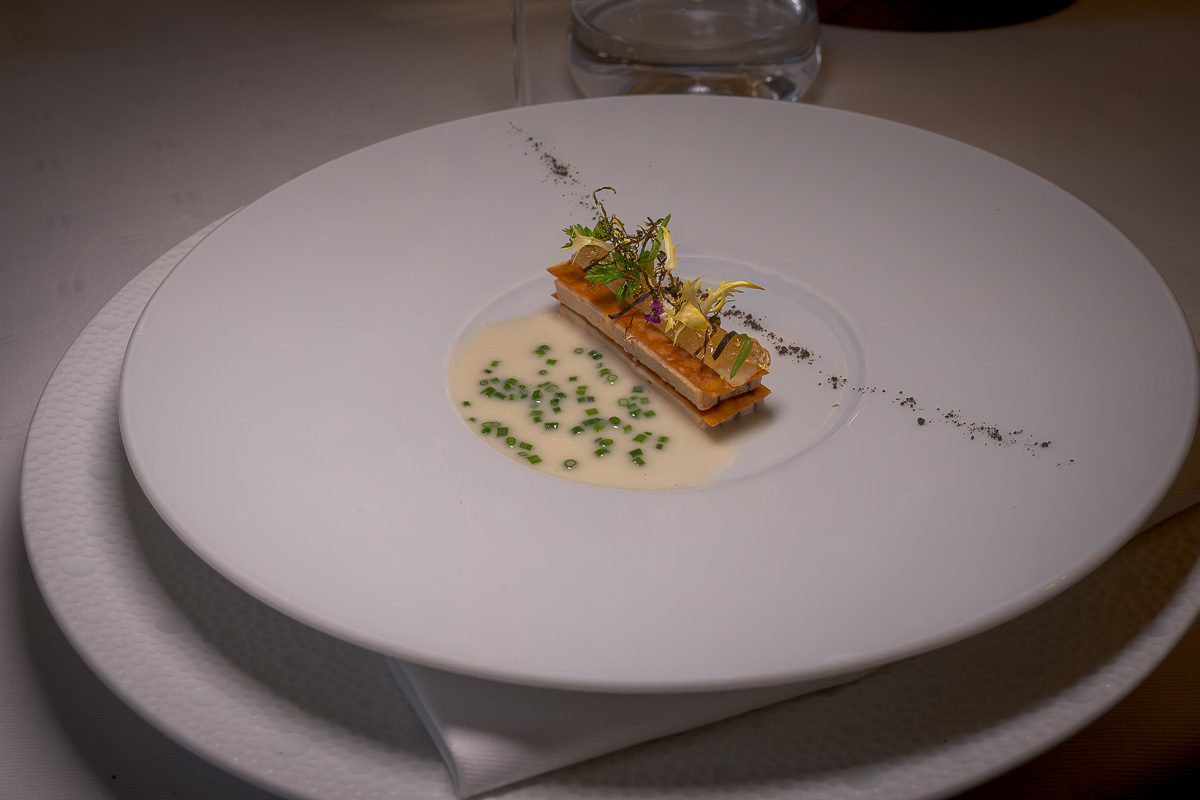
Foie Gras and Périgord Truffle
The first course and we are already among the house classics: goose foie gras with Périgord truffle, quince, nori and Pinot Noir vinegar. Served almost like a mille-feuille of foie gras and black truffle layered with crisp pastry that corrects and sharpens the texture. A hymn to flavour and contrast — the delicate richness of the foie, the unmistakable aroma of truffle revealing impeccable quality, and the supporting elements, some unexpected, such as the iodine note of nori showing the kitchen’s mastery. The Pinot Noir vinegar delivered acidity that was both surgical and necessary. Warm notes of quince from the Eifel acted as aromatic glue between all components. I keep a short mental list of the best foie gras dishes I have ever tasted. This one went straight to the top.
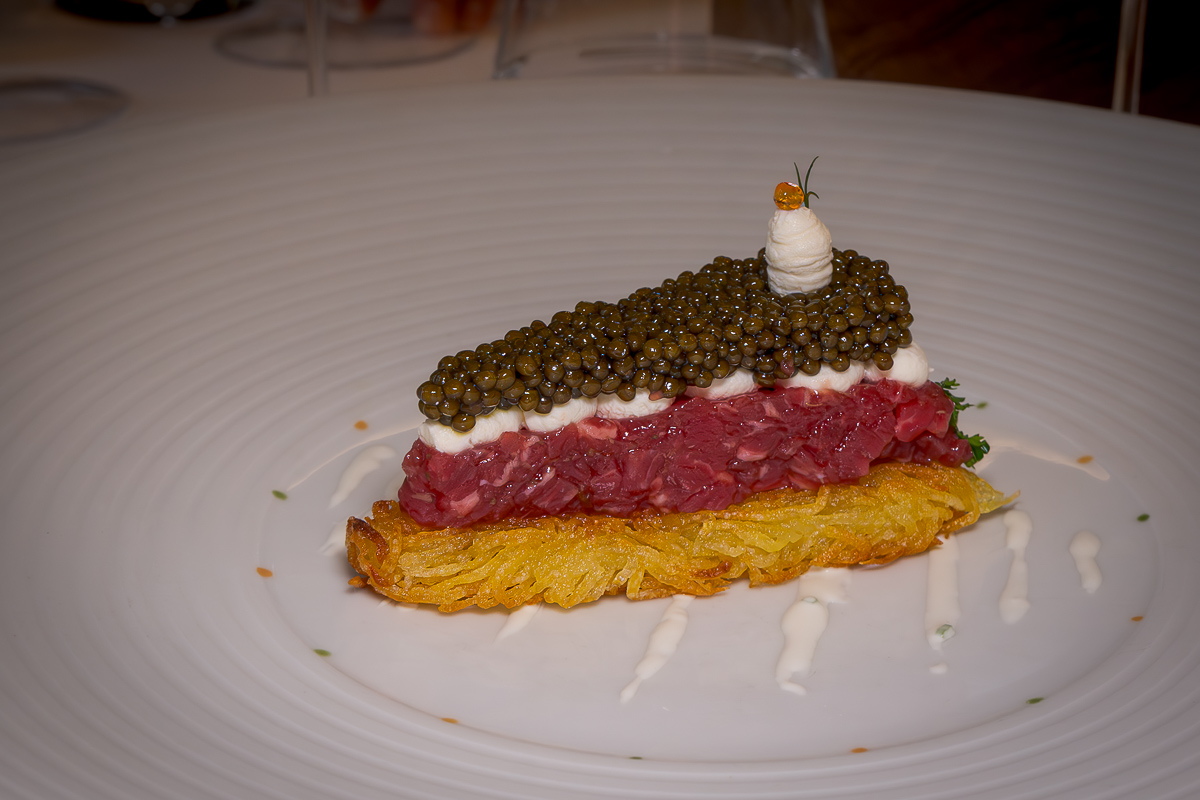
A Testament
Another Sonnora symbol — perhaps Thieltges’ most recognisable creation — the beef tartare with potato rösti and a generous portion of caviar. Clemens knows where he came from, so he kept this dish on the menu as a tribute to his mentor. And rightly so — there is no irony here, no deconstruction, no references to childhood memories. Even with a presentation that modernists might call vintage, it remains one of the most recognisable tartares in the world. Everything here speaks of pure indulgence: the crispness of the rösti, the richness of the cream, the quality of the beef, and the generous N25 caviar refreshing the palate and making the taste buds jump.
I would be a happy man if this were the last dish I ever ate. Judging by the faces around me tasting the same dish, I was not alone in that feeling.
Sea and Instinct
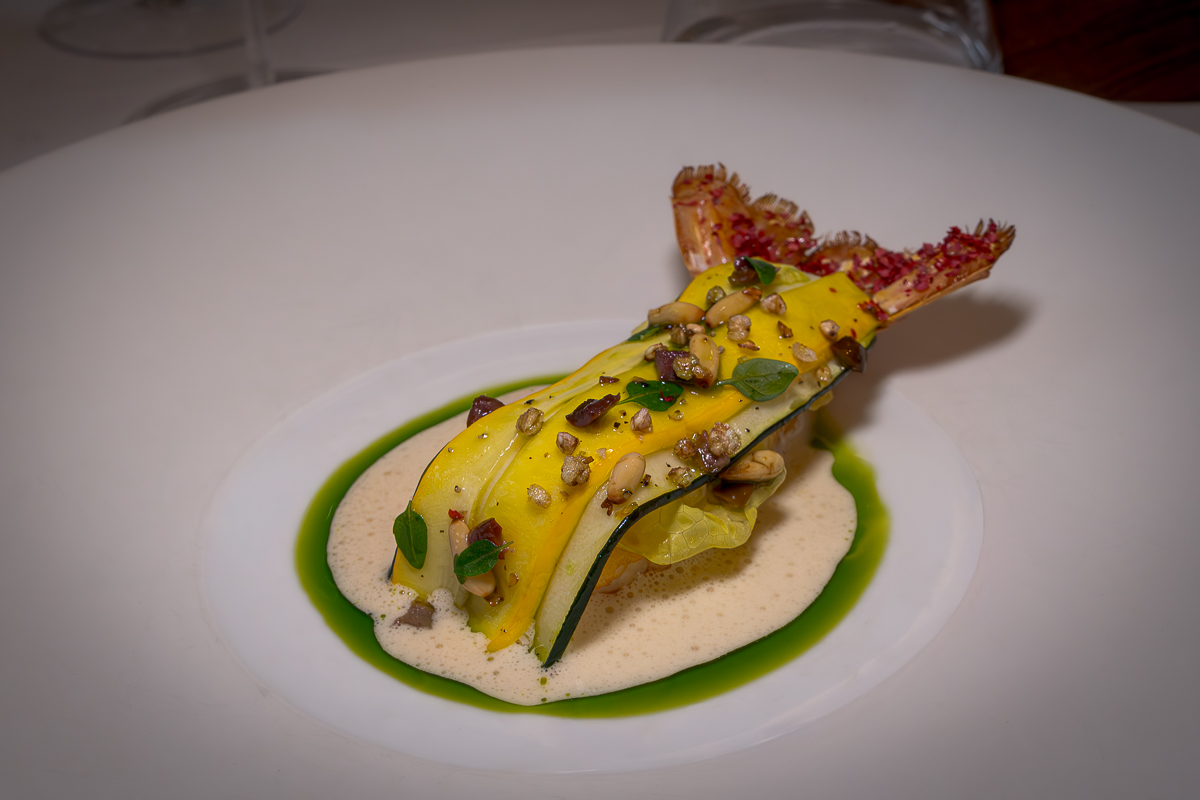
Throughout this text, I risk repeating myself — but for good reason. A large langoustine, sweet, perfectly cooked, accompanied unexpectedly by courgette, San Marzano tomato, Taggiasca olive, pine nut and basil — notes unmistakably Italian, which in a Franco-German kitchen might seem almost heretical. Yet the unctuous sauce and herb oil sealed everything with undeniable logic. A dish that proves something important: here, cooking is not only about fresh seasonal products, but also about instinct and hand — a lot of hand!
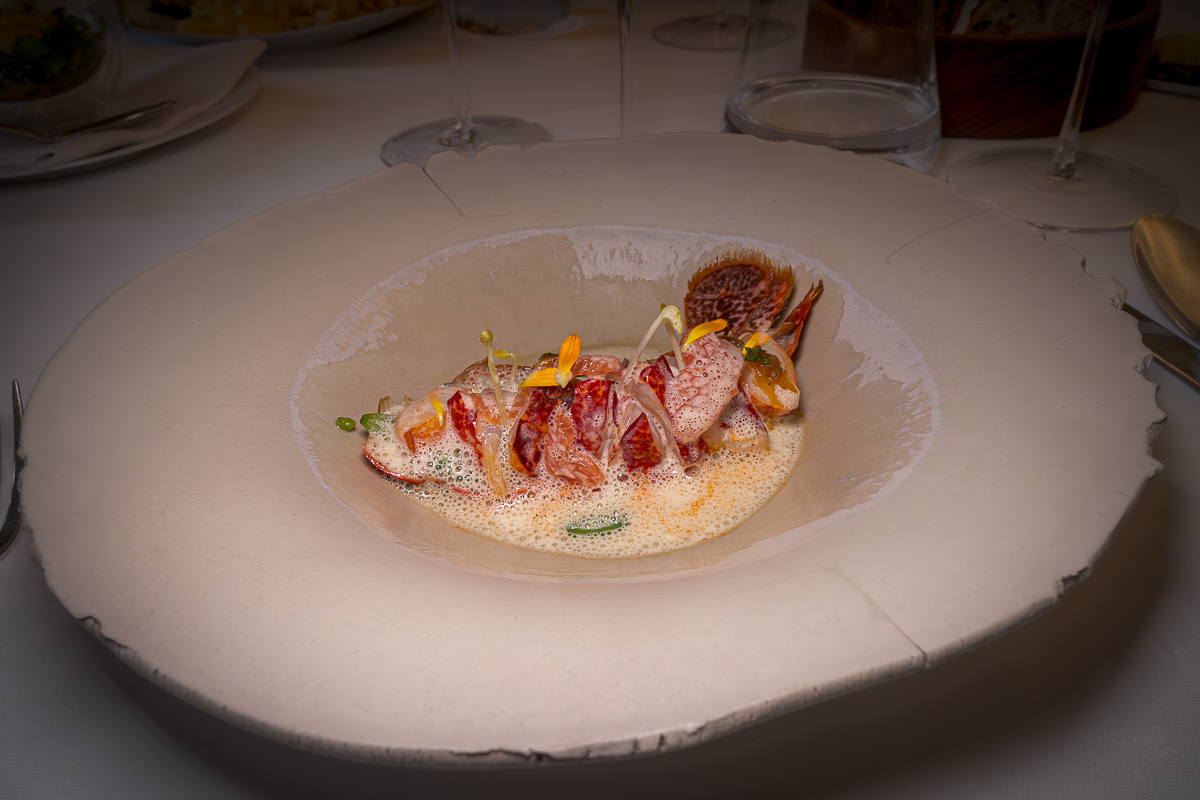
Continuing the theme of noble seafood, a Saint-Malo lobster appeared, lightly grilled over binchotan. Another impeccable point of cuisson, the flesh still translucent, vibrant and sweet. Paired with gentle notes of vadouvan — a French cousin of curry that perfumes rather than overwhelms. The Sonnora XO sauce elevated everything with umami and depth, and the green beans worked far better than expected — a vegetal, crisp counterpoint that truly delivered.
A great, great dish.
The Turbot
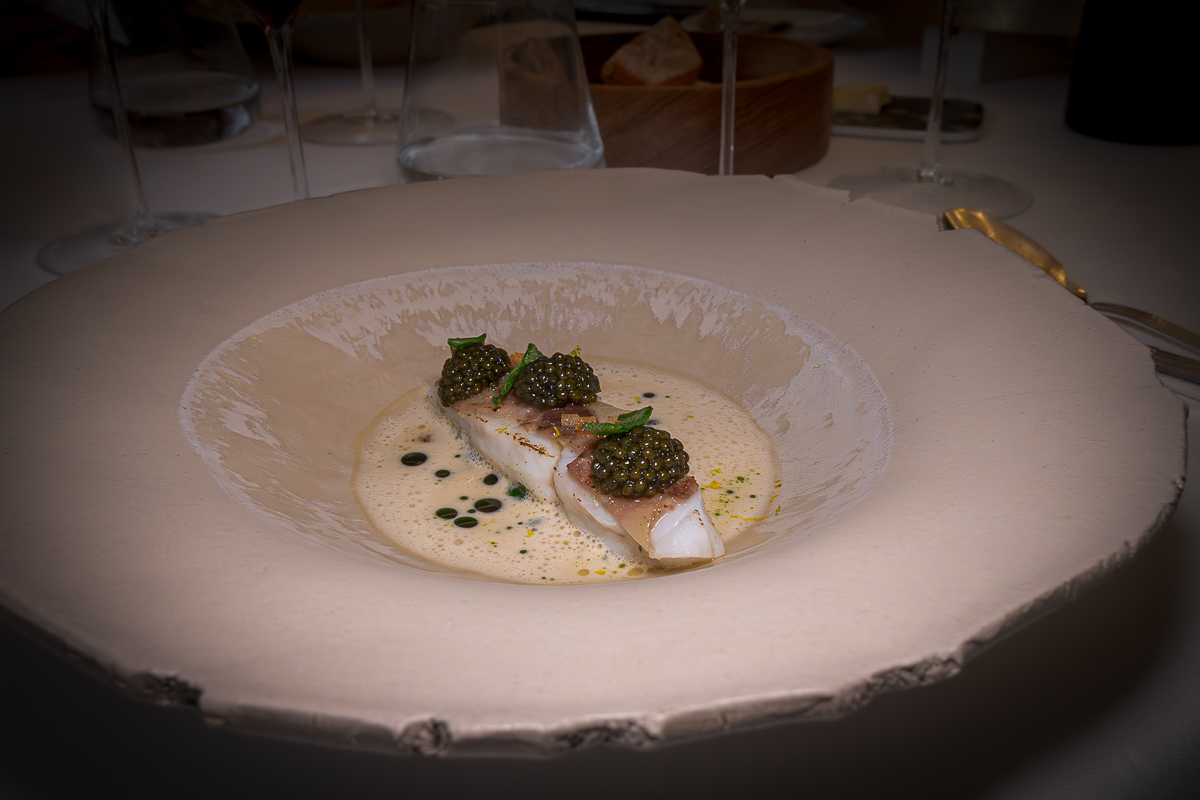
For the final maritime moment, a large turbot. Succulent, flavourful, still vibrant in colour. The Oscietra N25 caviar was not there for fashion or extravagance — it provided saline notes complementing the fumet and the richness of veal head. Yuzu brought the necessary perfumed freshness. Spinach completed the vegetal dimension.
The best turbot I have ever eaten in a fine-dining restaurant, alongside the one Donckele served me at Plénitude.
The Game
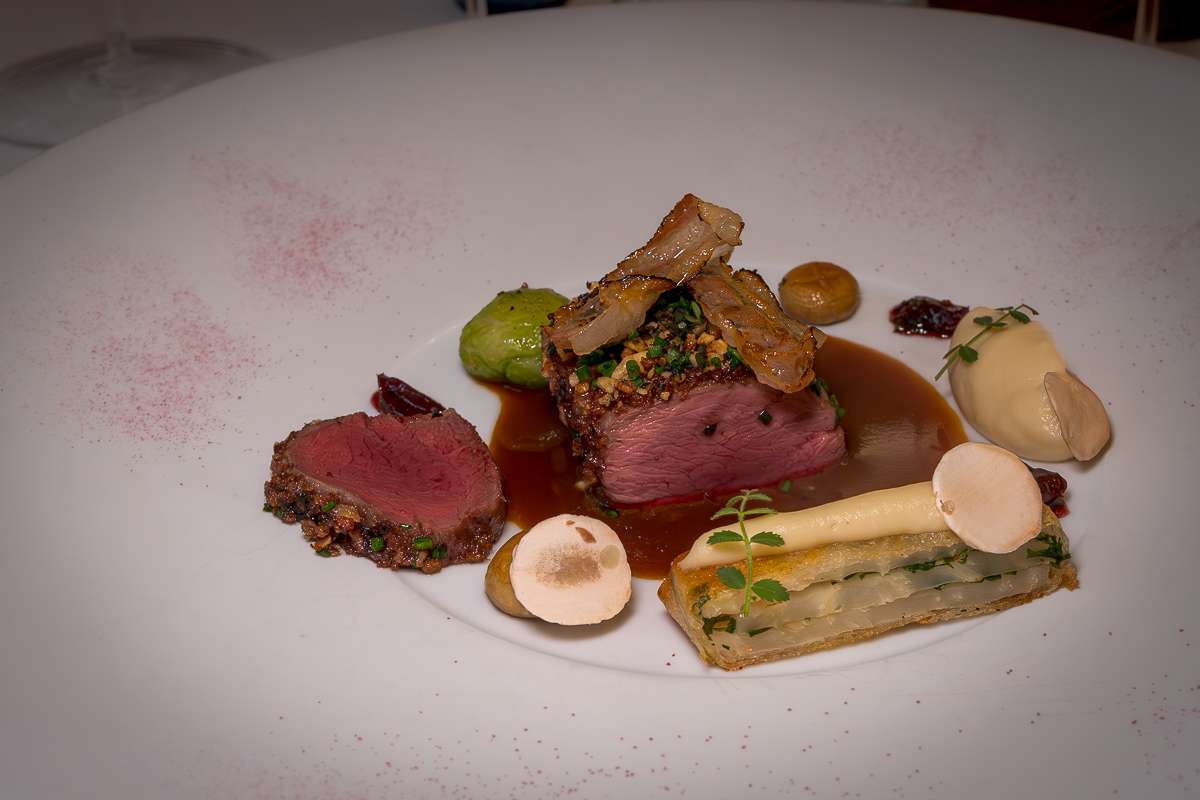
By now, we felt like children — full, yet always ready for another surprise. The saddle of venison gratinated with guanciale, perfectly cooked, arrived with a crust of herbs and nuts that provided several layers of flavour and texture. Guanciale, dried cherries, hazelnuts and Kampot pepper — beautifully balanced. But what made the dish memorable was the game sauce enriched and rounded by wild cacao. A velvety sauce with earthy depth, binding everything together and transforming a Central European classic into a personal expression of Clemens’ cooking.
Another Feast
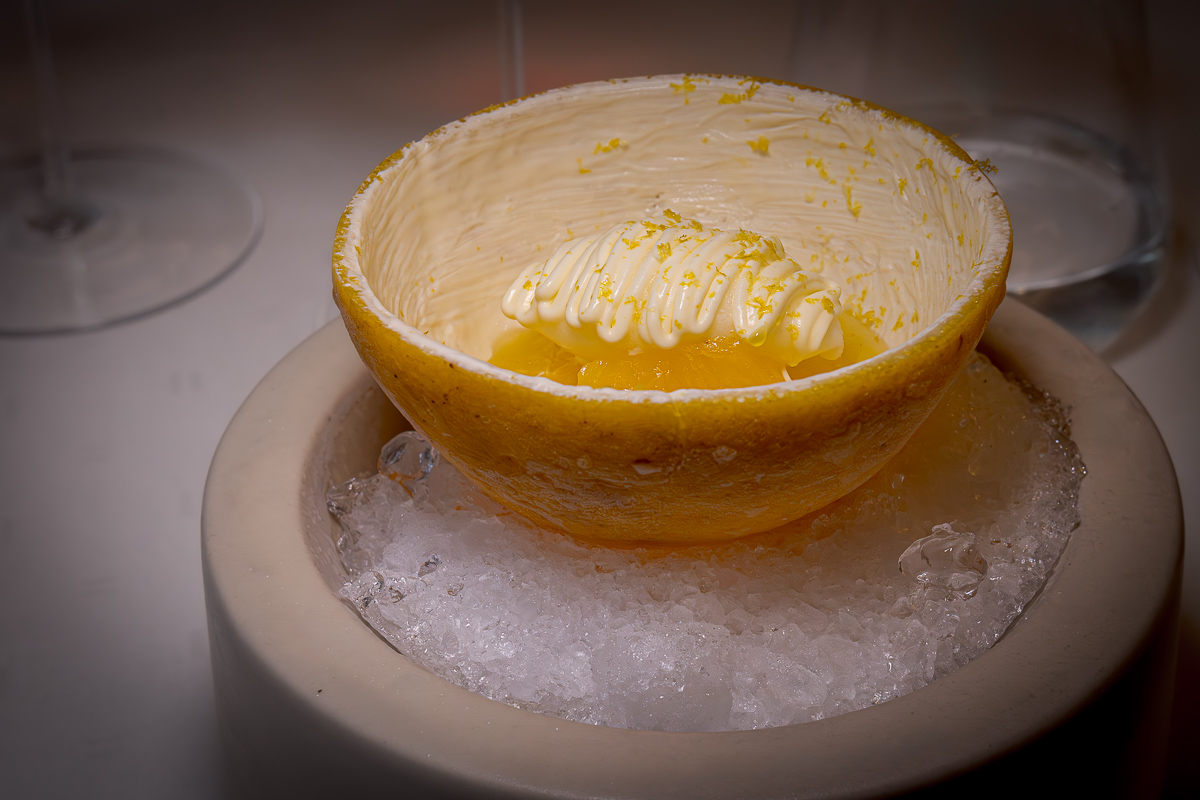
We skipped cheese at lunch — saving it for the evening as part of a lighter dinner. The Japanese “Misho” lemon, turned into a sorbet with Ligurian olive oil and Crème d’Isigny, worked as a perfect palate cleanser: citrusy, clean, light and flavourful.
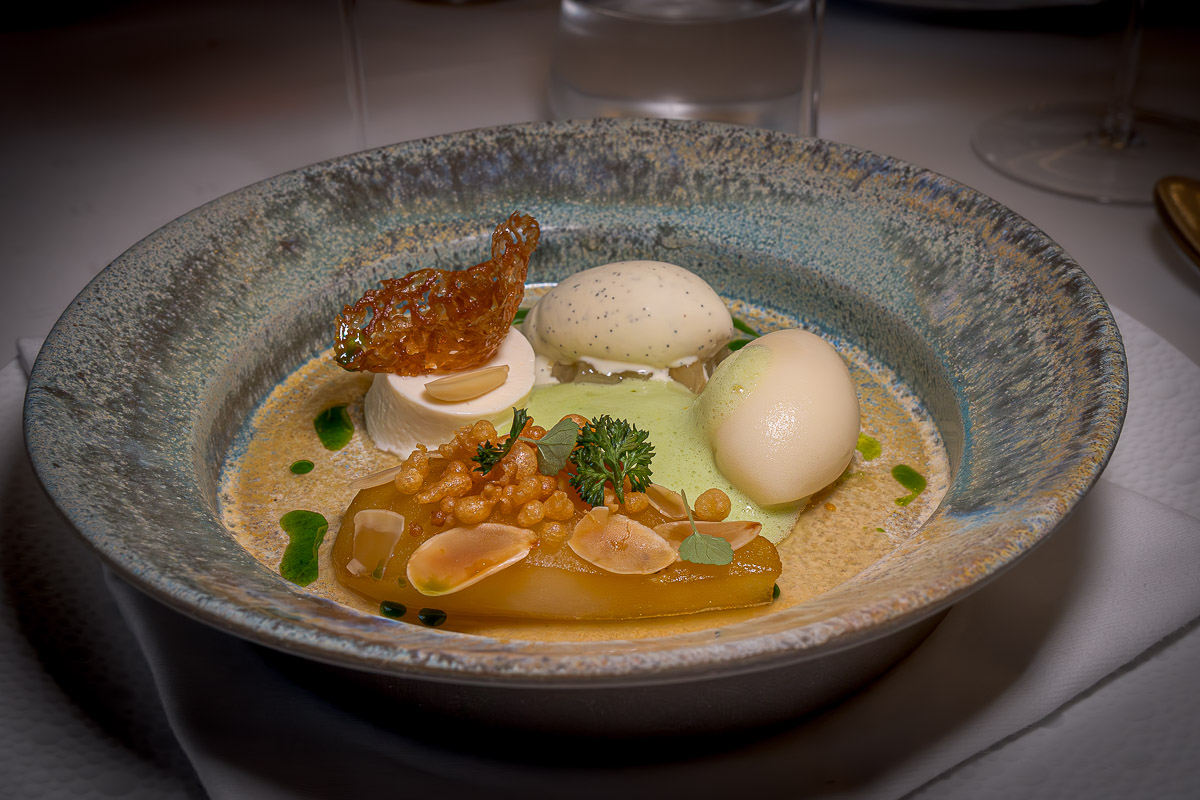
The warm “Trevoux” pear with Marcona almond, parsley, lime and Muskateller became a dessert that felt like several at once. Balanced sweetness, distinct textures, a play of temperatures — warm pear against cooler elements. No excess, exactly what one expects after a long meal.
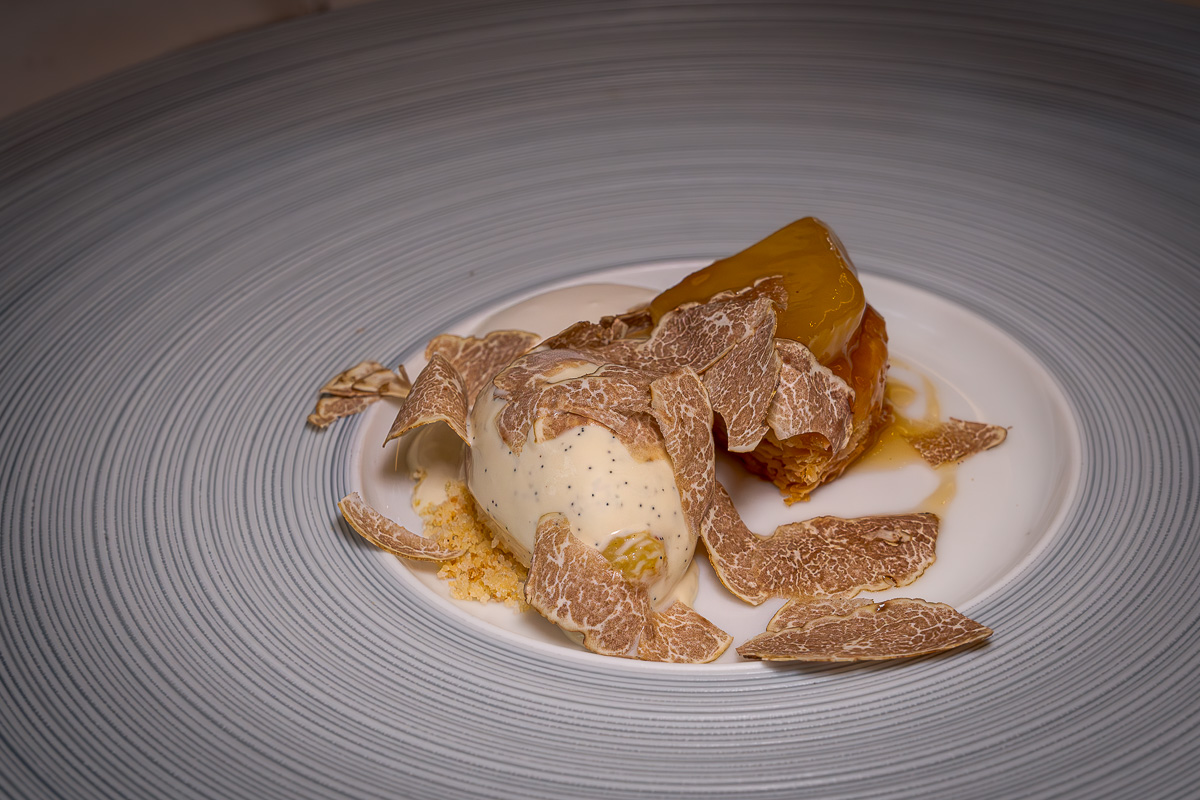
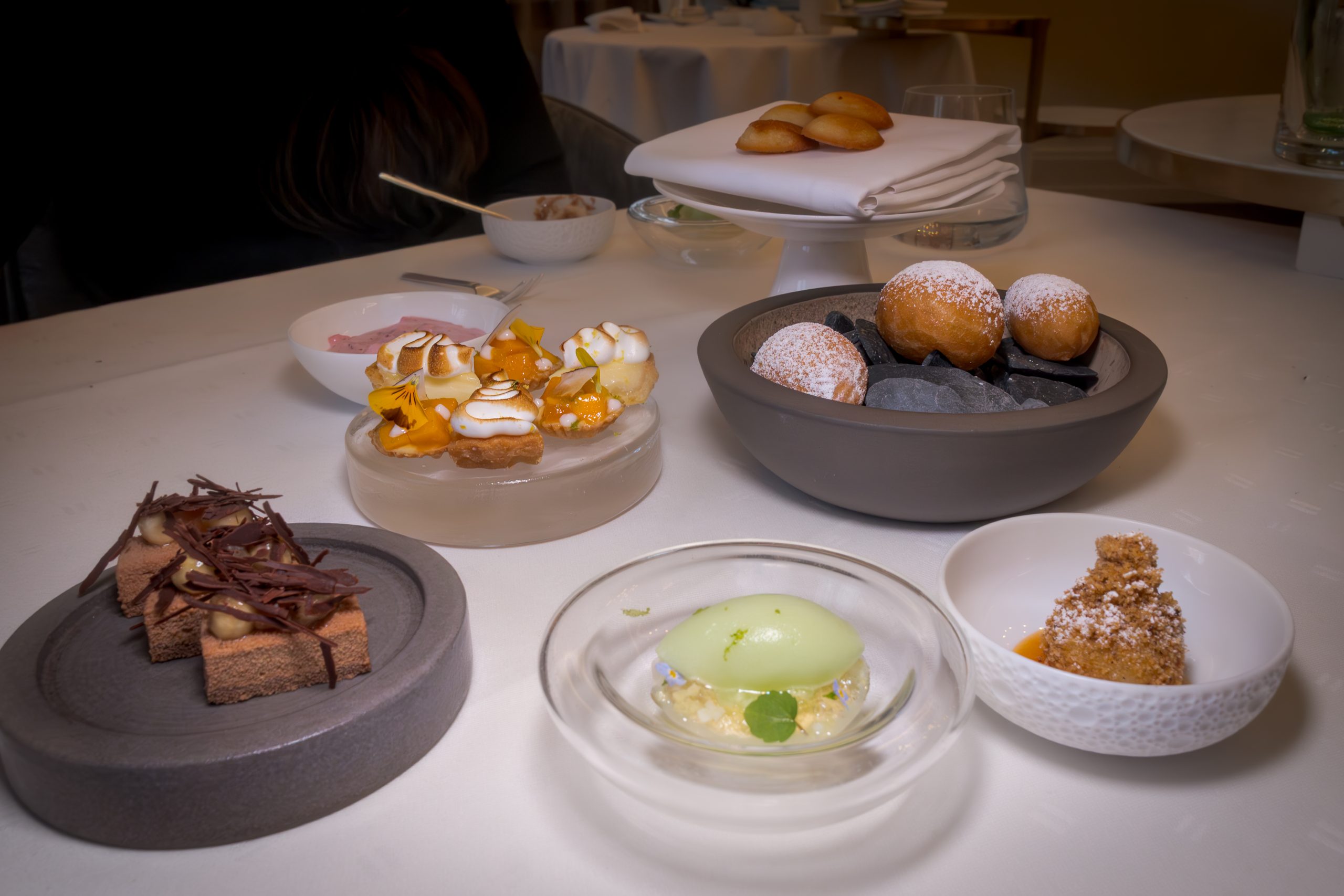
And then, as an autumn treat off-menu: a tarte tatin with vanilla ice cream and white truffle filling the room with aroma. We could have ended there, but as if we had barely eaten, a seemingly endless parade of petit fours followed — and not miniature ones. Many spoon desserts: sorbet, chocolate cake, lemon meringue tart, mango and coconut tartlet, beignets, madeleines. Everything at the expected level — no obsession with Instagram pastry aesthetics, but far more flavour and memory than most elegant desserts populating celebrity pastry chefs’ feeds.
A Love Letter to Wine
Marco Franzelin arrived at Sonnora after working at Vendôme with Joachim Wissler and at Schloss Schauenstein in Switzerland. A résumé shaped by three-star institutions that speaks for itself, so Magdalena — herself formerly the restaurant’s head sommelier — gave him complete freedom. Marco respected the house philosophy in building his remarkable wine list and brought his own perspective to the pairings.
The pairing began with local bubbles: Karthäuserhof Brut, a Ruwer Sekt with Champagne DNA, perfect for the snacks. With the foie gras, Günther Steinmetz Spätlese 2010 from the Mosel, whose residual sweetness danced elegantly with the foie. With the tartare, Manzanilla from Sanlúcar: De la Riva Miraflores Baja, Palomino Fino, saline and austere enough to cut through the richness. With the langoustine, Tement Grassnitzberg 2017 from Styria, creamy and citrus-driven. With the lobster, another surprise: Antoine Sunier Morgon 2020, a light, earthy Gamay that found remarkable harmony with vadouvan and XO sauce.
And then came the moment that truly won me over: Ramilo, from Colares. A rare and unexpected Portuguese wine. Here. In the heartland of German Riesling. A small production from pre-phylloxera vines planted in the sands of Sintra, with those unmistakable Atlantic saline notes that worked beautifully with the turbot, its richness, and fumet. I never expected to find it in this forest clearing in Dreis. Its presence is a testament to Franzelin’s curiosity and open-mindedness.
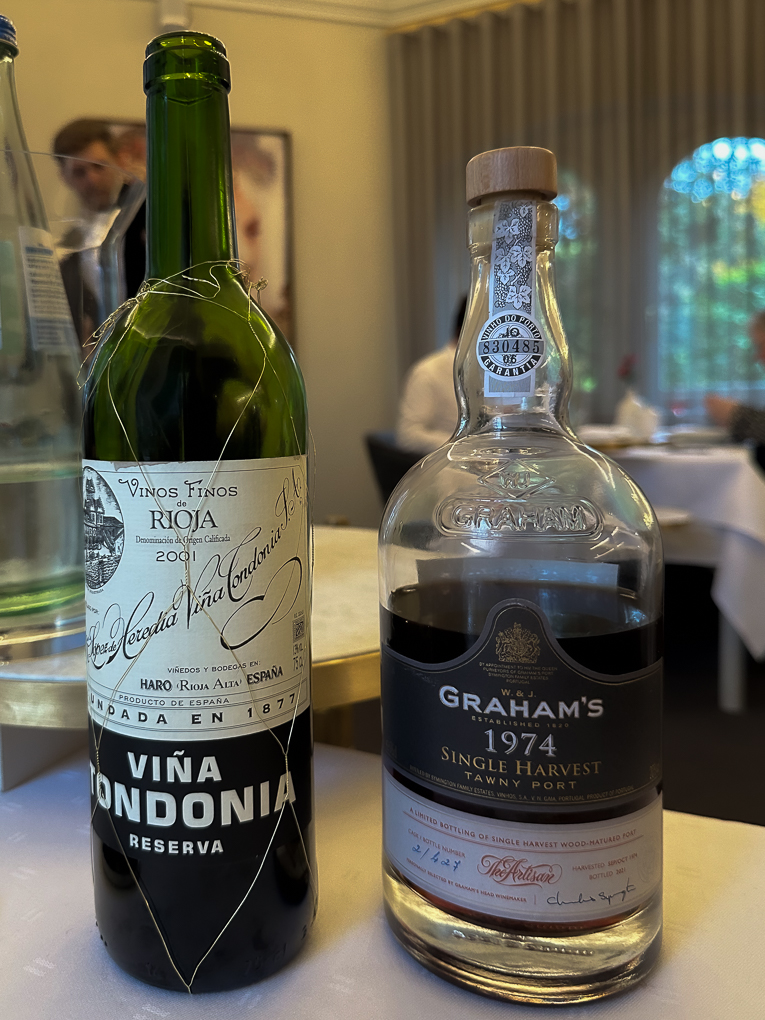
With the venison, two wines served simultaneously — two different pairing philosophies for the same dish. Tondonia Reserva 2001 from López de Heredia, more than twenty years of one of my favourite wines. And Graham’s Single Harvest Tawny 1974, aged for half a century in oak casks, bottled in 2022 — produced in the year of the Portuguese Carnation Revolution, when the Symington family chose not to bottle Vintage Port due to political instability but kept the wine in cask because it was too good to waste. Both worked. Yet despite my love for Port wine, the Tondonia 2001 proved extraordinary in every sense. Elegance, tension, structure and depth — a wine that gives everything to those willing to wait.
With the pear, Deutz Demi-Sec 2015. With the tarte tatin and white truffle, Rieussec Sauternes 2005.
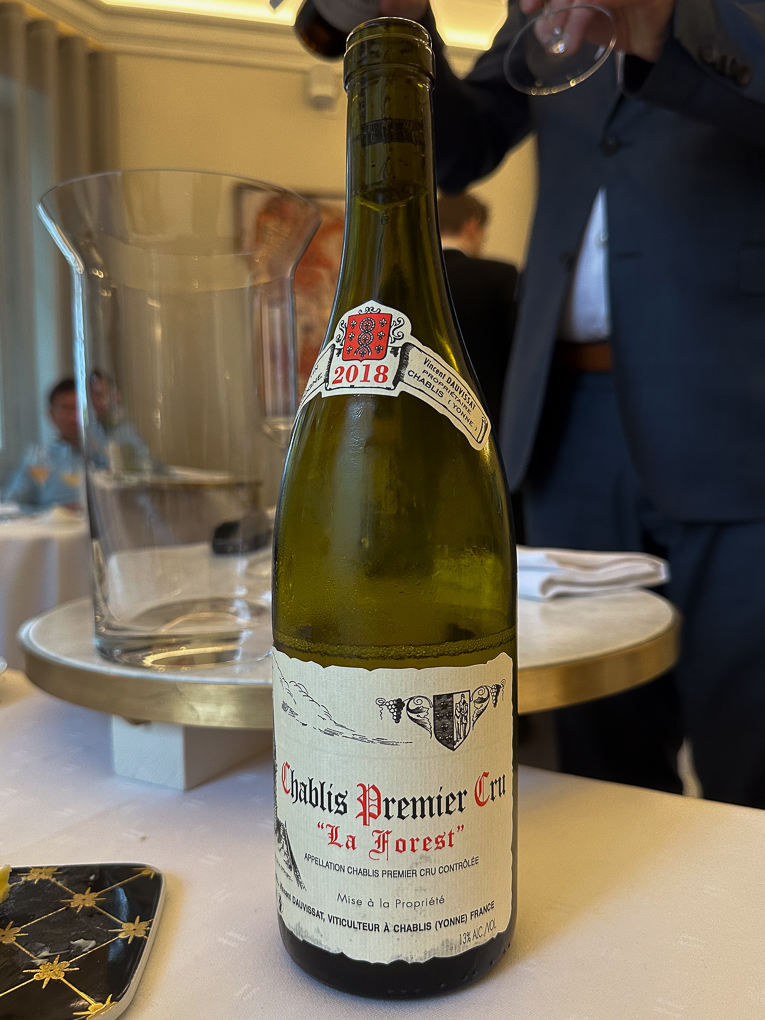
Cíntia, meanwhile, stayed faithful to Dauvissat Chablis Premier Cru La Forest 2018 — a wine she has a special connection with — and she was right. Some glasses stand on their own; they do not need formal notes to make sense.
High praise for Marco Franzelin. For his thoughtful selections, his unpretentious presentation, the bold inclusion of two Portuguese wines, and the management of a wine list that — thankfully — remains priced at levels almost impossible to find elsewhere.
The Rambichler House
As I mentioned earlier, the entire Sonnora team made us feel less like guests in a restaurant and more like visitors in someone’s home — the Rambichlers’ home. Magdalena welcomed us first in the lounge, then in the dining room. She brought along the couple’s daughter, slightly older than Francisca, who shared colouring books and markers — turning the parents’ long lunch into something entirely possible. The entire team treated Francisca with natural warmth — special dishes prepared for her, service pacing adjusted, small moments of playfulness between courses. Everything worked. It is difficult to forget her face when she tasted the vanilla ice cream and declared it the best she had ever had.
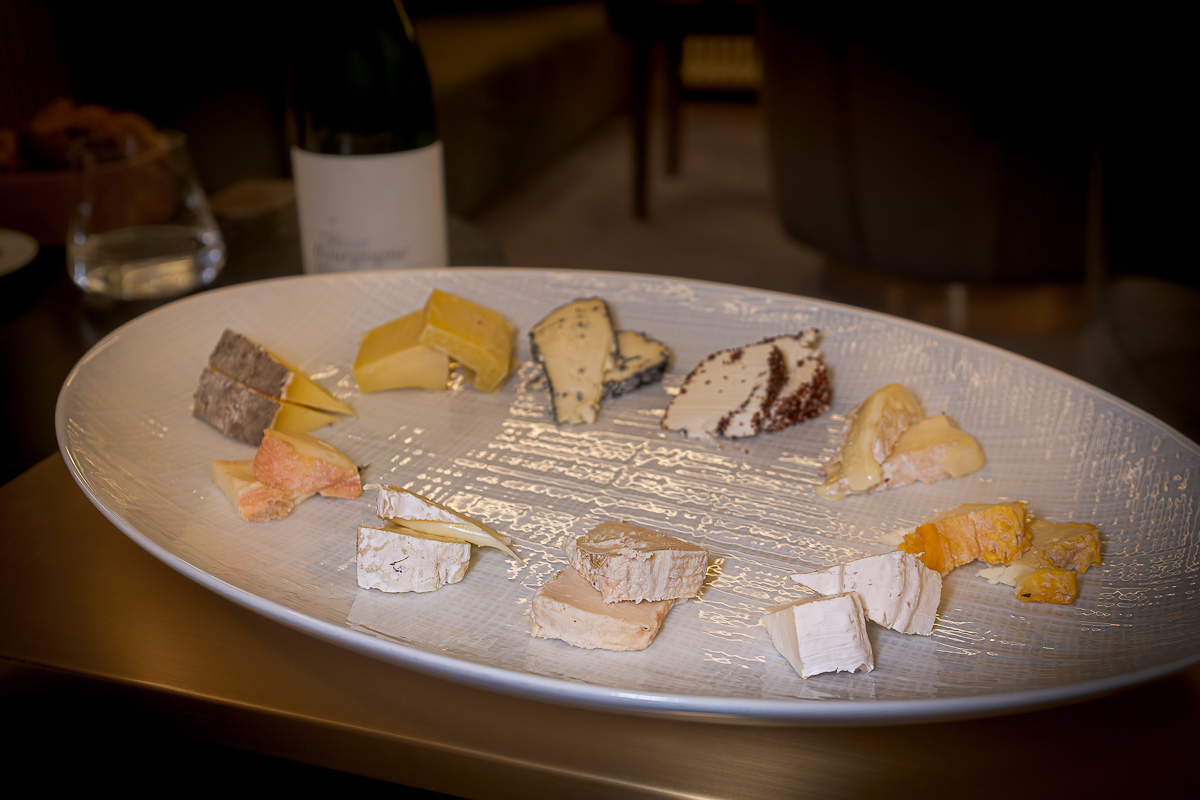
The meal was long. Because we wanted it to be. Fortunately, we have a daughter who also enjoys sharing a table as a family. The evening meal, light, stayed in the lounge: a Roulot Bourgogne 2021, a carefully curated cheese selection, and the best soup Francisca has ever eaten — served with a presentation that would make many chefs blush.
The Morning After
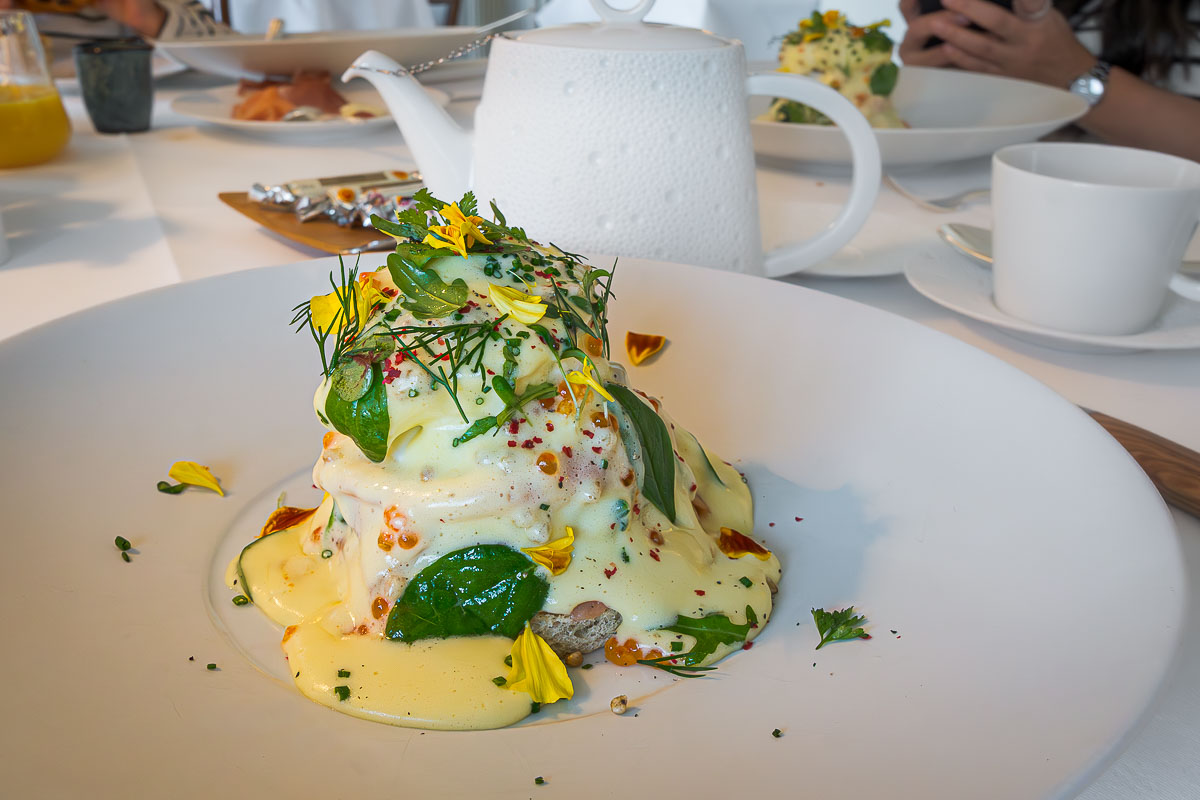
Great restaurant breakfasts are rarely discussed — and they should be. At Sonnora, beyond the usual hotel buffet clichés — albeit with excellent products — there is a small à la carte menu. We chose Eggs Royale. And we were glad we did — they were the best I have ever eaten. Precise execution, excellent product, a light hollandaise, edible flowers, and a generous portion of N25 caviar that made us salivate first thing in the morning — like the final pinch of salt that turns something good into something memorable. The dining room was filled with natural light, lively with guests, and the agile choreography of a team that has mastered the space for years. A true three-star experience in every sense.
Afterwards, we walked through the gardens before returning to the room, already thinking that perhaps the sensible thing would be to leave with another reservation in place.
A Final Note
The story is simple: in a clearing in the Eifel forest, less than an hour from Luxembourg, a young family is doing everything right. Cooking, wine, hospitality, breakfast, gardens, rooms. Everything. Sonnora is not a fashionable restaurant, nor does it follow trends. It does not host pop-ups in distant capitals, does not have a podcast, a line of organic products, or a Phaidon cookbook. It is a house in the woods where a 38-year-old Bavarian cooks with relentless intensity as if every dish might be the last. No manifesto. No storytelling. Just the plate — and the quiet confidence that it speaks for itself.
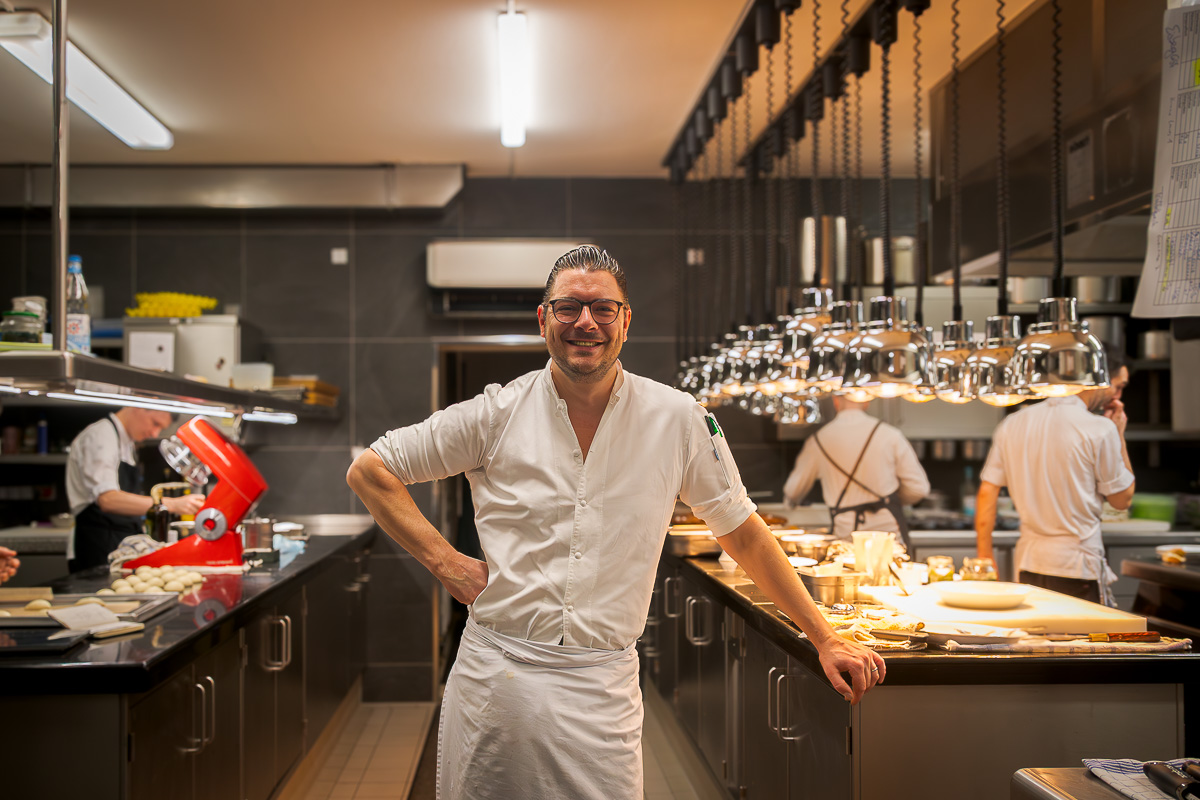
I once read in a newspaper article that Clemens never wanted to be a star — they were right. He did not aim for it, yet he inherited three stars, became the youngest chef to hold them, and has maintained them every year since 2017. He remains discreet on social media, distant from the spotlight of the international gastronomic press and the louder awards of our time. He lives in his world, in his kitchen, dealing with the everyday struggles of a young restaurateur who seems far more concerned with the guest than with himself. The very definition of hospitality!
As we drove away from Sonnora through the vivid green forest, Cíntia said, already nostalgic — this was one of the best meals of my life! And I tend to agree.
Address: Auf’m Eichelfeld 1, 54518 Dreis, Rhineland-Palatinate, Germany
Reservations: +49 6578 98220 | info@hotel-sonnora.de | hotel-sonnora.de
Hours: Thursday (dinner only, 7pm–8.30pm); Friday to Sunday (lunch 12pm–1.30pm, dinner 7pm–8.30pm). Closed Monday to Wednesday.
Price: From €345 (without wines).
Hotel: 15 renovated rooms, from €268/night.
Chef: Clemens Rambichler
Pastry Chef: Niels Dücker
Head Sommelier: Marco Franzelin
Hostess: Magdalena Rambichler
Awards: 3 Michelin Stars (uninterrupted since 2000), La Liste 2026: 99 points (2nd worldwide), Gault&Millau 5 Toques, Feinschmecker 5F, Feinschmecker Pâtissier of the Year, 50 Best Discovery.
Must-Try: Beef tartare with N25 Caviar on Rösti, Foie gras, Saint-Malo lobster, Langoustine, bread selection (over a dozen varieties).
Nearby: Mosel Valley and Riesling vineyards, Roman city of Trier (~25 min), Bernkastel-Kues (~20 min).
Getting There: By car — Frankfurt-Hahn airport ~40 min; Luxembourg airport ~1h; Frankfurt (FRA) ~2h; Cologne/Bonn ~1h45. Nearest train station: Wittlich (~10 min by car).
Note: Book a room at the hotel — the next morning’s breakfast is an integral part of the Sonnora experience.