
Prati doesn’t appear in the more obvious guides to Rome, and the locals would rather it stayed that way. The lady with the shopping cart argues with the greengrocer over the price and quality of the artichokes, schoolchildren walk in line down the street, and out on the café terrace the retirees rotate between cappuccino, politics and football. This is a residential neighbourhood from the late nineteenth century — orthogonal, dense, on the far bank of the Tiber — where life happens with the easy confidence of people who pass each other every day. The Vatican stands right there at the end of the avenue, and nobody seems particularly impressed; they were born and raised with it.
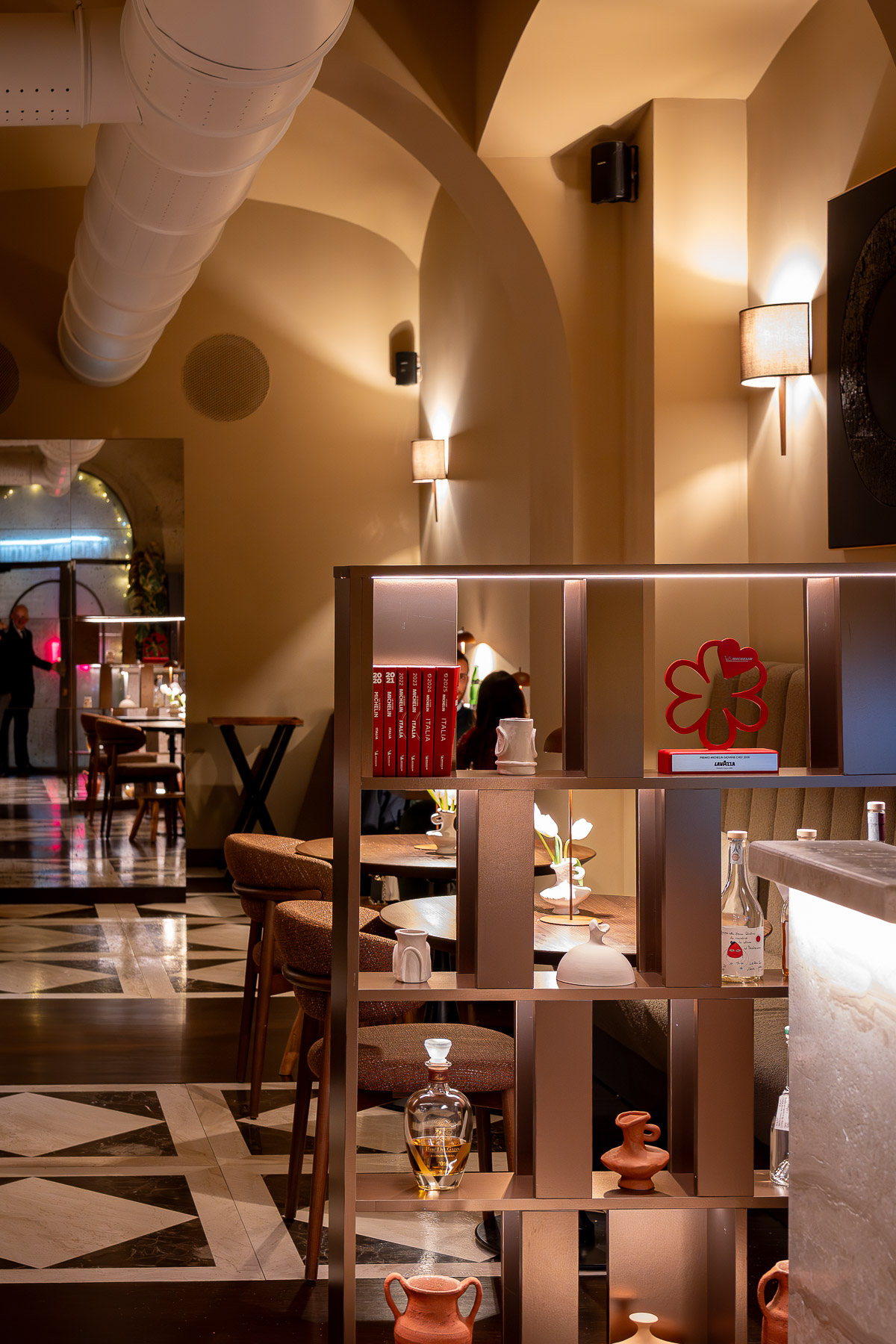
It’s in this Roma per romani register that Pulejo opens its doors, on Via dei Gracchi 31, between trattorias, shops and apartment blocks, with no aggressive signage and no fanfare — just the discreet Michelin star at the entrance, giving you a measured idea of what’s coming.
 Coming home
I came across Pulejo on social media, which could have been a bad sign. At a time when so many restaurants seem to cook for the screen, here was something else: dishes with a beginning, a middle and an end. A language recognisable at first glance, the kind of thing that always pulls me in. The only question was whether it would survive the leap from image to palate. Spoiler alert: it did.
Puleio‘s cooking is what it is because he left Rome in order to come back. He left early — at Il Convivio Troiani he was already learning what an old-school Italian brigade looks like when it works properly. He went to Noma when Noma was still putting kitchens around the world on edge, and brought back from Copenhagen an obsession with stripped-down technique. In London, alongside Agnar Sverrisson, he found Anglo-Saxon discipline in organisation; in Milan, with Taglienti at Trussardi, he saw Italian high cuisine taken to the limits of polish. When he came home, he was sous-chef to Luciano Monosilio at Pipero. By 2020 he was running L’Alchimia in Milan, where he earned the restaurant’s first Michelin star and was named young chef of the year by the Michelin Guide.
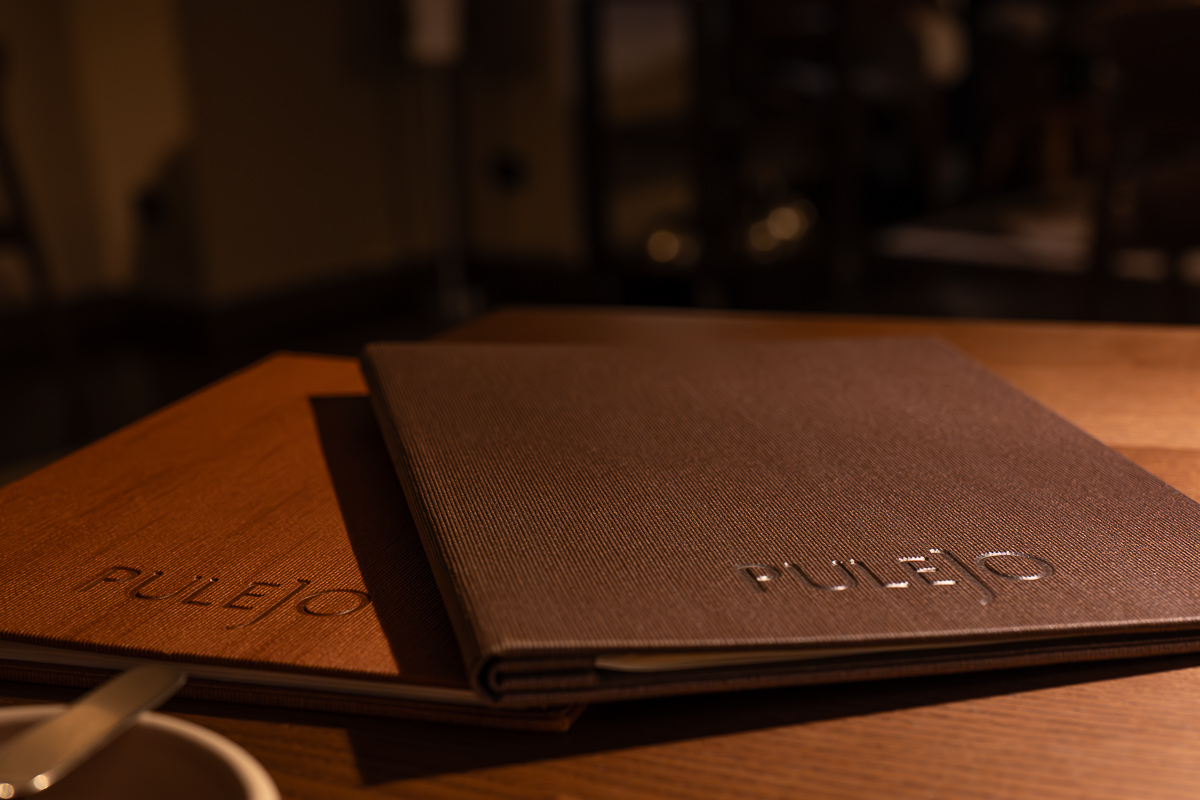 Coming home, he opened Pulejo at the end of March 2022, with the star arriving just seven months after opening. Nobody earns a Michelin star in seven months by luck; they earn it on accumulated debt.
Davide Puleio seems to want a restaurant à la française — small, elegant, with the classical markers of a Parisian dining room. That’s exactly what you feel on stepping in. The recently renovated room divides into three zones, articulated with spatial intelligence and minimalism. Darkened parquet, punctuated with slabs of Orosei marble brought in from Sardinia. Wood, neutral tones, low warm lighting that’s present without being intrusive. The atmosphere is everything the Italian press loves to call lusso sussurrato — whispered luxury — and frankly, it’s a room I want to stay in.
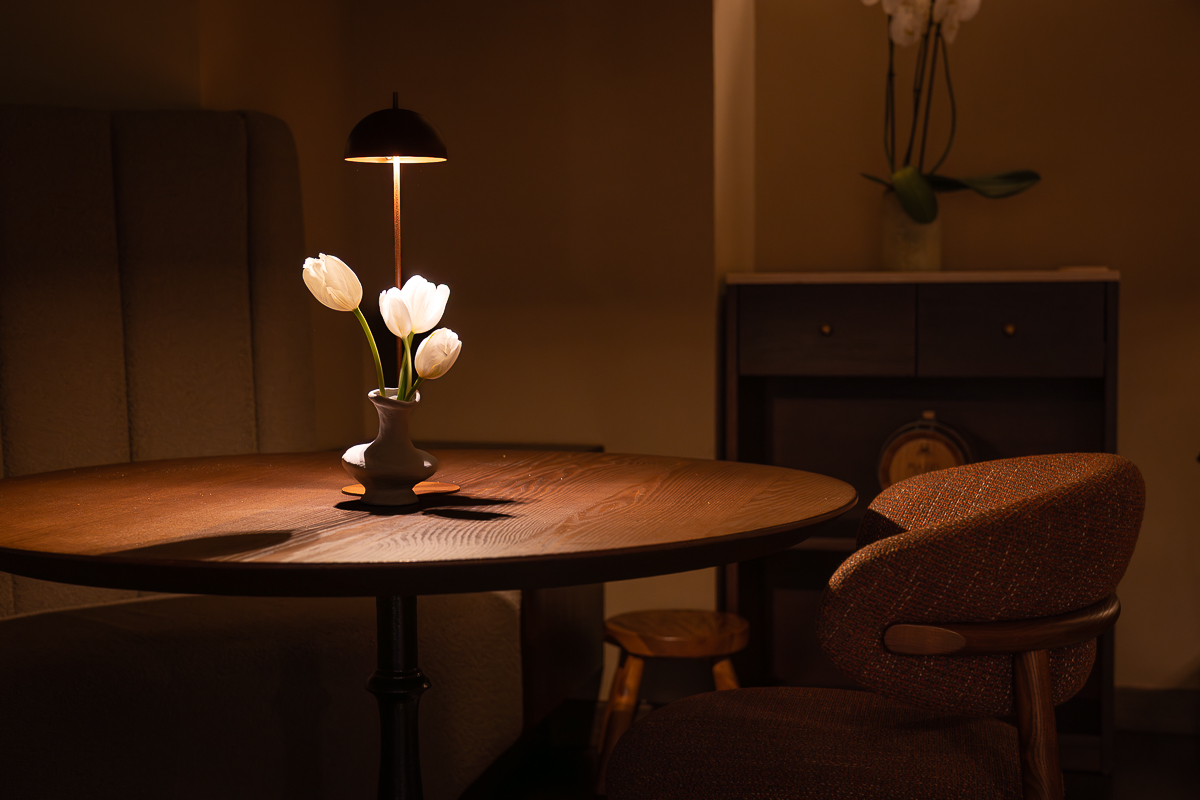 Settled into one of the corners of the room, I could take in the space at leisure: full house, mostly Italians — couples, families, small groups of friends, the odd tourist. The noise level lets you hear the staff’s interactions with guests, the explanations, the small gestures of hospitality. Halfway through dinner, chef Davide Puleio came out into the room — moving between tables, presenting dishes, techniques, ingredients.
I went for the Crepuscolo menu — seven courses at €140. For what it delivers, and measured against what an equivalent menu would cost in Portugal, more than fair.
 Opening gestures
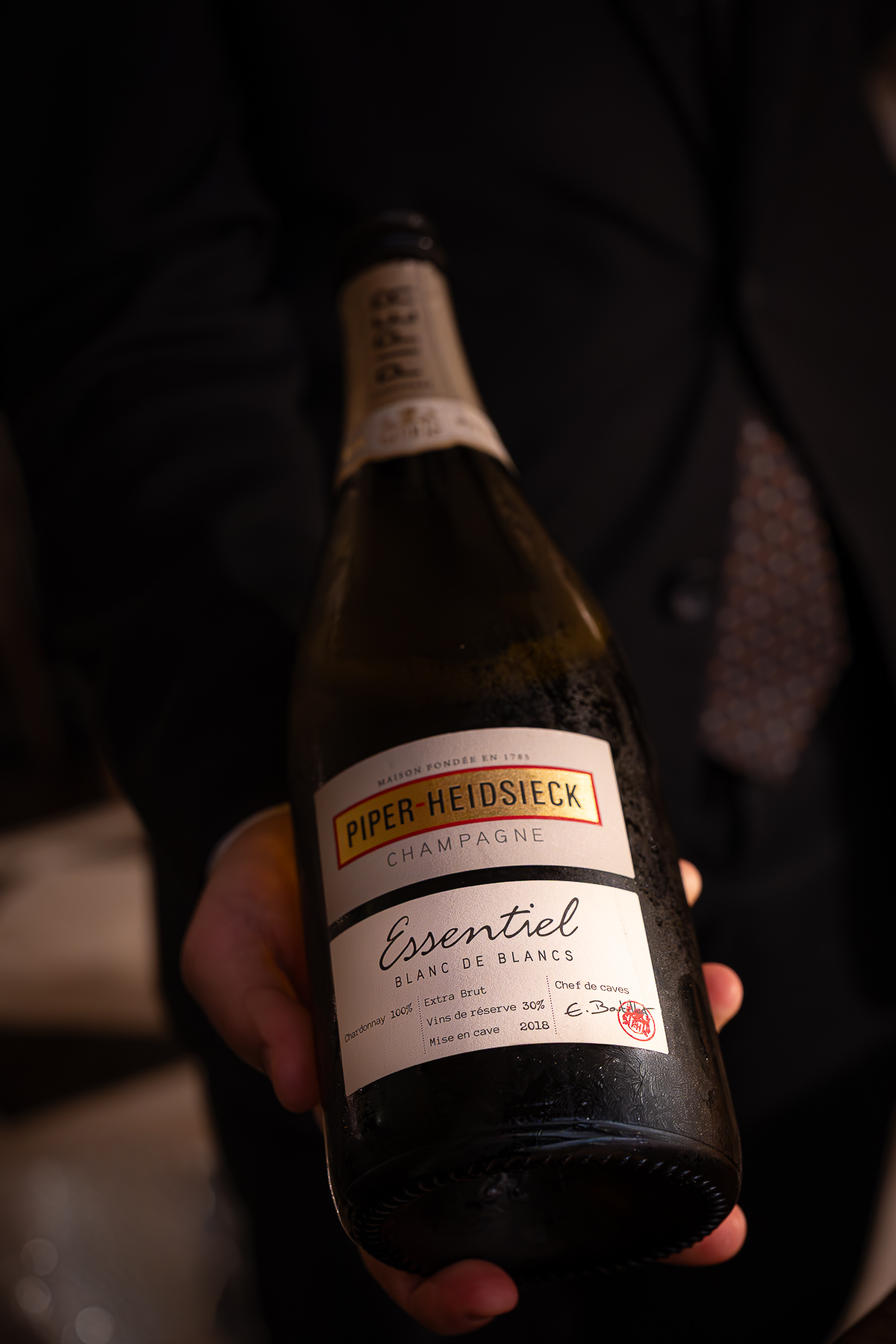
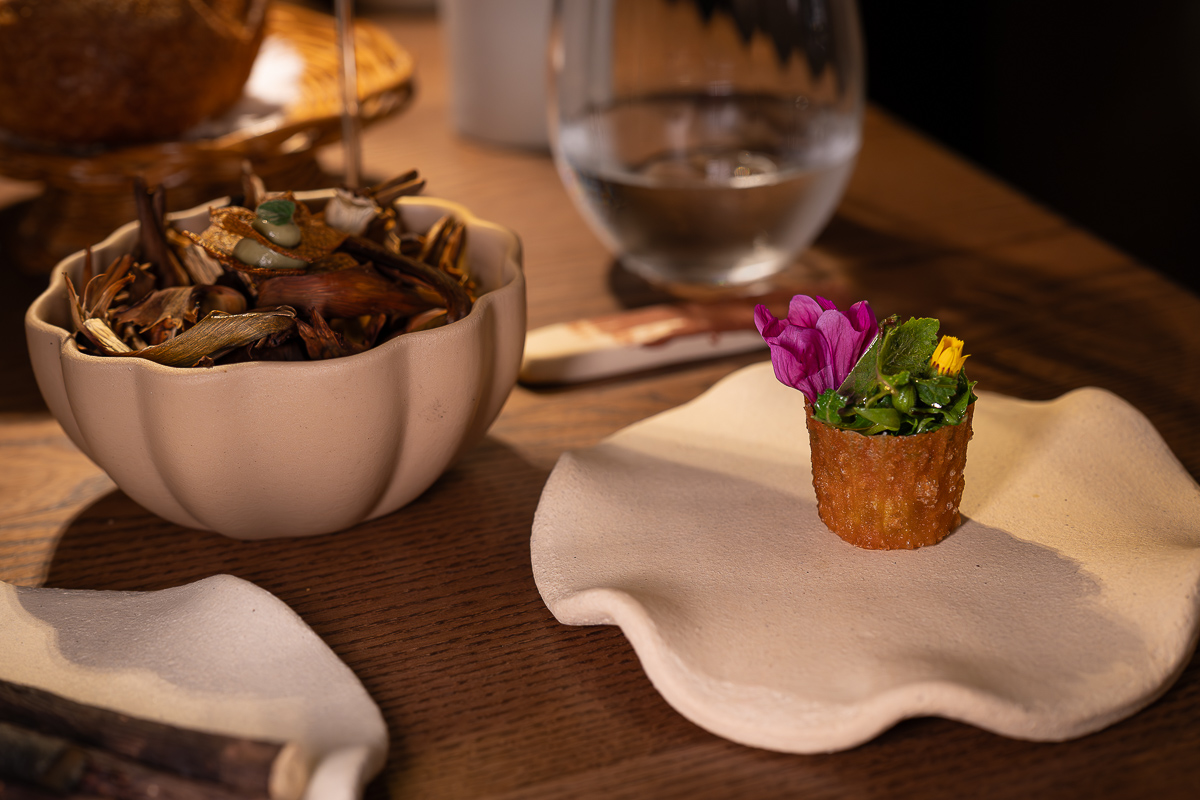
The opening pour is Piper-Heidsieck Essential Blanc de Blancs — Pulejo, after all, is part of the maison’s Essential Circle. The opening snacks aren’t trying to dominate the meal before it begins, no addiction to immediate effect or marquee aesthetics. Artichokes, poultry pâté, herbs, polenta, cheese — clean gestures, technically careful, properly flavoured. In an age when too many amuse-bouches behave like film trailers, this restraint already says something about how the rest of the evening will unfold.
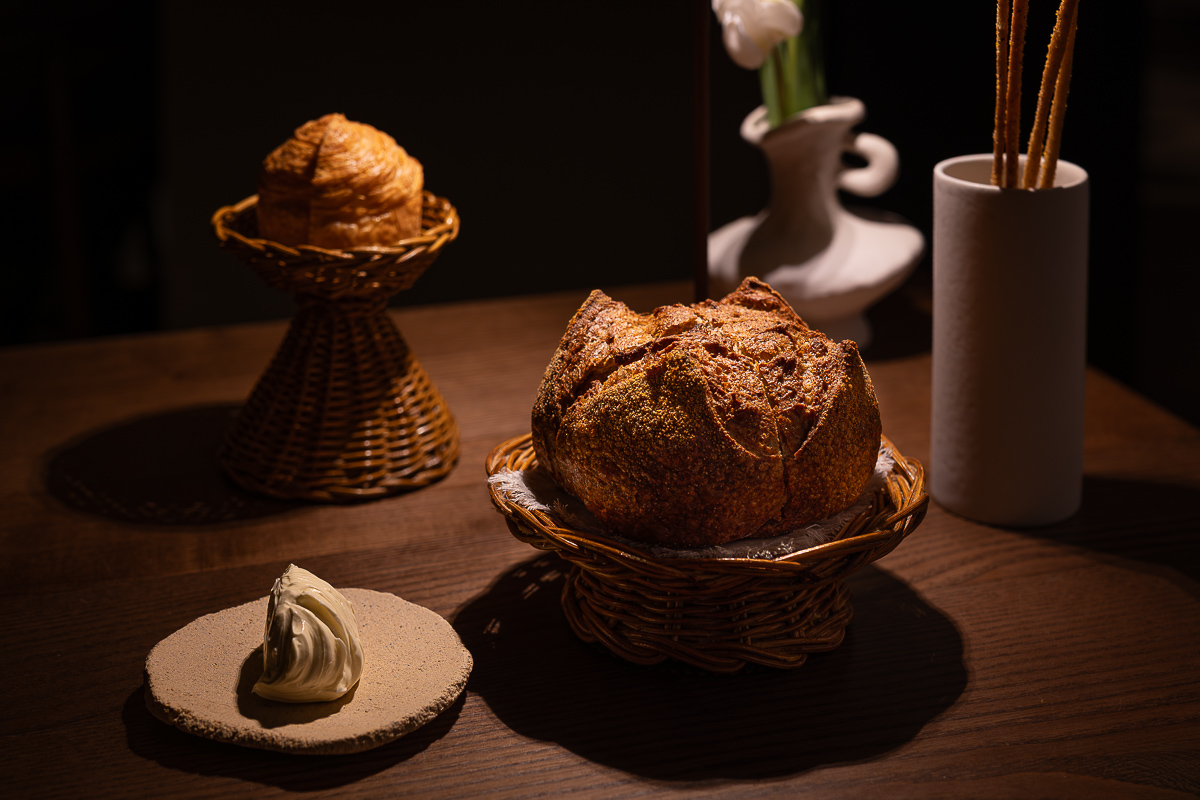
The bread is a different story. The grissini — paper-thin, addictive in their crisp brittleness. The sourdough loaf next to them, still steaming, dense crust and well-developed crumb. The brioche served warm, buttered, dangerous. Bread service at Pulejo is taken seriously — in a way many Italian houses, even the more decorated ones, still treat as a chore.
The razor clam
Then came the razor clam, brought to the table with proper ceremony by the chef himself, who finishes the sauce in front of you. Razor clam opened at low temperature, still juicy, served with an unusual gremolata in which a bone-marrow cream brings the dish to its close. A more contained, more herbaceous reading of the classic, with just enough vinegar to push the iodine of the mollusc forward without ever burying it. I ate it in two or three forkfuls.
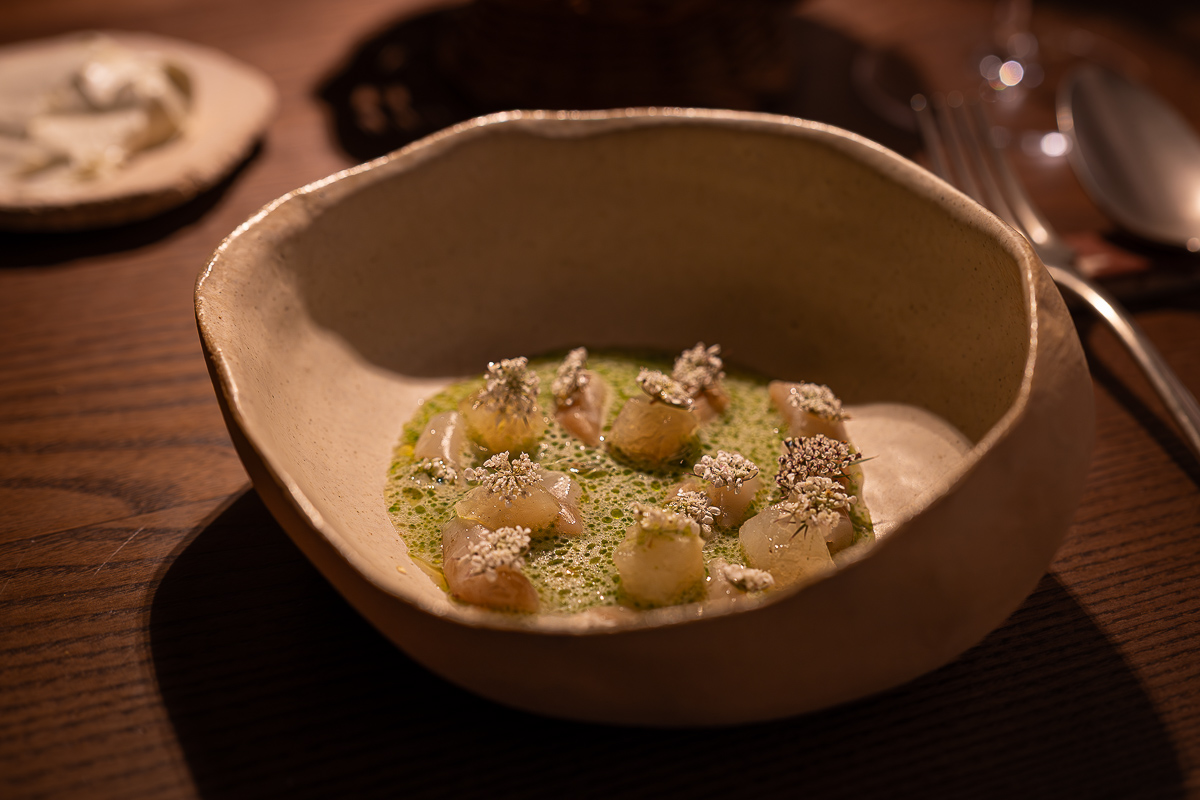
On the first, the iodine. On the second, the herbal notes of the gremolata arrive late, and finally the bone marrow rounds the whole dish out. A very strong opening.
The cuttlefish
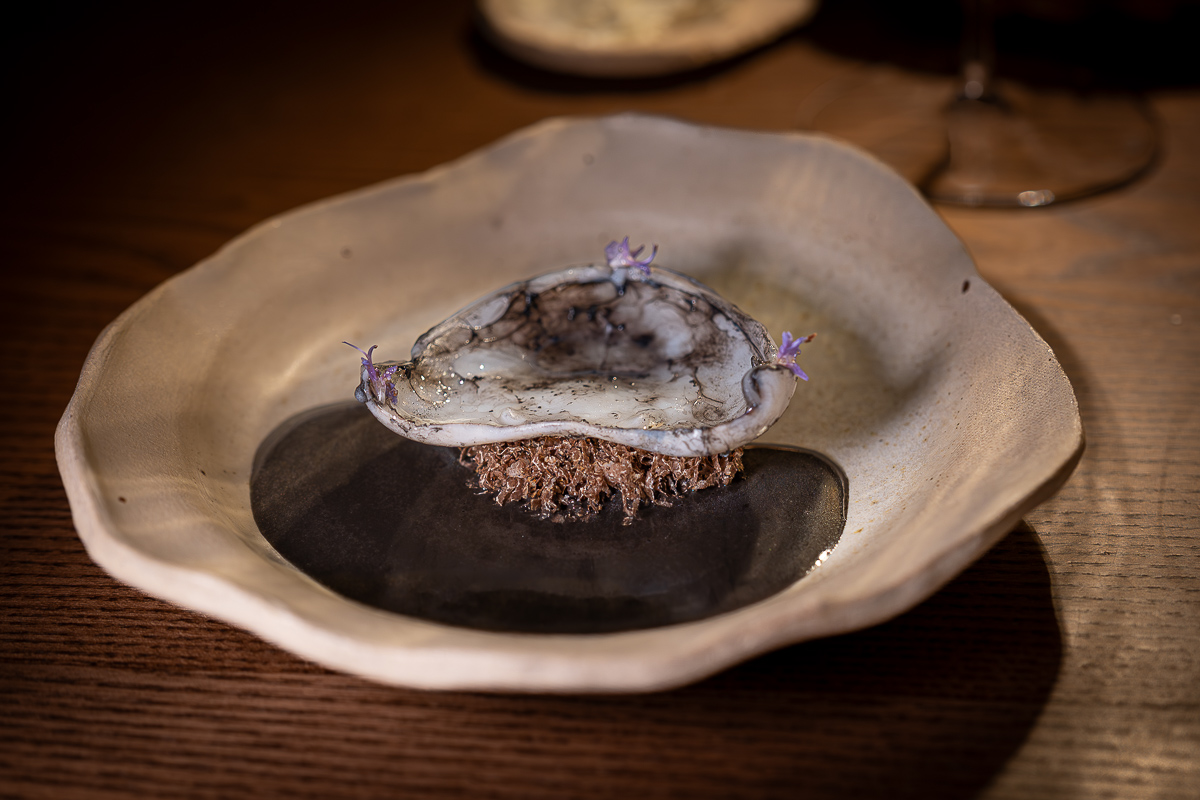
The idea is bold: pull cuttlefish into the language of game, with a civet sauce — a treatment historically reserved for hare or wild boar — and pair it with black truffle. In place of blood, the civet takes the cuttlefish’s own ink, a marine refinement of a dense, structured classic. The cuttlefish kept its inner skin intact — rare in fine dining, here a more aesthetic than technical choice. The truffle did its work as the anchor between land and sea. Even so, the whole still has zones that don’t quite knit together: between the opulence of the civet and the delicacy you’d expect from the cuttlefish, the final tuning is missing. Paired with Versant Nord 2024 by Eduardo Torres Acosta, an Etna wine with the volcanic tension to meet the salinity and brine of the cephalopod.
Meat or vegetable?
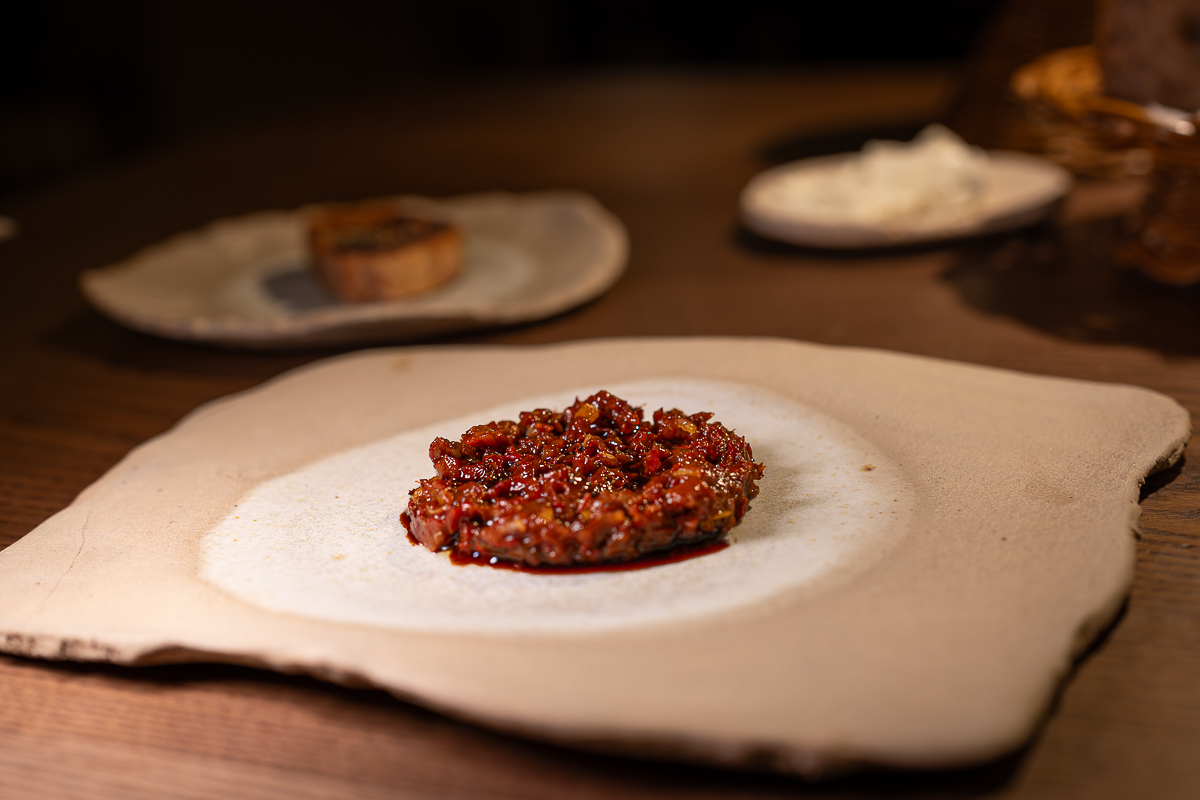
The peperone come manzo is one of the house signatures, and you can see why. Red pepper treated, pressed, marinated, served in the form of a beef tartare, with good toasted bread alongside. The idea has a long lineage in fine dining: Passard‘s beetroot, Berasategui‘s tomato. With red pepper I’d never come across it, and it works — better than I expected, I have to admit. There was a moment, mid-bite, when I caught myself wishing there had been actual meat on the plate. It lasted only a second — long enough to understand that this is precisely the dish’s victory: what gets created out of absence. The balance of sweet, acid and umami is tuned so finely that the whole architecture of the plate becomes part of the chef’s grammatical vocabulary.
The tortello
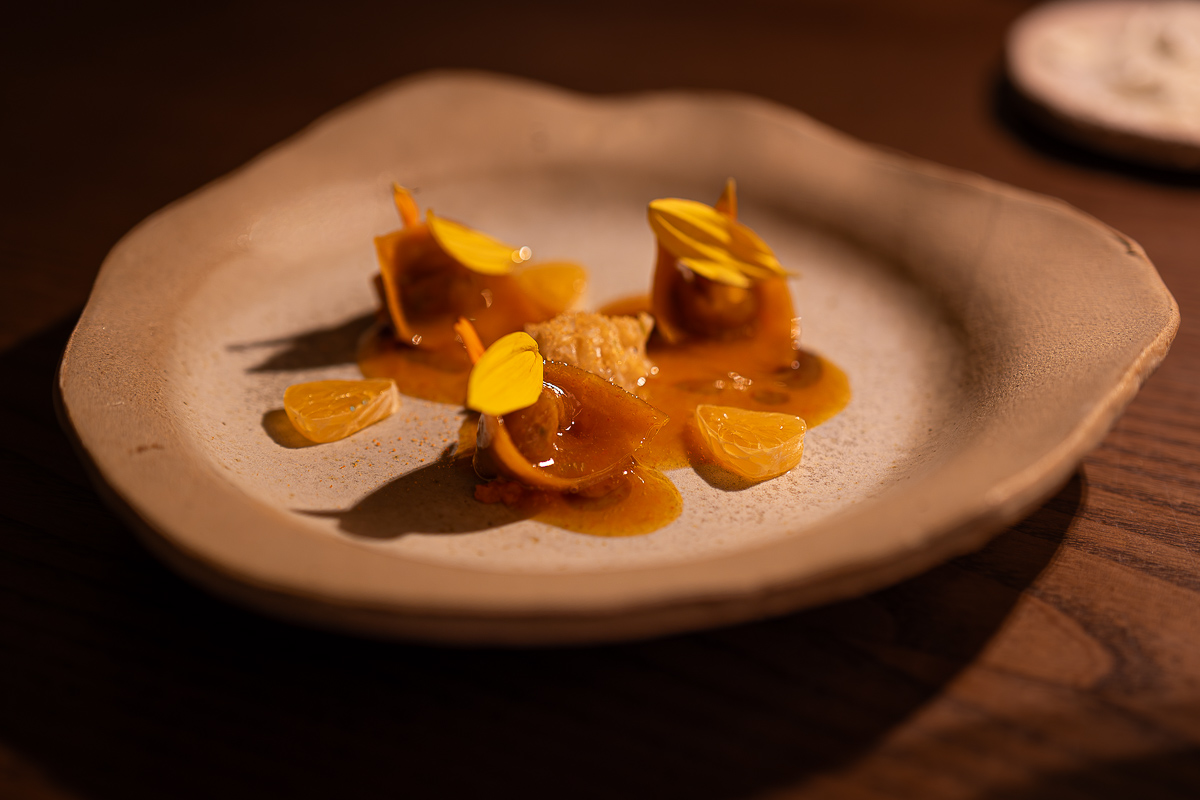
It was here, with the pumpkin tortello, crab and tangerine, that Puleio‘s Italian hand really raised its game. Pasta thin without being translucent — a serious tortello thickness, capable of holding the filling without breaking and without surplus dough. Filled with sweet, firm crab; tangerine bringing the right acidity and aromatic lift; chervil closing it with freshness. A bold combination, a clean result. Conceptually, this is Italy with the borders left open. Pasta, yes — but with the world coming in through the acidity, the herb, the crustacean.
Alongside it, Renato Keber Pinot Grigio Riserva Collio 2019 — the sommelier Gianluca Tronci‘s choice. A serious Pinot Grigio with age, unctuous and mineral, that built a bridge between the sweetness of the crab and the citrus. One of the finest pairings of the night.
The spaghettino
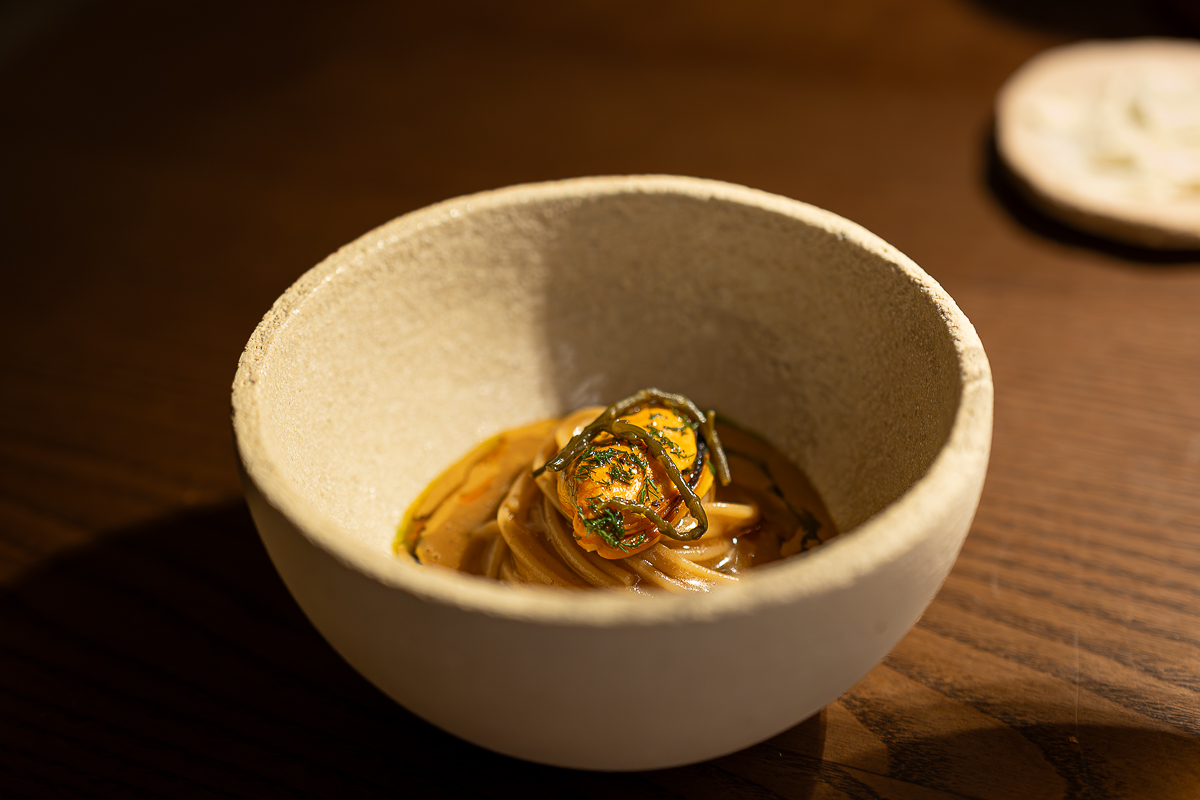
If there’s one dish that sums up Pulejo as essentialist Italian — pared down and deeply flavourful — this is it. Fine spaghettino, mussels opened to order and beans cooked down to create a velvet sauce that wraps the pasta, in a masterful negotiation between the mussel liquor and the bean starch. There’s a worked stock hidden inside the dish. Greedy and brilliant.
I drank it with La Torre Civitellia 2022 by Sergio Mottura, a Grechetto from the Tuscia, herbaceous and mineral, that pinned down the iodine of the mussel and let the dish shine. One of those dishes only the Italians know how to make. The difference here: it’s sharpened, cut, with no fat, no superfluous element. Cooking without rhetoric.
The lamb
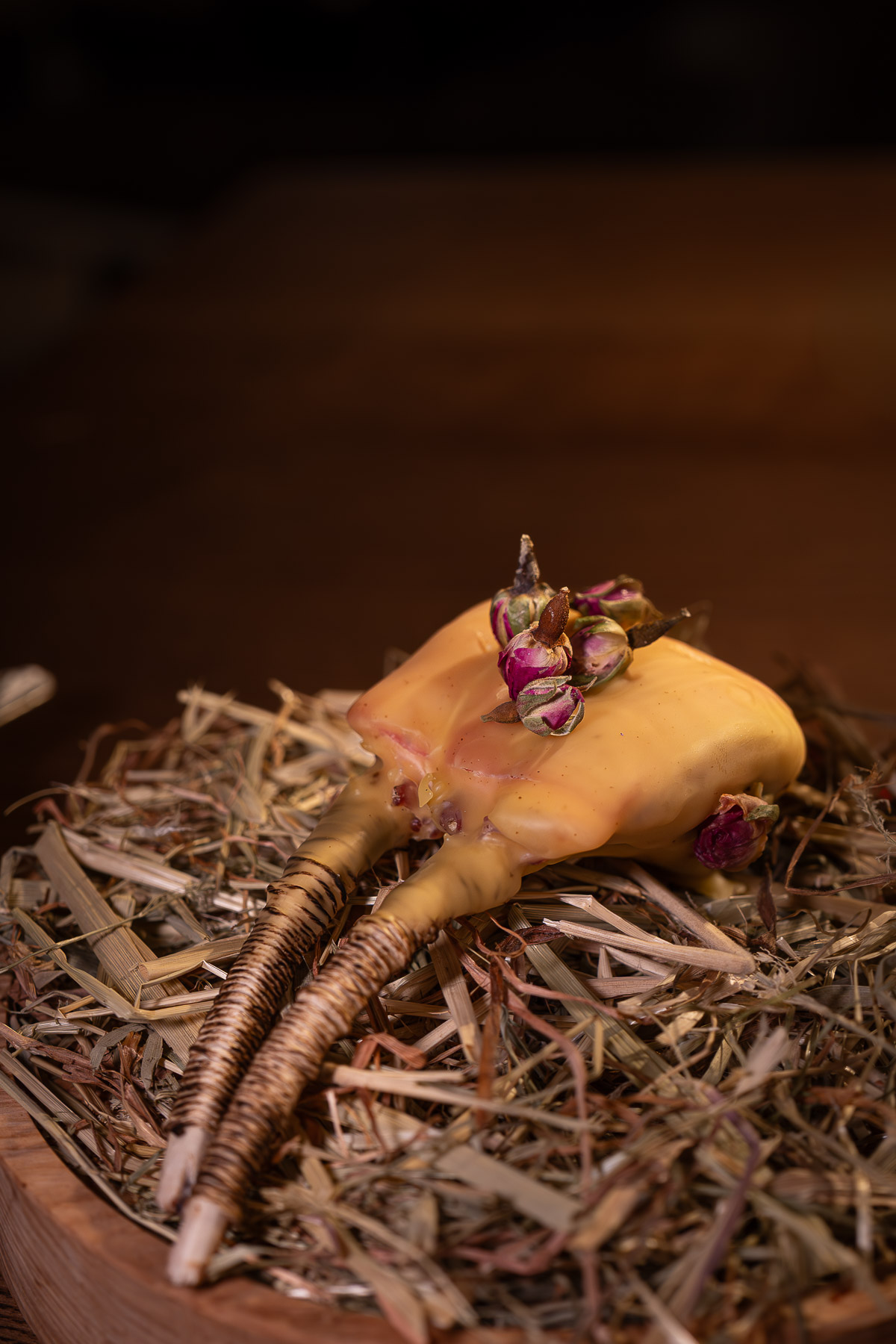
Pecora e rose promises poetry and theatre in the name itself, and the dish delivers without ever putting on a show. First the lamb is presented: butter-aged, a modern technique of controlled maturation in which the dairy fat protects moisture and perfumes the meat through the cure. The result is meat with concentrated flavour, real depth, and a texture that yields without ever falling apart. The rose buds reach you through the nose before the plate does, having sat alongside the meat through the maturation. The aroma drifts in quietly, like perfume worn by mistake by someone at the next table. The meat itself, served in different cuts and at exemplary doneness; the sauce, a reduced and concentrated lamb jus, underlines and binds the elements, while the onion and rose petals lift the whole composition with elegance and freshness. A small bao on the side carries the less noble cuts, full of flavour. A great dish.
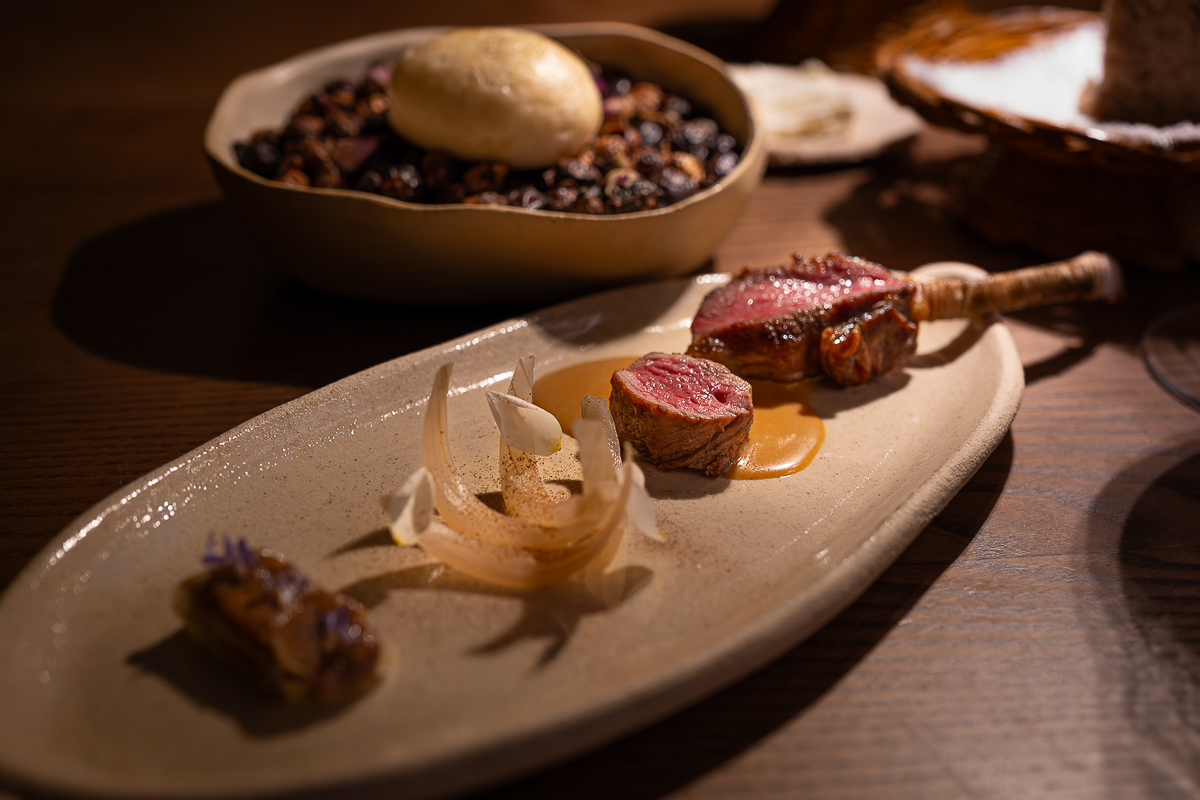
In the glass, Stefano Amerighi Syrah 2022, from Cortona. A Tuscan Syrah with white pepper and dark fruit, the tannin still adolescent but already structured enough to engage with the aged lamb. A fine, elegant Syrah that built a carnal connection and surprised me with every sip.
The closing chapter
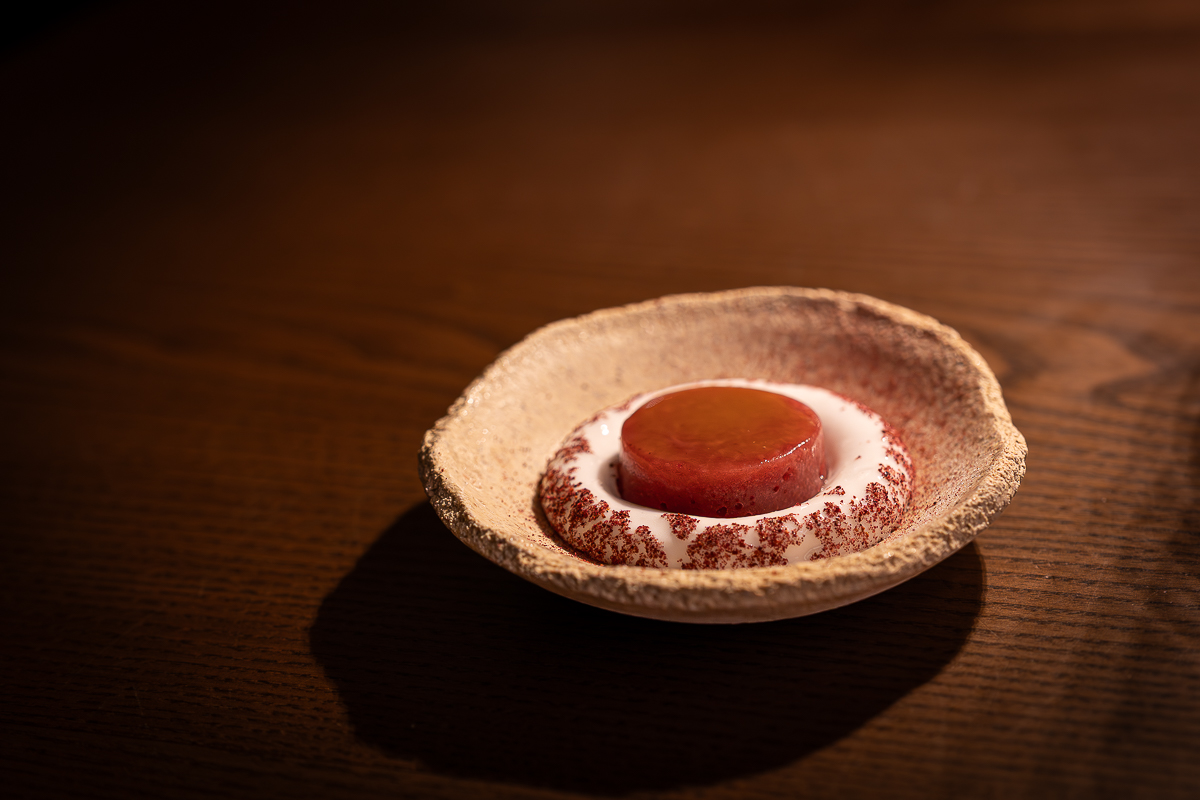
First, a strawberry-and-grape sorbet with almond cream, light and fresh, doing exactly what was being asked of it. Then came the biggest surprise of the night. Celeriac tarte tatin — and the portion of root that arrives on the plate is unapologetically generous, sitting on a serious round of puff pastry. Caramelised in the classic tatin manner, sweet, with the earthy note kept very fine, and the more aggressive vegetal edge tamed by the cooking, to the point where the celeriac could easily pass for a fruit. Sheep’s-milk ricotta alongside, a milky, creamy counterpoint with that animal note that meets the earthy vegetable head-on. A finale with every chance of derailing, and yet it works on several levels, surprising as it goes.
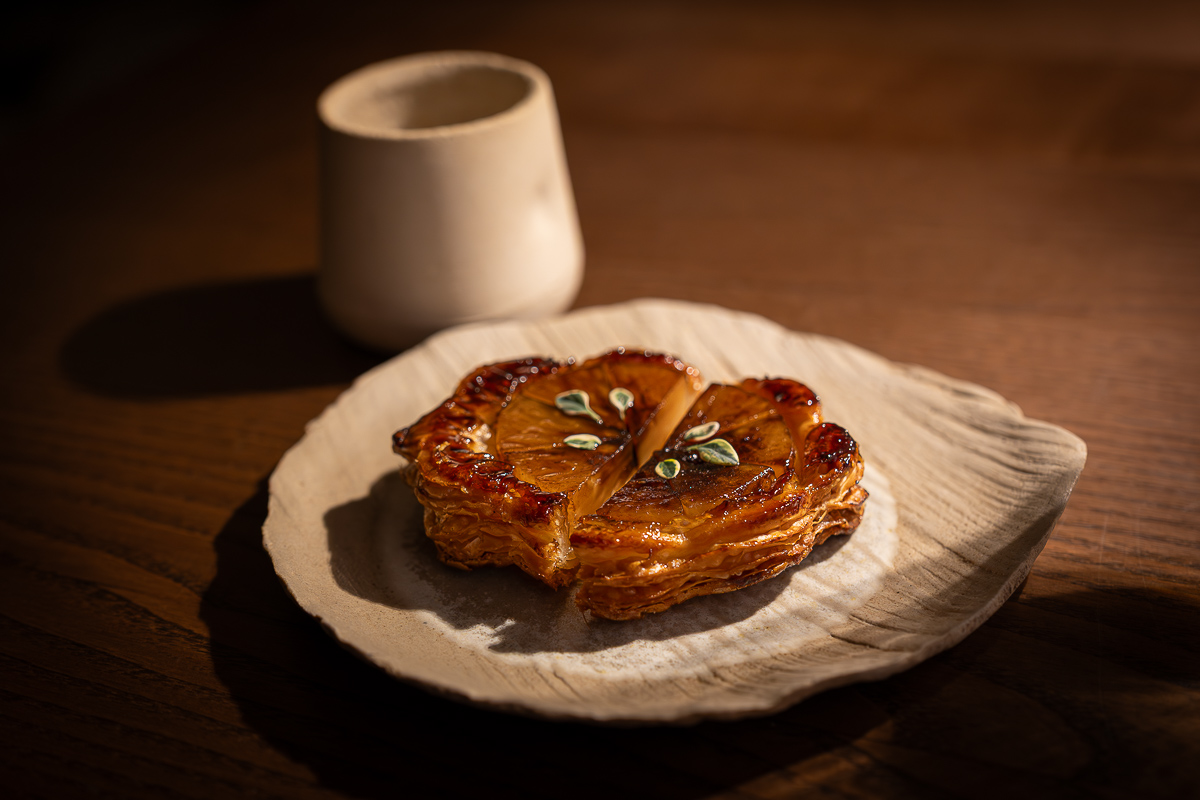
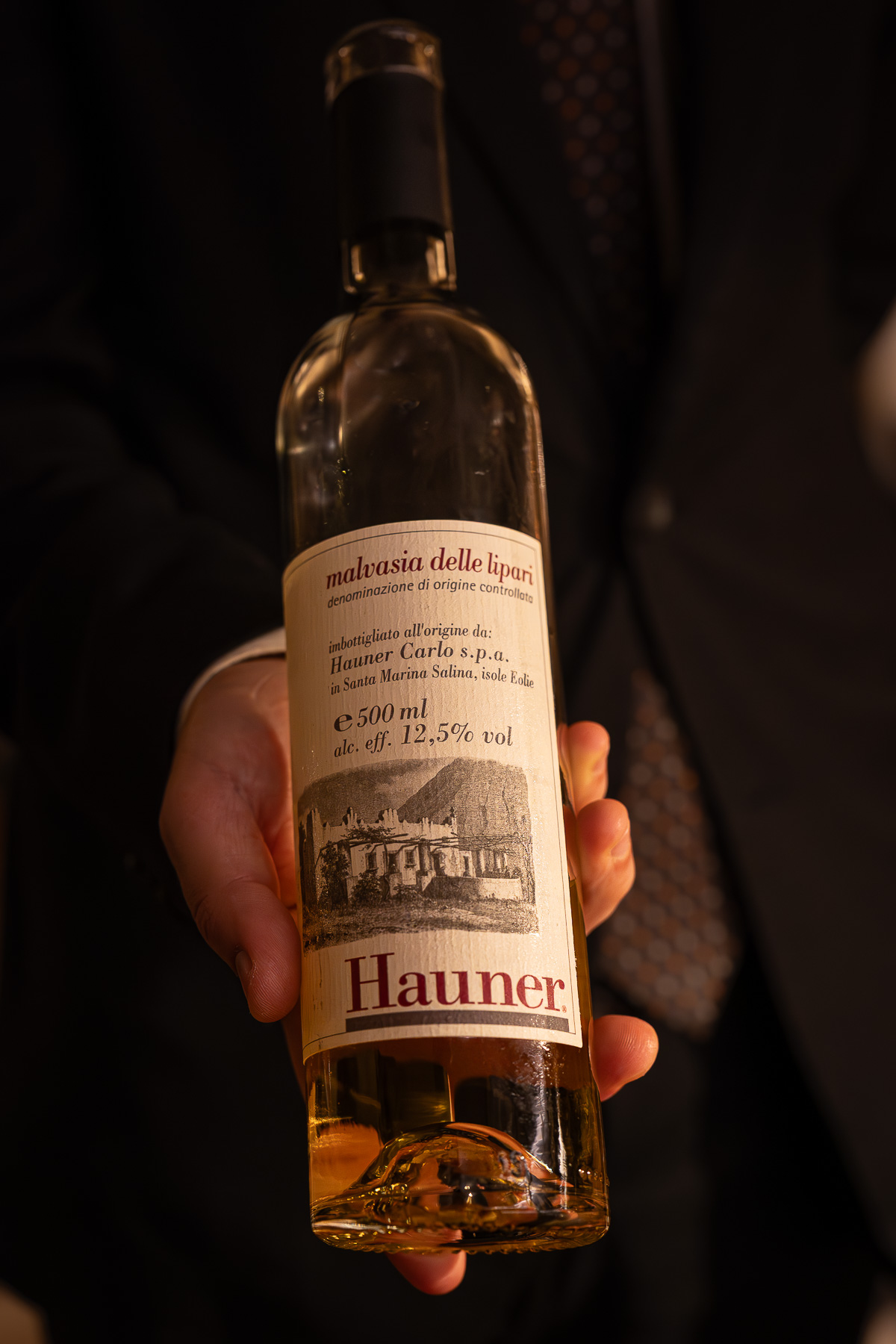
In the glass, Hauner Malvasia delle Lipari, a Sicilian passito with notes of honey, dried apricot, and the iodised volcanic salinity that pulls the wine’s sweetness back into civilised territory. A great pair for the dessert.
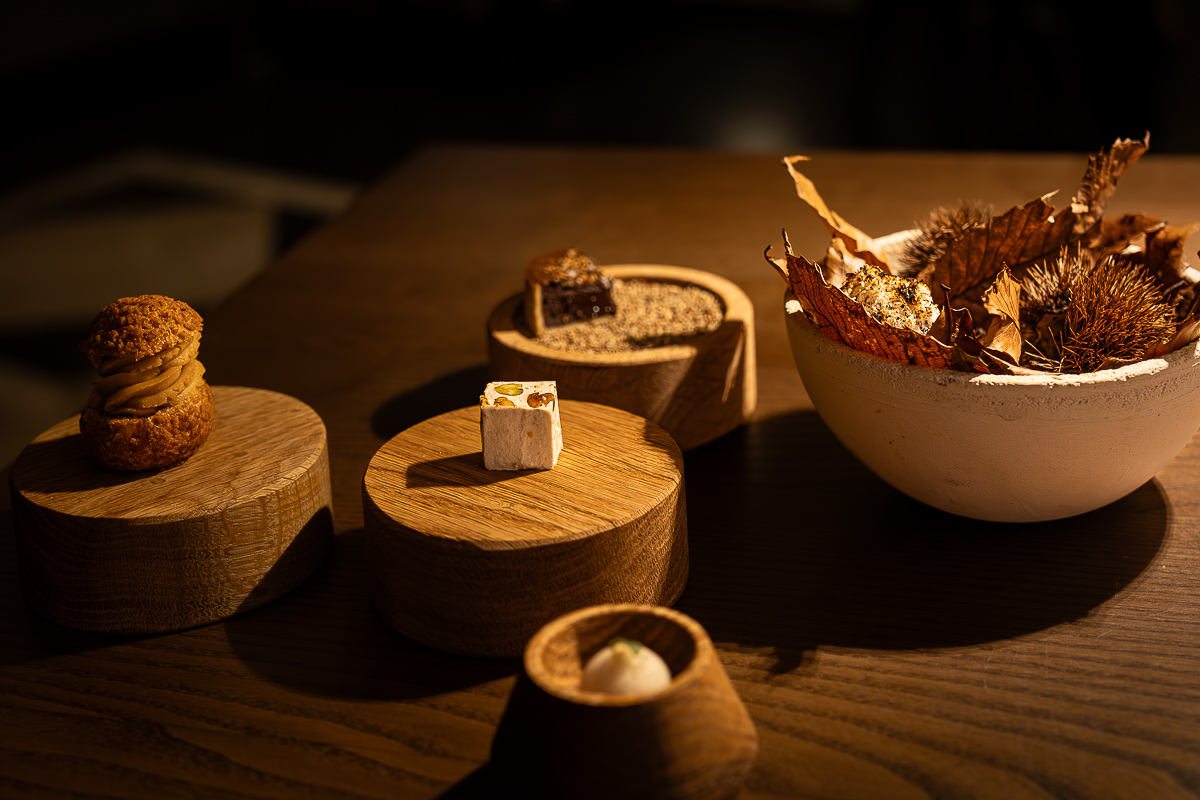
The petits fours, more conservative in form and construction, closed the meal with discretion and care — no fireworks, no unnecessary stretching.
The room
Gianluca Tronci‘s wine pairing wasn’t trying to flaunt the cellar — it was trying to read the kitchen, more than show off labels. Champagne, Etna, Friuli, Tuscia, Cortona, Lipari — distinct Italian geographies, each glass placed there to extend and complete the dish, not to cut across it. Tronci is still young; he came through other starred kitchens before landing in Prati. He knows when to step in and when to step back, and above all he knows how to listen to the guest — a rare attribute, especially at this age.
 The same principle runs through the rest of the service, which was excellent on every level. Not just with me — eating alone, you noticed the individual reading of the table — but at the surrounding tables too. Well calibrated, knowing when to talk and when to step aside. Several dishes finished tableside, with proper mise en scène and no intrusion, technically faultless. Eugenio Galli runs the room with the calm of someone who’s used to sitting on the other side: he reads a guest’s pace before serving them.
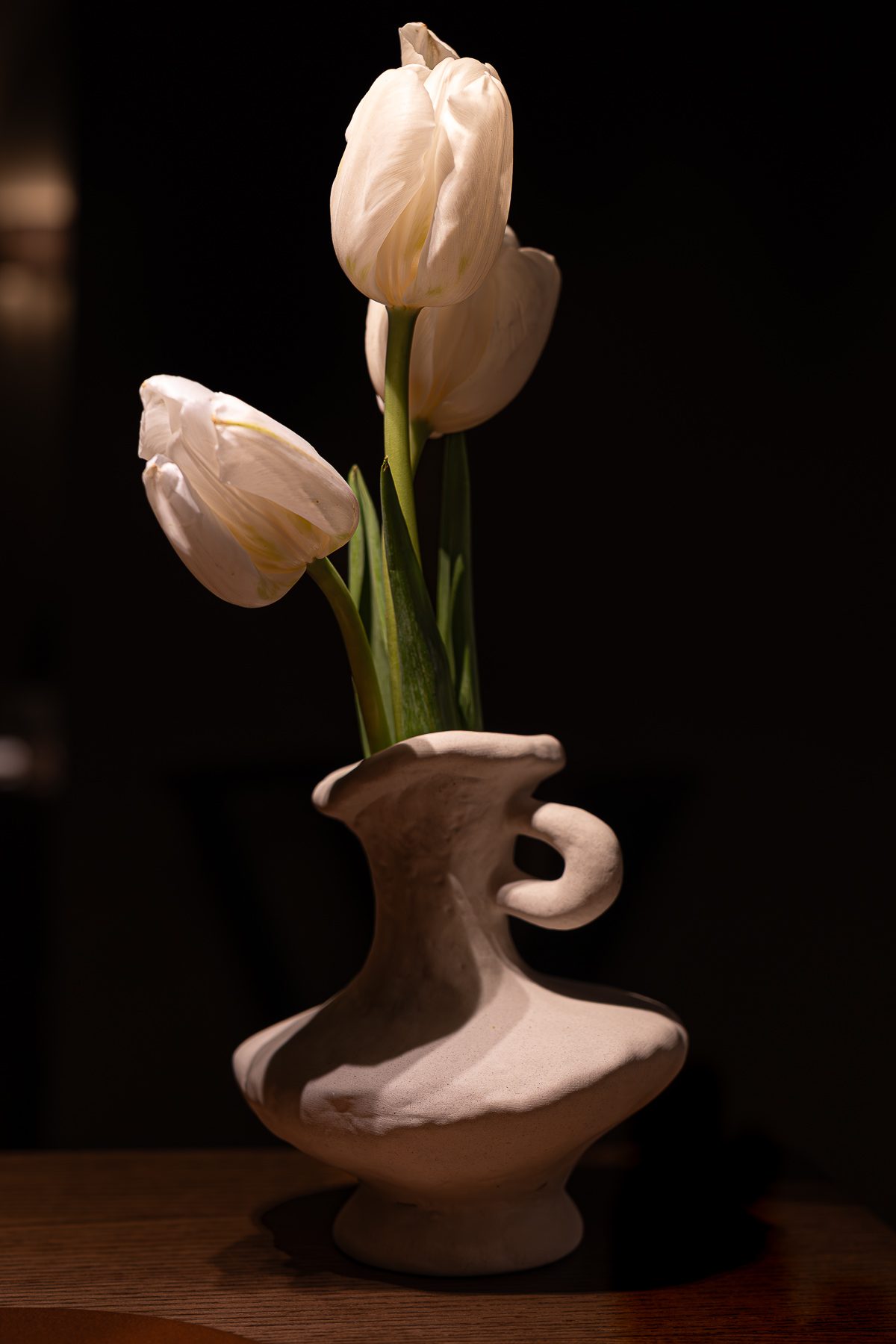
A rare sense of hospitality, presented not as theatre but as something well above the level of the star this house carries. Everything in the room was luxurious without the luxury ever announcing itself — the artisanal ceramics, the cutlery, the linen napkins, the comfort of the chair, the gesture.
 A final note
To file Pulejo as just another emerging star in Rome’s new dining scene is, frankly, reductive. Davide Puleio has in his signature what so many lack: a grammar of his own. Italian in structure, free in the construction of its sentences. A set of journeys and techniques marshalled to write the future of the region’s cooking.
A piece of writing built on a cuisine of memory pointed towards the future. Essentialist, marked by flavour, always Italian. A dish at Pulejo is easy to identify, and that identification doesn’t come from the photograph: it comes from the gesture and the palate.
At a moment when fine dining swings between the virtuosity of Instagram and the fatigue of ostentatious fermentation, Pulejo has the courage to make legible cooking with a clear identity.
To my eyes, the second star isn’t a fantasy. It looks like a concrete possibility — contingent on small refinements, on the repetition of gestures, and perhaps on the occasional stretch towards a more ambitious raw ingredient. The starred guides, as we all know, do enjoy a marquee ingredient on the plate. The rest is for time to ripen.
In Prati, Rome is speaking a new language. Recognisable at the root, free in the syntax. A new Latin. One I want to learn more of.
Address: Via dei Gracchi 31, 00192 Rome, Italy
Reservations: +39 06 8595 6532 | [info@pulejo.it](mailto:info@pulejo.it)
Hours: Dinner — Tuesday to Saturday, 7:30–9:30 pm. Lunch — Saturday, 12:30–2:30 pm. Closed Sunday and Monday.
Price: From €100 (excluding wine)
Chef: Davide Puleio.
Sommelier: Gianluca Tronci
Distinctions: 1 Michelin Star; Newcomer of the Year, Gambero Rosso Guida Ristoranti d’Italia 2023;
Don’t miss: Cannolicchi in gremolata with bone-marrow cream; pumpkin tortello with crab and tangerine; spaghettino with mussels and beans; Pecora e rose (butter-aged lamb); celeriac tarte tatin with sheep’s-milk ricotta; Peperone come manzo.
Also from this chef: Isotta — Trattoria di Quartiere, in Torrevecchia, Rome. A contemporary trattoria paying modern tribute to the region’s traditions.
Around the area: The Vatican and St Peter’s Square (~10 min on foot); Castel Sant’Angelo (~15 min on foot); Piazza del Popolo (~20 min on foot via Ponte Cavour); Mercato Trionfale, one of Rome’s oldest covered markets (~10 min on foot).