
Steirereck was born in 1970, the same year as Heinz Reitbauer, who would one day run it. He is exactly as old as the house he directs, proof of two histories that live as one. His parents, Heinz and Margarethe, both Styrians, had opened a tavern on a corner of Vienna‘s third district and named it after the place they came from: Steirereck, the Styrian corner. Big plates, small prices, the food of southern Austria served to people who missed it — a concept that held for decades.
The son took the opposite road to his parents. Altötting, the Obauers at Werfen, and then the wandering years in the kitchens that then ran Europe: Chapel at Mionnay, Mosimann in London, Robuchon in Paris. He came back with another idea in his head, the modern dream of French nouvelle cuisine. In 2001, after Pogusch, Heinz and his wife, Birgit, swapped houses with his parents and moved to Vienna; in 2005, they moved in for good into a glass pavilion in the middle of the Stadtpark. The early years were hard, the guides marking them down, the press hesitant before the novelty and the nerve of it. The couple had to rebuild, alone, a reputation his parents had spent three decades raising. They did it their way, and with a division that holds to this day: he in the kitchen, she in the room. That detail matters because the night I came here to tell would put it to the test.
Even in the depth of the Viennese winter, the Stadtpark is still what it was made for: people walking home from work, someone reading quietly on a frozen bench, muffled couples, basketball courts, children at full boil, bicycles at the pace of dolce far niente, and the picnic as the highest ambition of a meal. In the middle of this territory of urban decompression, the scale shifts without warning, and the unexpected happens: few restaurants ask you to cross a scene like this to reach them. In Steirereck‘s case, that crossing is the first appetizer — a tasting of haute cuisine in the mind — before we reach the building itself.
The glass box
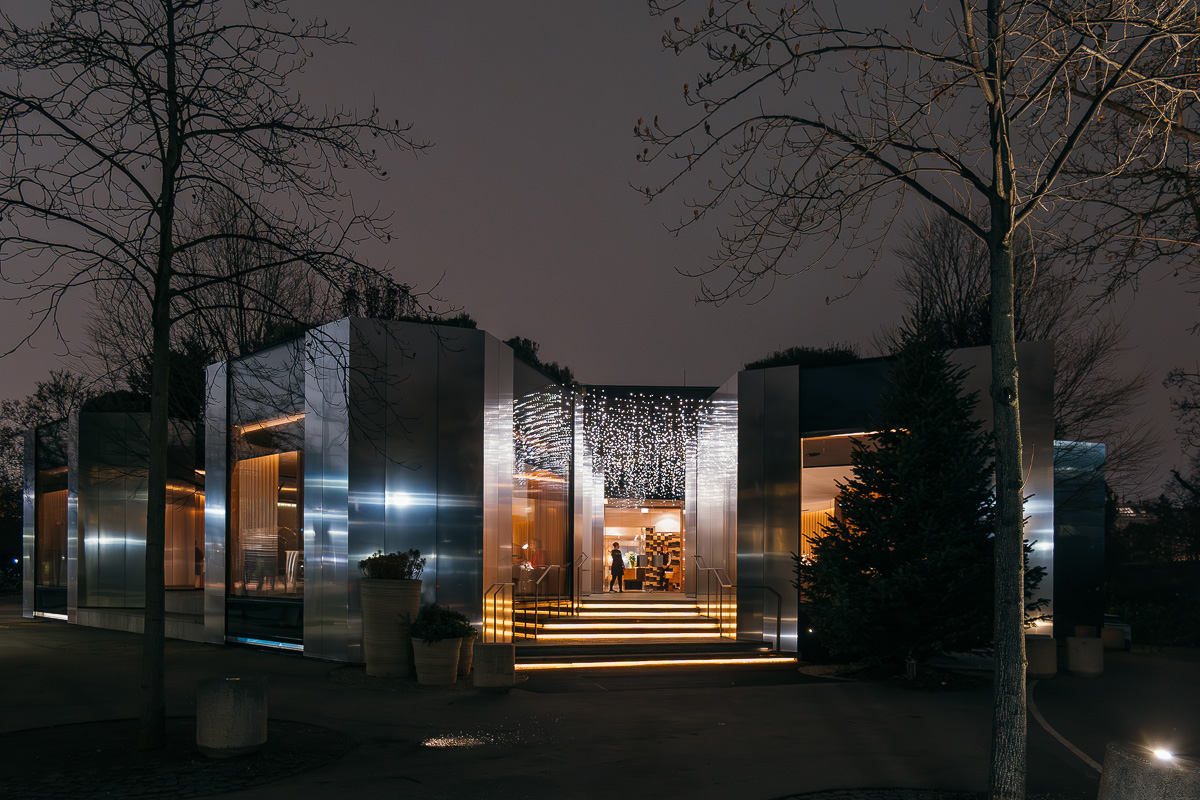
And it isn’t forgotten on several counts. First for the light: as we approached and night fell over Vienna, the glass began to glow, the steel took on another sheen, the interior gained a body, and what had been a modern silhouette became a lit pavilion pulsing among the bare branches. Then, inside, for the sound: the hum of a restaurant that, still early in the evening, was already at full tilt — that unmistakable murmur of a full room working in time. You arrive at Steirereck with the sense of entering a living organism, pulsing to the rhythm of the service. That pulse carries the meal forward.
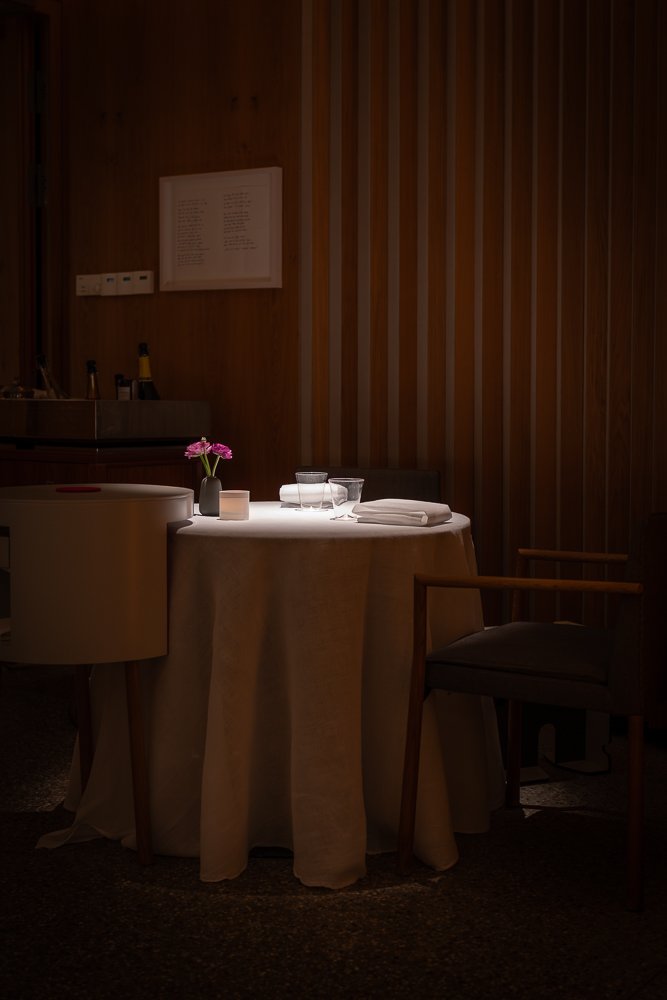
The building helps tell the story. At its core is a former park milk hall from the early twentieth century, to which PPAG added, in 2015, an extension of mirrored panels that reach into the grass like fingers reflecting back the surrounding greenery. Almost every table faces out; tall sash windows rise in summer and drop in winter, keeping the green in view without sacrificing comfort. The result is a warm minimalism: metal, concrete, pale wood, and curves that avoid both cold solemnity and decorative excess. Seated, you grasp quickly the role the architecture plays and how it serves as the sounding box for everything that follows.
A menu that dares to be light
I dined alone, with Cíntia back at the hotel, felled by a virus, and the empty chair beside me was the one fault the house could not fix. Without her to agree or disagree with me, I took the full tasting menu, and the night’s great surprise was not a single dish but the line running through all of them: lightness and freshness. In a register where it would be easy to impress by density, by fat, by a succession of party tricks, Steirereck takes the harder road: that of balance. You eat a great deal, you taste everything, and still you leave without the weight that is usually the price of a dinner like this.
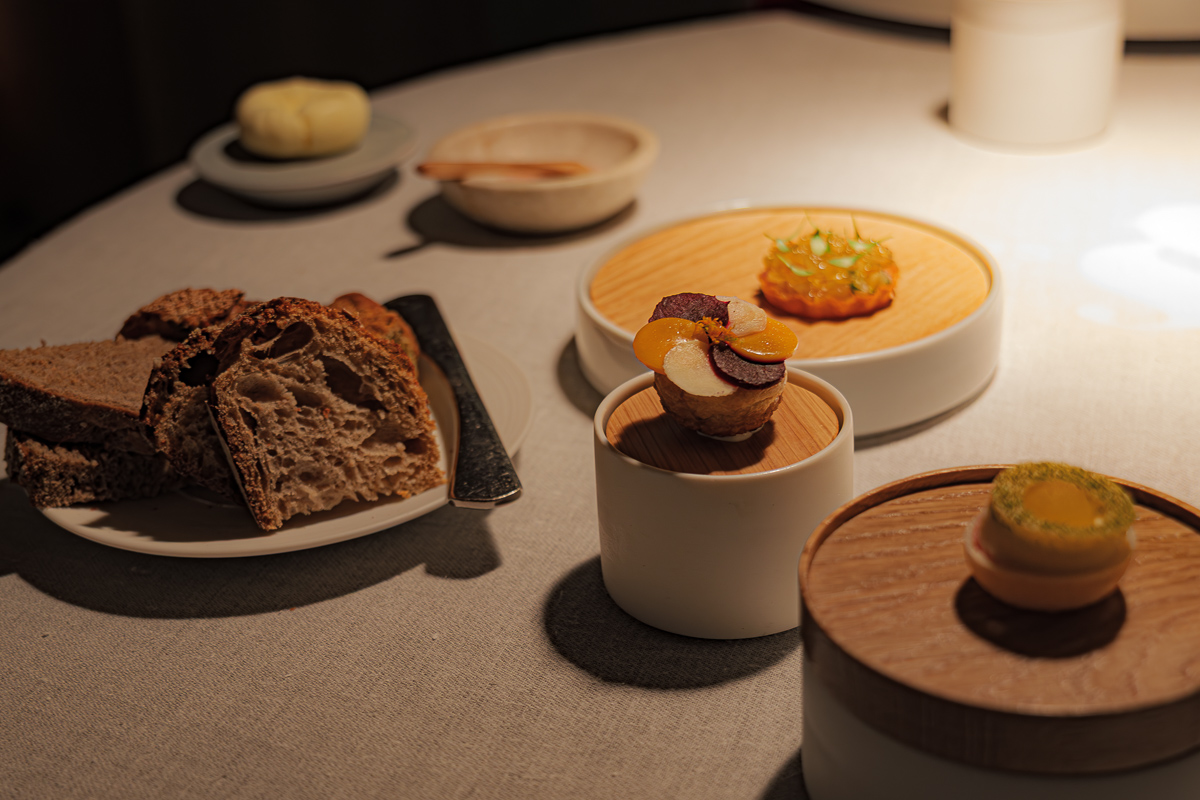
That balance is all the more remarkable because the house never gives up its two great gestures of abundance: the bread trolley and the cheese trolley, each a trap of more than twenty references. The bread trolley is, in fact, part of the restaurant’s mythology and one of the reasons I’d long wanted to know Steirereck. It arrives right at the start, as it should, which means you have exactly one chance to behave like an adult before the meal begins. I blew it. I chose the dark ones, the deepest, with olives, with walnuts, a sourdough to feign restraint, and then glanced around to make sure nobody had noticed that I, a grown man dining alone, had just negotiated myself a second visit to the trolley. The standard, as I’d expected, was one of excellence. Nobody, in this world of judgment, builds an operation like that only to serve you bad bread and mediocre butter beside it. The detail gives away the philosophy.
The three opening snacks, accompanied by a Malat Brut Nature Reserve served from magnum — a Kremstal sparkler, dry and direct — set the tone. From there, the menu unrolled like a journey through the Austrian larder, with the small cards the team hands over with each dish working as edible footnotes. Each card carries the name, the ingredients and an archive number — 1607, 1621, 1461/1 — which is not decorative: it is that dish’s entry in the database of thousands of recipes Steirereck documents in fine detail. The house’s cataloged memory reaches the table without any fuss, and it leads naturally to the river chapter.
Freshwater
Around 2010, Steirereck made the choice that still defines it: it swapped the imported sea for the Austrian river. Farewell, langoustines by plane. Hello, trout, char, carp. This was more than a kitchen decision — it was, above all, a political one. In a country that buried an empire in 1918 and spent half a century believing that good food spoke French, serving your own river instead of other people’s ocean is a political sentence said under the breath: the national raw material owes nothing to the rest of the world. It needed someone with the authority to state it on the plate, and that was where Reitbauer made his mark, shaping the house’s central idea.
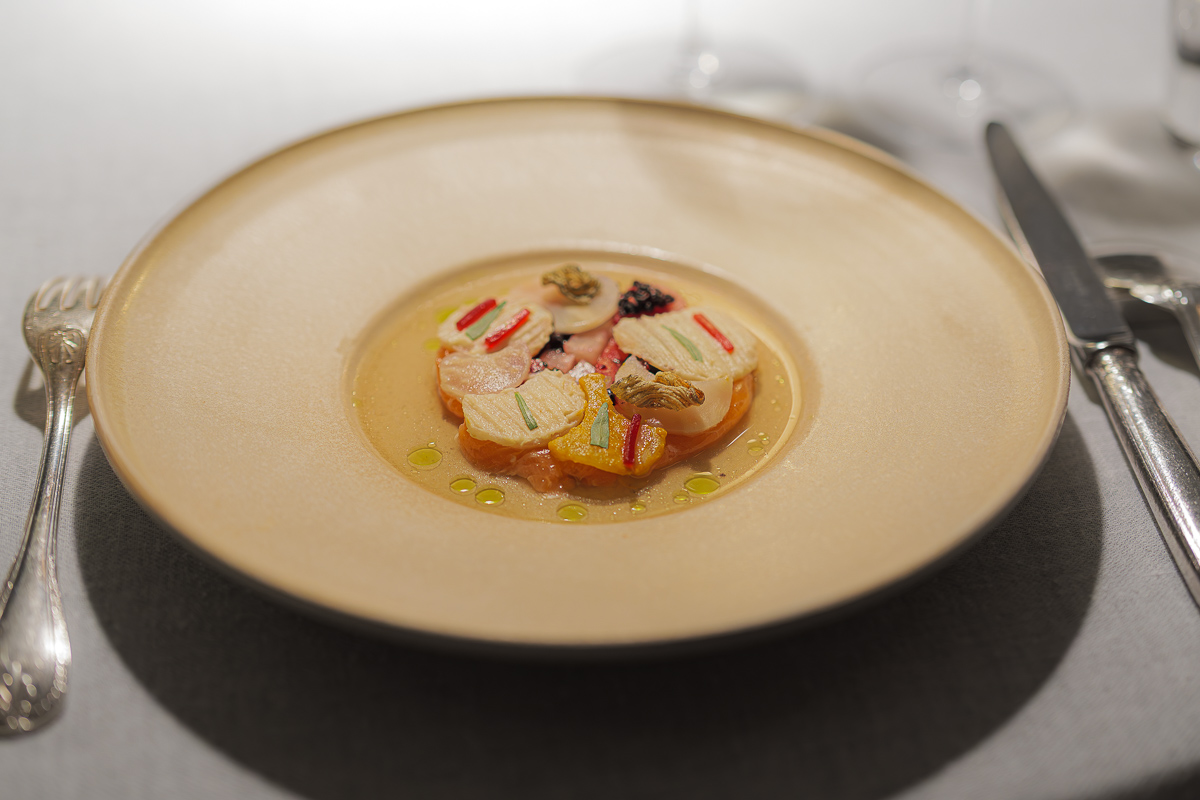
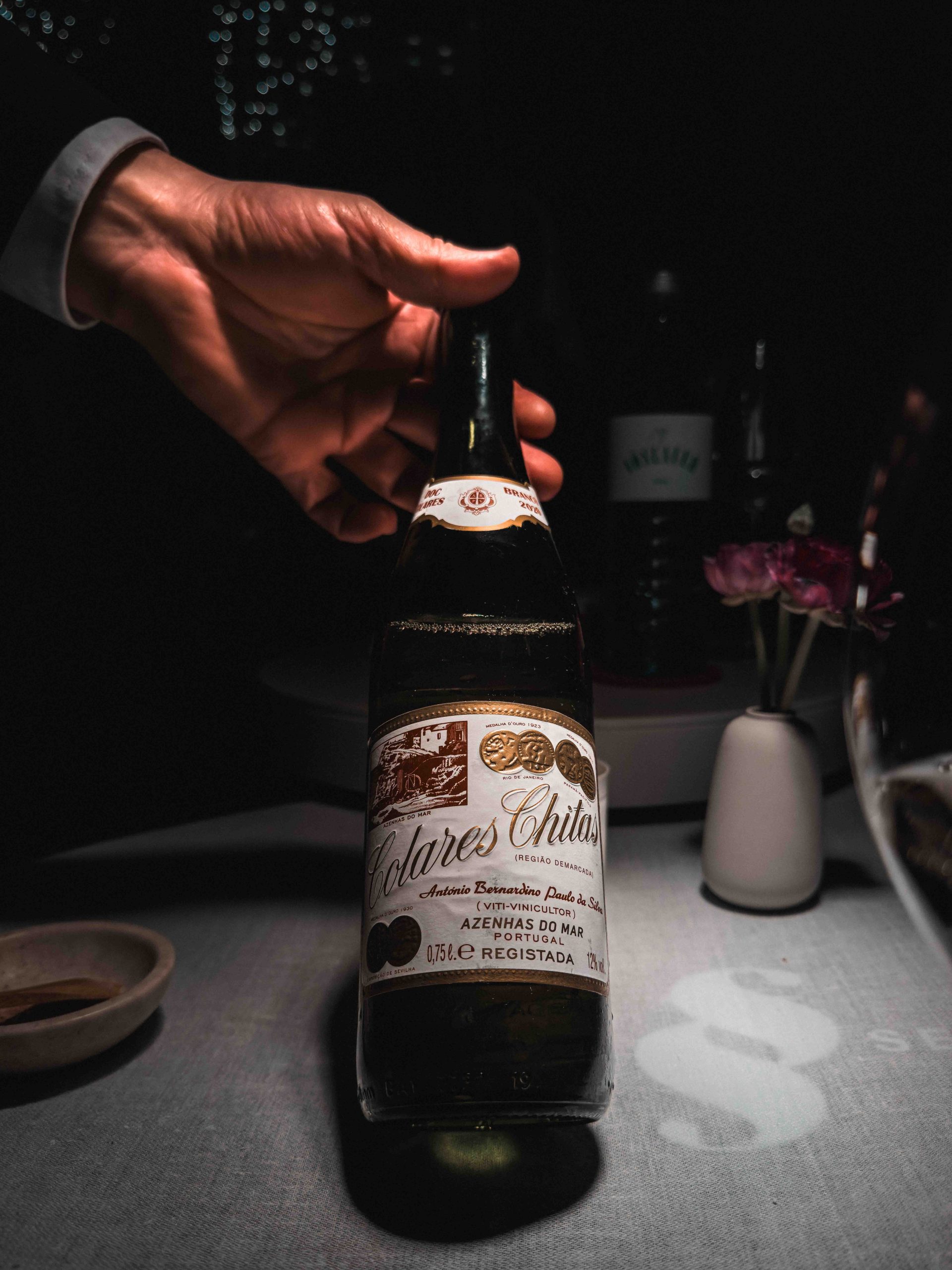 The Ramsau trout opened the menu. Lightly cured, marinated in a garum of fermented Schönbrunn citrus, ringed by parsnip in juice and jelly, celeriac braised in blackberry and miso, a sea-buckthorn cream, dried blackberries and a crisp skin, with the tarragon doing the stitching. Freshwater freshness with the tension of the sea: a play of notes and textures tuned to the millimeter, announcing the signature of the rest of the menu. Beside it, the cellar’s first wink: a Colares ‘Chitas’, from Paulo da Silva. A grape raised in sand, at the Atlantic‘s edge, under sea spray. It gave the freshwater trout back the salt and iodine it doesn’t have by nature — the sea coming in through the glass, now that it had left the plate.
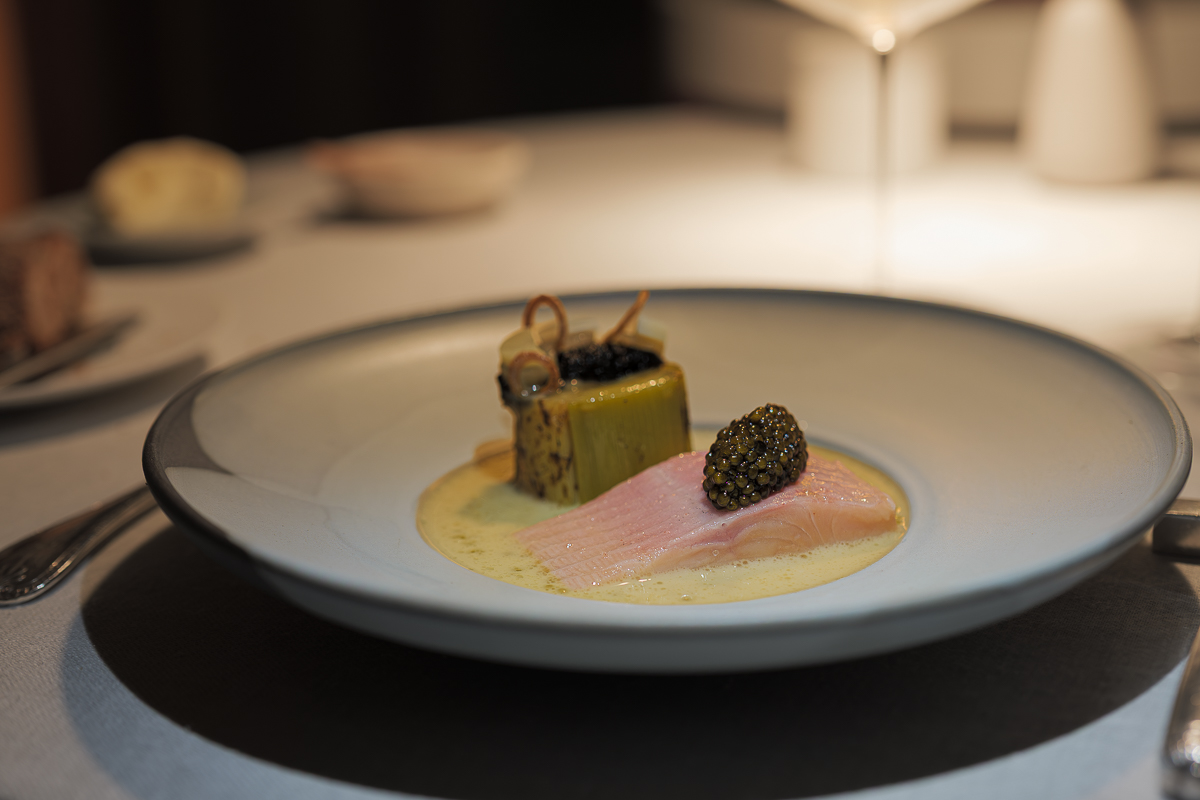
The char (mountain char) brought the most photographed dish in the house. Oscietra ‘Kristal’ caviar, charcoal-grilled leek, bergamot. Around it, caramelized leek paste, yacon, roast spring onions, a fermented-asparagus butter sauce: weeks of fermentation followed by several months in store. Cooked at low temperature, the char gave to the spoon with that minimal resistance which signals the exact point: the flesh translucent, the collagen still taut, nothing dry. You don’t see the technique, but we know it is there. The bergamot works the aroma and the balance; the asparagus returns, in salted jabs, the depth the look had promised. A great dish that can no longer be a revelation, and one that reads better at the table than on the screen: what Instagram doesn’t carry is the temperature, the texture, the precision. That’s not the dish’s fault — it’s the price of eating a classic after seeing it a thousand times on your phone: the wonder had evaporated before the first forkful. Instagram wears the dishes out before we taste them. Which leaves the uncomfortable question — how good, really, is social media for the life of restaurants?
Vegetable hero
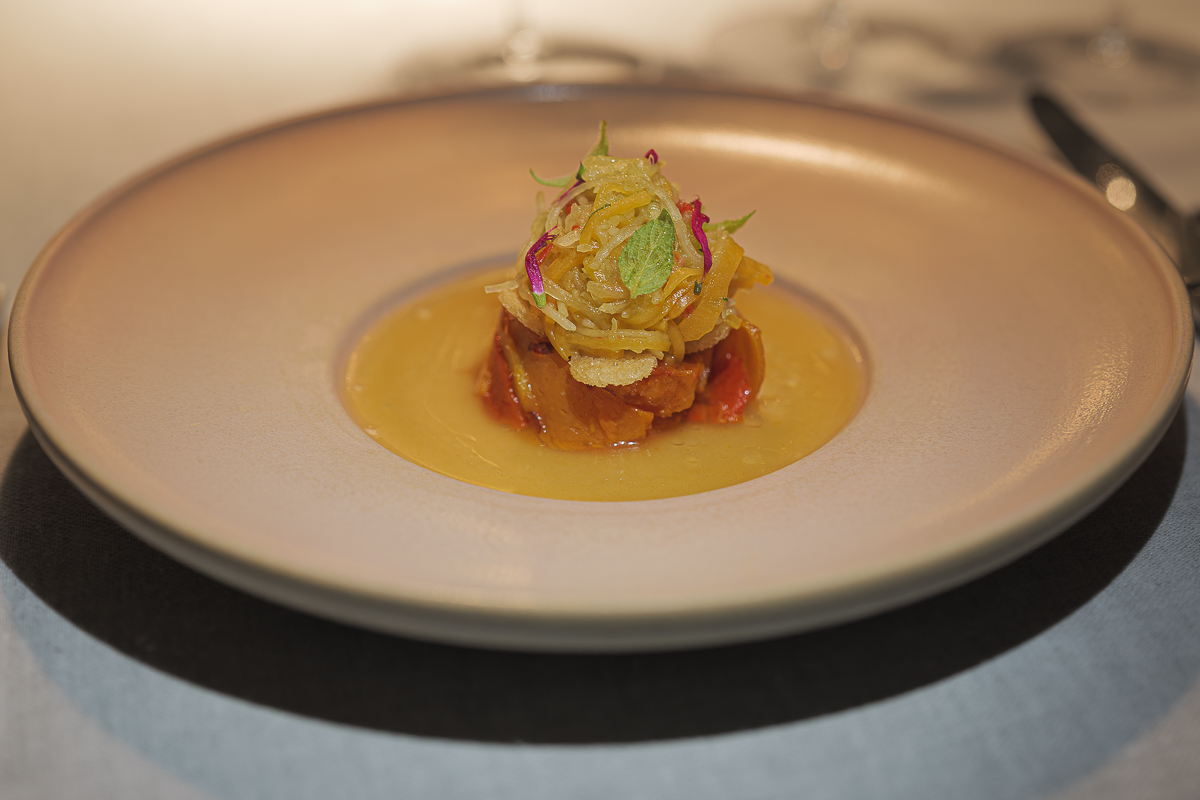
The wonder came from where it was least expected. From a squash, so often reduced to purées and soups, Reitbauer and his team created something singular. I took the first forkful and understood the difference right there: threads of squash marinated in kaffir lime and padrón peppers, braised and dried squash with fermented white peach and a long sweet pepper, confit butternut, crisp white bread and pineapple sage. And beneath it, a muscat-squash juice with fermented horseradish that lands the final kick. The peppers come from Erich Stekovics, the Burgenland man who turned vegetable diversity into an almost militant cause. It was the best dish of the night, and it held no noble protein, no luxury ingredient. It held a play of fruit-sweet aroma, contained heat, and an acidity that made the dish strike home. A squash giving lessons in hierarchy to half the fine-dining world, a little like Cape Verde at this 2026 World Cup.
Meat, restrained
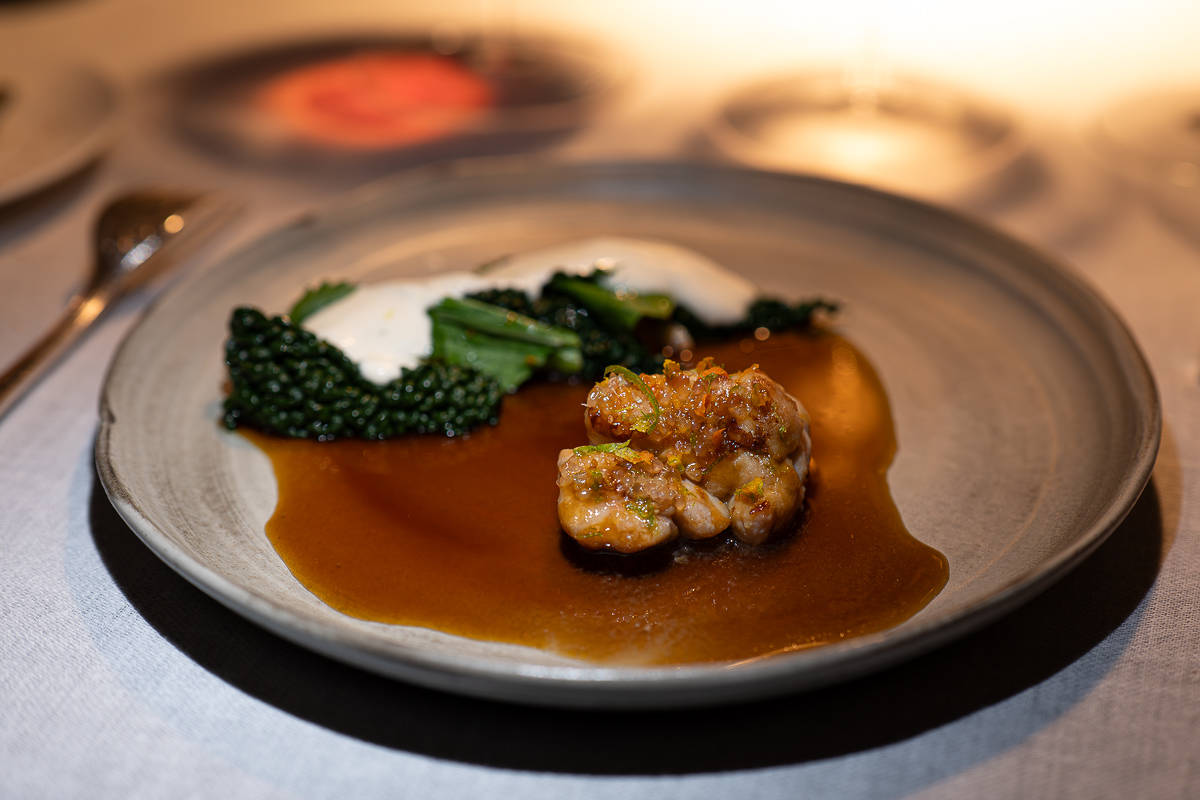
The veal sweetbread proved that lightness is not timidity, and that it can be achieved even in dishes usually associated with something heavier. Here it was glazed with mace, finger lime, tangerine and ginger, over black kale, pak choi and chervil root, in a citrus cream sauce and a tangerine-scented jus. Precise. Beside it, the register rose: a Savigny-lès-Beaune 1er Cru “Les Lavières” 2021 from Marchand-Tawse, frank Burgundy bridging towards the game.
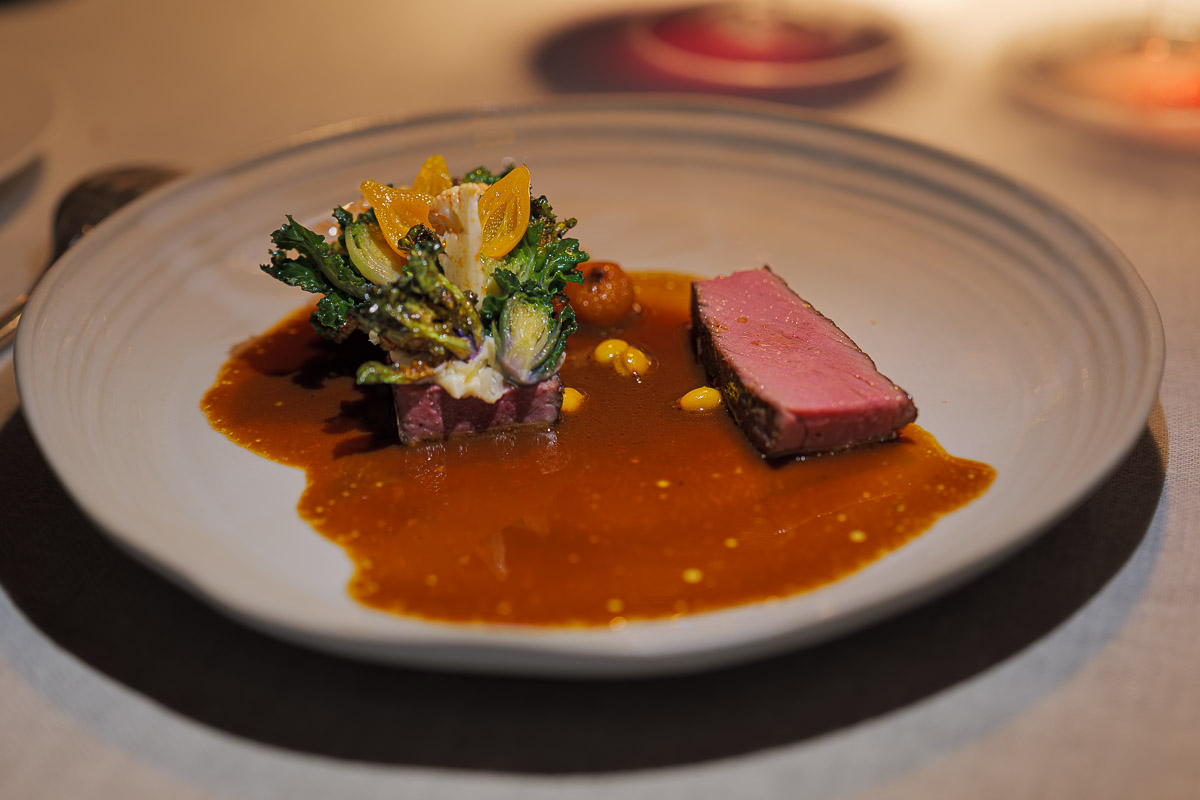
The venison was the most carnal moment of a night measured by choice. Roast loin, cauliflower in two registers, one a German-style cream and the other with lemon and verbena. Robert Brodnjak‘s “Petit Posy” sprouts. Pickled yellow peppers. A game sauce with wild berries and beurre noisette. Powerful but balanced, from the cooking of the meat to the elegance of the sauce with the vegetal touch of the cauliflower. In the glass: a biodynamic Blaufränkisch from Claus Preisinger, Ried Bühl 2016, served from magnum.
 Cheese on stage
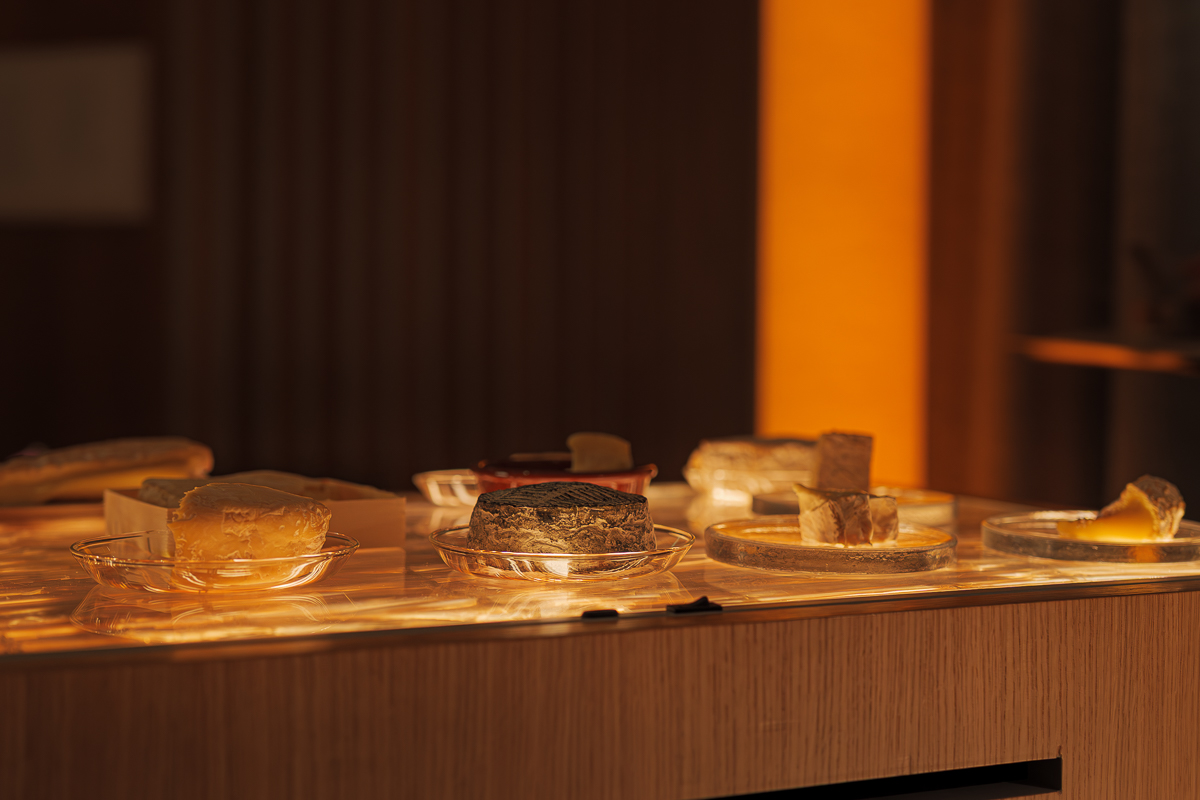
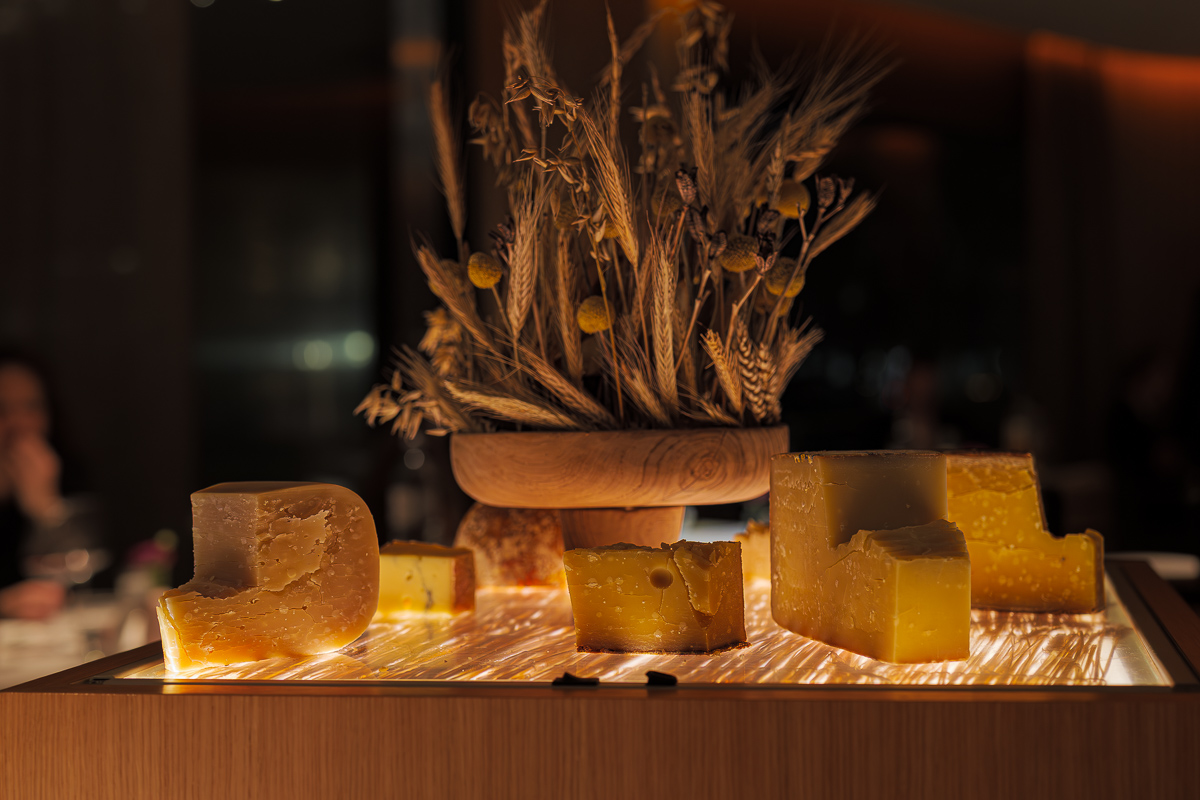
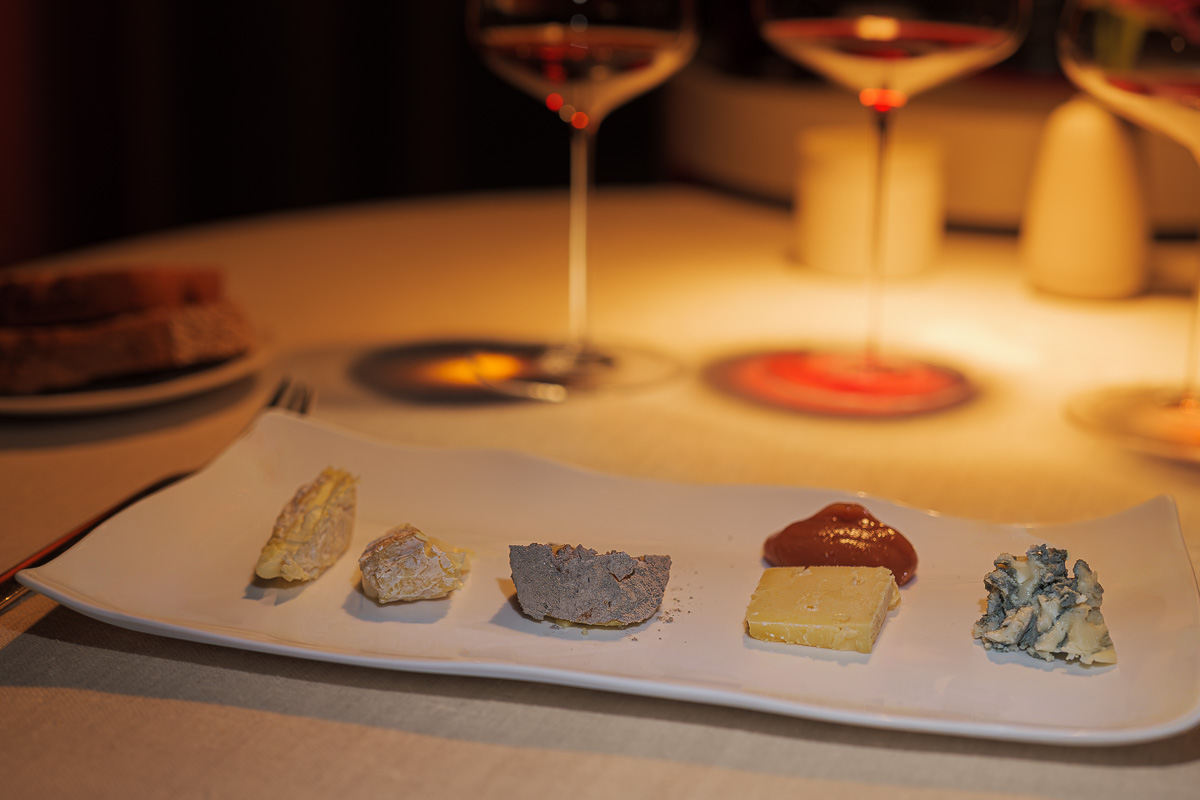
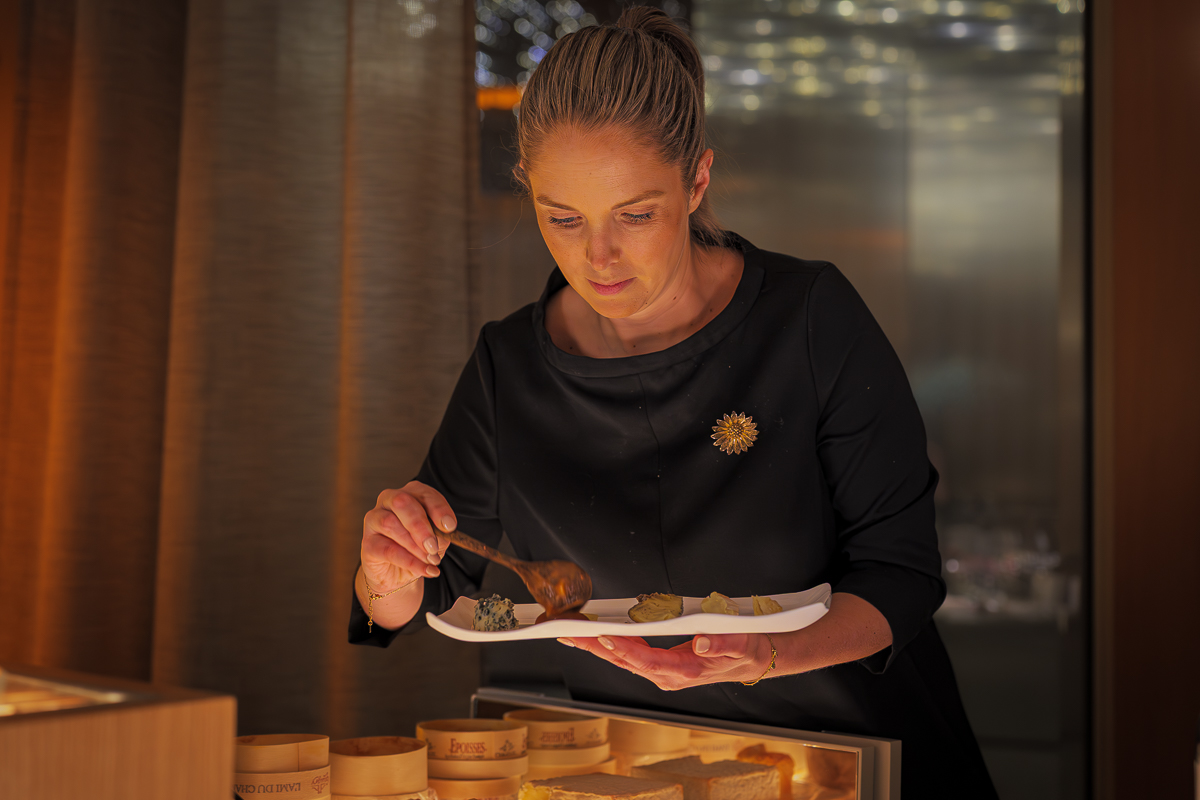
Then came the second trolley, the cheese, with a selection that makes you forget you’ve already eaten six courses. Abundance once again, once again the temptation to taste it all, after an expert account and a maturing that was better still, with each cheese carefully chosen to my taste. Beside it, two wines, both worth the journey: a Rivesaltes 1982, forty years in barrel, amber and walnut and time; and a Ratafia Champenois from Eric Rodez, of Ambonnay. Most restaurants dispatch, or drop, this classic moment. Here, no. It is given the whole stage.
The citrus cut
The bitter-chocolate dessert sets cocoa against citrus and the kitchen garden: a dark-chocolate biscuit with kumquats and signet marigold, an edible flower grown in Steirereck‘s garden, citrus-scented with a tarragon edge, a warm salad of Jerusalem artichoke and pear, a crisp Jerusalem artichoke shell, a kumquat-and-orange sauce and a sorbet of the same flower. It was well made and true to the same line of freshness, if less surprising than some of the savories; the one reservation goes to the chocolate discs, which are too thick.
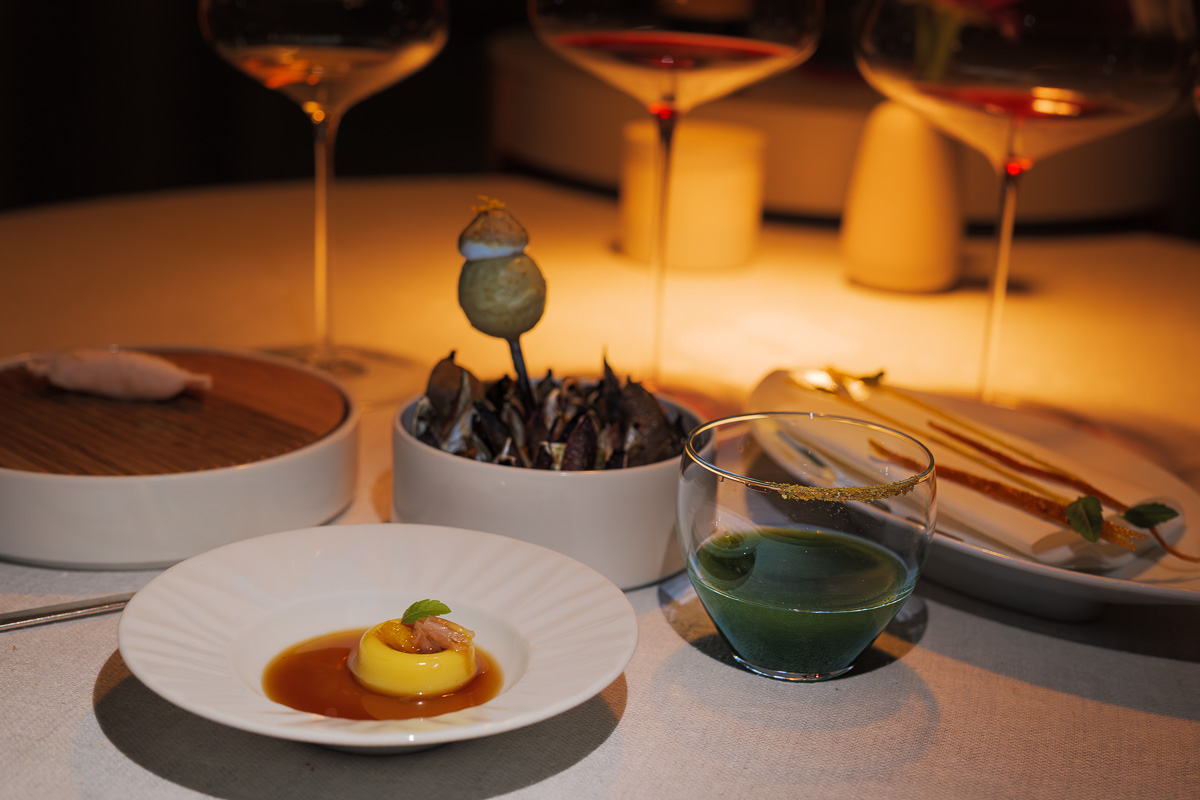
The petits fours: a crème caramel of coffee, coconut and grapefruit, candyfloss with bergamot and lime zest, a butternut-and-tangerine praline lollipop, and the liquid touch of a gin-and-lime cocktail prepared at the table — to reinforce, once more, the game of trolleys, and the excellence of the service.
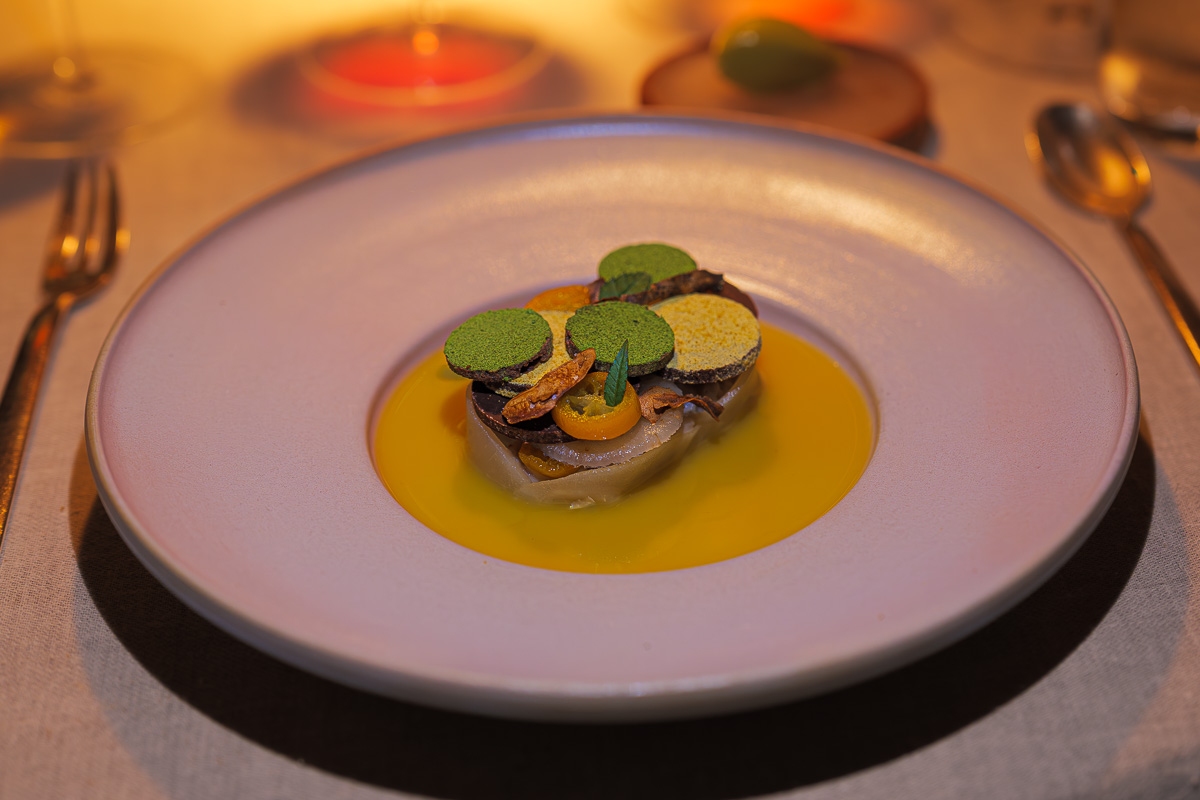
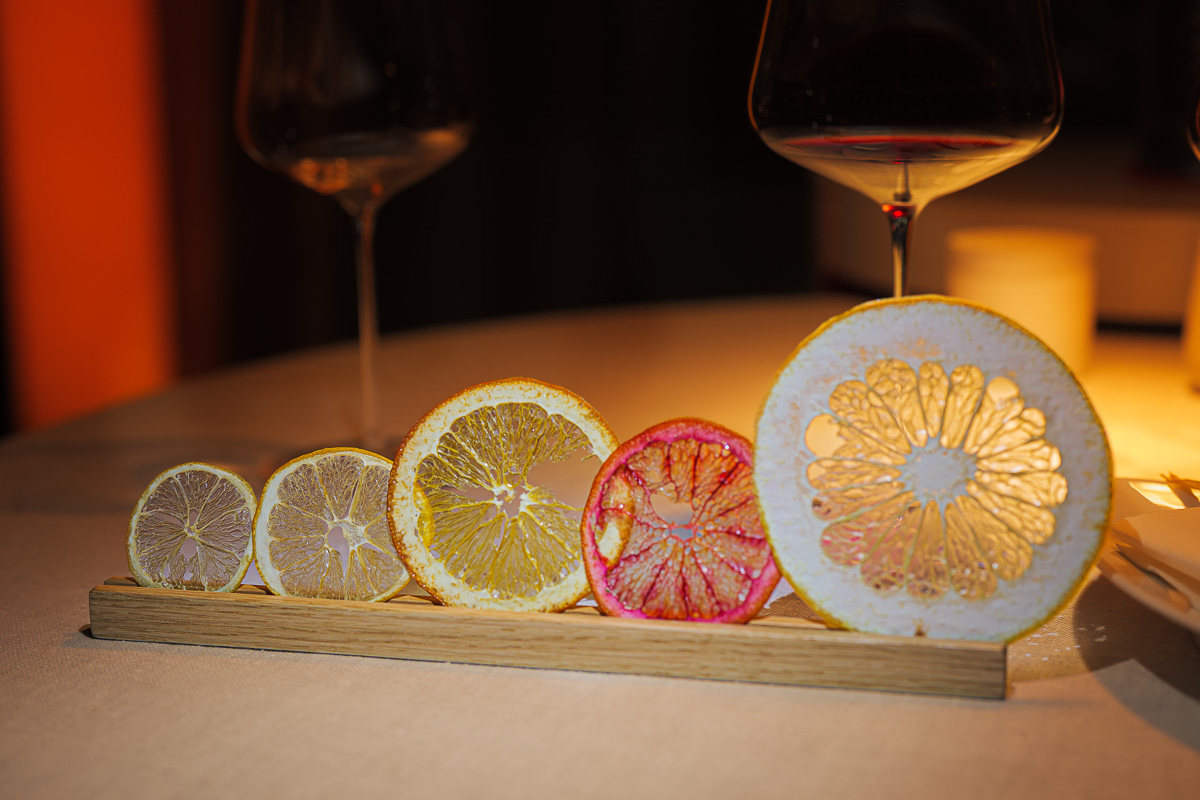
But the real stroke of genius came at the end. Slices and zests of citrus, dried, in an almost austere fashion, served as the meal’s final element.
Instead of closing on sugar, Steirereck closes on dehydrated citrus — a radical cut, of intense freshness, that sends us out full and yet without a shadow of heaviness. I left light, which, in a dinner of this scale, is close to magic.
The map in the glass
The wine deserves a chapter of its own, as the night’s second narrative. Not for the decorated list, which René Antrag built over close to a decade and which earned both him and Steirereck several awards, but rather for the coherence of the pairing. Seen in sequence, glass by glass, it drew a map of Austria: the Kremstal Malat at the start, Martin Muthenthaler‘s Riesling Ried Bruck 2015 from the Wachau with the squash, Wenzel‘s Furmint “Garten Eden” 2017 — from Rust, in Burgenland, where the grape is reborn — accompanying the char, Preisinger‘s Blaufränkisch with the venison, and, to close the sweetness, a Sauvignon Blanc “Essenz” from Frauwallner of the Vulkanland Steiermark. Styria — the Styrian corner that gives the house its name — returns, quietly, in the last glass. A circle that closes.
Through this Austrian territory, a few surgical French detours: a Savigny-lès-Beaune 1er Cru “Les Lavières” 2021 from Marchand-Tawse with the sweetbread, and, with the cheese, two wines for meditation: a Rivesaltes 1982 and a Ratafia Champenois from Eric Rodez, of Ambonnay. And, of course, the Colares. We didn’t speak openly about where I’m from, but the choice felt implicit, the gesture of someone reading the table: we talked about it being a wine I love, from a region still so little explored internationally. It was one of those moments when you feel the room is thinking about us, not merely serving us — because the best pairing reads the diner, not only the plate.
A room with a soul
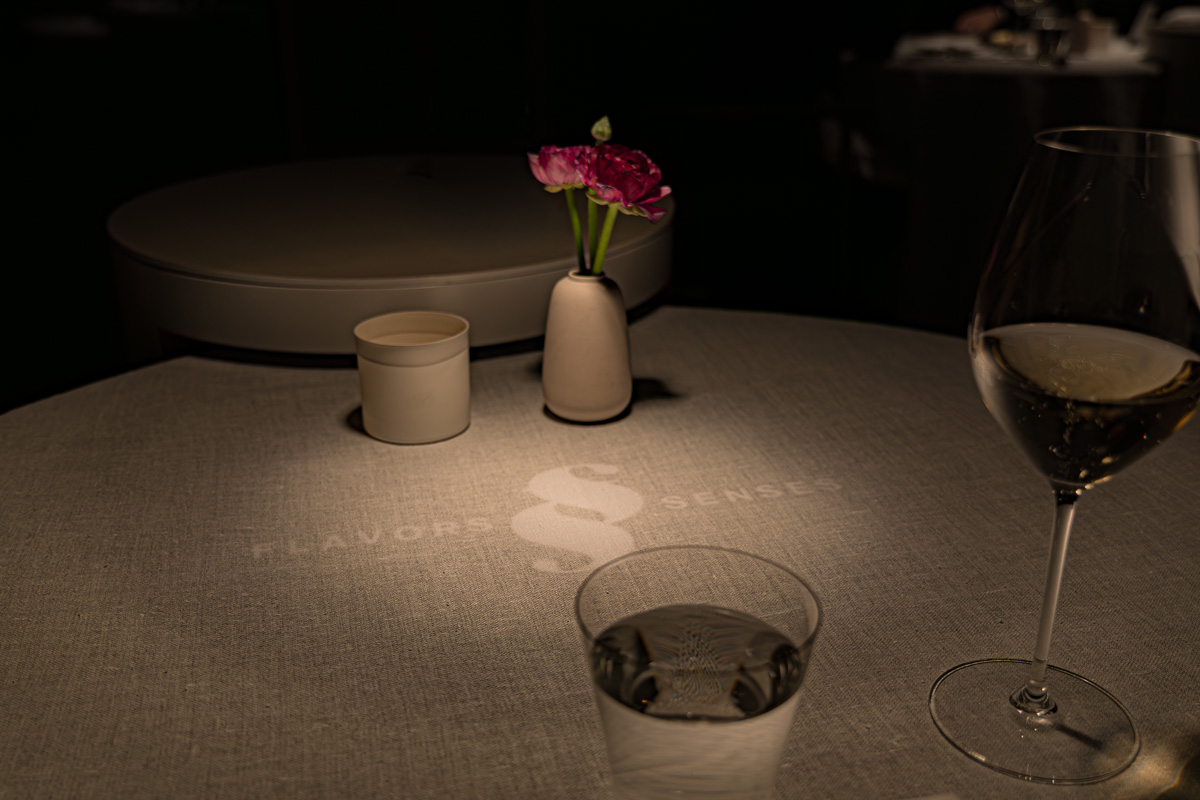
Neither Birgit Reitbauer nor Heinz was in the restaurant that night. And yet, the service was impeccable from start to finish. A truly great house is one that remains exceptional when its best-known faces are absent. The recognition began right away, with the Flavors & Senses logo projected onto the table, a discreet detail of study and attention, and it carried through the whole meal: the command shown in the wines and the cheeses, the pacing and the gestures, the talk that never sounded like a technical spiel. The sommelier who served me was not Antrag himself, but another member of a team you sense is deeply in love with what it does.
Solitude at the table, here, had a texture of its own. With the room full and a first-rate team moving in unison around me, dining alone turns into a kind of night at the theatre: you grow more attentive to the detail, to the choreography of the trolleys, to the way each pause is filled. I felt good — a privileged spectator of a machine that rarely misses a beat.
A final note
I expected the technique, the legendary trolleys, and an endless wine list. I did not expect to leave both full and so light. That is the memory I carry from Steirereck: in a long dinner, with bread and cheese without limit, the house had the rare elegance to send me out into the street sated and without weight. Knowing when to stop is, too, a form of luxury — and few three-stars practice the noble art of restraint.
Heinz Reitbauer‘s quiet revolution is served not only through the vegetables, the fruit and the native produce, but in the room as well, through a reading of Austrian hospitality that has been the mark of Birgit‘s work. The work of a couple and a team who treat one another as family. A recognition that was late: Michelin only launched an Austrian national guide in 2025, and it was on that debut that Steirereck climbed from two to three stars. It was always hard to understand the delay in reaching the gastronomic Olympus, but it came at last. And it came just as Steirereck follows its own current: guided by lightness, by freshness, by the refusal to impress through weight. In a context where three-stars still so often rhyme with opulence, Austria ended up crowning the opposite.
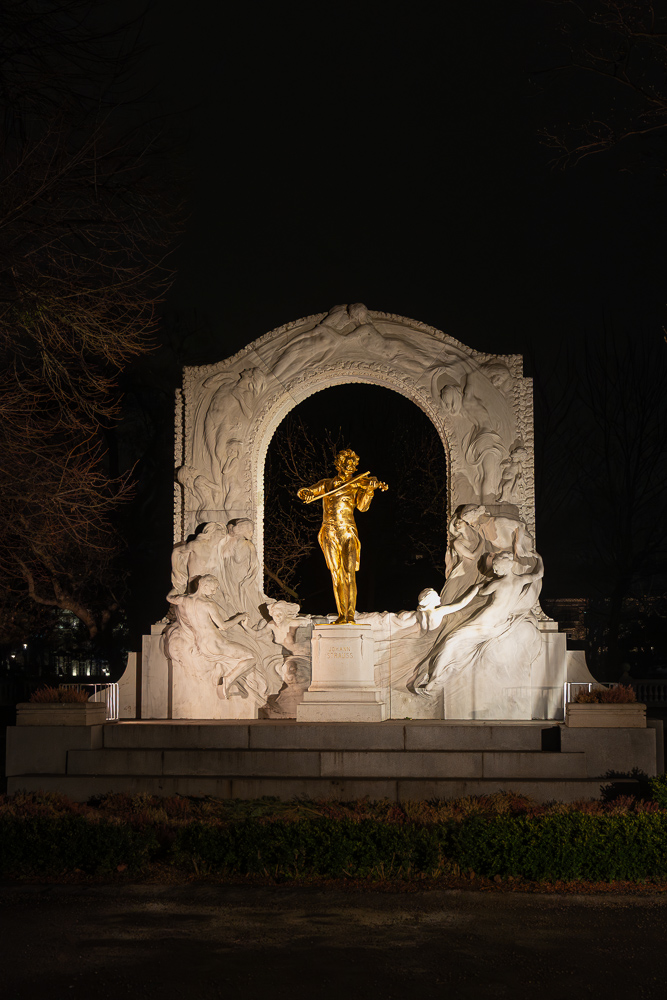
Outside, the dry January cold and the Stadtpark almost dark, with the pavilion’s light going out behind me and the gleam on the gilded Strauss statue, I ran the whole meal back — from the squash to the river fish, from the improbable use of textures and home-grown elements to the magic of its trolleys and its service. I caught myself wishing Cíntia were there: the great dishes, like the great cities, always ask for someone on the other side of the table, to share the experience and the life.
It was one of the best meals I’ve had alone, and perhaps that is the only reproach I can lay at Steirereck’s door. It made me wish I weren’t.
Now I won’t let another ten years pass before I return to Vienna — and no, I won’t go back to that glass box alone!
Address: Am Heumarkt 2a, im Stadtpark, 1030 Vienna, Austria
Reservations: +43 1 713 31 68 | wien@steirereck.at
Opening hours: Monday to Friday, Lunch: 11.30am–4.00pm | Dinner: 6.30pm–12.00am.
Price: From €155 (lunch) and €225 (dinner), excluding wine.
Distinctions: 3 Michelin Stars; 4 Gault&Millau toques; No. 33 in The World’s 50 Best Restaurants 2025.
Don’t miss: The bread, cheese, petits fours and digestif trolleys; the char with Oscietra caviar, charcoal-grilled leek and bergamot; Erich Stekovics’s squash; the service and the wine list.
The chef’s other projects: Meierei im Stadtpark — the house’s café-bistro, right next door by the Wienfluss, open all day for breakfast, strudels and a celebrated cheese selection. Wirtshaus Steirereck am Pogusch — the family’s tavern-farm in Styria, at 1,050 metres’ altitude, with its own agriculture, more than 500 edible species cultivated, lodging and produce-driven cooking.
Nearby: the Stadtpark itself (at the door) and the gilded Johann Strauss statue in the park; the MAK – Museum of Applied Arts (~5 min walk); the Wiener Konzerthaus (~5 min walk); Wien Mitte station, with the airport link (~7 min walk); Stubentor and the U4-Stadtpark on the doorstep; St Stephen’s Cathedral (Stephansdom, ~15 min walk); the Belvedere (~15 min walk).