
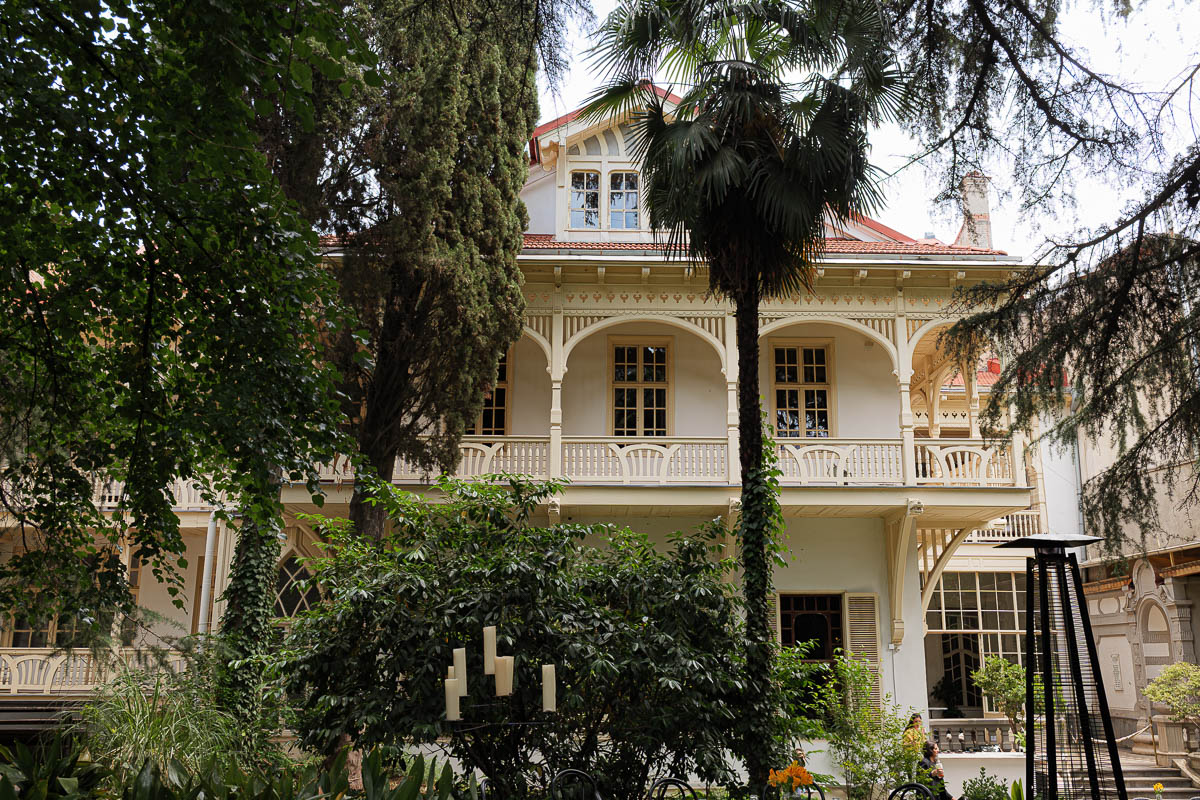
In Georgia, telling someone they want duck dolma is telling them their wishes are unrealistic. The expression comes from Georgian folklore and usually travels with another, about owls’ eggs; both name the food that cannot be found, the request no kitchen can meet. I can now say I ate mine at lunch, in the garden of a century-old house in Sololaki, the district of wooden balconies and inner courtyards a few minutes’ walk from Freedom Square, with matsoni foam and mint, among the guests of the fifth Tbilisi Gastro Week, at a press lunch. But before the food, the house. It has more stories to tell than most restaurants and their menus.
 From brandy to books
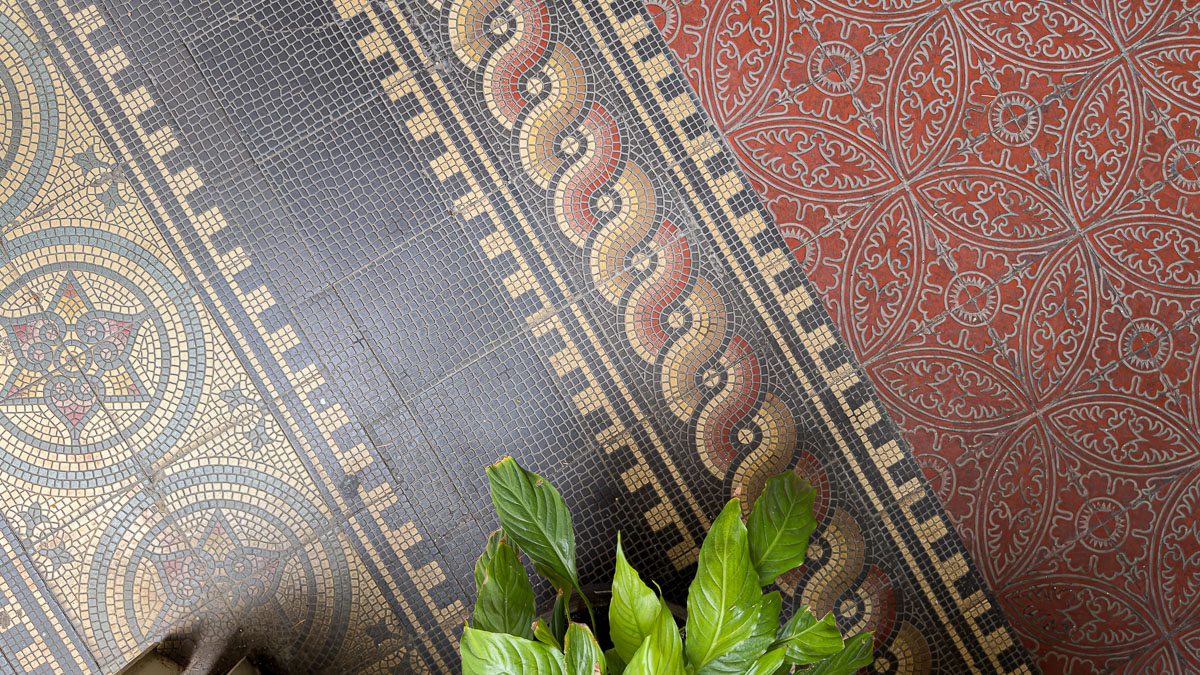
No. 13 Ivane Machabeli Street was built between 1903 and 1905 for David Sarajishvili: chemist, philanthropist and pioneer of Georgian brandy. The architect, Karl Zaar, gave it an Art Nouveau façade with neo-Baroque accents and a terrace laid with Villeroy & Boch mosaics. It was his home only briefly; after that, it was a bit of everything.
In the early 1920s, the Blue Horns poets gathered here, in the decade they dominated and modernised the country’s literature. Under the Soviets, the house passed to the Writers’ Union, and in July 1937, at the height of the Terror, Paolo Iashvili, one of the group’s founders, died within these walls. Since 2021, the building has housed a museum dedicated to writers repressed under the Soviet regime.
Twentieth-century Georgian literature has its drawing room here, and its wake.
The house, for that matter, has never stopped being contested.
 The garden, meanwhile, became a stage, not for literature but for the cooking of Tekuna Gachechiladze, who honours her country’s culinary tradition.
The unexpected cook
Gachechiladze studied psychology, went to New York and came back to Tbilisi in 2006 as a cook, to the dismay of her father, who, by her own account, didn’t speak to her for two months. In 2011 she opened Culinarium, the country’s first chef-owned restaurant, and a television show made her Georgia’s first celebrity cook. Every country has its old guard. Georgia’s wanted grandmother’s recipes left alone, and to them she was a heretic.
At a TEDx talk in 2016, she recalled asking the cooks at a hotel opening in Anaklia for elarji shaped into croquettes and bazhe made with almonds instead of walnuts. They refused and called it betrayal. It took the local governor, and a few threats, to get them cooking.
Her defence has a lineage. She calls Barbare Jorjadze, the princess who in 1874 published a cookbook in which satsivi sat beside French blancmange, the “founding mother” of Georgian gastronomy. The thesis is simple: Georgian cooking has always been built on Persian, Ottoman, Russian and European borrowings, and it took seventy years of Soviet canteen to embalm it. Modernising it means resuming an old habit. In 2011, James Brennan, then a critic in Dubai, ate her food at Vong and called it “Supra Nova — the new Georgian cuisine”. The name stuck, and she has been the country’s leading name ever since, a regular in international guides such as the 50 Best and La Liste. The lunch that followed was that idea in practice.
First moves
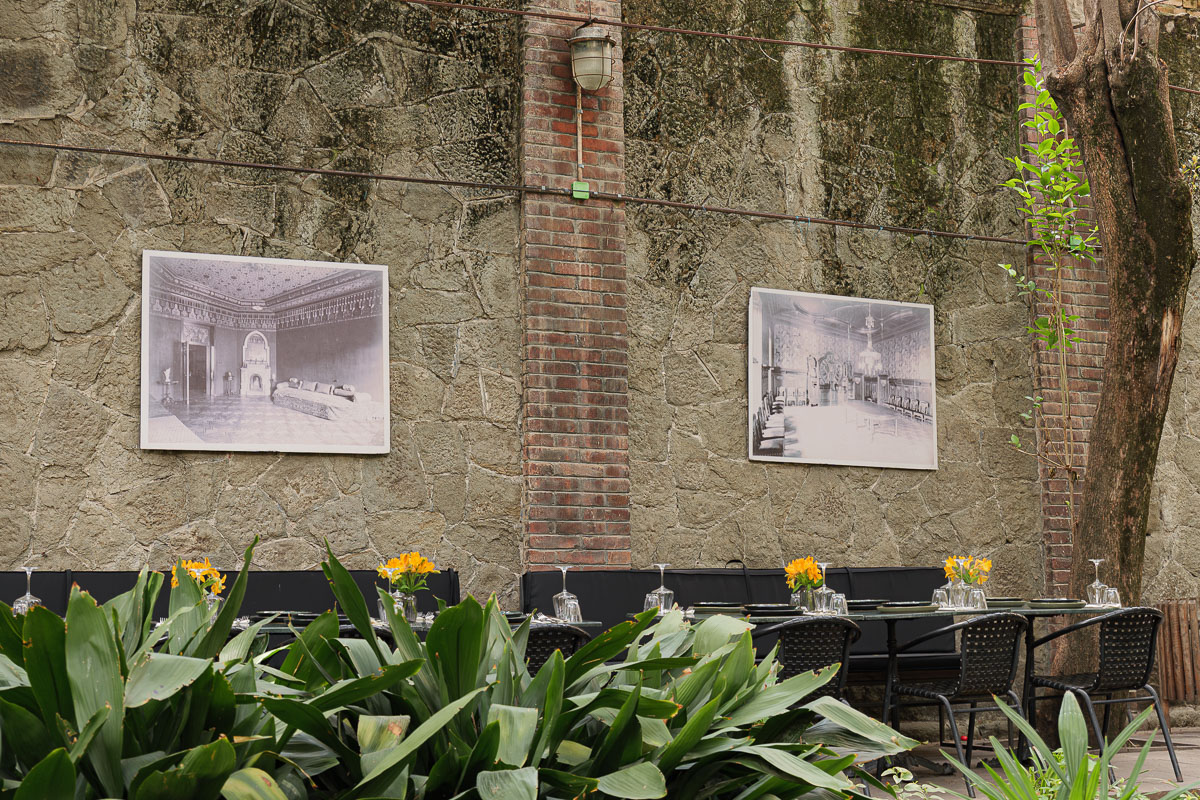
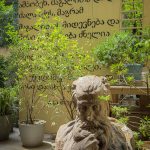
We came in through a half-open door beneath the house, along a passage that gave little hint of the splendour beyond: a broad green garden backed by century-old trees, images of the house’s history and tables carefully placed for the perfect meal al fresco, with the house itself as the backdrop.
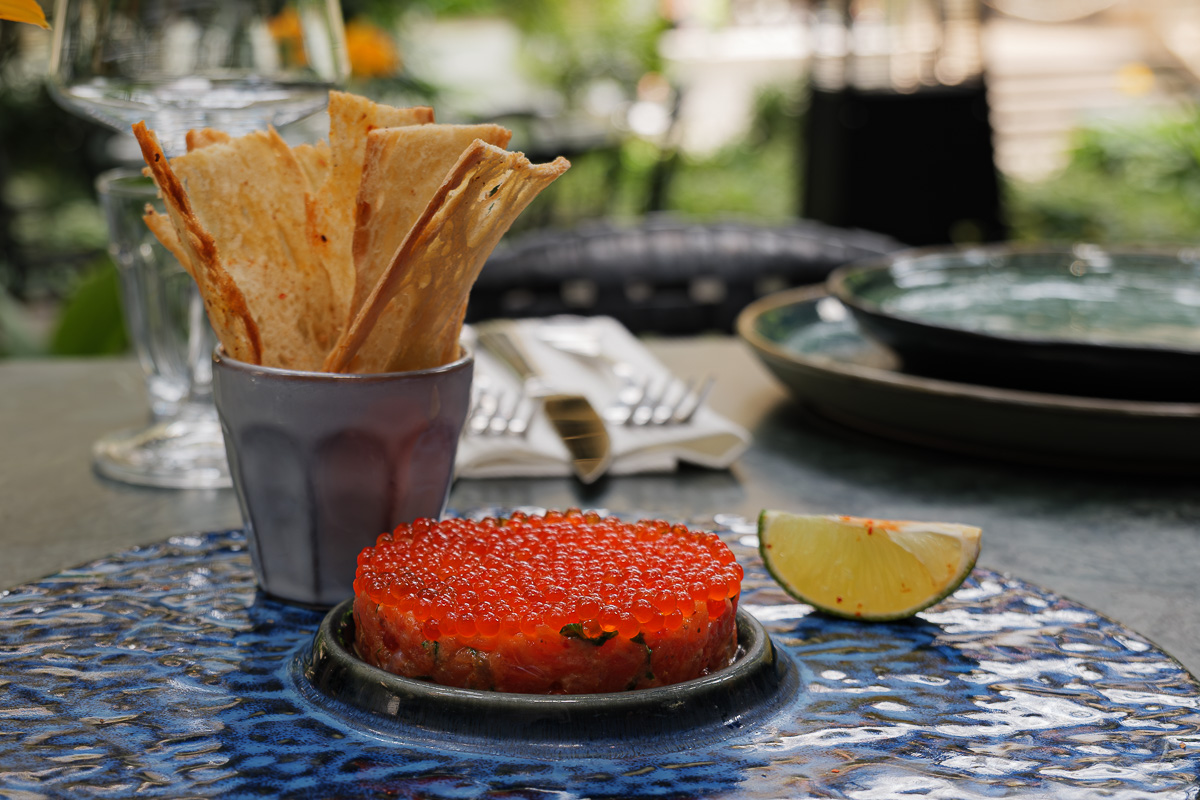
In 2018 she told an Italian journalist that Georgia had no tradition of raw fish and that it was time it did. The trout tartare is that sentence turned into a dish: local trout, its own roe, toast for crunch and lime for the acid cut that fat and salt need if they are not to take over. Elegant, with the roe dominating, and well executed. An imported technique applied to a home fish, improved by serving it raw and lightly cured: that is the Tekuna method.
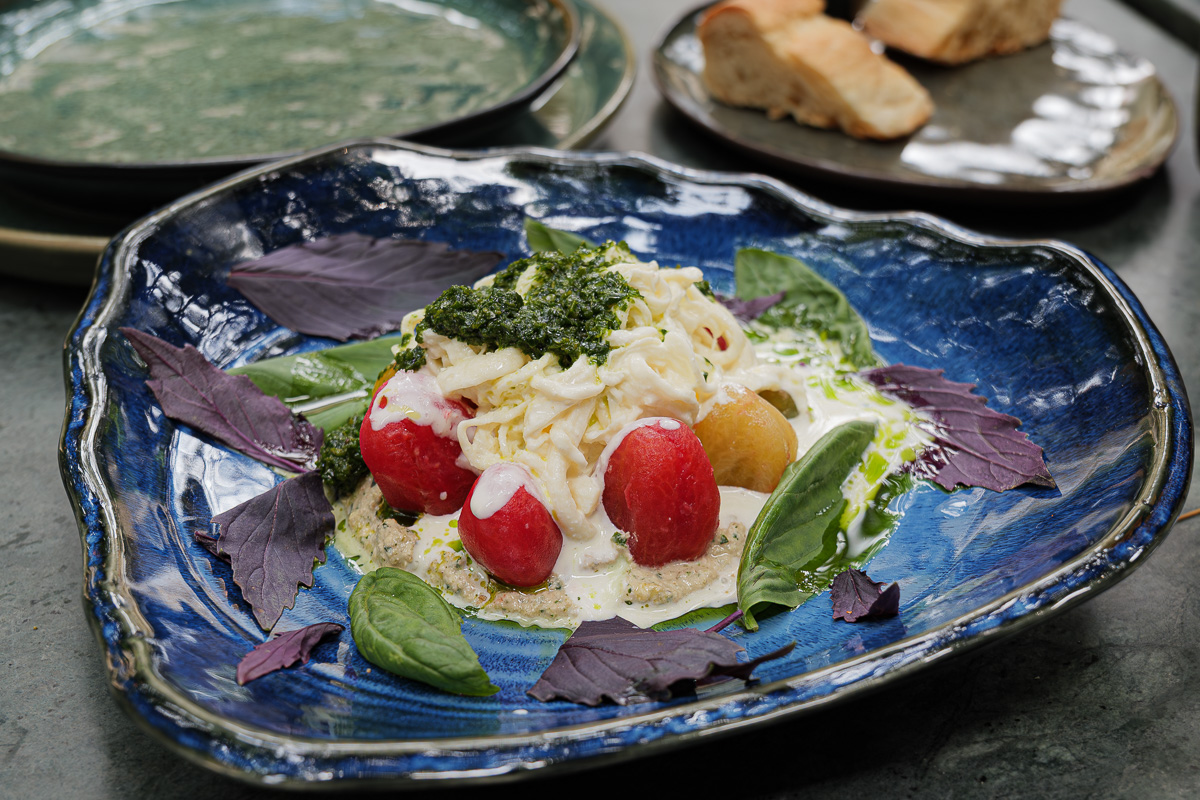
Then tenili, one of the most labour-intensive cheeses in the Caucasus. In Meskheti, in the south, the curd is stretched in hot water until it breaks into hair-fine threads, dried on poles, kneaded with cream and pressed into clay pots; tenili means, precisely, “pressed”. They made it once a year, in September. Under the Soviets, only a few families kept the knowledge alive; it gained geographical indication in 2012 and joined Georgia’s intangible heritage list in 2013.
Calling it Georgia’s answer to burrata is technically sound: threads of pasta filata wrapped in cream are the very definition of stracciatella. But tenili is denser and firmer than the stracciatella inside a burrata. With cherry tomatoes and basil, it bridges to Italy without losing its origin, an Italian salad that is also 100 per cent Georgian, especially with the hazelnut and spice cream binding it together. Perfect for a summer lunch in a garden.
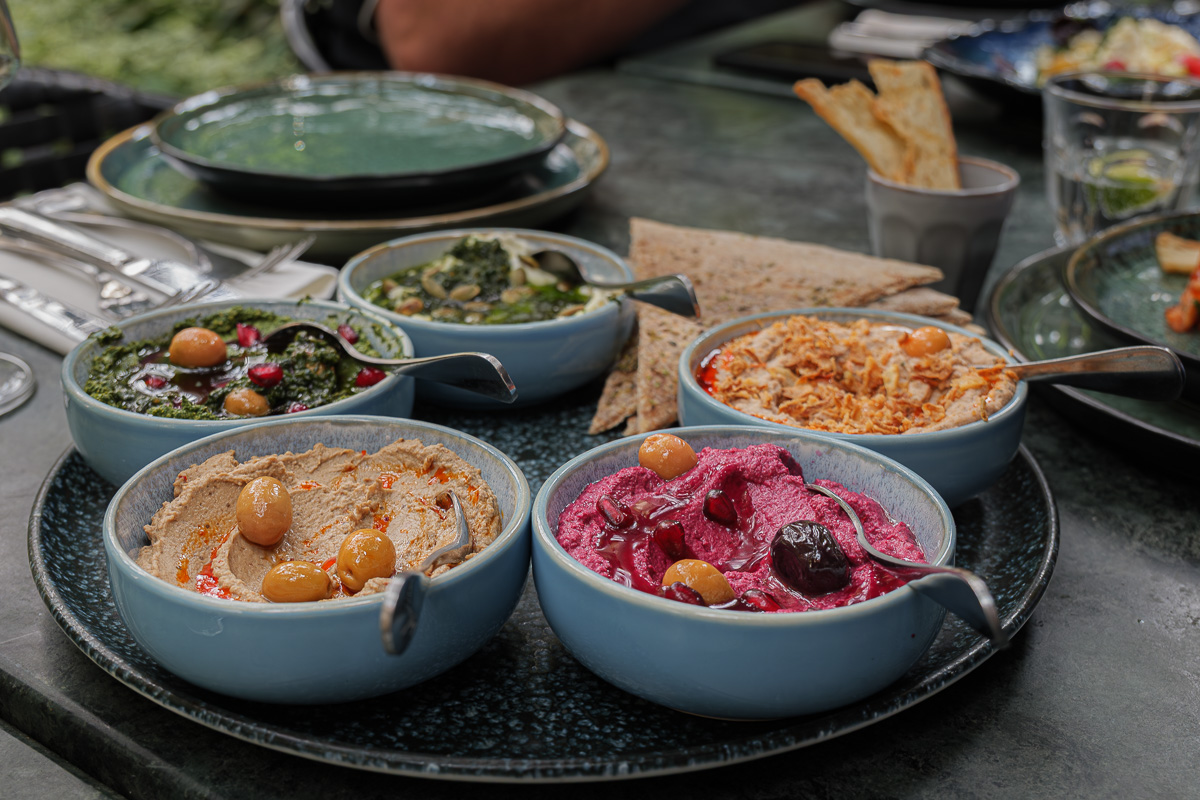
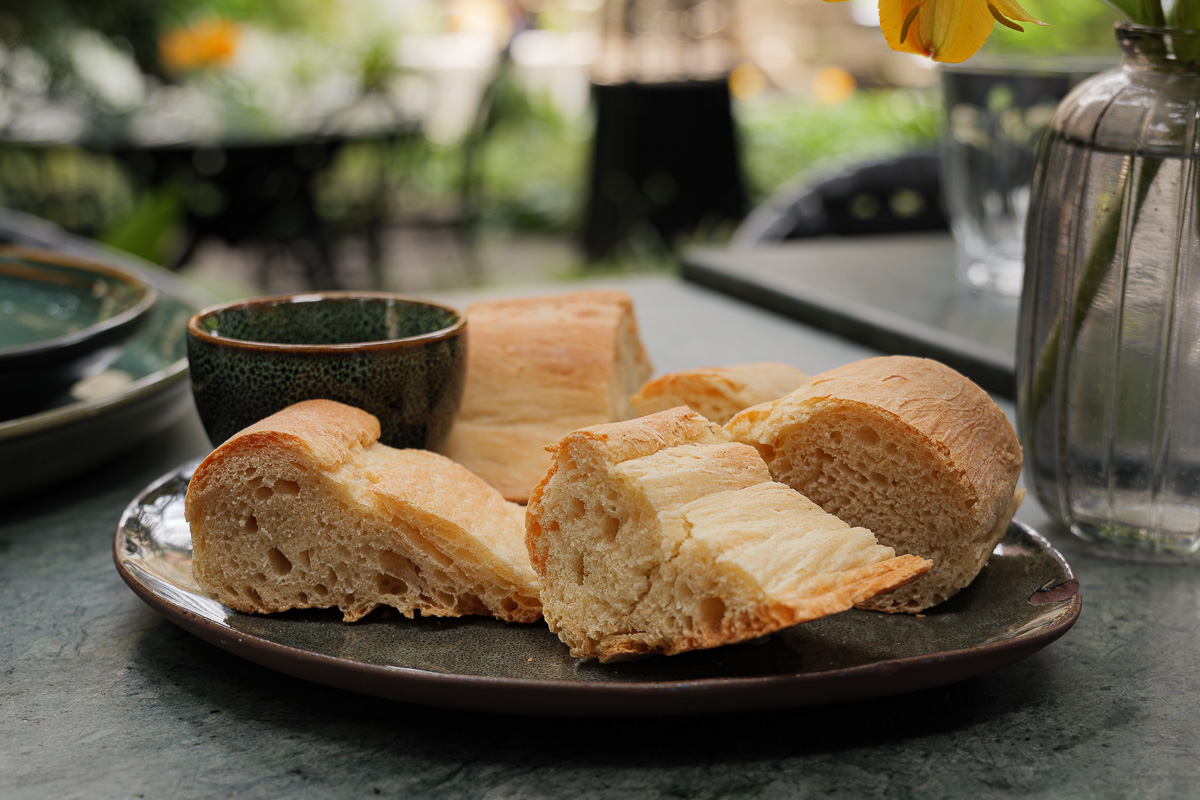
Pkhali is traditionally a ball of chopped vegetables bound with walnut paste, lined up on a supra platter. Here it becomes five dips for lavash: beetroot with pomegranate, pea with adjika and mint, white bean, smoked aubergine, spinach with pomegranate. Lavash, a bread of Armenian roots in a country proud of its shoti, is a choice that in the Caucasus is never innocent. I liked them all, but I’d keep the spinach and the bean.
The new Georgia
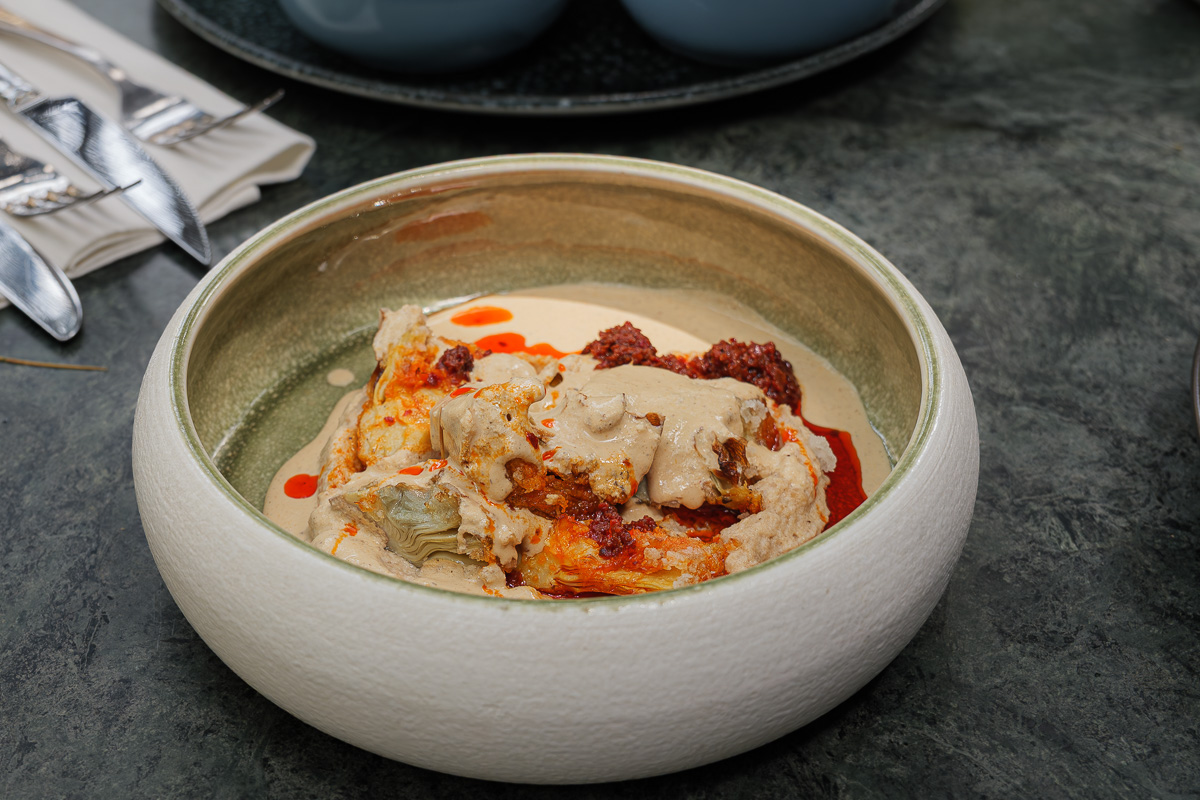
The artichoke arrived crisp, in small pieces fried in a light, flawless batter, over warm bazhe and red adjika. Ten years after that TEDx talk, western Georgia’s walnut sauce wrapped a vegetable the country rarely puts at the centre of the plate. The adjika, a Mingrelian pepper paste, brings heat; the frying brings structure. Textures and nuances a long way from ours, and everything in its place. One of the best dishes of the meal.
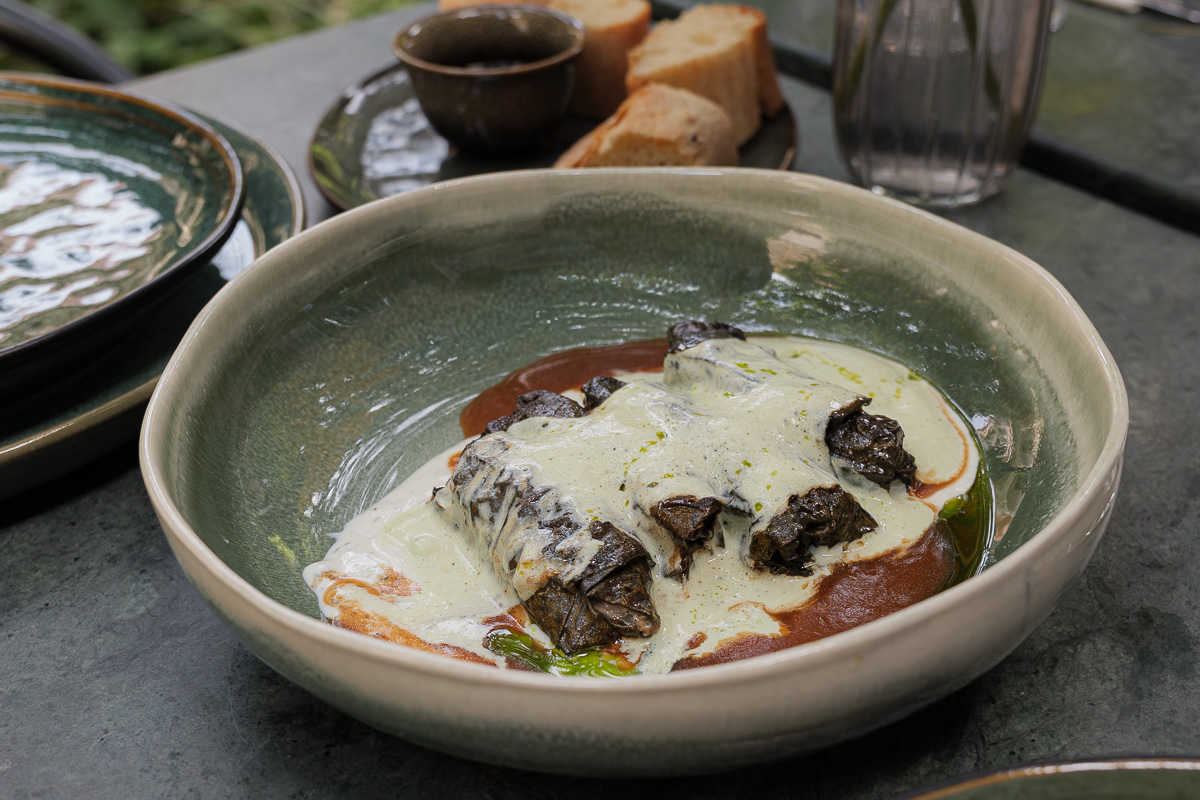
Then the impossible. Duck dolma was revived by Kakha Bendukidze‘s circle and the Georgian Culinary Academy, to the point that sociologists cite it as an example of “tradition lost and regained”. It now appears on Tbilisi menus; at Littera it comes wrapped in vine leaf under matsoni foam. The matsoni brought freshness and acidity; the mint cut through the duck fat. Another Silk Road dish that became a national signature. Folklore will have to find another image for what it cannot find.
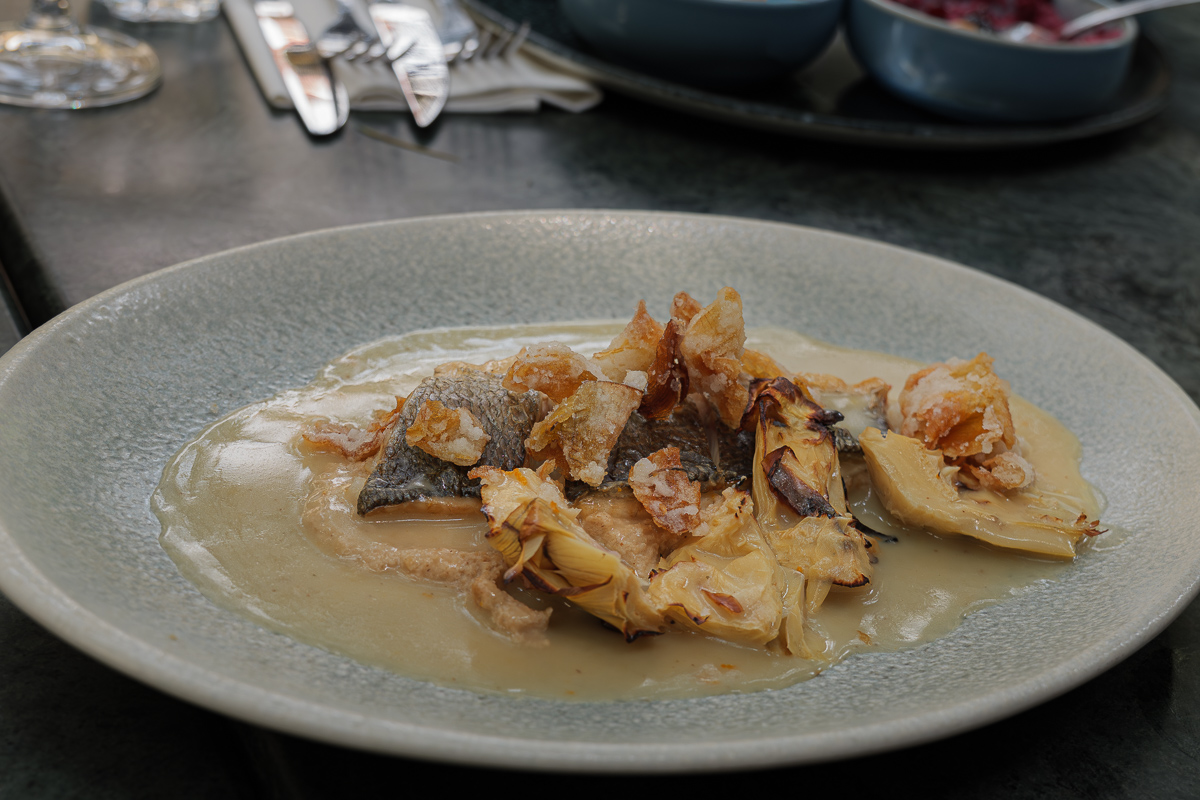
The menu said “black sea bass”. Strictly speaking, black sea bass is an American Atlantic species; I read it as sea bass from the Black Sea, which makes more geographical and gastronomic sense. Sea bass is an old Littera regular, once served with spinach and a soy-and-ginger reduction. This time it came roasted, with artichokes, which added the earthy note a dish of the sea needed. The fish was overcooked. The sauce saved it, without absolving it—the only technical lapse of the meal.
The farewell
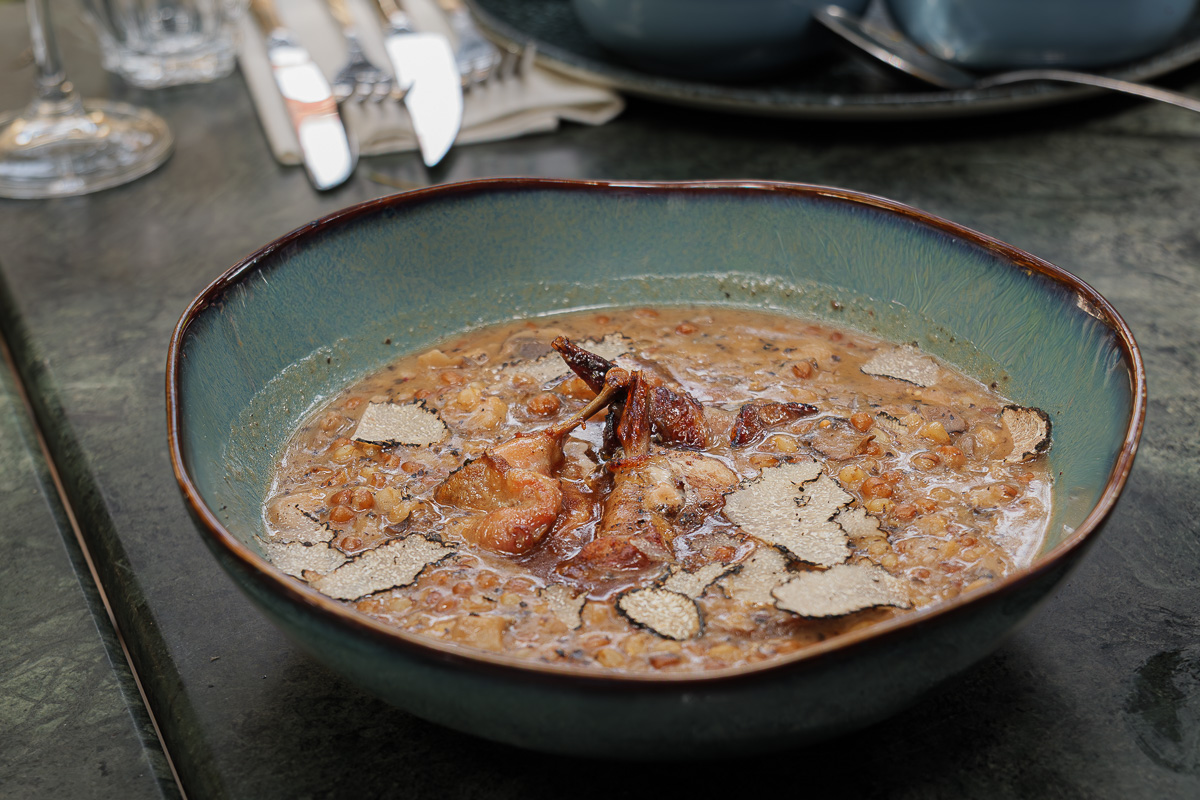
Shila plavi is the dish that closes the kelekhi, the mourning meal of eastern Georgia: no one rises before it is served, each guest eats at least a spoonful to see off the soul of the dead, and the dish then goes to the neighbours and those close to the family. The classic version is rice cooked until it falls apart, with mutton. Littera‘s is wheat, the grain of korkoti, the other dish found at every mourning table in the country, stewed with mushrooms and summer truffle, which also grows in Georgia, as a bed for a roast quail cooked to the point—pure comfort.
Gachechiladze can take a dish of grief and serve it at lunch in a garden without disrespect: she keeps its texture and changes its occasion.
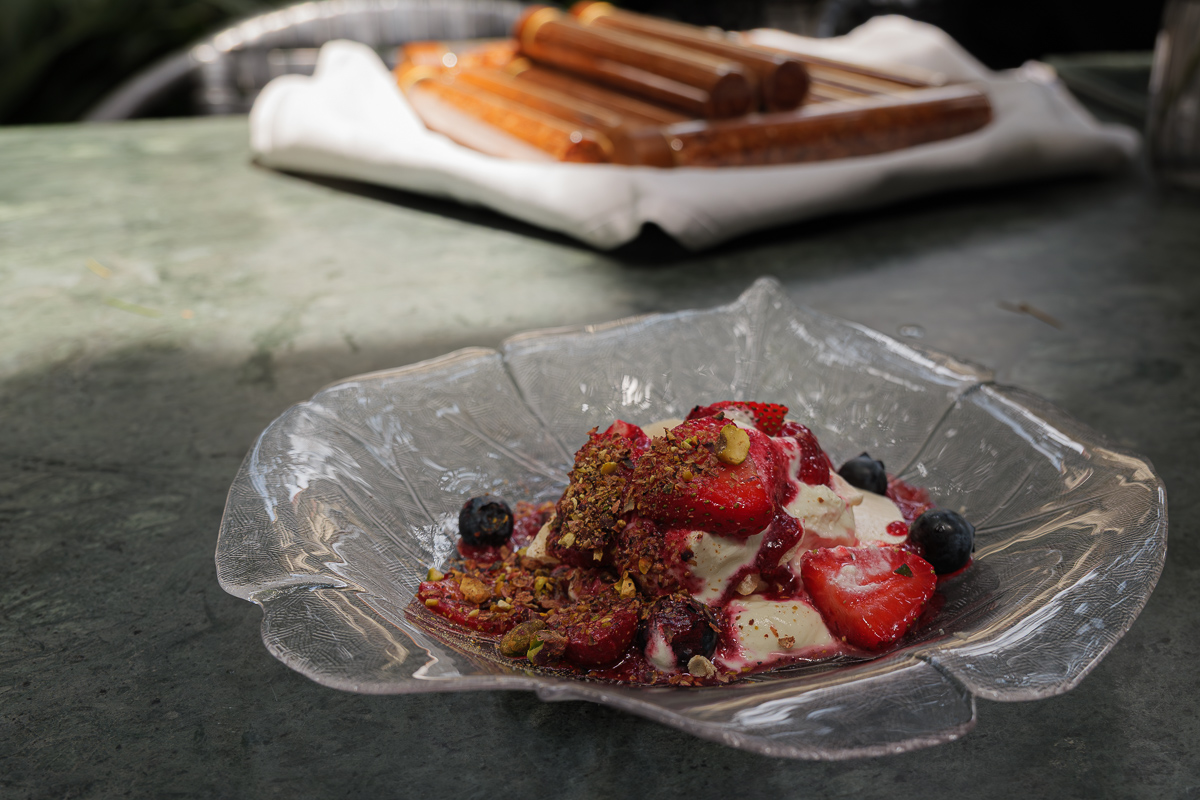
Dessert arrived light and stayed in season: red fruits, some roasted and some fresh, a coulis, a few nuts for crunch and mascarpone cream wrapping it all in milky richness.
Wine and the room
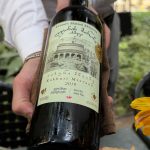
Three bottles, two of them from the man pouring the wines. Nikoloz Khomasuridze, Littera‘s sommelier, founded a small wine project in 2021 with Nukri Samkurashvili, also a winemaker and sommelier, under two labels. IGI is the qvevri side: the Kisi-Rkatsiteli 2024, amber, from vineyards at Kondoli in Kakheti, pairs kisi, half-forgotten for decades, with rkatsiteli, Georgia’s most planted white grape. Unico goes the other way: the Rkatsiteli-Tsitska 2024 is a classic vinification, polished and distinctly European, made without qvevri, crossing rkatsiteli from the east with tsitska from Imereti in the west. Side by side, the two repeat the kitchen gesture in the glass: the same grape, once through the old technique and once through the new. The third bottle came from outside and was the oldest on the table: Levani’s Marani‘s Kakhuri Mtsvane 2019 from Akhmeta, certified organic, fermented and aged in qvevri on skins and stems, the Kakhetian way.
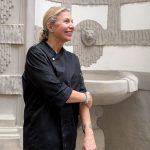
Service at a group lunch was built around the chef’s voice: each dish arrived with Gachechiladze‘s explanation, linking recipe, region and memory with the same ease with which she later showed us the house.
 A final note
In a Sololaki garden, behind a house marked by history, a cook whose family never wanted her to be one keeps doing what traditionalists once called heresy: cooking Georgia as if rewriting it and preparing it for the future. The grammar is all there (walnut, pomegranate, adjika, matsoni, the wheat of funerals). Still, the punctuation is now different, like the second edition of a book revised by its author, in which every dish admits its origin before changing it. This is not change for its own sake; it is preparing it for the future, with more lightness, contemporary technique and a distinct aesthetic, much the same process we have seen applied across Europe.
There was an overcooked sea bass. There was also an artichoke with bazhe worth the journey on its own, a tenili that puts Meskheti level with Puglia, and a mourning grain turned into comfort for the soul. Fifteen years after a critic gave it a name, Supra Nova still has its mother house in this garden.
Folklore held that duck dolma was impossible to find. I had it at this lunch. That leaves the owls’ eggs: who knows whether they’ll ever turn up at Tekuna Gachechiladze‘s table.
Address: Writers’ House of Georgia, 13 Ivane Machabeli Street, Sololaki, 0105 Tbilisi, Georgia
Reservations: +995 593 62 08 18 | littera.resos.com/booking
Hours: Daily, Lunch: 1pm–4pm | Dinner: 6pm–9pm and 9pm–midnight
Price: From 45€ without wines
Distinctions: 15.5/20 Gault&Millau Georgia; La Liste 2026, 83 points; The World’s 50 Best Discovery; Opinionated About Dining 2026 (Casual in Europe Recommended).
Don’t miss: The fried artichoke with bazhe and red adjika; duck dolma with matsoni foam; tenili with cherry tomatoes, basil and hazelnut; the wheat shila plavi with quail; the sommelier’s recommendations; the garden.
The chef’s other projects: Khasheria – Tekuna Gachechiladze’s hangover food. A culinary school and Apotheka – her most recent venture, opened in 2024.
Nearby: the Museum of Repressed Writers, in the same building; Freedom Square (~5 min walk); Rustaveli Avenue and the Georgian National Museum (~10 min walk); the Abanotubani sulphur baths (~15 min walk); Narikala Fortress and the Mother of Georgia statue, uphill from Sololaki (~20 min walk).