
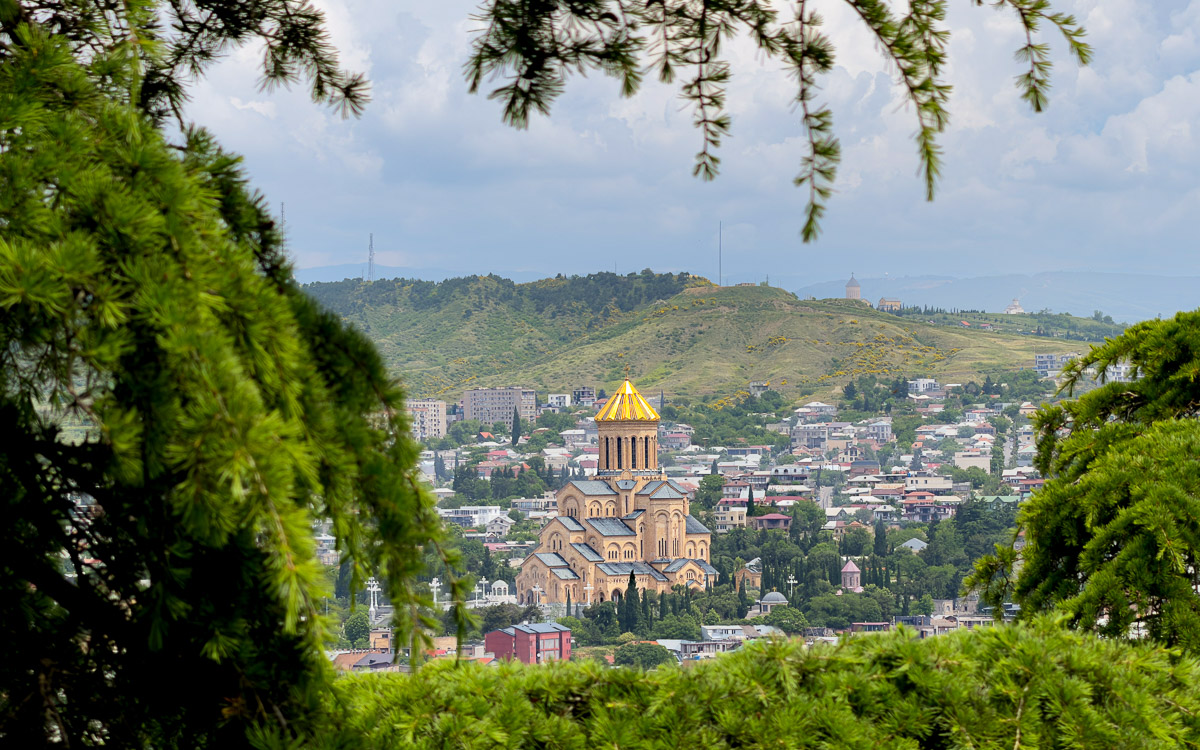
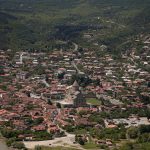
I arrived in Tbilisi halfway through the week, which on a press trip is like walking into a cinema after the film has started, with colleagues talking about dinners I hadn’t eaten, jokes I hadn’t heard, and tastings in a wine region I had never set foot in. On little sleep, or none at all, and before I had even opened my case, they put me in a van and drove me out to Mtskheta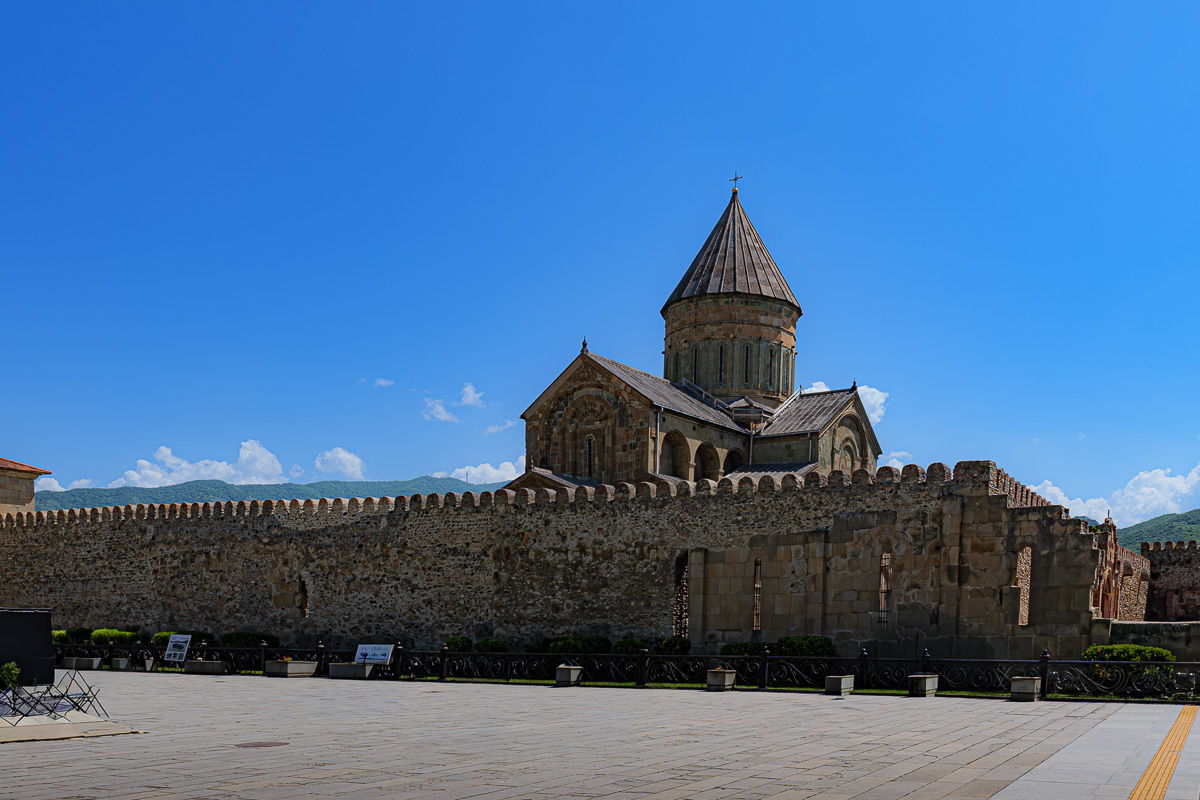 .
.
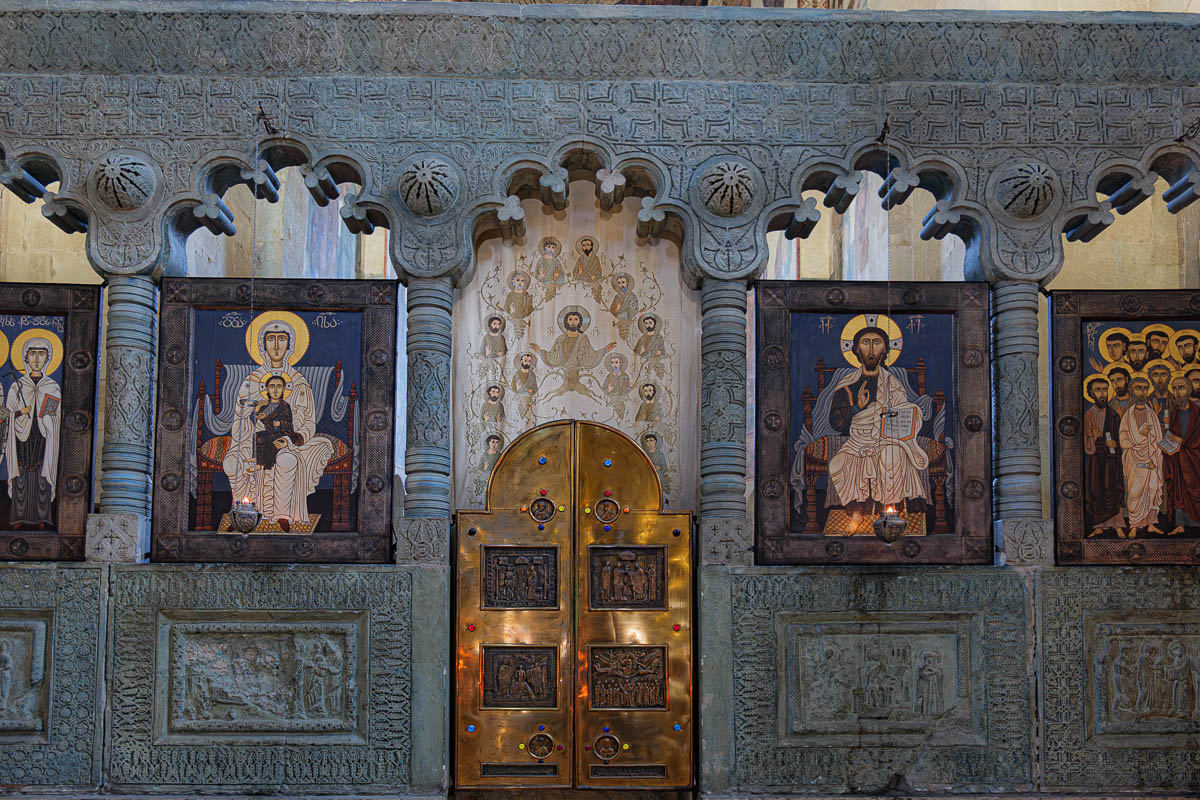
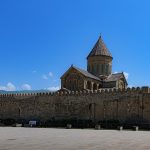
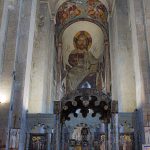
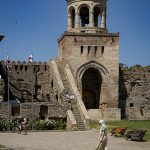
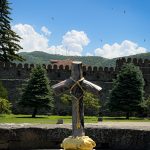
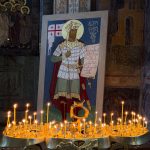
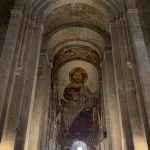
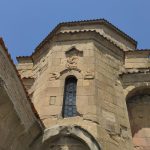
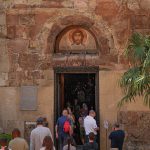
The old capital has an eleventh-century cathedral, Svetitskhoveli, and a peculiar origin story: the medieval chronicle has it that a Jew from Mtskheta bought Christ’s robe from a Roman soldier and carried it home, where his sister, Sidonia, died the moment she touched it, gripping the cloth so tightly that they buried her still holding it. A cedar grew over her grave, and from that cedar came the column that gave the cathedral its name, the “pillar of life”, today sheltered beneath a seventeenth-century canopy covered in frescoes that tell the whole thing in pictures. The cross of Saint Nino, who converted Georgia in the fourth century, is made of vine shoots bound with her own hair. In this part of the world, faith and the vine come from the same raw material, and I would remember as much later that afternoon, a few minutes down the road.

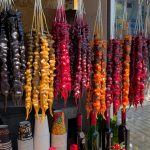
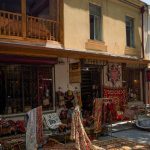
Around the cathedral, the streets are lined with souvenirs. There was no shortage of honey, pomegranate juice, strings of churchkhela (nuts threaded on cord and dipped in grape must) hanging out to dry like tapered candles, silks, hammered silver, soaps made by hand from goat’s and donkey’s milk, grape seed oil, all of which insisted on coming back to Portugal with me. Perfumes, t-shirts printed with Georgian symbols beside wine ice creams and socks bearing Stalin‘s face. My fascination with the former Soviet leader runs thin, but I filed those socks away, because the man would turn up again more than once over the course of the trip, and in circumstances a good deal less folkloric.
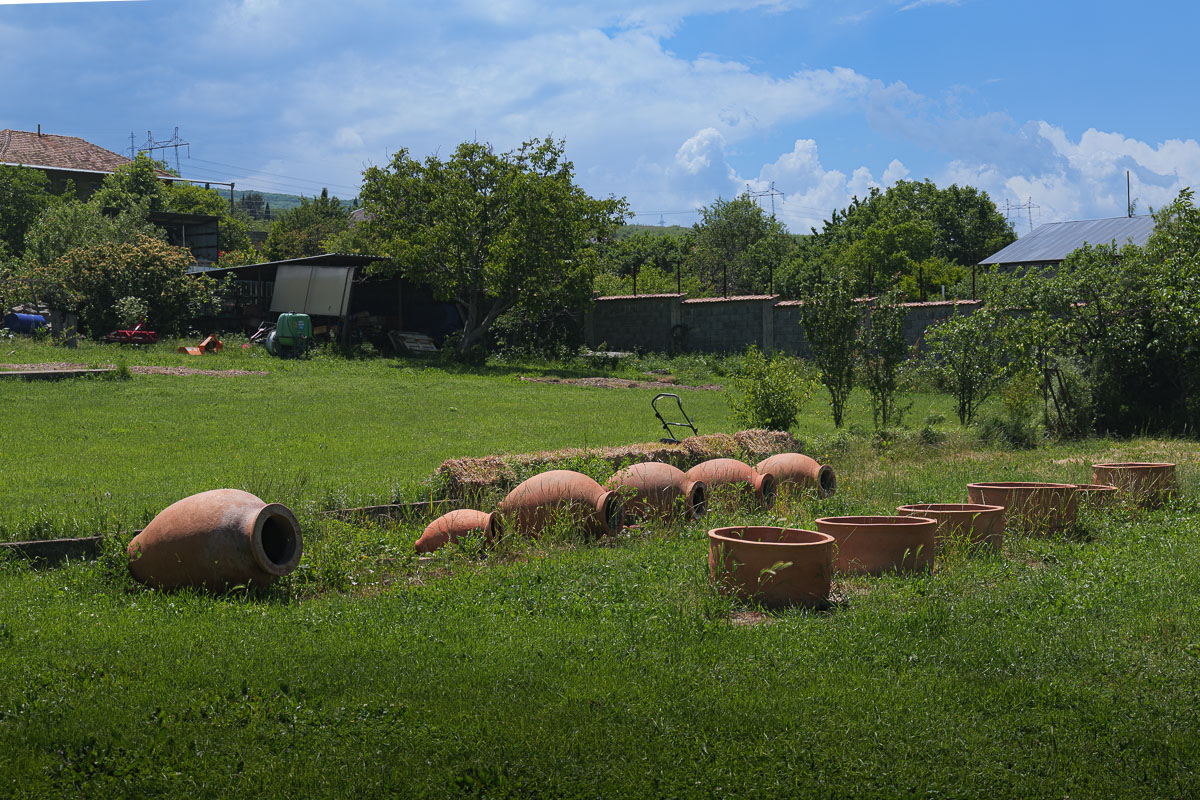
Chardakhi
If the point of this trip is to carry a people and its culture beyond its own borders, then my first day was easily the most telling, and largely thanks to one small producer.
Iago Bitarishvili makes wine in Chardakhi, a village twenty minutes from Tbilisi and close to Mtskheta. He planted part of his vineyard in the late nineties, bottled his first vintage in 2003 and in 2005 became the first producer in the country to gain organic certification. He works essentially one variety, chinuri, white, from vines over sixty years old, and makes around ten thousand bottles a year because he uses only his own fruit. Asked whether he might not buy grapes from neighbours and grow his business, he answers with the arithmetic of a man who has done the sums and found them sufficient.
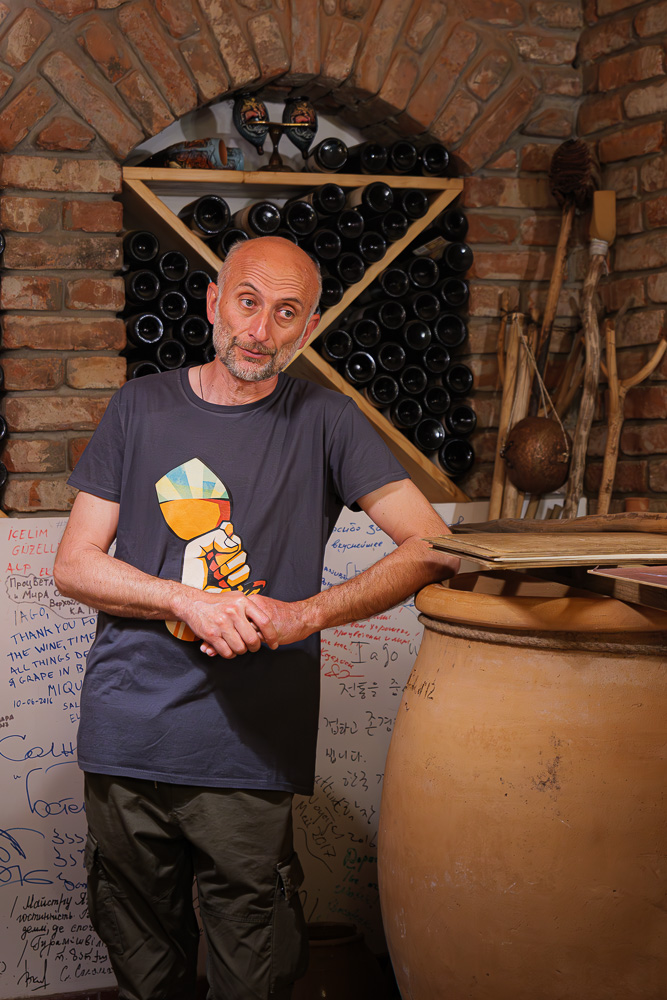
Almost everything he makes leaves the country, across twelve markets, and the reason for that is probably political. In 2006 Moscow banned imports of Georgian wine and the market that had absorbed most of the national output closed overnight. Producers were forced to go looking for the world, and they found it.
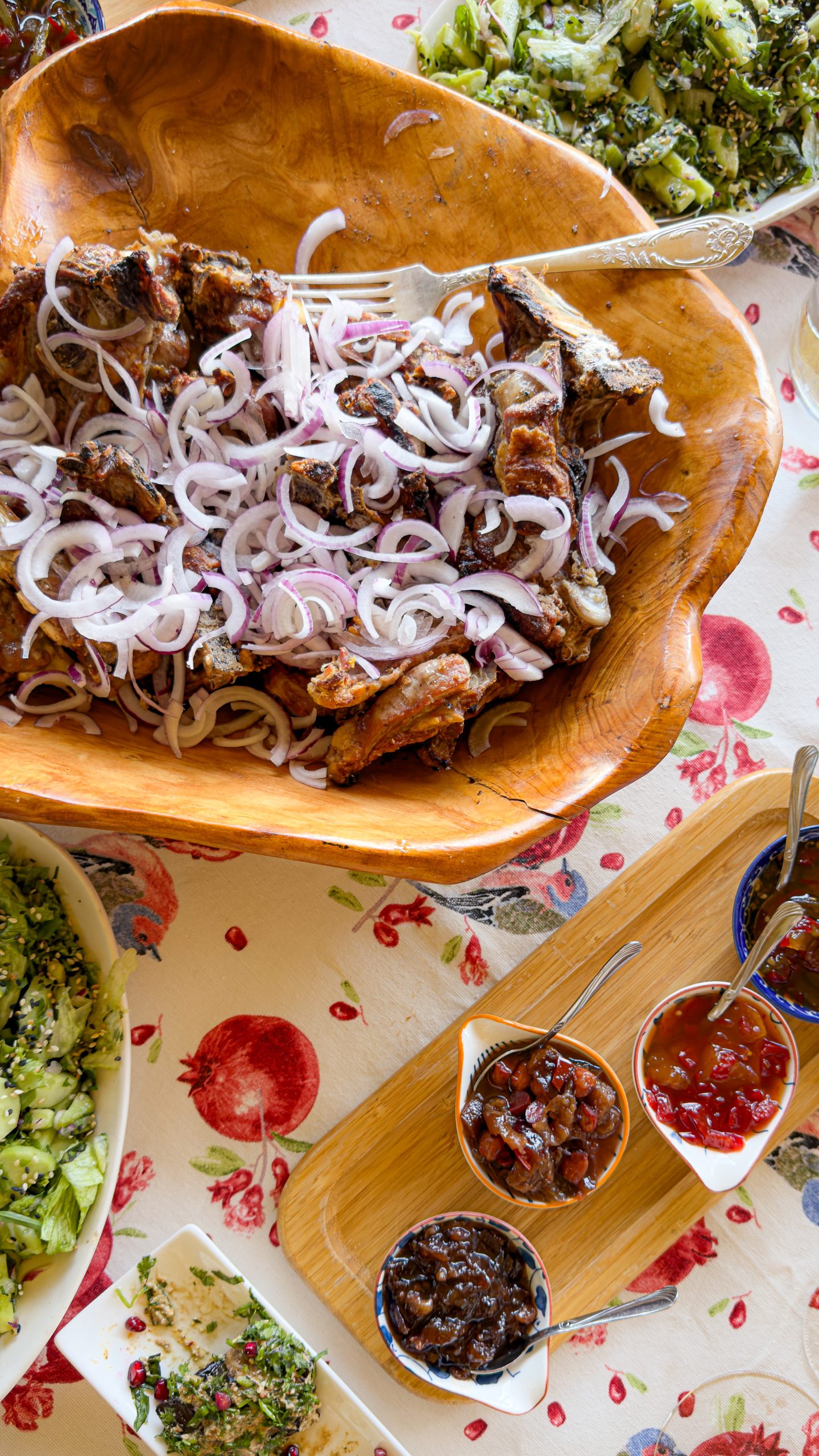
He took us round the cellar himself, and halfway through the conversation I realised our paths had already crossed without my knowing: Iago has been to Porto, at Simplesmente Vinho, and at the Vigner.on gathering held during Essência do Vinho. The man welcoming me in Chardakhi had already poured his wines in my own city, and I had probably walked past them without noticing.
Stepping down onto the beaten earth floor where the great qvevri are buried to the rim, he walked us through his method of vinification, the most traditional there is. The chinuri goes in whole in October, skins, stems and pips, and ferments on indigenous yeasts. For two to four weeks, somebody comes down every morning to break the cap with a wooden pole, because the solid mass hardens at the surface and suffocates the fermentation beneath. They then top up the vessel with must from another qvevri and seal it with sand. Six months in the dark, on its skins. They open it in March, rack it, and bottle it unfiltered. The remaining solids are distilled into chacha.
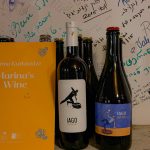
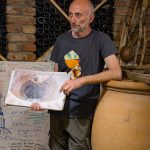

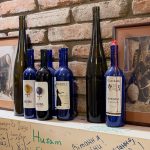

We tasted the amber chinuri (best not to say “orange wine” while you are in Georgia), the most traditional and the most Georgian of the two, and the chinuri without skin contact, paler and more direct. Drunk one after the other, they are worth a lesson in themselves: the glass is the same, the method changes, the skin changes, and everything changes. The qvevri there works as a technical vessel and equally as a statement of principle and an act of preservation. We also tasted an mtsvane from a tiny parcel on the property and a pét-nat that forced me to revise the poor opinion I hold of the category: fine-beaded, taut, without the bruised-apple or fizzy-pineapple note that ruins half the pét-nats being drunk in Europe today.
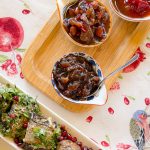
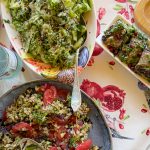
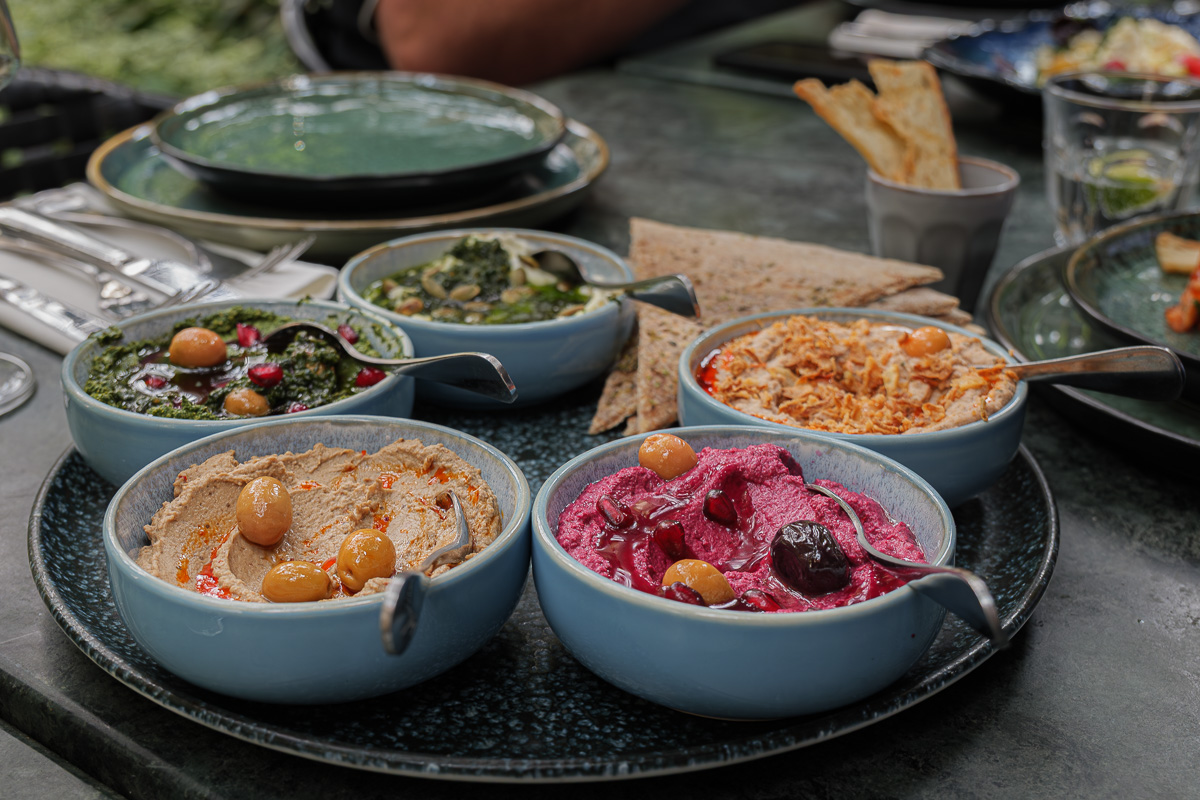
And then we had lunch, and what a lunch. Cooked by the matriarch and the rest of Iago’s family and team, with no menu, no plating and no notion of presentation beyond the plain fact of the food, and yet the salads were exceptional: produce picked that morning, textures played off one another between raw and macerated, seeds cracking beneath the leaf, herbs we do not have here, ferments and hot preserves used as an acid counterpoint rather than as garnish or as something to spoon over pudding. There was khachapuri straight out of the oven, lamb over coals, the fat still running into the dish, and seasonings that point to other latitudes.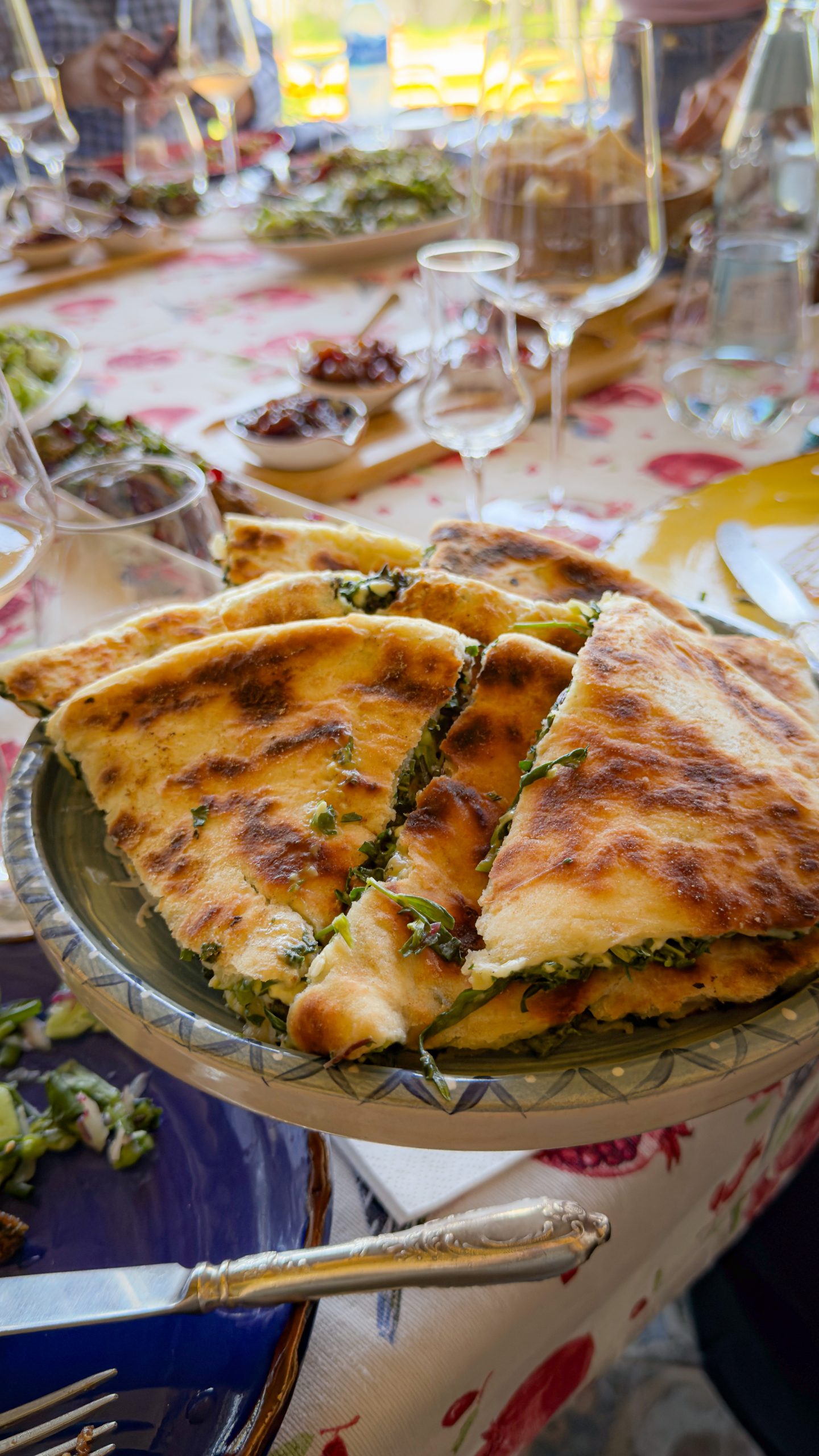
A fair stretch of the Silk Road was being eaten at that table. Greece in the herbs and the yoghurt, the Middle East in the spices and the nuts, Persia in the sweet-sour, the steppe in meat over fire. For centuries, the Caucasus was the corridor through which everything passed, and Georgian cooking became the sediment of that passage. These days we might call Georgian cooking fusion, but that would reduce it: what you have there is a summary of the history of the world, accumulated in a territory with rules of its own.
It was the most Georgian meal of the entire week, and it was not on the dinner programme.
Tbilisi: the city and its contrasts
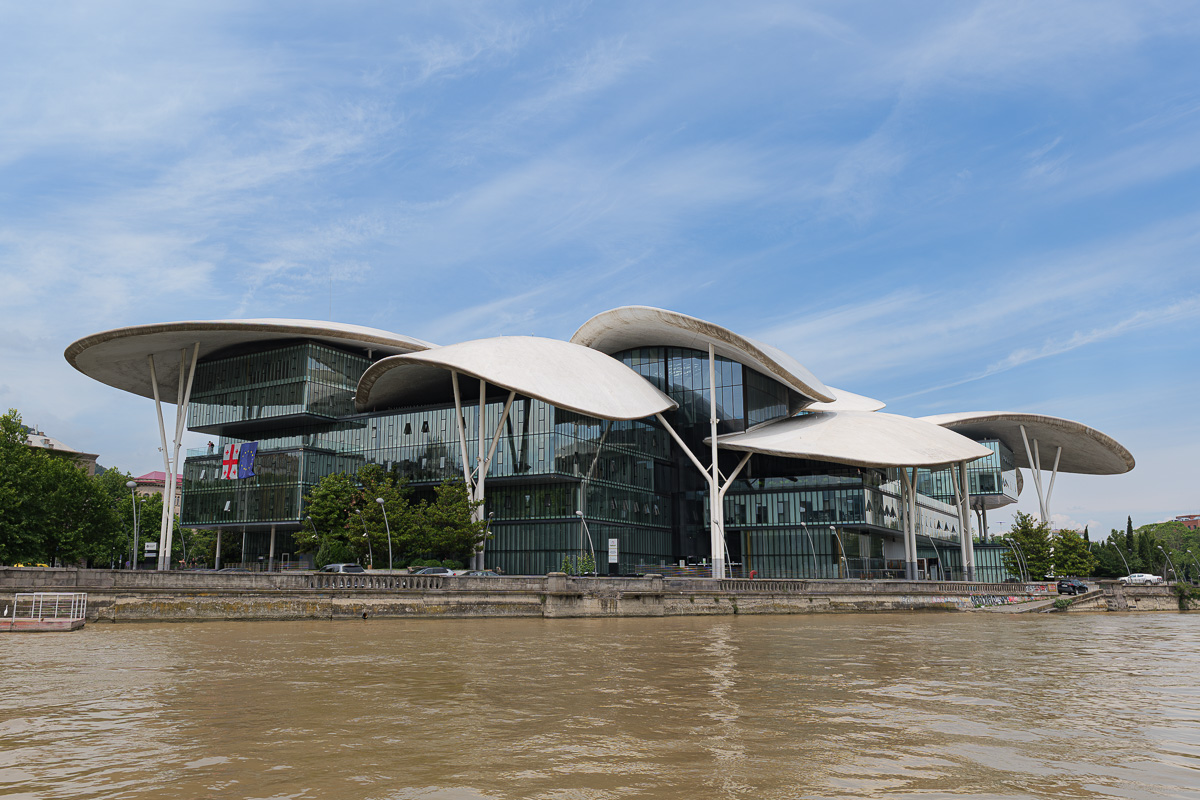
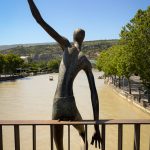
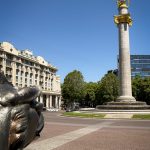
Much of Tbilisi’s charm lies in how a series of historical layers diverge and converge across the same ground. A sixth-century Orthodox cathedral stands two hundred metres from a steel-and-glass bridge signed by Michele De Lucchi. On one side, the Public Service Hall with its translucent “mushrooms”; on the other, carved wooden balconies falling apart above streets where natural wine bars keep opening. High on Sololaki, the Kartlis Deda, the Mother of Georgia, cast in aluminium in 1958, a cup of wine in one hand for those who come as friends and a sword in the other for those who come as enemies.
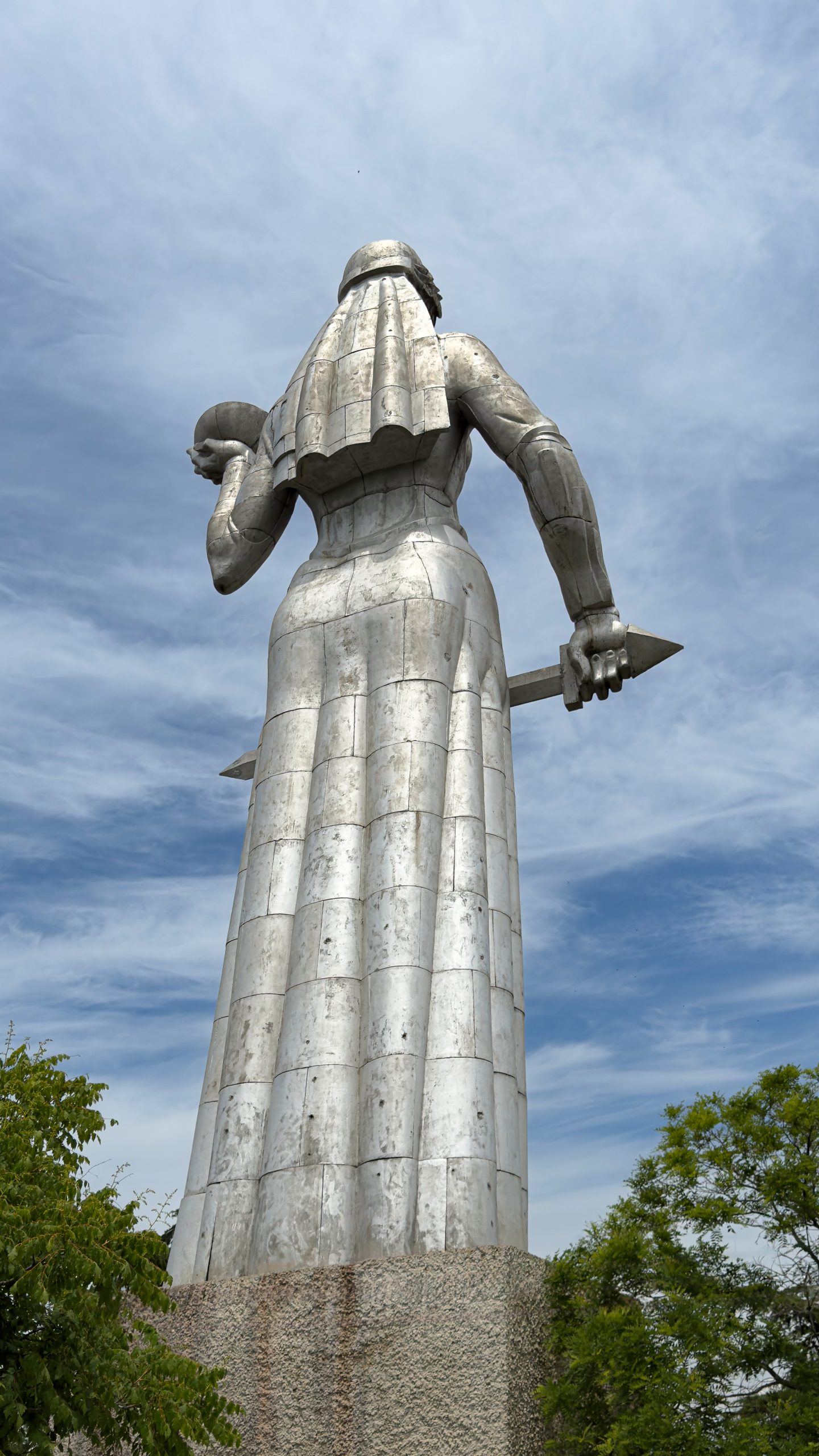
It was Sophi who guided us through the city over the days of the festival, telling stories with the urgency of someone who has very little time to explain an entire country, and who pointed out the statue to me and explained it. A nation that defines itself in the same gesture by hospitality and by defence, and that had that gesture cast during the Soviet era, which makes the sword considerably less decorative than it first appears. Perhaps a clear enough demonstration of the local character: wary, defensive, and yet open-armed to anyone who comes in good faith.
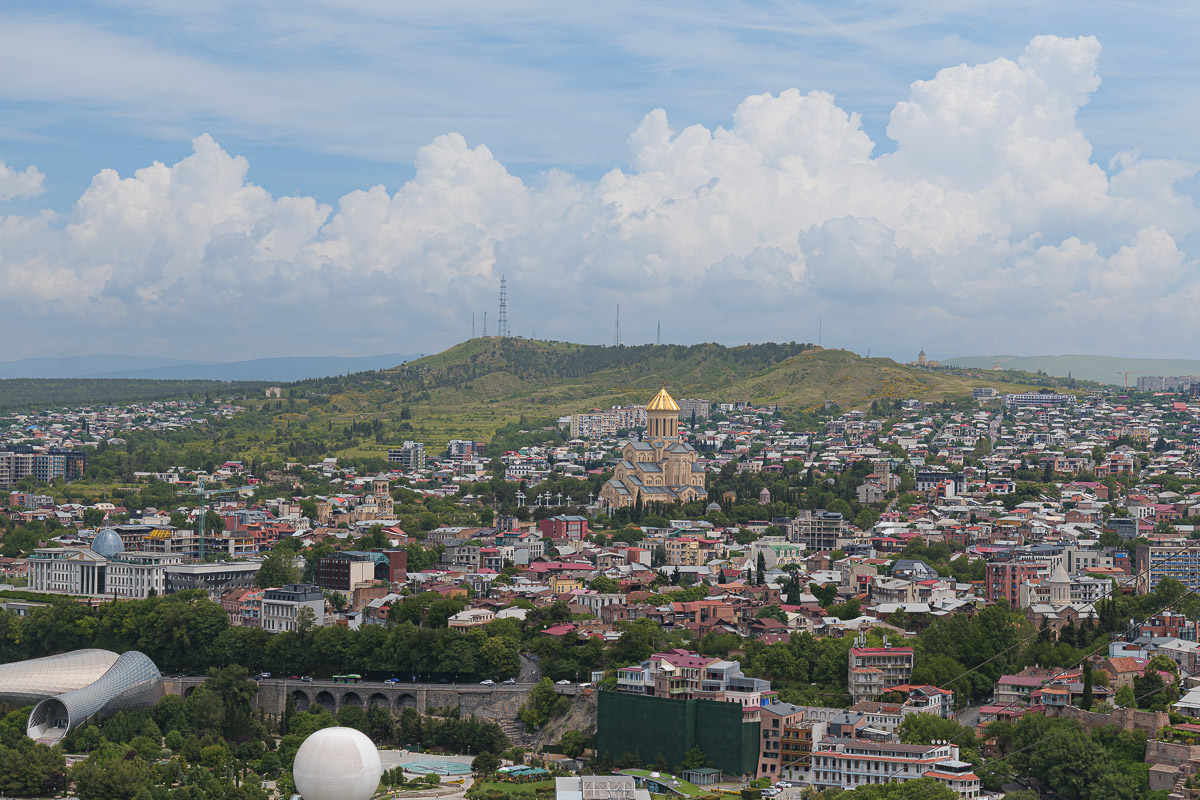
It is worth bearing in mind what this city was twenty-five years ago, when ministers grew rich selling the country’s resources abroad. At the same time, its citizens spent their winters huddled around candles, rubbing their hands, with local officials helping to kidnap business people and street police rounding up their salaries at the expense of whoever walked past. In little more than a dozen years that same city became one of the safest in Europe to walk at night.

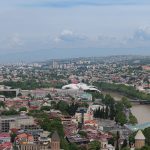
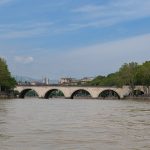
In the Vera district stands Stamba. The word means printing house in Georgian, and the building, from the thirties, was one of the largest presses in the Caucasus, where Georgia’s first communist newspaper was printed. After more than twenty years of abandonment, Adjara Group gave it a second life in 2014. The original presses still stand in the atrium, stopped, with greenery climbing the rails that once carried the pamphlets, and around them run luxury hotels, coworking, a barber, a bookshop, a bakery, a design store, a restaurant, a wine bar, a bottle shop and a courtyard with live acts in the open air. I went back several times over the stay, always for the same selfish reason: it is the sort of place I would like to have at my own front door, and in Portugal I do not. That, and the wine, obviously!






At the National Gallery on Rustaveli hangs the work of Niko Pirosmani. He was born in 1862 in Mirzaani, in Kakheti, the son of peasants who owned a small vineyard and a pair of cows, and taught himself to paint, working directly onto black oilcloth and making his own colours. He produced signboards for shopkeepers and panels for the city’s taverns, paid in food and in wine. He died in April 1918, in a hospital for the poor, of malnutrition and liver failure; he was buried in Nino cemetery, and nobody recorded the plot, which remains unknown. Around two hundred of his paintings survive, and the subject is almost always the same: the laid table. Feasts, men in suits raising glasses in a row, barrel-organ players, peasants, animals. A century on, he is Georgia’s national painter, and his pictures are reproduced right across the city.
The son of a Kakhetian vineyard who died of hunger painted his country eating!
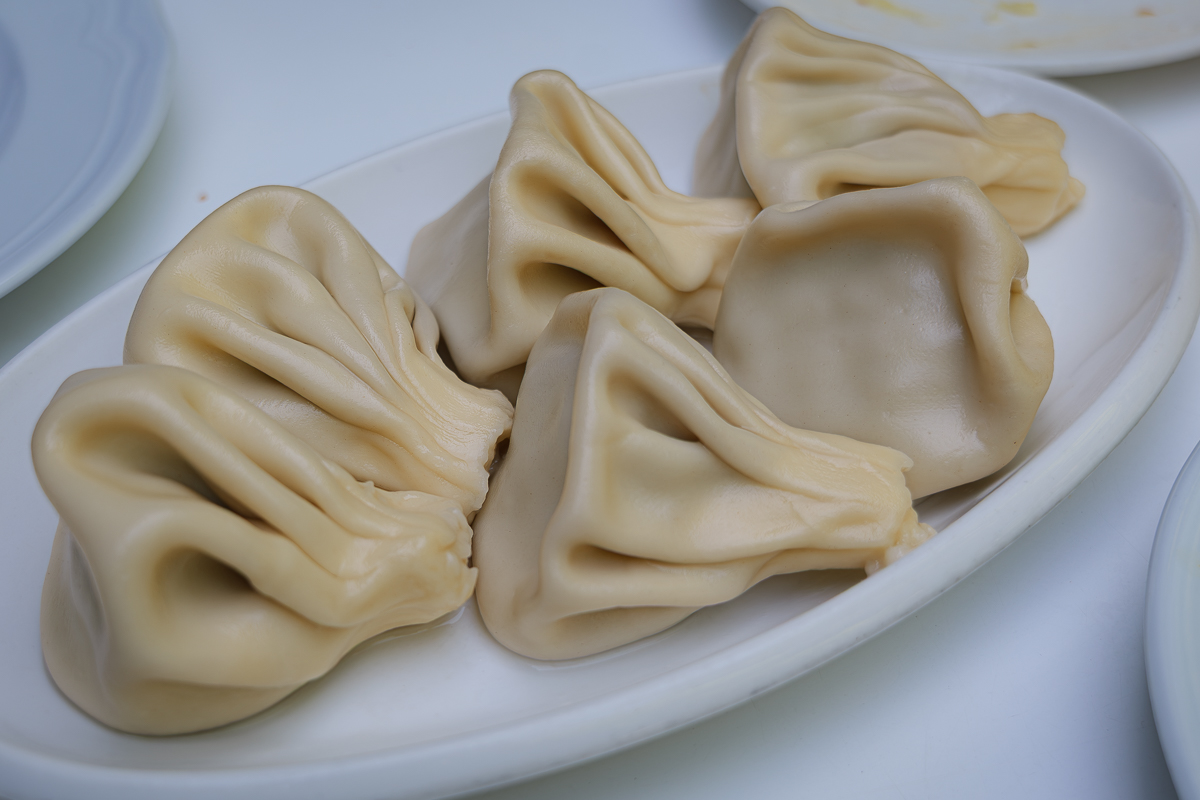
Between one thing and another, I ate and drank as one does in Georgia. There was no shortage of khinkali, the boiled dough parcels twisted at the top, filled with minced meat and broth, taken by the knot, bitten at the side and drunk before they are eaten — as close as we are likely to get to the Chinese xiao long bao, if larger and rougher. And here is the tip: stick a fork in one, and you spill the broth and lose the whole point of the dish. Nobody warns you. It works as a sort of initiation test for foreigners, and they let you find out on your own while the table watches and waits for the mess!
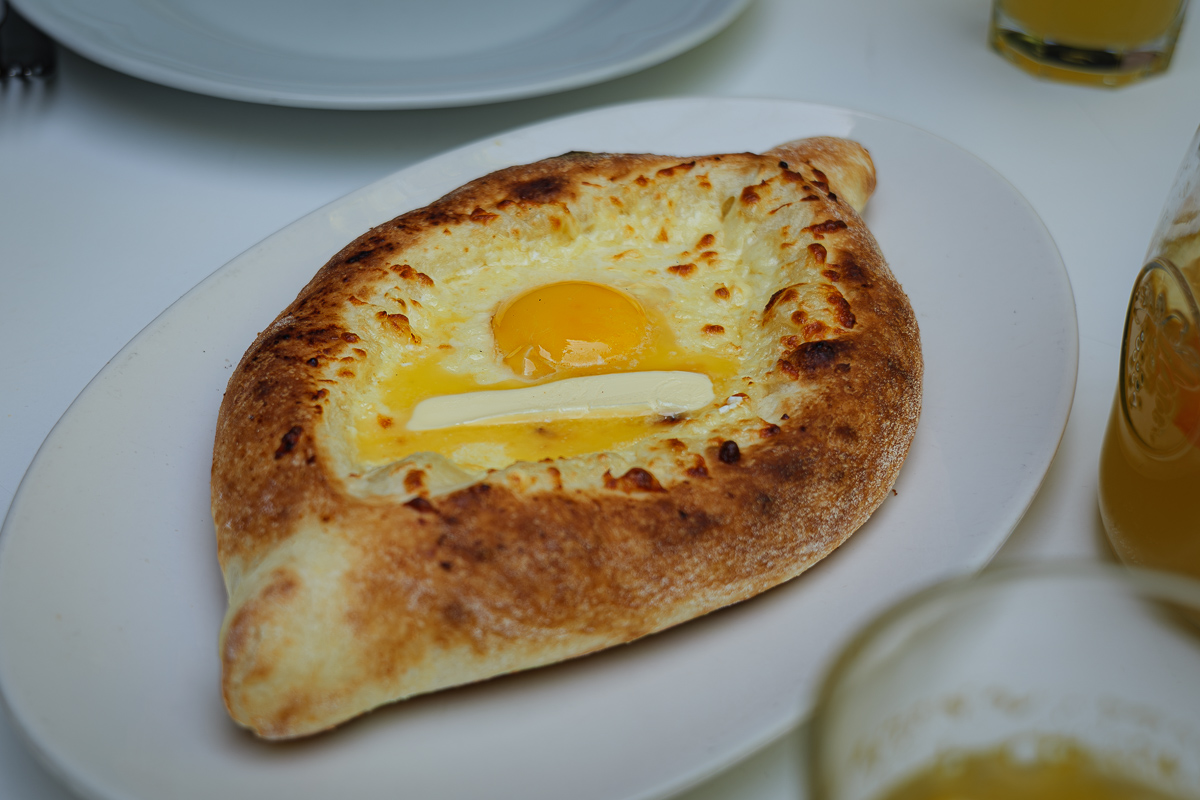
And then, of course, adjaruli khachapuri: the dough “boat” with molten cheese inside, butter and a raw yolk dropped into the middle at the last moment, stirred through while everything is still hot, and eaten by hand, tearing off the ends of the boat to dip into the cheese. It has the base of a pizza, the fat of a carbonara and the standing of a national flag. It is eaten from one end of the country to the other, and now also in Lisbon, Porto and elsewhere in Portugal: Guram Baghdoshvili, one of Georgia’s best-known chefs, lived twenty years in Portugal, started at a restaurant on Costa do Castelo, passed through the Algarve, staged at El Celler de Can Roca, returned to Tbilisi, opened restaurants, did television, and in 2024 came back to Bairro Alto to open Karater in the old Flor da Branca dairy, with a Portuguese partner who had made the move in reverse. Georgian cooking has done so well here that Guram is now preparing a second space in the capital, opening Chveni, his Tbilisi restaurant, in Lisbon too.
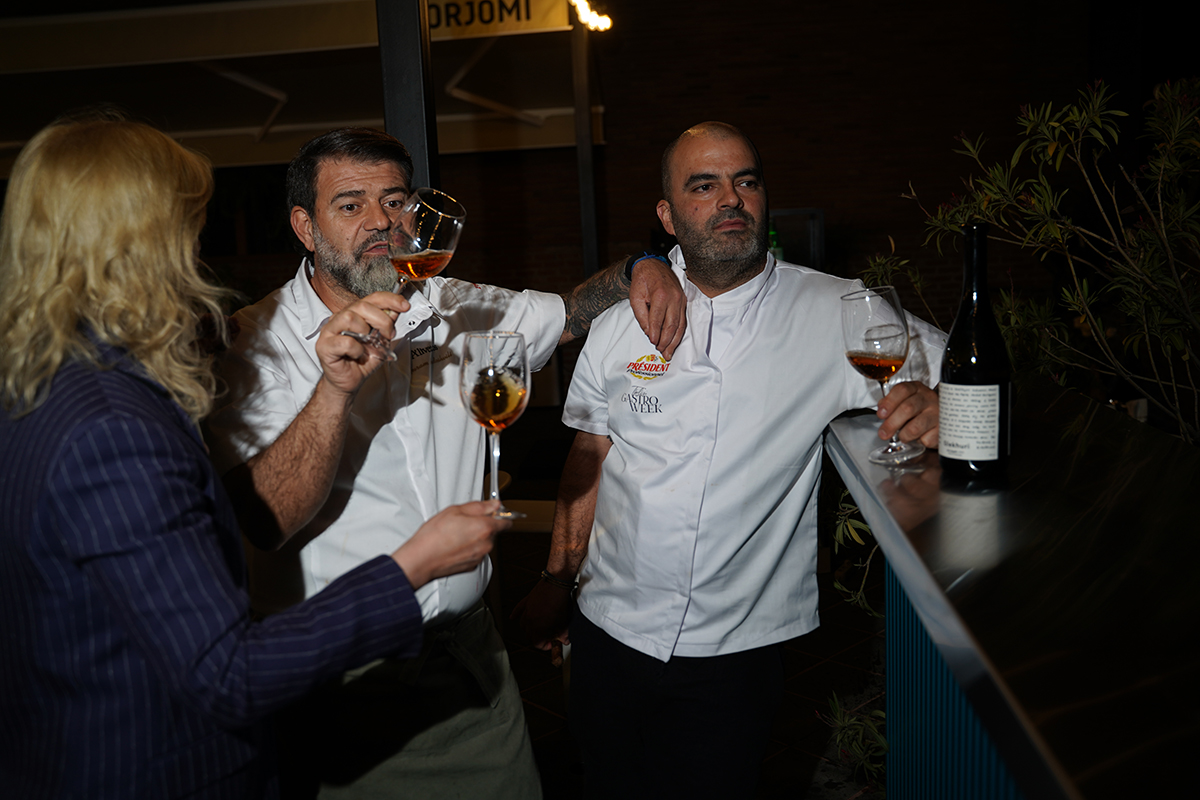
Tbilisi Gastro Week: Pourcel x Gortina
My first night was spent at Ostigan, in the Hotel Paragraph on Freedom Square, at a four-hands dinner born of French culinary culture that brought together Jacques Pourcel and Stephane Gortina.
I never made it to Le Jardin des Sens, but I have fond memories of Maison Blanche on Avenue Montaigne, now closed, so it was a pleasure to meet that Pourcel hand again. The best dish of the night was a classic of his, the foie gras yoghurt with summer truffle, balanced in the mouth, rich, silken, without the heavy solemnity with which foie gras usually reaches a table.
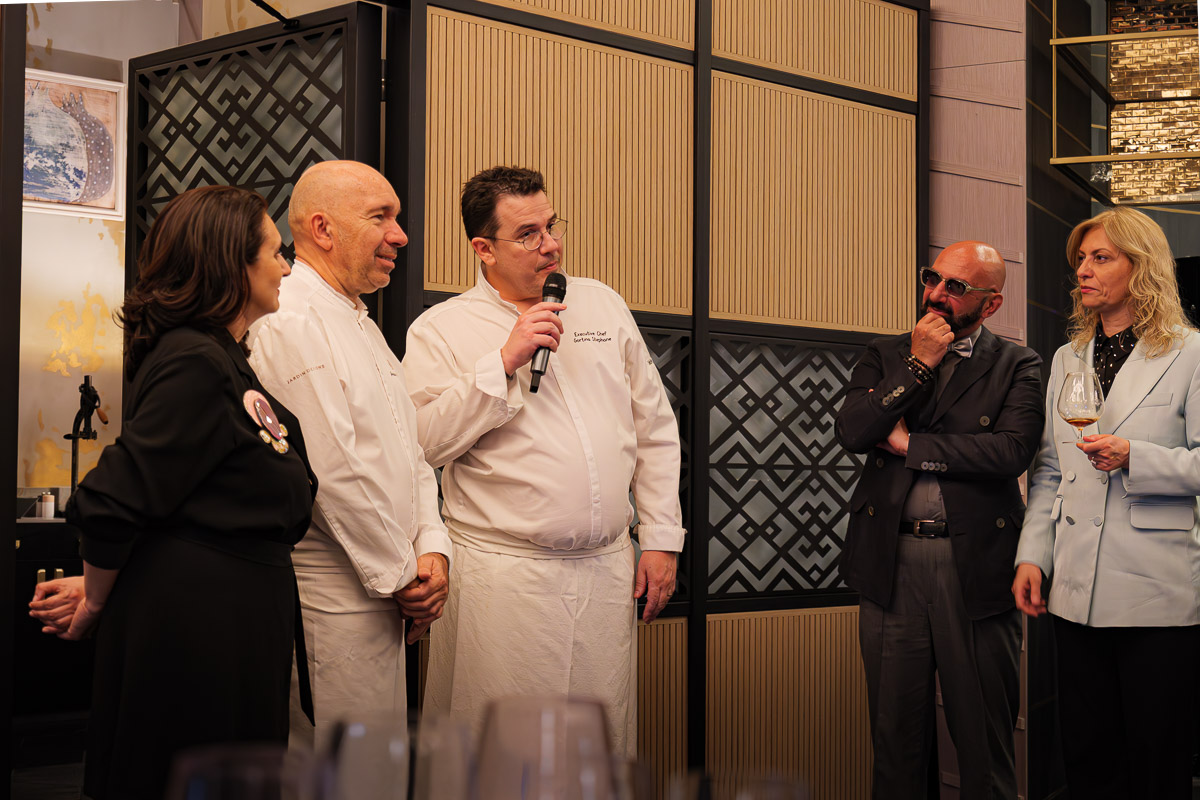
The rest of the menu held me for another reason: across the days, not one of the visiting chefs tried to fit his cooking to the country, and almost all of them adapted their cooking to the ingredients available on the ground, which is a different operation altogether and a considerably more honest one than the folklore one might have expected.
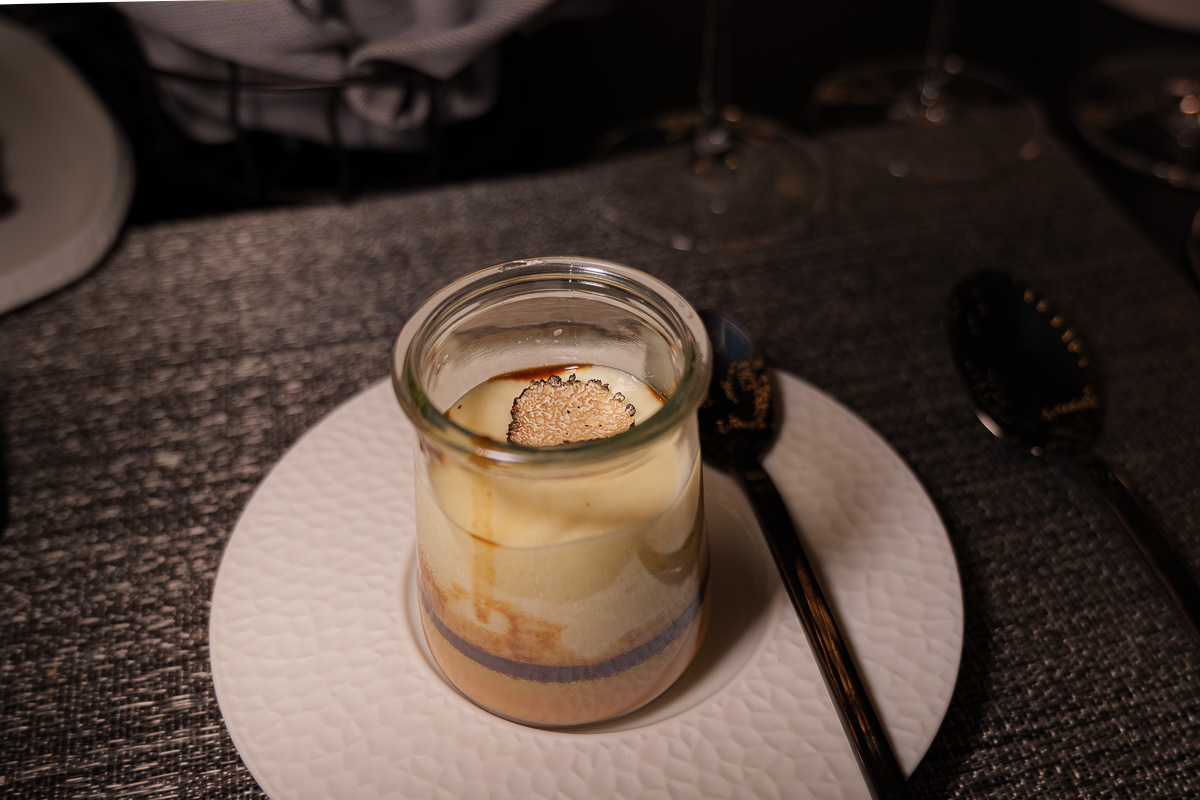 Two of Gortina‘s dishes built bridges to Georgian food: the chef, who lives in Tbilisi but built his career in France, brought Georgia to the menu with nadughi ravioli with the last Georgian morels of the season and grilled Black Angus with local green asparagus and saperavi sauce. The dessert that quoted the clay vessel, a chocolate qvevri with blackberry and saperavi reduction, was the work of the hotel’s pastry chef, Tamar Tsiklauri.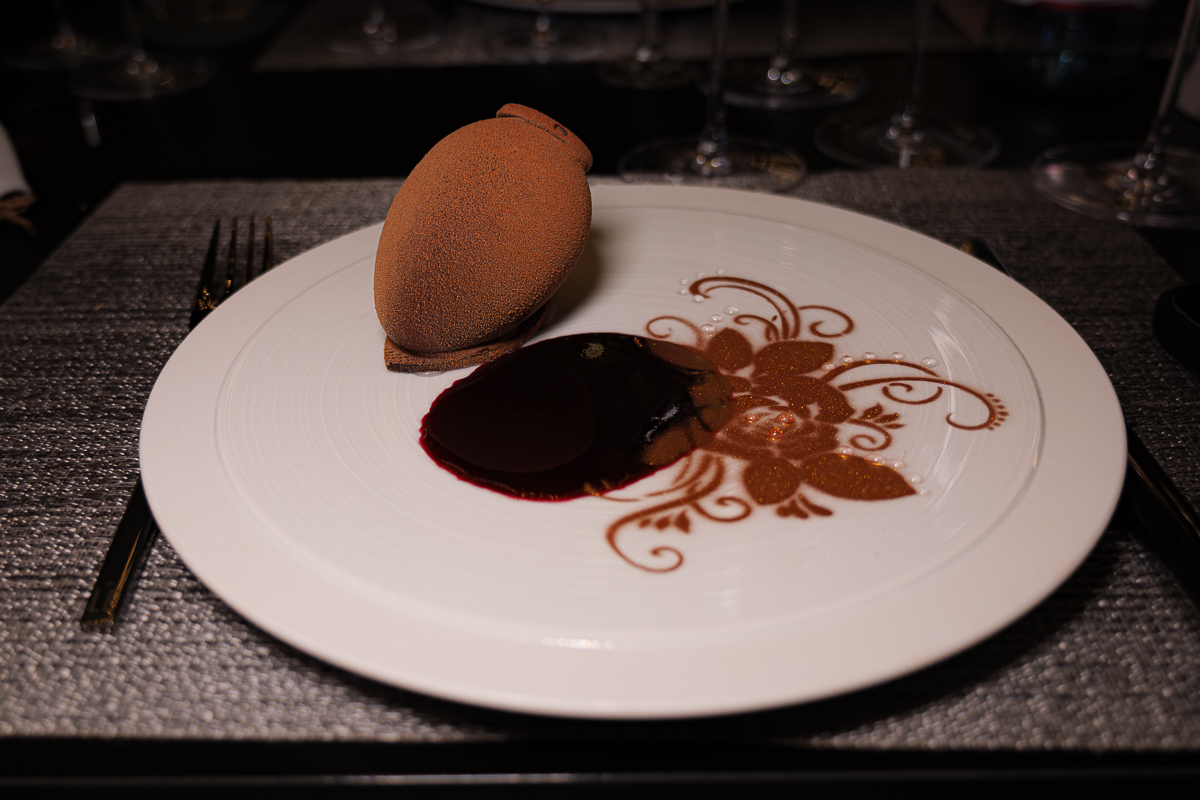
One thing ran through the entire week, and none of us could ignore it. Sparkling wines, whites and ambers were served almost at room temperature throughout, and on some nights the red arrived cooler than the white. Amber asks for a higher temperature than a young white, as does a white with some age and density behind it, and we know that much. But between serving at twelve or fourteen degrees and serving at twenty there is a chasm: at twenty the alcohol rises and smothers the aromatics, the acidity drops out of the structure, and the skin tannin turns heavy, almost bitter. That is how the wines are drunk in Georgia, and that is how we found them everywhere we went, whether through some fault or habit of theirs or of mine, I cannot say. I often came away unable to draw the most from a glass, simply because of the difficulty of tasting at those temperatures.
To close the evening they poured Port. Curiously, despite no tradition of drinking Port in the country, Taylor’s was among the festival’s sponsors, alongside a handful of Italian and Georgian houses. More traditional, they say, is to end a meal with chacha, the spirit the various producers distil from the pomace left in the qvevri. The end of the meal comes out of what is left of the wine, a coherence that says a good deal about how central wine is to this country’s history.
The archive
On the second day, after a long walk through the city and an excellent lunch at Littera, we visited the National Enoteca, housed in Wine Factory No. 1, on Vasil Petriashvili Street. It sits a few minutes from Stamba, in the same Vera district: two industrial spaces returned to the city for another purpose. Alexander Ozerov designed the original building in 1894-96, financed by David Sarajishvili, the man behind Georgian brandy; it produced wine for the Russian Empire and later for the Soviets.
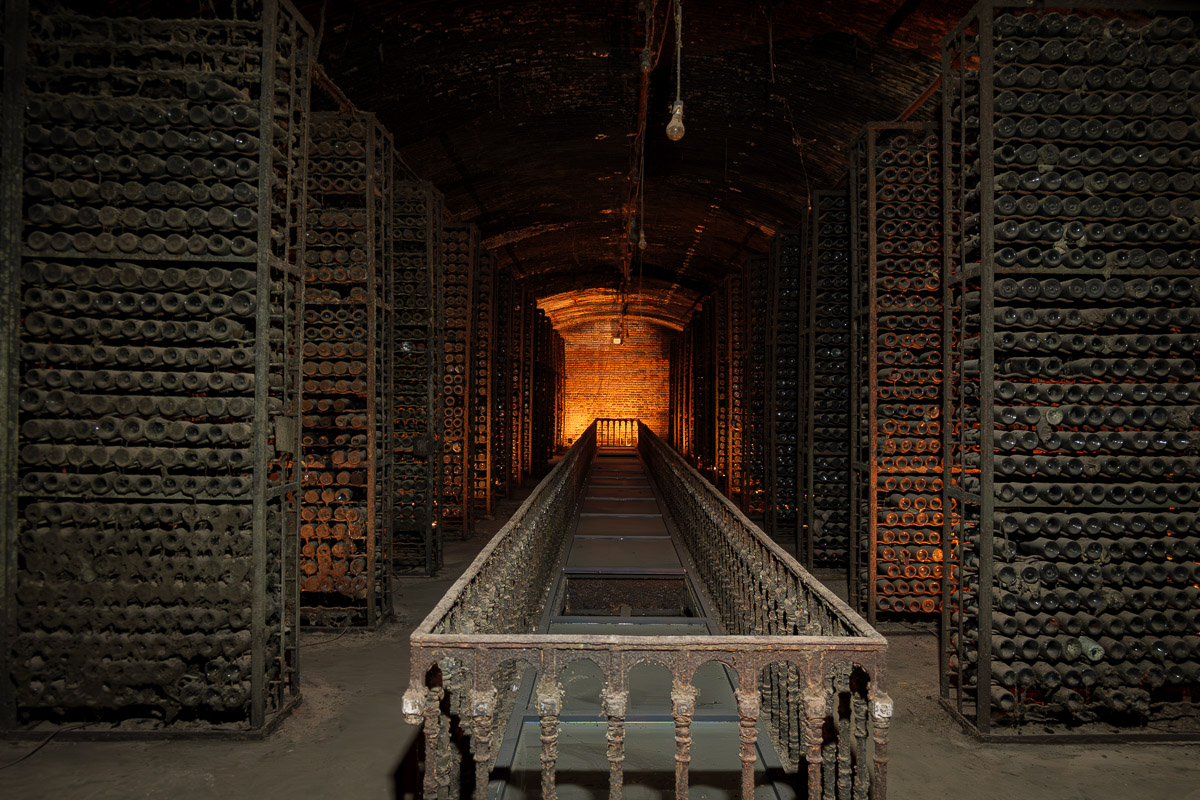
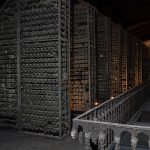
By the entrance, a board on the wall lists the inventory, which tells the long history of this holding. Thirty-four thousand samples, some six hundred designations, from the eighteenth to the twentieth century, according to the 17 February 2003 stocktaking. A Polish liqueur from 1790. A French cognac from 1811, out of Napoleon’s cellar. A hundred and thirty-seven bottles of Château d’Yquem, from 1847 to 1958. A hundred and nineteen of Latour. Twelve Mouton from 1874. A single bottle of Schloss Johannisberg from 1866. And twenty bottles of Port from 1847, plus three hundred of Madeira, from vintages between 1851 and 1939. We were not allowed in; we saw the dust on the bottles and the depth of the dark cellar in which they rest.
I stood there longer than I should have, thinking about the history and about what it would be to taste any number of those wines. The National Wine Agency identifies bottles in the holding that came from personal collections, from Napoleon to the Romanovs and later to Stalin, because everything “passed to the people”, but not the wine. The feared man on the tourist socks in Mtskheta had a state cellar.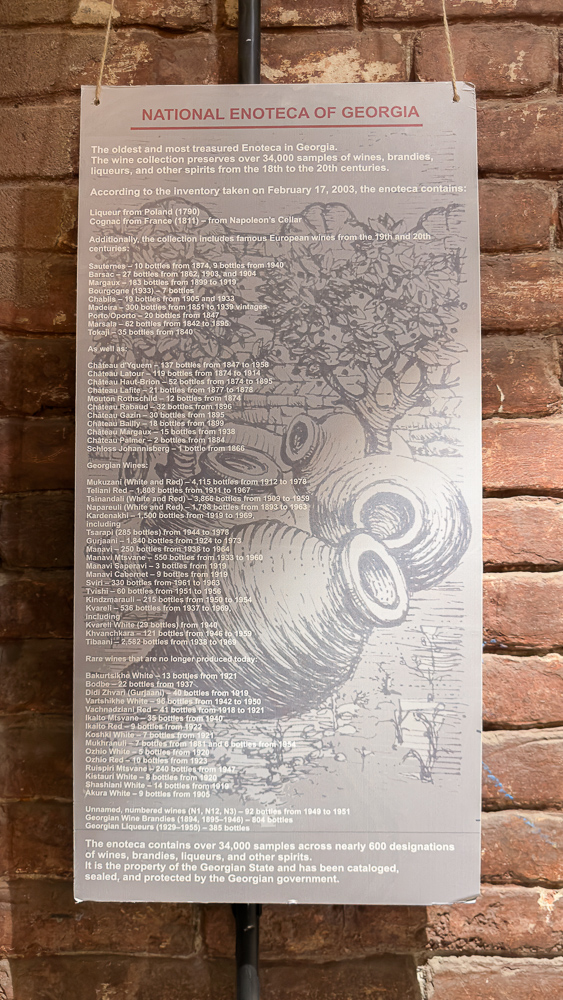
The hard part to read is the last list, the one for wines no longer made. Bakurtsikhe white, thirteen bottles from 1921. Bodbe, twenty-two from 1937. Ikalto mtsvane, thirty-five from 1940. Akura white, nine bottles from 1905. Ozhio white, five from 1920. Every line carries a name, a year, and the number of survivors, giving that wall the exact form of a graveyard. And the Georgian wines in the collection run from 1893 to 1978, with nothing after that.
Note, too, what the list does not have: the names of producers. The Georgian wines in that inventory are catalogued entirely by appellation — Mukuzani, Tsinandali, Napareuli, Kardenakhi, Khvanchkara — because that is how the monopoly classified them. In 1929, Samtrest took over the entire industry and became the owner of every cellar in the country. The grower delivered his harvest to a primary winery, which made bulk wine, and a second winery in Tbilisi handled the bottling under the single state brand.
The name of whoever made the wine never made it to the label.
In the thirties, collectivisation finished off the small producers, moved the vineyards off the slopes and onto flat ground for the sake of mechanisation, and cut the diversity down to a handful of high-yielding varieties. By the eighties Georgia was exporting more than four hundred and forty thousand tonnes of wine a year, almost none of it from clay. The Soviets waved away the country’s wine history and essence in favour of volume and their own internal needs.
Here lies the answer to the question anyone asks on discovering all that past and diversity: how did the country where wine began spend decades absent from the international conversation? For sixty years it produced at industrial volume, inward into an empire, without a single name of its own on the bottle. There were no producers to present, only appellations to fulfil. The qvevri, in practice, was never banned; it simply stopped being profitable, and could only be worked in people’s free time, which gave few of them any reason to have new vessels made. What survived stayed in the cellars of private houses, among them the old vines that today underpin part of Iago’s wines.

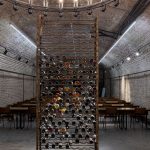
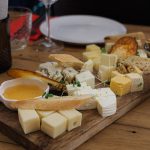

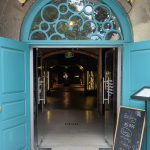
The Enoteca opened in May 2026, days before our visit. The ceremony drew the prime minister, Irakli Kobakhidze; minister David Songulashvili; Pierre Lurton, president of Château d’Yquem; and representatives of international auction houses and private collectors. The official communication speaks of a plan to identify what is held there and determine its origins, condition, and keeping potential.
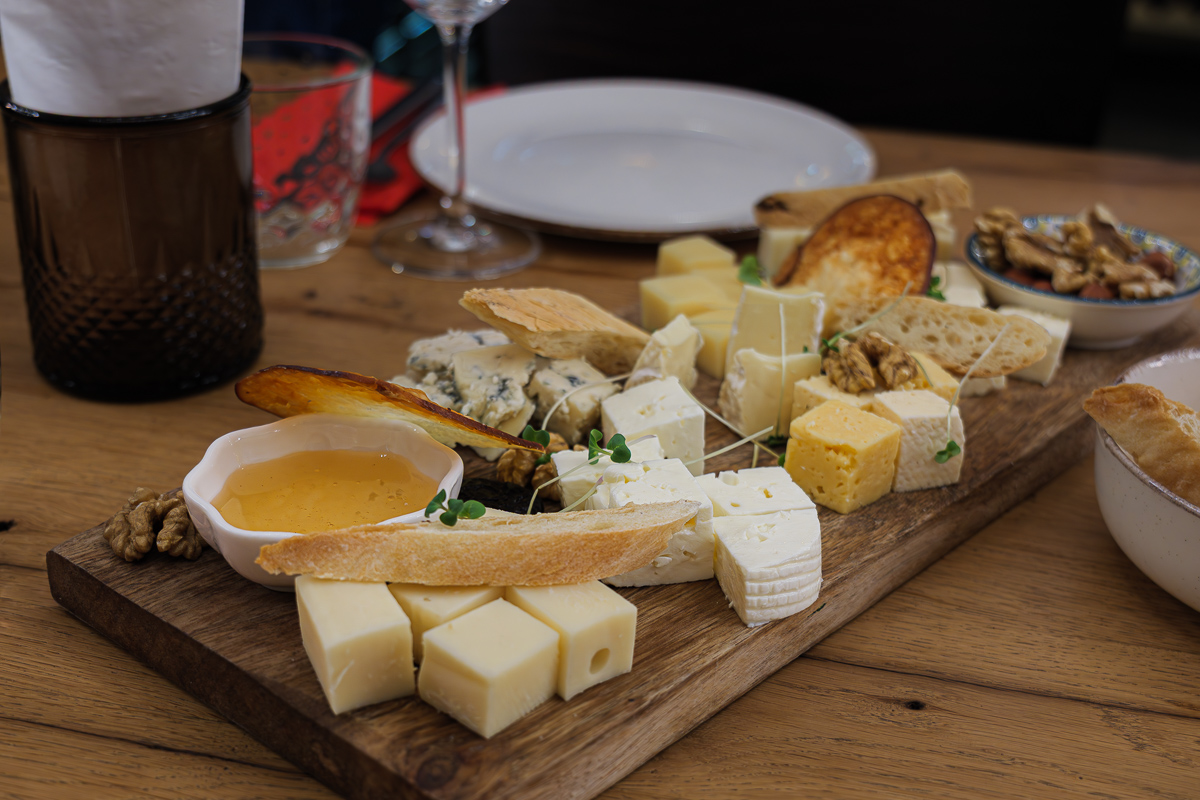
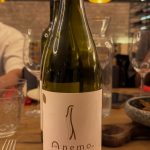
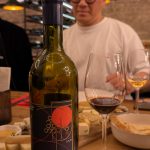
Anna Godabrelidze, the first lady of Georgian wine, as some like to call her, showed us around. She heads the Faculty of Viticulture and Oenology at the Agricultural University of Georgia, chairs the State Tasting Commission at the National Wine Agency, founded the VINEMO wine school in 2009, which operates in the same building, presents a television programme about wine and owns Anemo, whose wines I drank at several moments of the festival and at a tasting of Georgian wines and cheeses in the school’s wine bar, at the door of the sealed cellar, with the past locked away a few metres off and the present standing as a shop window for the country’s future in the room next door.
Tbilisi Gastro Week: AMA x ATI
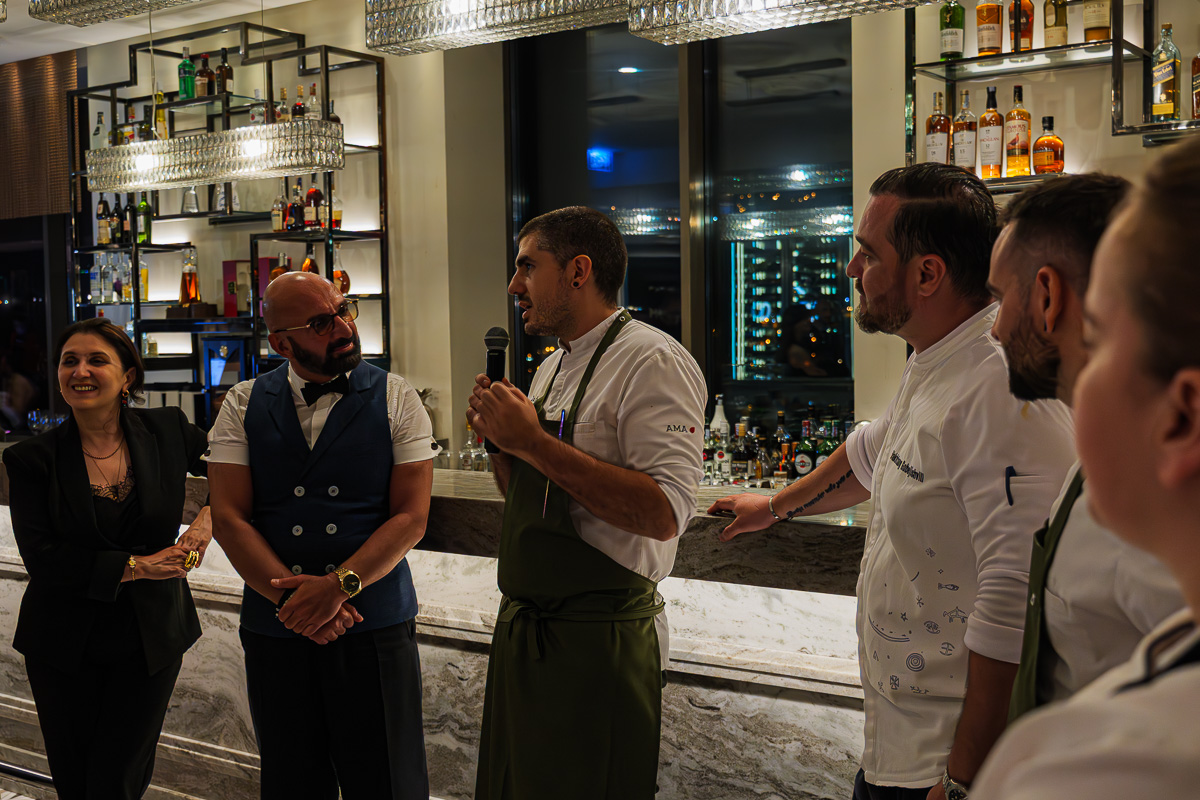
The last big night was at ATI, on the top floor of the Sheraton Metechi Palace. Javier Rivero and Gorka Riko, of AMA in Tolosa in the Basque Country, with a Michelin star and a green star, alongside the Georgian Vakho Gobejishvili.
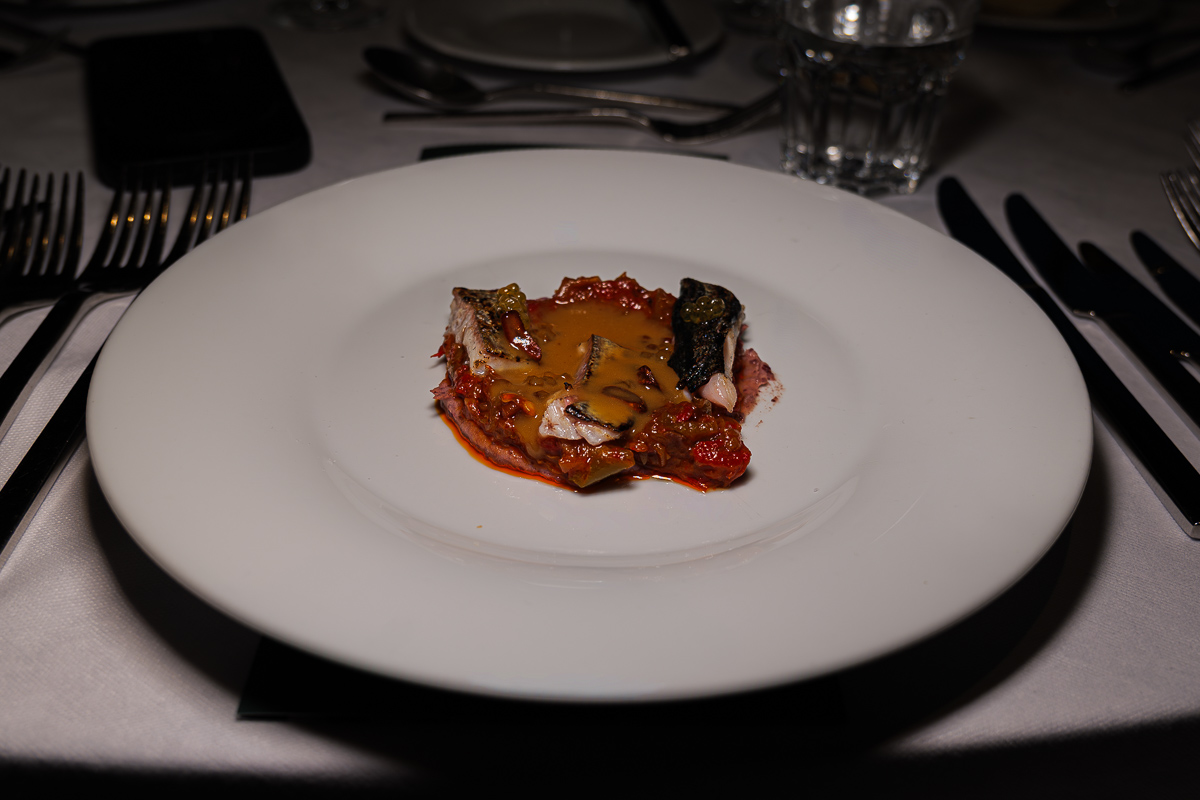
AMA takes as its motto “lo local nos protege, protejamos lo local“, which, three thousand kilometres from home, is a contradiction waiting to happen. They resolved it with a trout piperrada, and it was the best answer of the week: rather than import produce from Tolosa, they imported the method and applied it to a fish that is common in Georgia. It was my dish of the night. In the glass, I had the Anemo mtsvane-rkatsiteli 2024, an amber from qvevri in Akhmeta, and the Dolidze chkhaveri 2024 from Guria, a variety barely anyone outside the country knows.
The last lunch
The close was a brunch at Osteria Luigi, with Nika Akopov and Takahiko Kondo, of Gucci Osteria in Florence. Relaxed, with a handsome and informal room, a recent Italian that looks as though it has been there for decades, also housed in the broad spaces of Wine Factory No. 1.
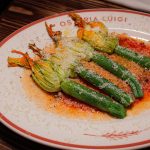
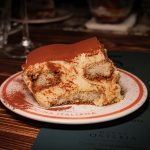
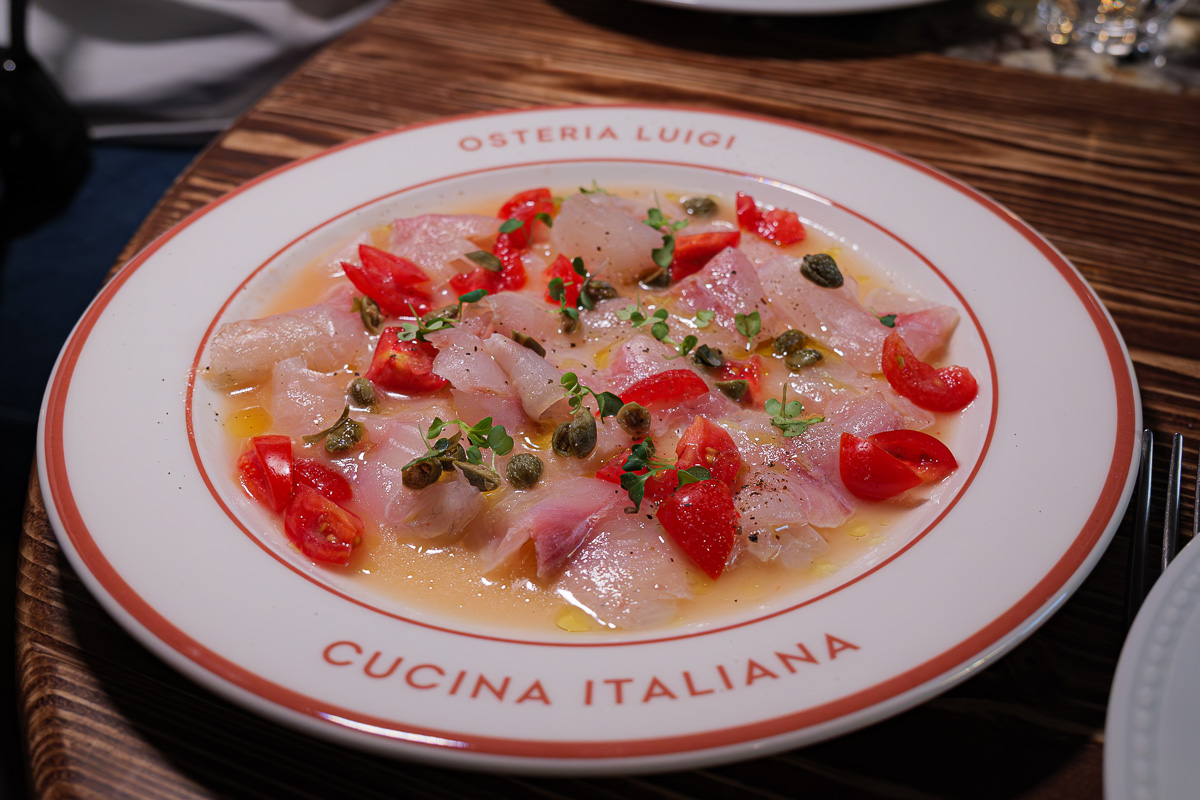 Sea bream crudo with tiger’s milk. Courgette flowers with ricotta and tomato. Tortellini with a cream of thirty-six-month parmigiano, unmistakable. Sea bass with cacciucco. Cherry, strawberry and fiordilatte ice cream, and a classic tiramisù, both puddings faultless.
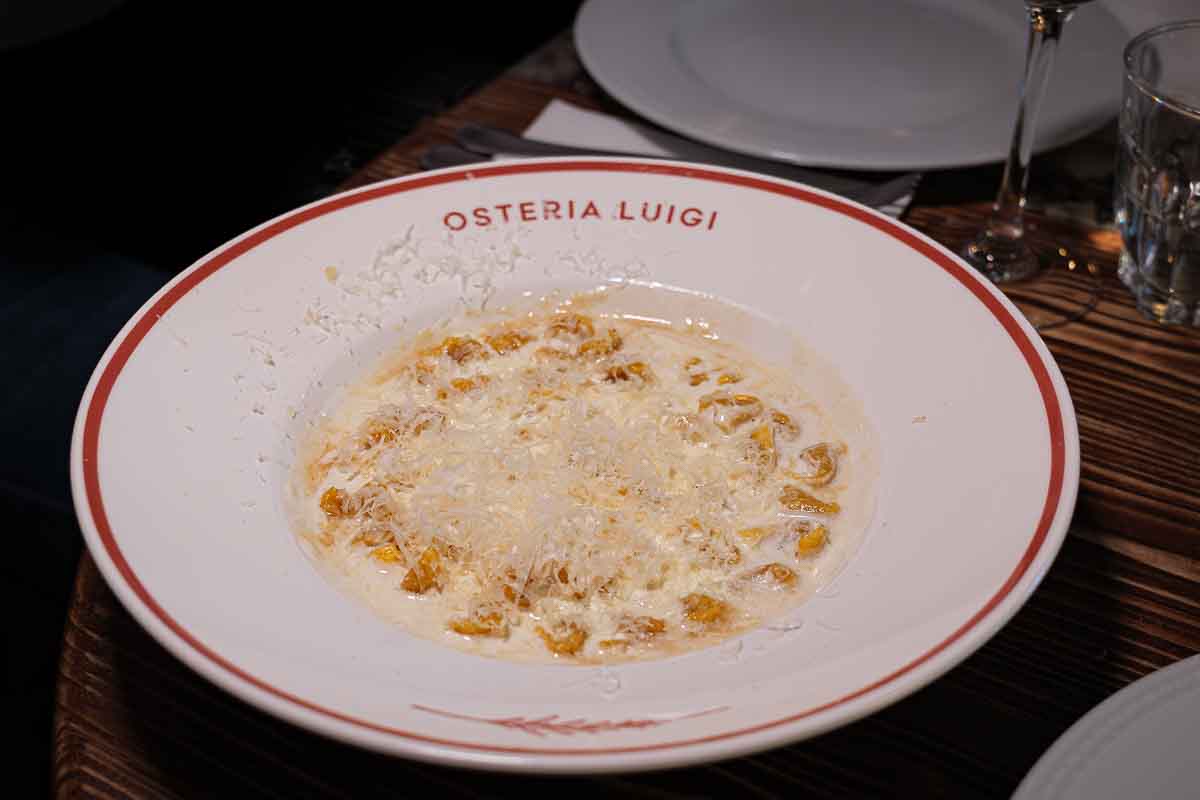
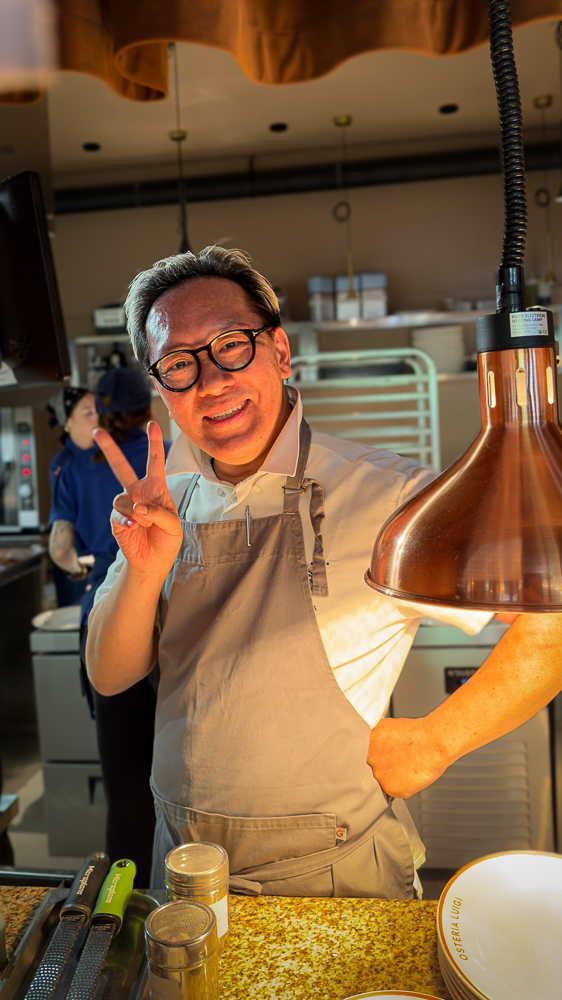
It was the best of the four-hands dinners I attended, and I worked out why somewhere in the middle of the tortellini. It was the only one at which nobody had to represent anything. A Georgian and a Japanese cooking Italian food in Tbilisi, with no speech, no flag, no need for the table to signify anything at all. On the list, two columns of wine, Georgia and Italy, and an amber chinuri from qvevri by Barbale, the same variety as Iago’s and from the same region, poured beside a nerello mascalese from Sicily. It was drunk with pleasure and without a caption.
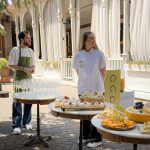
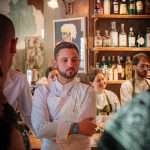


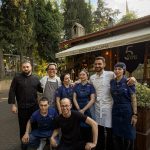
Every dinner that week seated more than a hundred people, a week given over to the city, to the people of Tbilisi setting out to discover cooking they had never tasted, prepared by internationally recognised chefs in a country that spent sixty years producing wine by volume inward into an empire and now wants back the name it is owed.
 They do this in several ways at once. With small producers exporting their entire output, with wine schools teaching locals and visitors about their own wines. With a food culture that belongs to no one else and a hospitality all of its own. With Georgians opening restaurants across Europe and one of their most celebrated chefs, Guram Baghdoshvili, bringing to Portugal the name of the restaurant he runs in Tbilisi, Chveni, after the success of Karater.
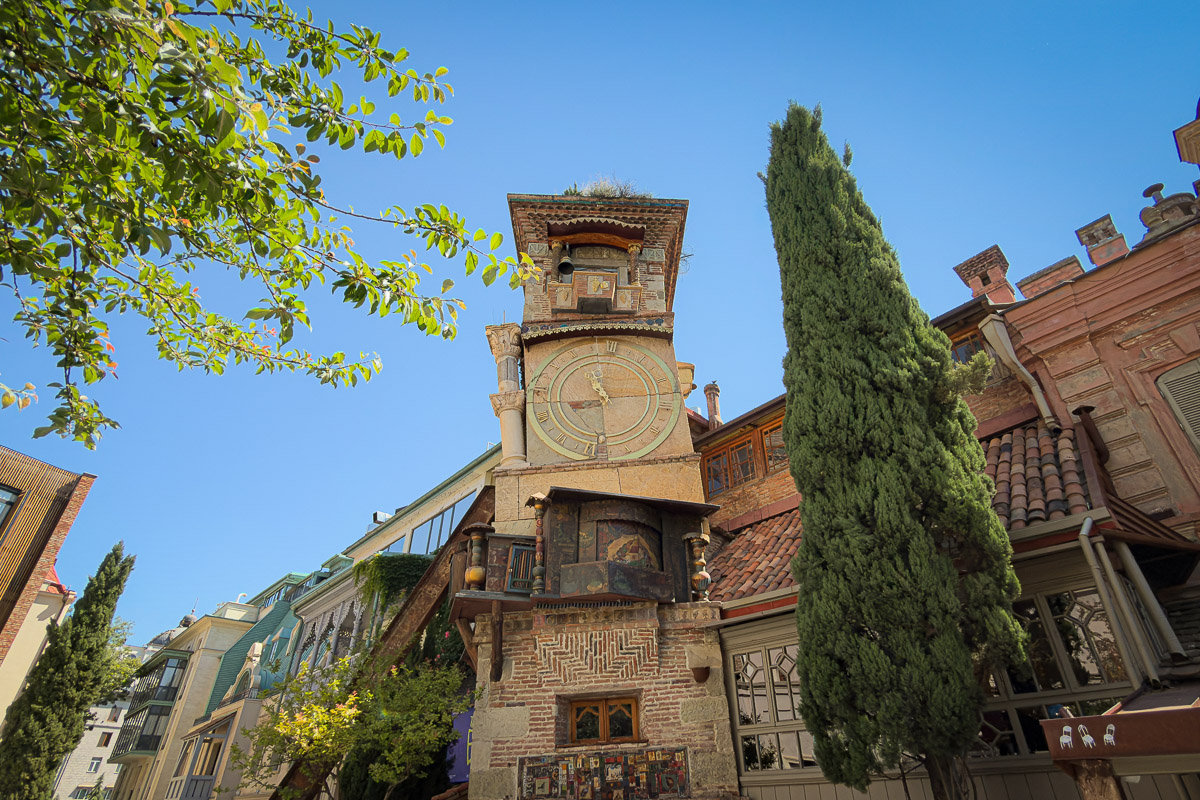
The best of what that country has still happens at a long table with no menu, with the matriarch serving, the lamb arriving off the coals, the khinkali and the various khachapuri, and a clay vessel buried in the floor of the house next door. It was there, in Chardakhi, that I understood the rest. And the more open you arrive at that table, the further it carries you. Which is rather the point of the statue up on Sololaki, still holding the cup in one hand and the sword in the other.

My thanks to Irakli Nadareishvili and Keti Kvichidze, and to the whole Tbilisi Gastro Week team, for the chance to discover a country, a culture and a way of being at the table that is worth the trip and worth repeating. And to Sophi, who did the rest!
Useful Information
Wine
- Iago’s Winery — Chardakhi, near Mtskheta. Visits with tasting and lunch. Chinuri from vines over sixty years old, amber and without skin contact, plus pét-nat and chacha. In May they run their own festival, Sherekilebi.
- National Enoteca / Wine Factory No. 1 — 1 Vasil Petriashvili Street, Vera. The same complex houses the VINEMO wine school, run by Anna Godabrelidze, with wine and cheese tastings.
- Vino Underground — Galaktion Tabidze Street, Sololaki. An all-Georgian list of small natural producers, around 350 references, including labels found nowhere else in the city — Iago’s among them.
- DADI — just off Freedom Square. More than 500 organic and biodynamic wines, around thirty by the glass rotating daily.
- Amber Bar — Davit Aghmashenebeli Avenue. More than a hundred natural wines from family estates.
- Warehouse — inside Stamba Hotel, committed to making natural and biodynamic wines accessible to everyone.
Where to Eat
- Littera — in the garden of the historic Writers’ House of Georgia, Sololaki. Contemporary Georgian cooking by Tekuna Gachechiladze.
- Chveni — 8 Tchorokhi Street. Guram Baghdoshvili’s restaurant, and the name coming to Lisbon.
- Osteria Luigi — Italian cooking by Nika Akopov, at Wine Factory No. 1.
- Poliphonia — from folklorist Luarsab Togonidze. Wild, strictly local produce, ethnographic wine objects around the room, spontaneous polyphonic singing at the table.
- Barbarestan — a menu built from a nineteenth-century recipe book by Barbare Jorjadze.
- Shavi Lomi — in a Vera courtyard. The restaurant that launched contemporary Georgian cooking.
- Culinarium Khasheria — 9/11 Samghebro Street, Abanotubani. Reopened in June 2026 in its original neighbourhood.
- Zakhar Zakharich — under the Dry Bridge. One of the few places where khinkali dough is made entirely by hand, mountain-style.
- 144 Stairs / OAT Gallery — beneath the walls of Narikala. Order the gebzhalia and the gupta lobio.
Culture and History
- Abanotubani — the sulphur bath district. The city’s name comes from tbili, warm. A public bath costs between six and ten lari.
- Narikala — the oldest walls date from the fourth century. Cable car from Rike Park.
- Kartlis Deda — the Mother of Georgia, high on Sololaki.
- Svetitskhoveli and Jvari — in Mtskheta, half an hour from the capital.
- National Gallery — 11 Shota Rustaveli Avenue, for Niko Pirosmani.
- Deserter’s Bazaar — 107 Mikheil Tsinamdzghvrishvili Street. Upstairs in the neighbouring Central Bazaar, guda sheep’s cheese, sulguni, hundreds of churchkhela and fruit tklapi.
- Museum of Soviet Occupation — inside the Georgian National Museum, on Rustaveli.
- Dry Bridge Market — Soviet memorabilia, gramophones, ceramics and drinking horns.
- Fabrika — a former Soviet industrial complex, now courtyards with murals and cafés.
Where to Stay
- Stamba — Merab Kostava Street, Vera. A former printing house from the thirties. Worth a visit even without staying.
- Rooms Hotel — connected to Stamba, same group, more secluded.
- Paragraph Freedom Square — a wine fridge in every room, a three-level spa with indoor pool. Home to Ostigan.
- Paragraph Golf & Spa Tabori — on a hillside above the city, for those who want to leave the centre.
In Portugal
- Karater — Rua Diário de Notícias, Bairro Alto, Lisbon. Guram Baghdoshvili’s cooking, with Georgian and Portuguese wines.
- Ezo — Rua da Meditação, Boavista, Porto. Opened in 2025 by chef Maia, from Senaki. Ezo means courtyard in Georgian.
- Nani Bistrot — Porto. Armenian-Georgian cooking. Nani means grandmother in Armenian. Khorovats and khinkali.
Dishes Not to Miss
Adjaruli khachapuri, khinkali, kharcho, kubdari, ajapsandali, lamb over coals, garden salads with ferments and hot preserves, churchkhela, and chacha to finish.
- Tbilisi Gastro Week — 5.ª edição, de 31 de Maio a 7 de Junho de 2026. Direcção de Irakli Nadareishvili, presidente da Associação de Festivais da Geórgia, com a Georgian Gastronomic & Rural Tourism Association, presidida por Keti Kvichidze. Jantares a quatro mãos, provas, masterclasses e visitas a produtores, com público sobretudo local.