
Riemergasse is a narrow, unshowy street, minutes from the Opera yet outside the theatre of the Ring. We arrived at the Mandarin Oriental on a January afternoon — sunlit, but with the snow still clinging to the window ledges and the city in a hush. From the outside it is severe: a closed façade, columns, tall windows in sequence, the stone with which Vienna, at the start of the twentieth century, chose to give shape to the idea of justice. For more than a hundred years, the building served the city as a courthouse.
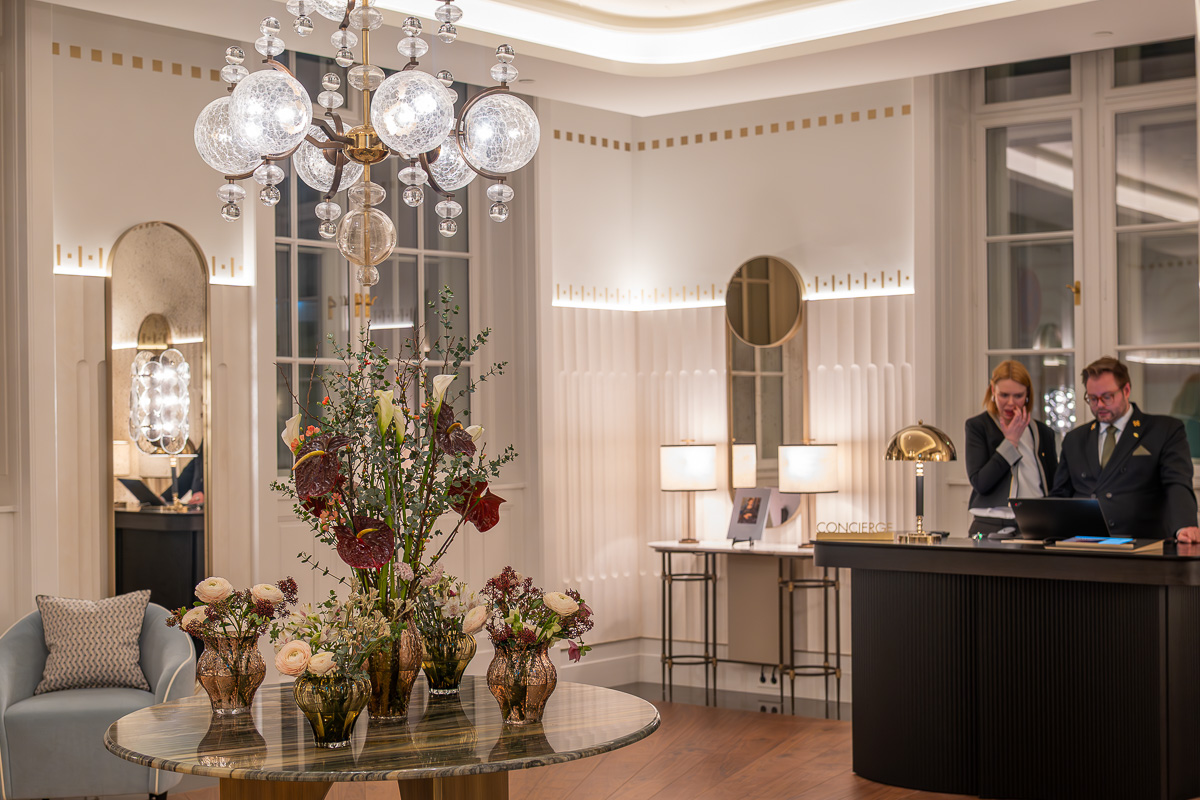 We had left, minutes earlier, the more familiar Vienna: the one of velvet, of portraits, of the balls that knew how to outlive the empire. Here, the proposition was different, and it came with an intriguing premise — we arrived weeks after the hotel had opened, and everything still smelt new.
This is Mandarin Oriental‘s first address in Austria, and it did not arrive alone: the Rosewood opened at almost the same time, a few blocks away. For decades, Viennese luxury had a near-singular form — imperial and inherited. What the Mandarin brings is drawn from another latitude: a hospitality of Asian roots, built on foresight and restraint, one that measures service by the detail rather than by ceremony — showing the city that invented the court how to receive without one.
It is no coincidence. In recent years, Vienna has ceased to be only the capital of coffee houses and the waltz and has entered the map of the great names in luxury and hospitality, and these two near-simultaneous openings are as clear a sign of it as any.
 From courthouse to hotel
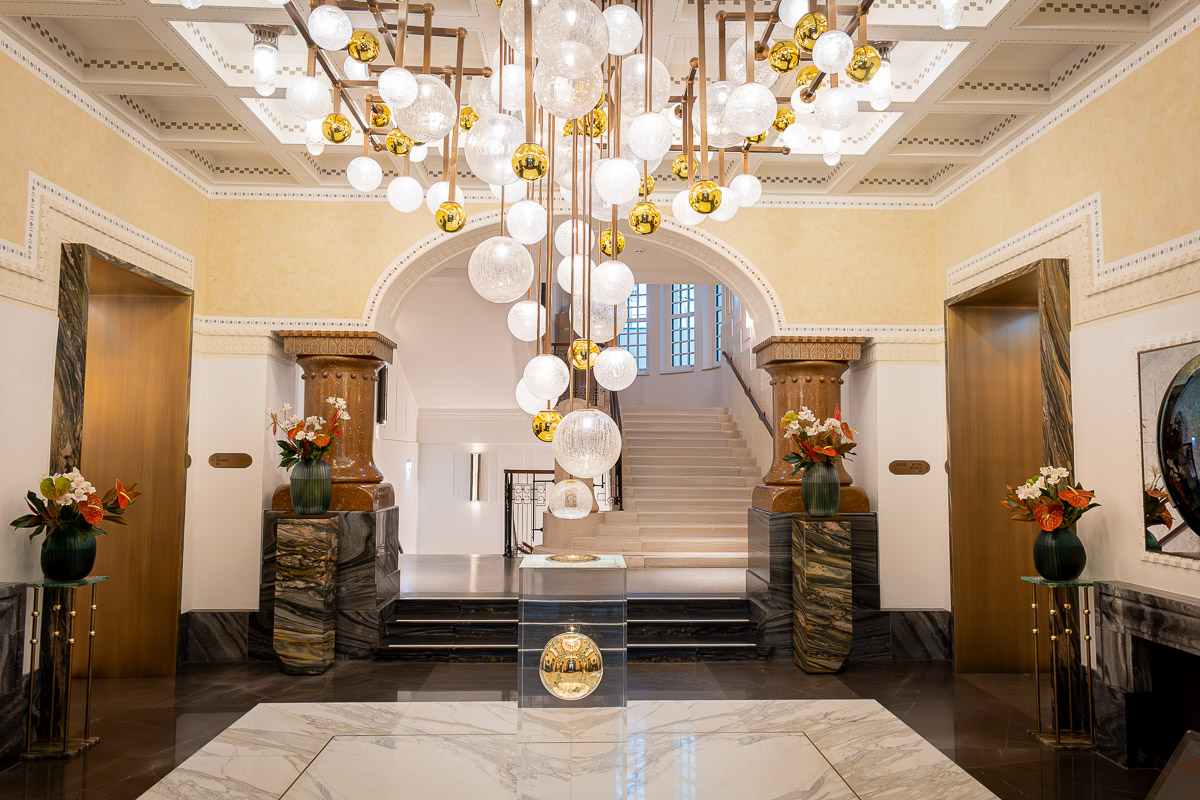
The Art Nouveau building is the work of Alfred Keller, completed in 1908, and for generations it served as a courthouse: criminal cases, divorces, family disputes decided within these premises. Today you cross the atrium knowing this, and it sits uneasily against the idea of a hotel.
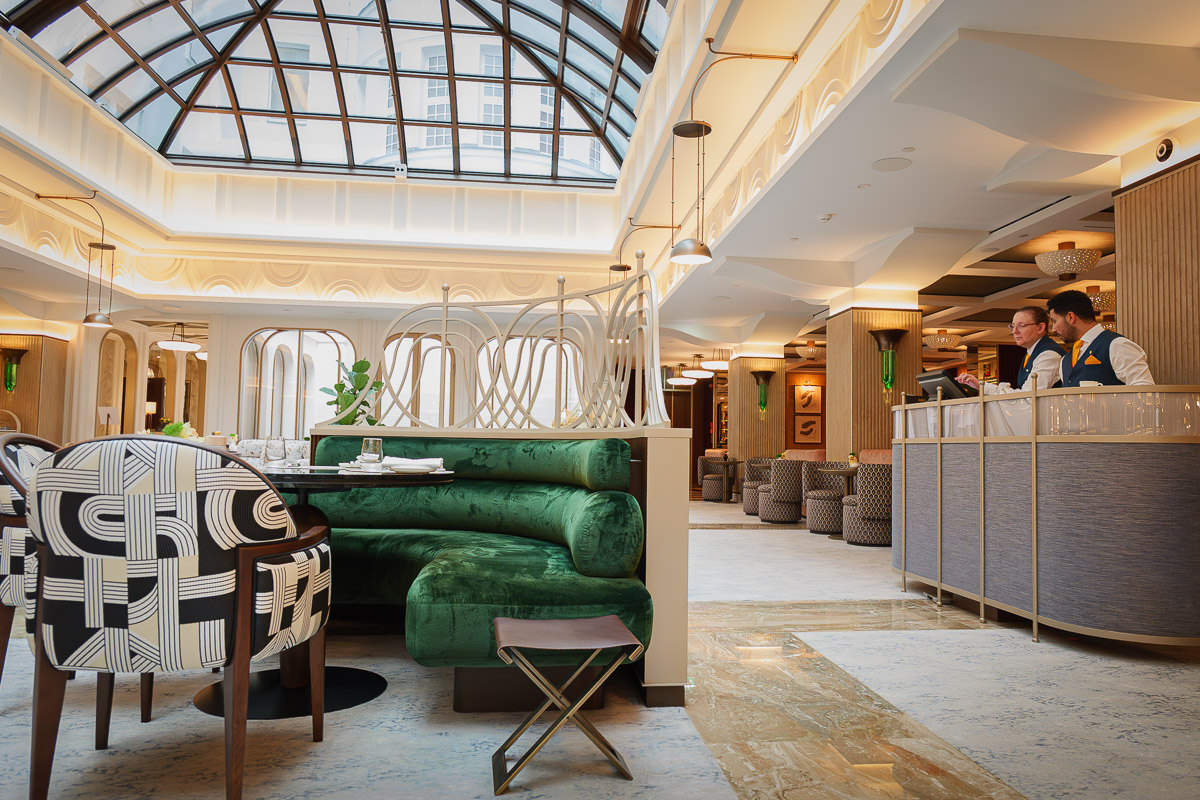
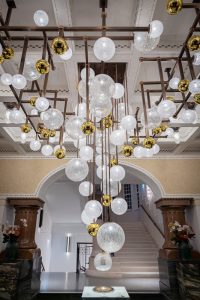
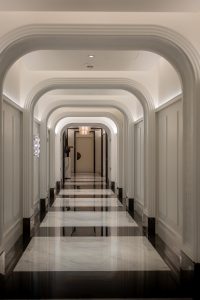
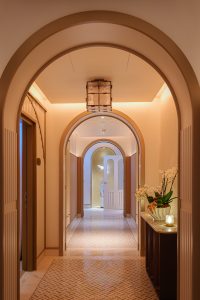
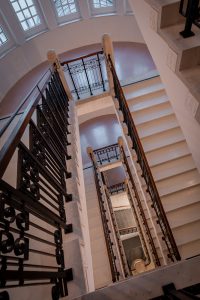
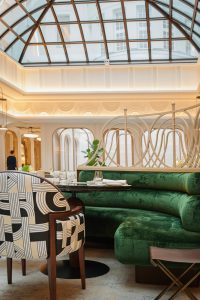
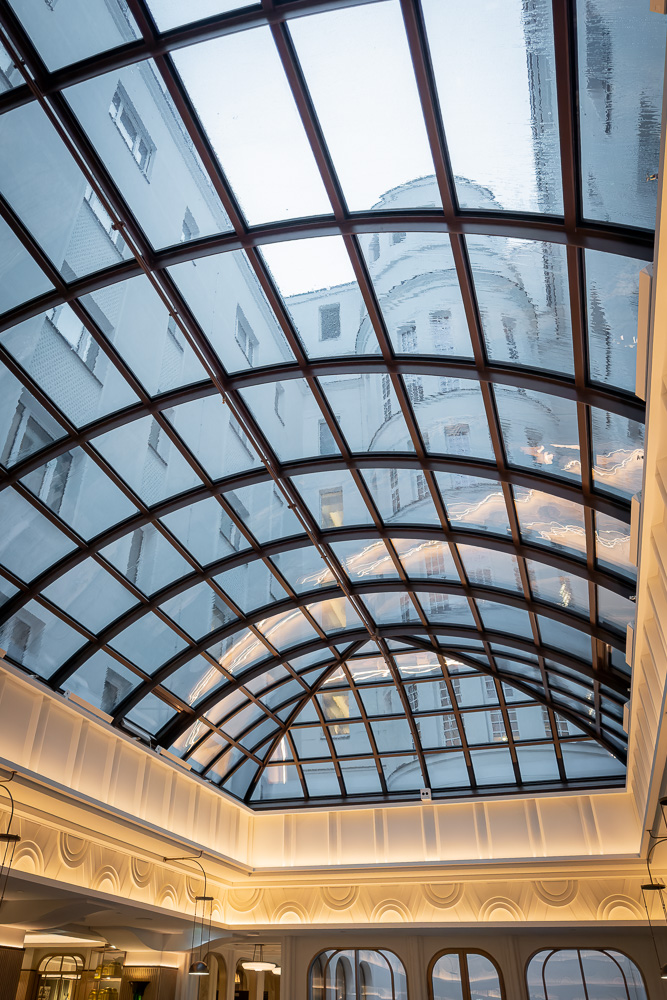 The conversion fell to the studio Goddard Littlefair, and the project’s intelligence lies in what was not torn down. They kept the monumental staircase and the original ceilings, and preserved the building’s footprint. The old central courtyard, now covered by an elegant skylight, has become the social heart of the hotel — the open core around which everything is arranged. You pass through it several times a day, with or without intent, and the movement is always the same: your eyes rise to the light coming down from the skylight. At the same time, the sound of the surrounding spaces reaches you muffled, as though the courtyard imposed its own tempo on everyone. Underneath it lies an even older layer: during the excavation of the spa, human remains were found, tied to a monastic past and to Roman Vienna, Vindobona. Work stopped, archaeologists were called, and the building’s inheritance came to hold nuns, Roman soldiers, judges, and now guests — the same ground occupied differently in different centuries. This is what History lives on!
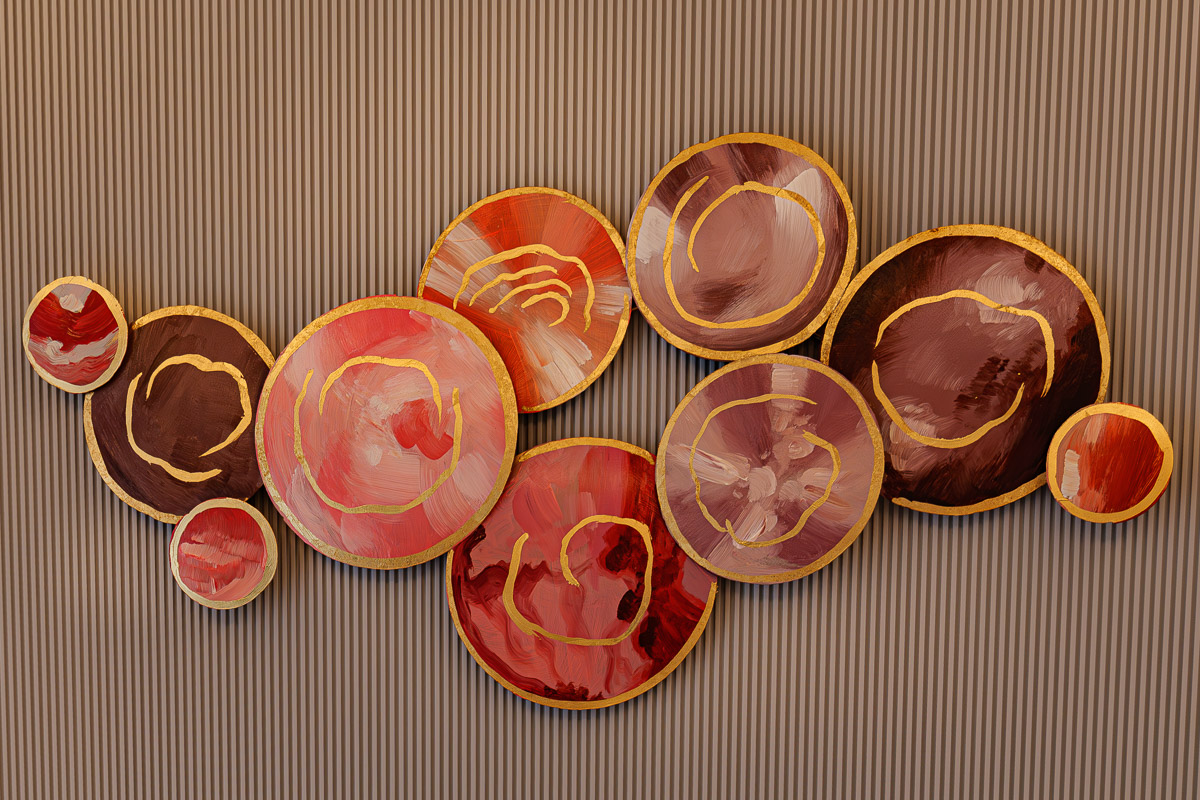
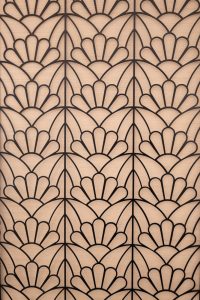
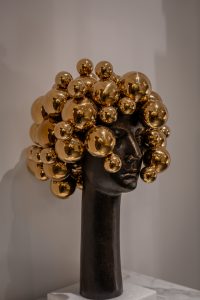
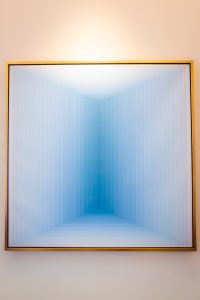
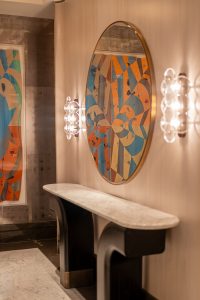
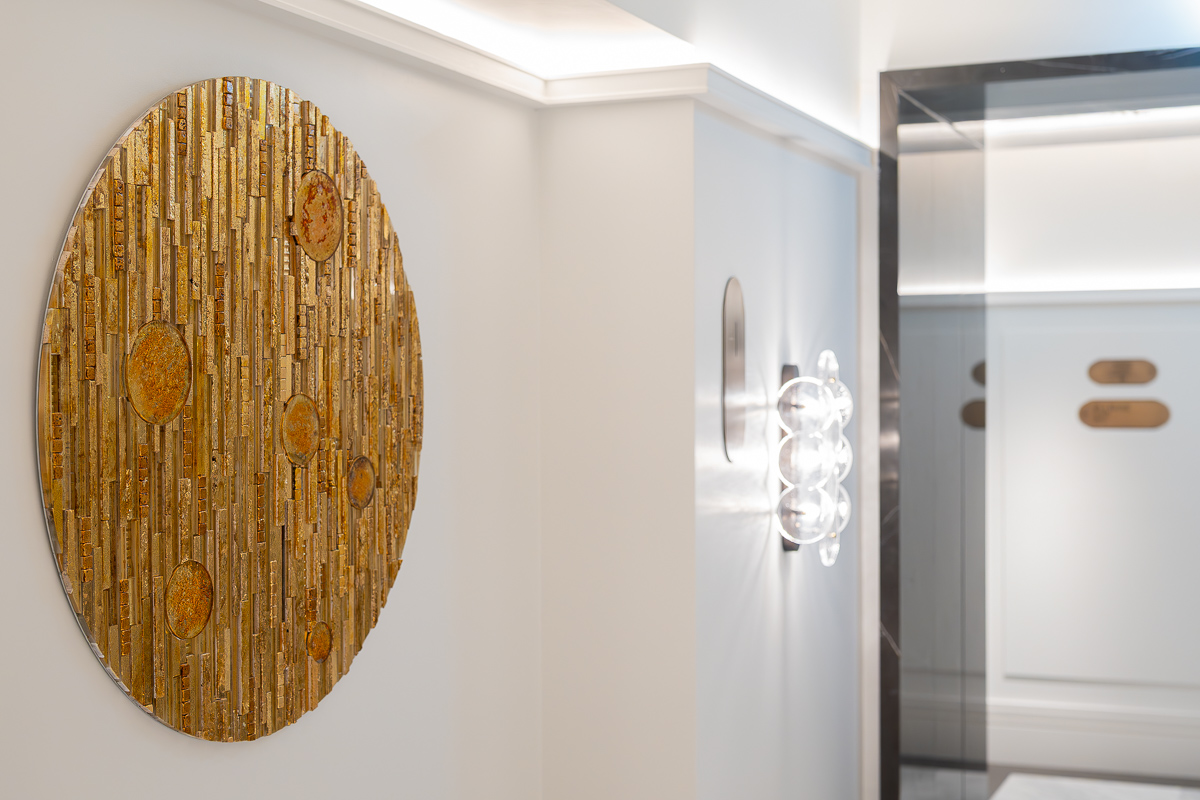 None of it is staged, or lived, as a museum. Art is scattered through the hotel without ceremony or fanfare, in the lift lobbies and inside the rooms themselves, and Minda Dowling‘s curation makes a deliberate gesture: fourteen of the twenty-five artists are women, in a contemporary reading that does away with the gallery of imperial portraits.
This is the gesture everyone involved in the project wanted to foreground — to take a building of the old power and rewrite it in another language!
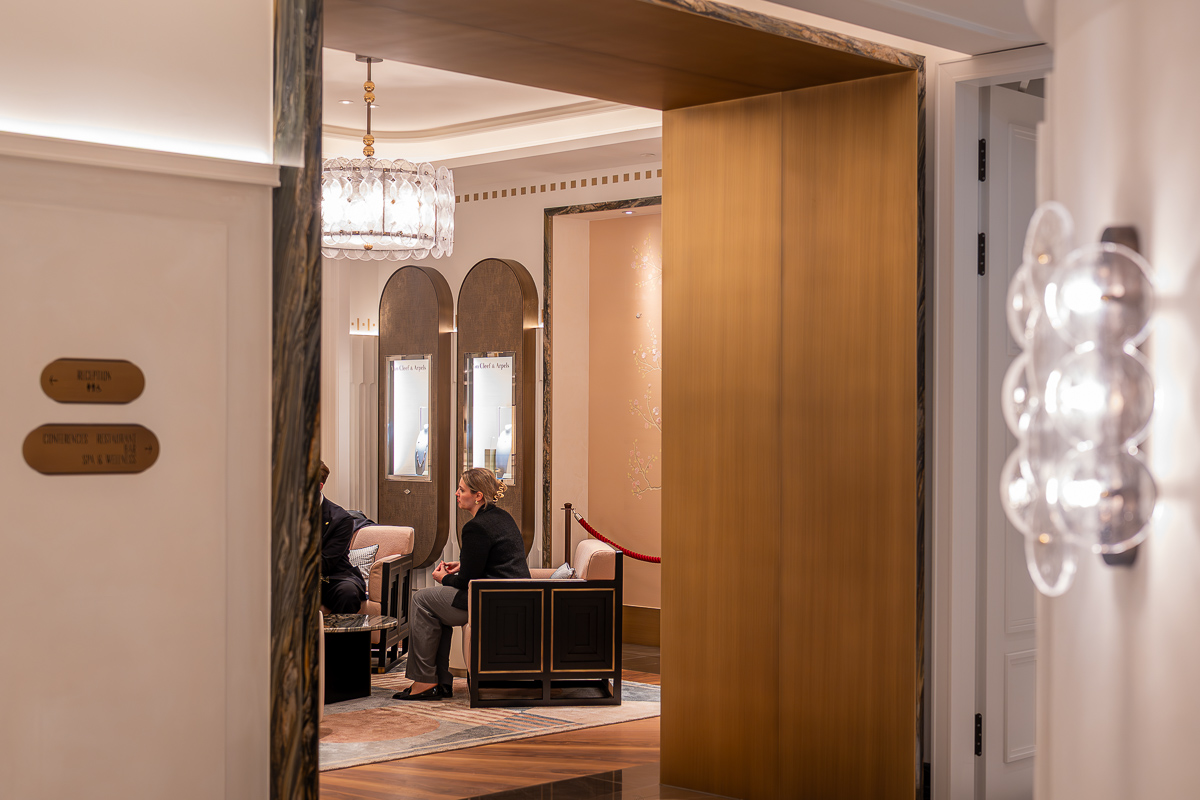 The arrival, and a service of two speeds
From the moment we stepped out of the car to check-in, everything ran with rare ease. They asked us a few questions about our tastes, Francisca’s in particular, and those questions came back hours later in another form: a room key just for her, personalised with her name and her favourite treat, an ice cream!
 The same held where it is least noticed. The housekeeping was among the best we have ever experienced, both in the daytime service and in the turndown at night: our clothes and belongings arranged to perfection, the fragrance of the room always impeccable — details I had not expected to find so soon, and which plainly carry the marks of the brand. Elsewhere the opposite showed, as at breakfast and in the restaurant service, with some details still being fine-tuned, nothing surprising in a hotel only weeks into operation and still settling into its routines.
 The suite
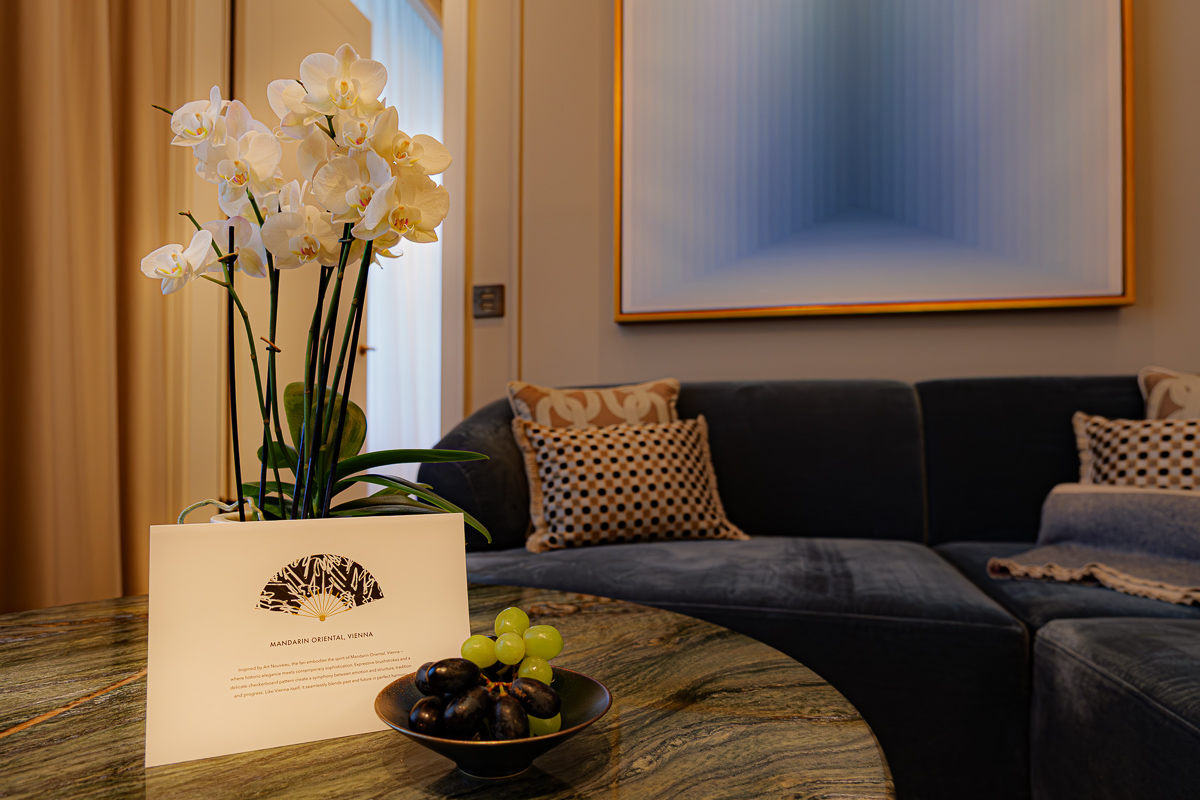
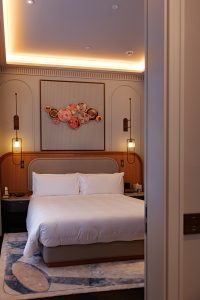
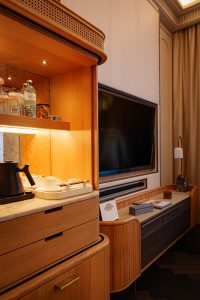
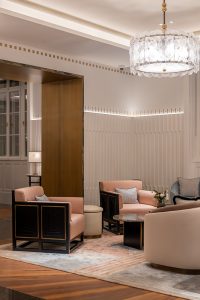
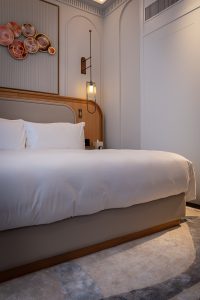
We stayed in a Deluxe Suite, the space hardly lived in yet. The palette is Secessionist without being themed: oyster tones, a discreet gold, the blue that runs through the whole hotel. There is no view to speak of — the wide windows give onto the street — but the light comes in well and converses with the pale tones.
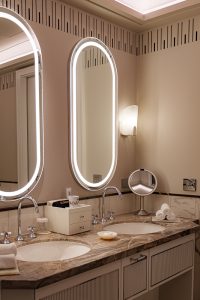
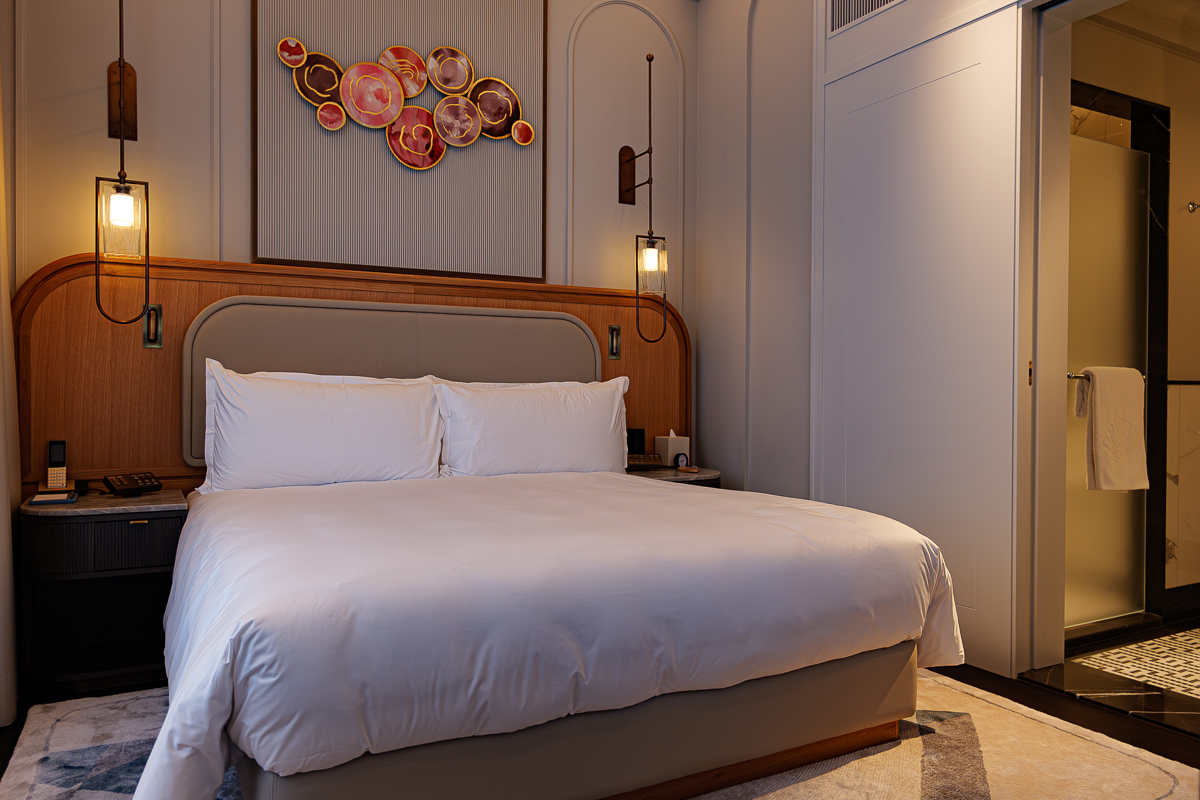 The newness reached you through touch as much as through smell: the linen, the feel of the bed, the air of the room — and up from the narrow street no movement rose at all, a rare silence for the first district. A very comfortable sitting room, an excellent bed, home automation in the right measure, and a functional bathroom with the ever-welcome Japanese toilet, which I adore!
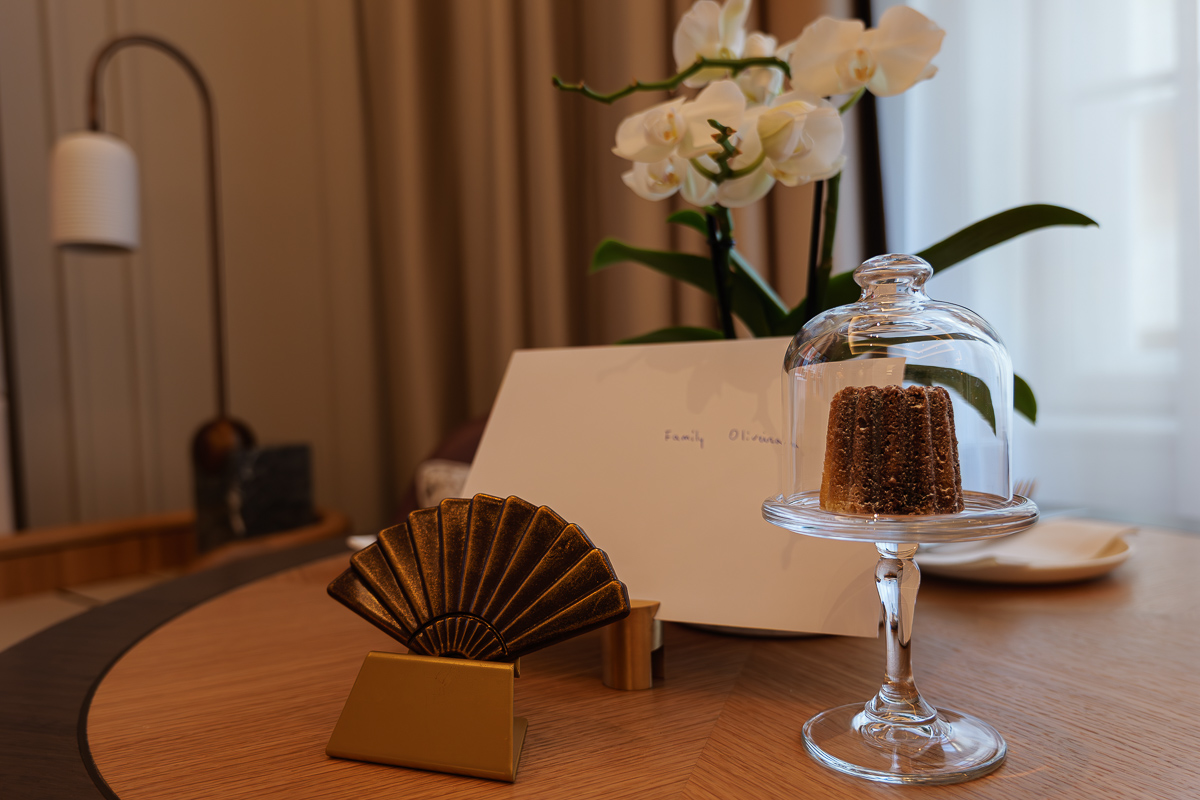
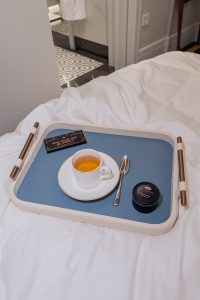
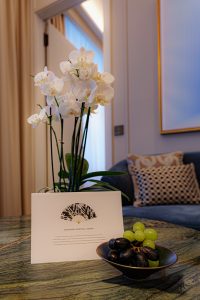
 Waiting for us on arrival were fruit, cake, a personalised note and a chocolate in the shape of the Mandarin Oriental logo. On account of the gold, Francisca took it for an ornament, and her face when she realised it was chocolate was priceless!
An author’s “food court”
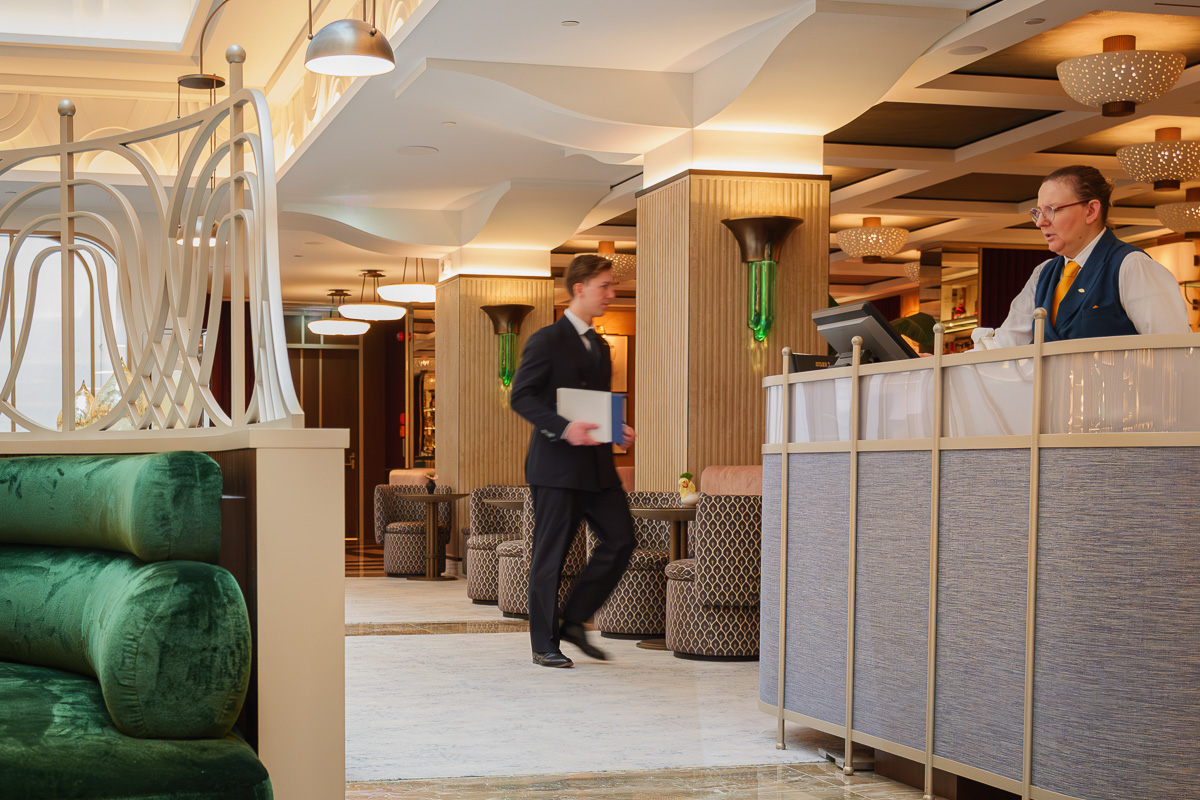
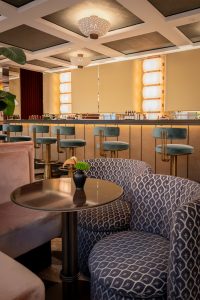
The whole dining offer lives beneath the skylight, under the Atelier 7 signature, and here I must own to an initial strangeness. The concept disconcerts at first sight: an open plan, almost a food court, in which the various venues — from the fine-dining Le Sept to the brasserie, from the café to the izakaya and bar — open onto one another without physical barriers, despite their individual registers and service. It is hard to make sense of at first glance. Then you understand that it is the same gesture as the rest of the hotel: trading the separate, gilded rooms of imperial ceremony for a single agora of light. I’m not sure I like it, but it is only a matter of first-sight strangeness.
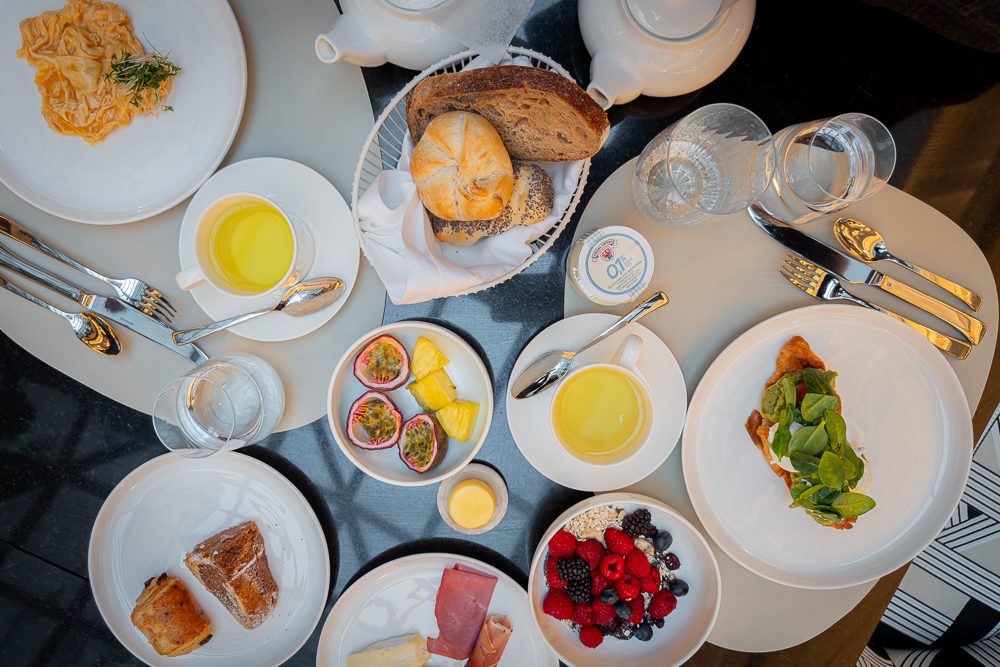 We lunched (in truth, I ate nothing at all but a superb beef broth, since my gastroenteritis held on throughout our stay in Vienna!) at the brasserie — a casual lunch, very well executed.
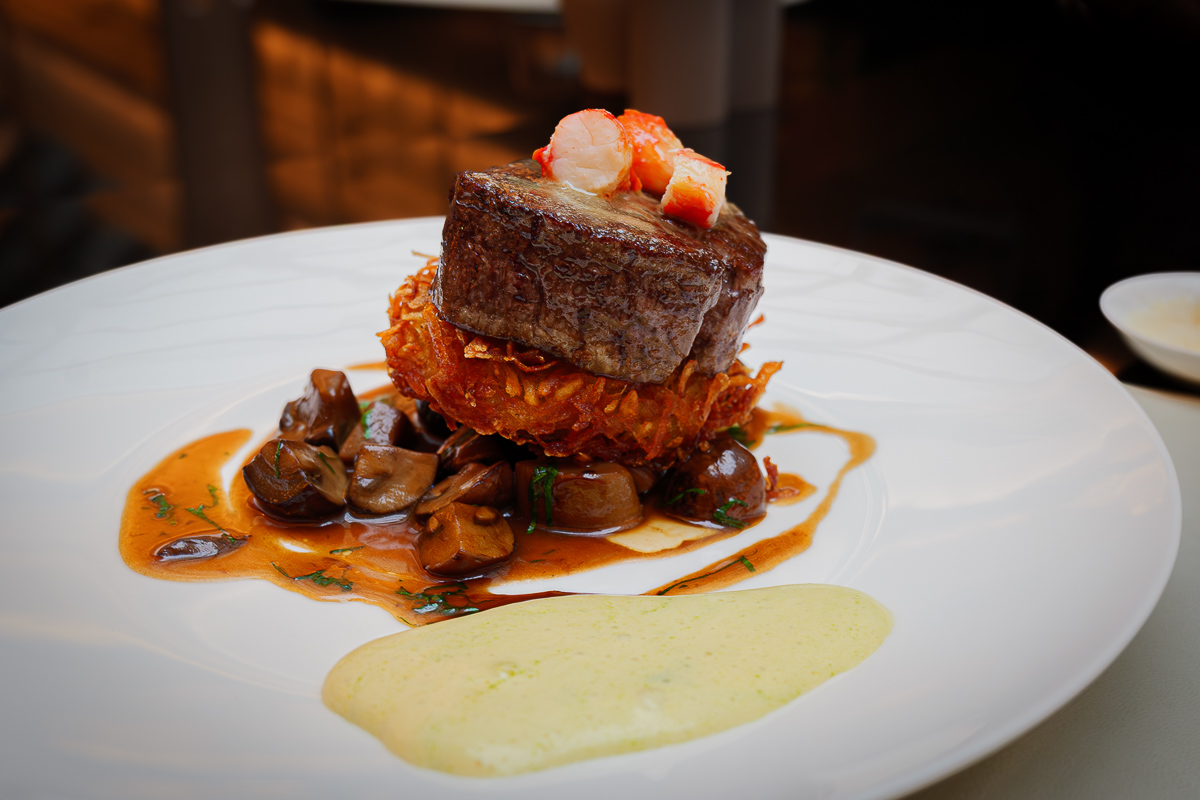
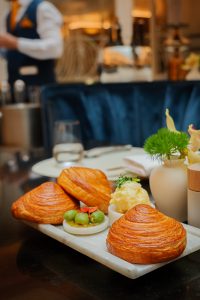
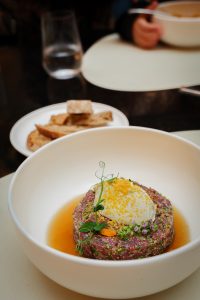
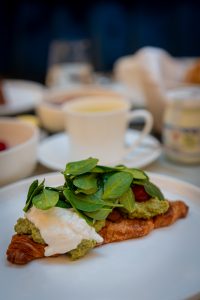
An excellent flaky brioche to begin. Then a tartare that brings together beef and tuna, with cured yolk, toasted sourdough, and a mushroom gel: improbable and well resolved. After it, a lavish surf and turf, the Steak Frites “Oscar”, with tenderloin, king crab, hollandaise and mushrooms. The desserts, in the fake-fruit style of Cédric Grolet, came from the Atelier 7 pâtisserie and did exactly what is asked of them: sweet without excess, with the right acidity. The care is no wonder: the pastry has pedigree, with Christian Grübler coming from Steirereck, which in a city obsessed with viennoiserie says everything.
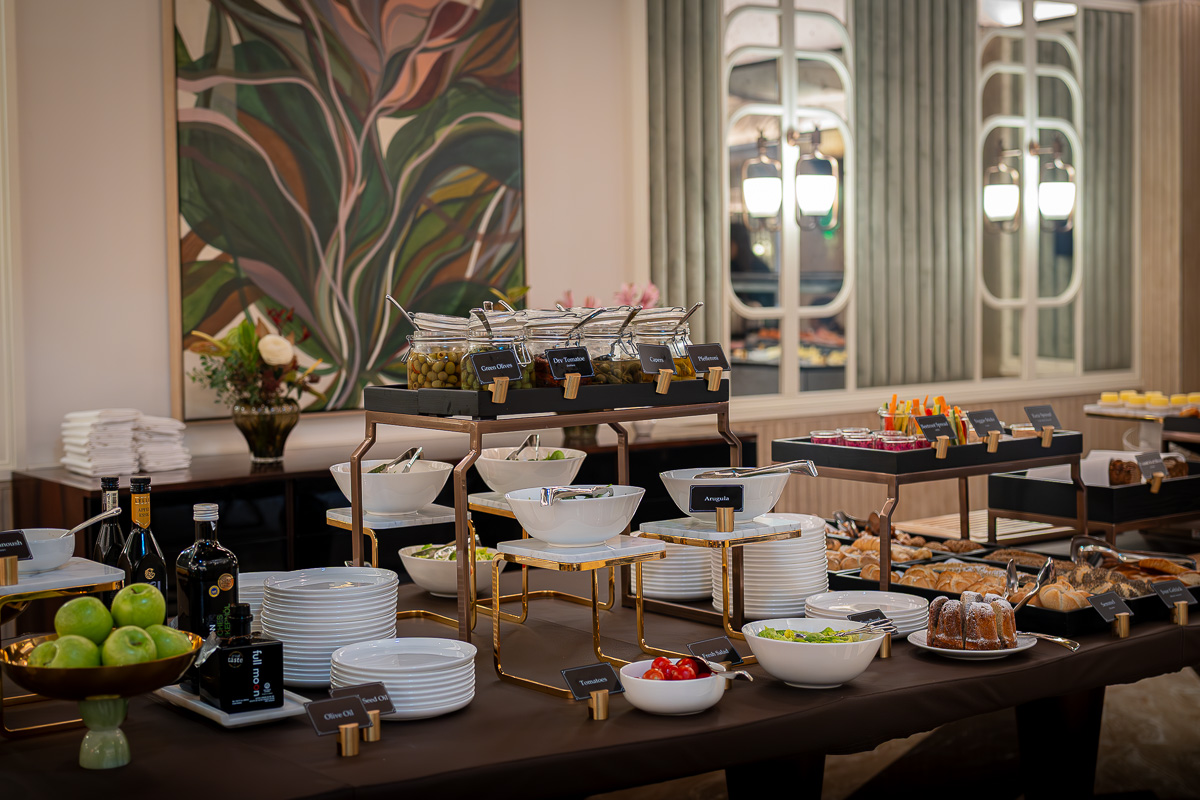
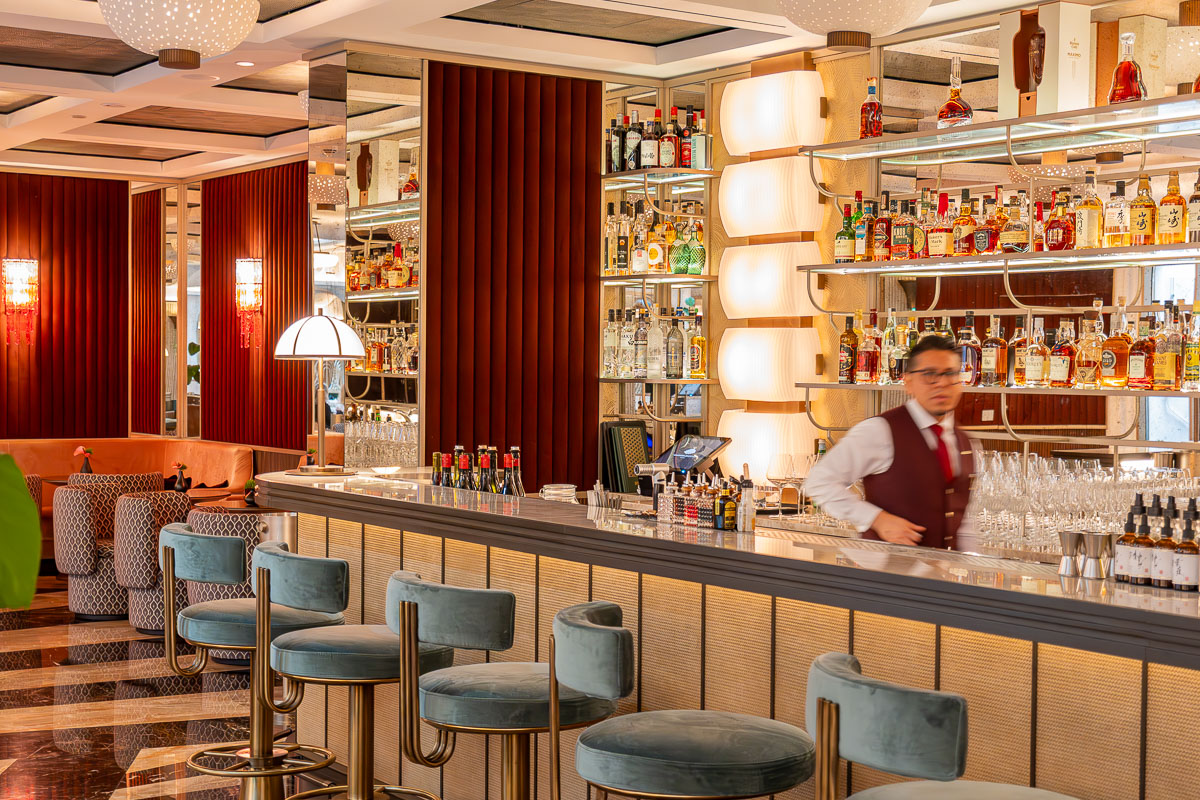 At the top of the concept sits Le Sept. We did not dine there, but it is the restaurant that sets the hotel’s tone: fish and seafood, in a French-Asian reading, in a city without a sea. The chef, Thomas Seifried, who oversees the entire hotel’s dining, trained at Eric Ripert‘s restaurants in the Cayman Islands and New York, and it shows in the menu’s ambition.
 A spa dug out of time
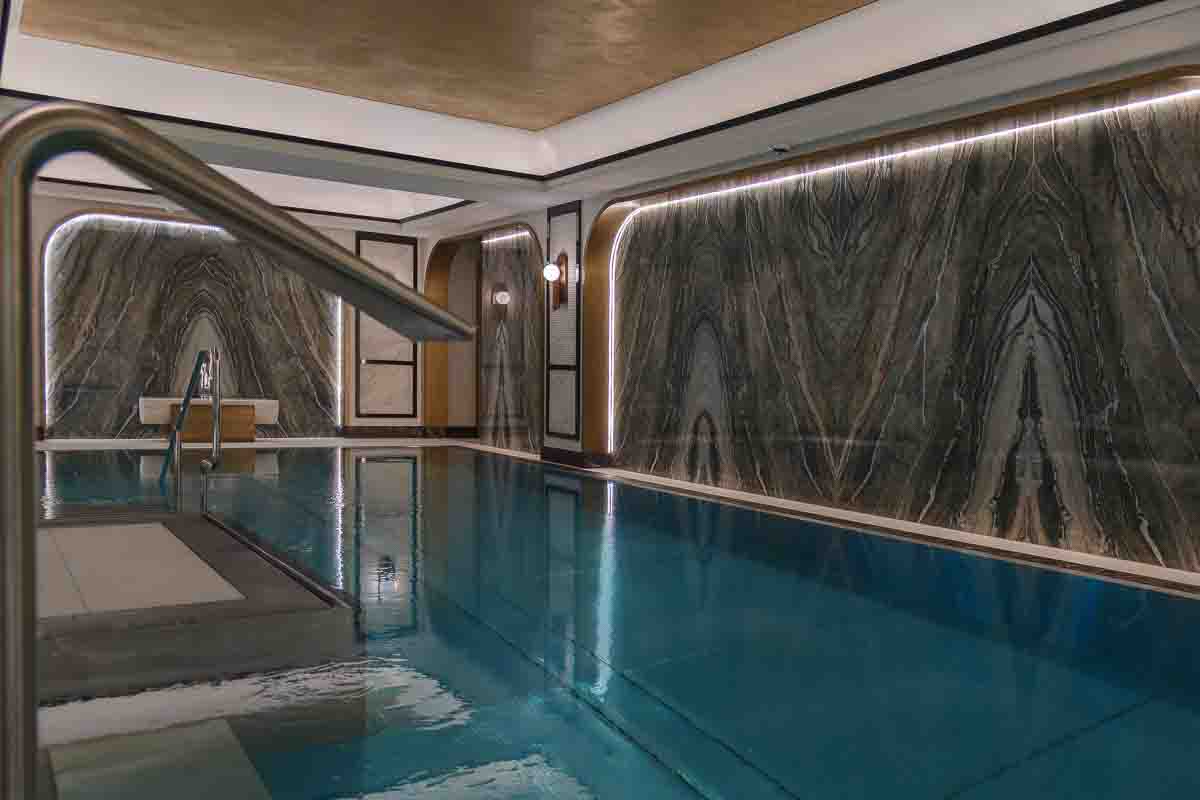
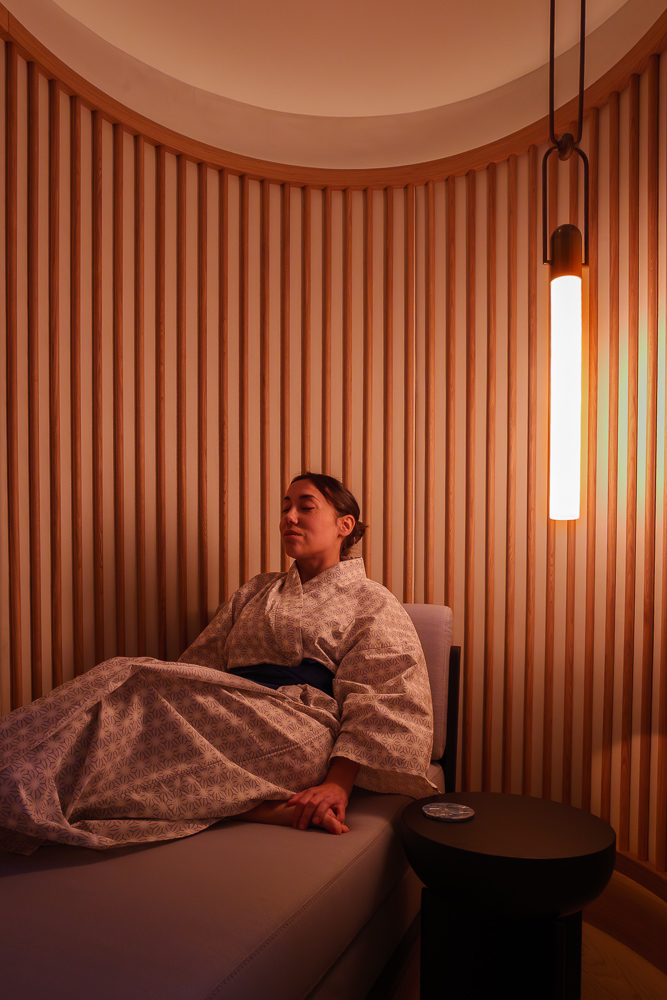
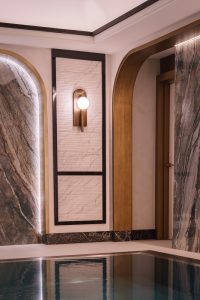
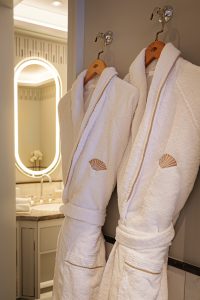
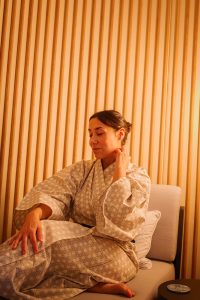
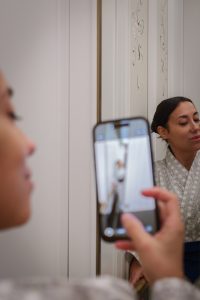
The spa lies underground, and going down to the pool means passing under every layer of the building: the most recent comfort over the city’s oldest ground. While João and Francisca settled into the pool — she in raptures with the robe cut to her size and the soft slippers they had given her — I took a massage. The room was impeccable, the execution very good. It was the moment alone I needed to try to recover from the days of malady that had taken hold of me on this trip.
 A Vienna without a court
The Mandarin Oriental has no intention of being a new Sacher, or another hotel of imperial cast. It takes a building of the old authority and tames it, in a luxury of restraint, for a guest who seeks Vienna without its nostalgia. Even the blue that dominates the rooms — strange at first against the light tones — comes to make sense: notes of the sea in a city which never had one.
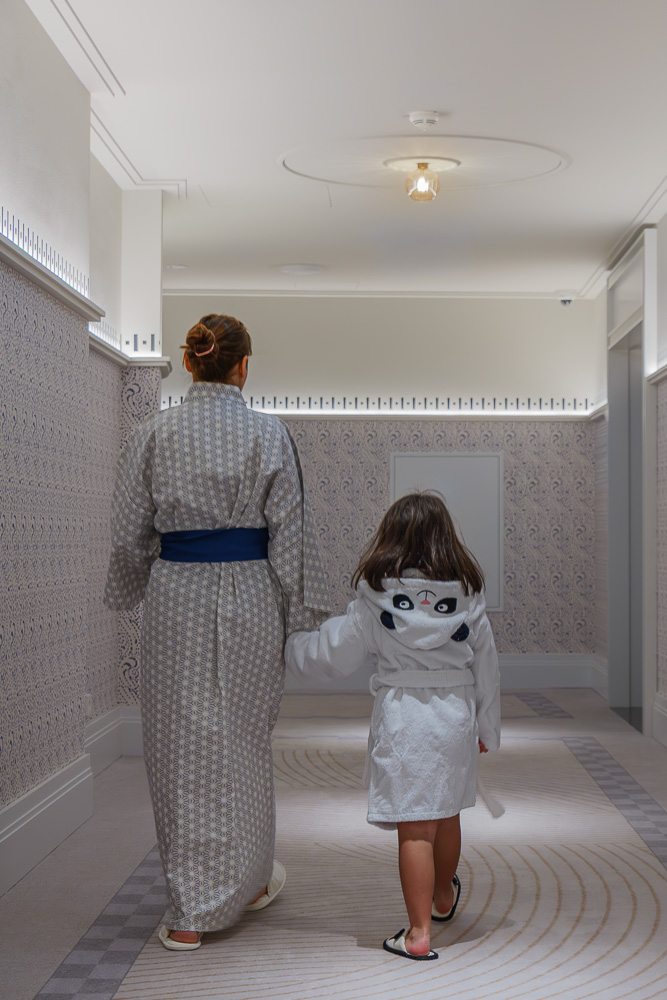 On the morning we left, Francisca lingered over the courtyard as we took breakfast, that void of light through which the city comes in with no appointed hour. She was asking whether she might come back to the hotel, since they had given her a key of her own and she had loved the pool. We said yes — because there are few things better than reliving a good memory.
There was a time when one came to this building out of obligation, awaiting a sentence. Today one comes by choice, and what is hard is the leaving!

For whom
For those who want Vienna without the weight of the imperial register, and who prefer a restrained, residential luxury to ceremony. Couples, design-minded travellers and families – children are looked after with genuine care – and anyone seeking a hospitality closer to Asian service than to the court.
We loved
- The foresight in the service, and the care taken with Francisca
- Housekeeping
- The light and the silence in the Suite
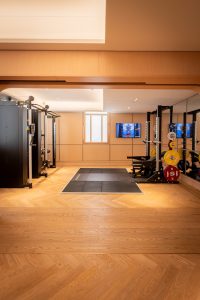
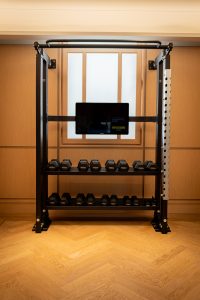
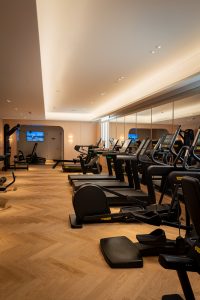
- The Spa treatments, the pool and the gym
- The table at the Brasserie
Room for improvement
- The open-plan concept, disorienting at first
- The floor service, still being fine-tuned
Address: Riemergasse 7, 1010 Vienna – Austria
Bookings: +43 189 068 880
Prices: From €680
History: An Art Nouveau building designed by Alfred Keller and completed in 1908, for decades the commercial and criminal courthouse of the Innere Stadt. Restored by the interior design studio Goddard Littlefair and reopened as Mandarin Oriental’s first hotel in Austria — soft opening on 20 October 2025, official brand debut on 1 December 2025. Named Austria’s Best Opening by Falstaff and featured on Travel + Leisure’s It List 2026 and Condé Nast Traveller’s Hot List 2026.
Facilities: 138 rooms and suites (86 rooms and 52 suites, including three Mandarin Signature Suites and a Royal Suite), with accessible rooms for reduced mobility and connecting rooms ideal for families; pet-friendly hotel. The Spa, underground, with a 13-metre indoor pool, seven treatment rooms and a gym.
Atelier 7 dining world: Le Sept (fish and seafood fine dining), Brasserie Atelier 7, The Café and Izakaya & Bar, under the direction of chef Thomas Seifried.
Ballroom and seven meeting rooms. Art programme curated by Minda Dowling.
Tips: Ask for a table at Atelier 7 in the early afternoon and linger beneath the skylight, it is the best spot to understand the hotel; go down to the spa even without a treatment booked, the pool alone is worth it; look out for the art by the various lifts and inside your own room; take your time in the surrounding area, minutes from St Stephen’s Cathedral.