
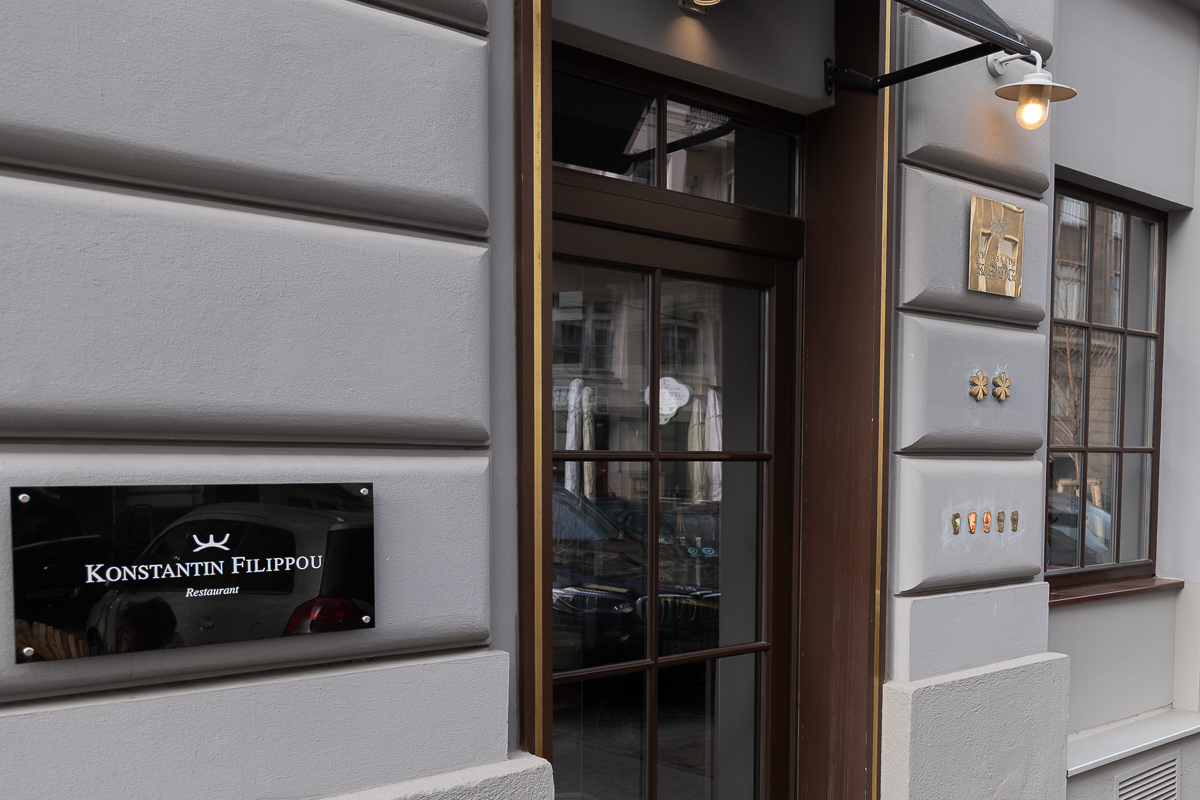
 We arrived at Dominikanerbastei, an almost deserted street by the canal, shortly after midday. Time does not seem to have changed the area much, but today, more than ten years later, the sun is shining, and our company now includes a child. Inside, the low winter light draws squares across the dining room floor. Cíntia smiles as she takes off her coat and happily remarks that everything is still in the same place. Francisca looks around seriously, studying the room. Behind the glass separating the dining room from the kitchen, I catch a glimpse of him: dressed in his trademark black, pushing his hair away from his face. Konstantin Filippou is not at the door greeting guests. He is where he has always wanted to be, at the pass.
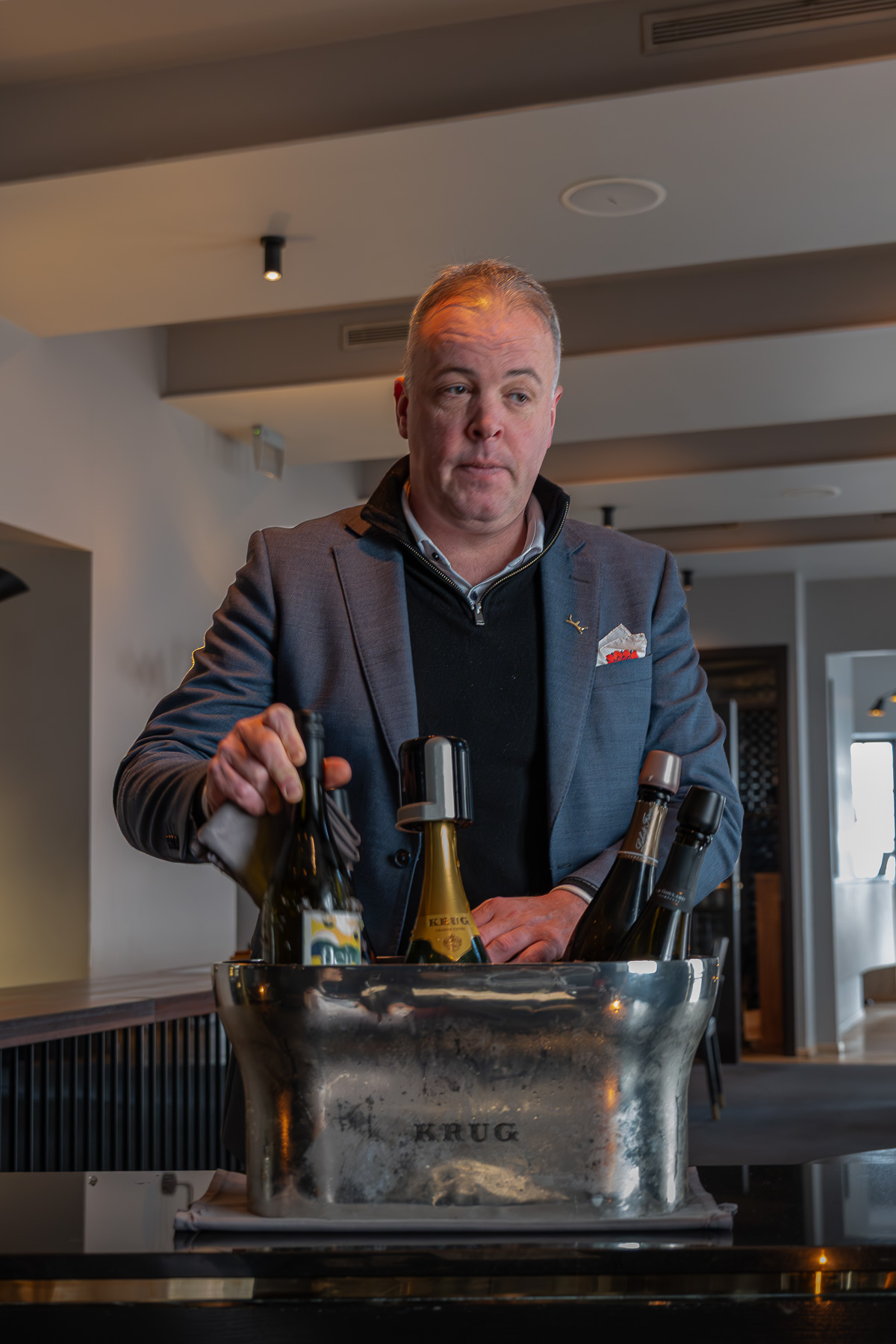
Guided to our table, we are welcomed with Krug Grande Cuvée, as one would expect from one of its ambassades. The third glass, for Francisca, is filled with an alcohol-free sparkling wine, served in the same crystal. It is one of those micro-choreographies that separate service from hospitality. The three of us raise our glasses while her eyes shine with the importance of the gesture.
 The last time we were here was in 2015. Back then, the restaurant held one Michelin star, and Konstantin was the enfant terrible of Austrian cuisine. At the time, I wrote that the second star would arrive quickly, but consecration did not come until 2018. The five toques from Gault&Millau followed in 2020, while the 99 points from À la Carte and Falstaff came this year. Eleven years later, I return. What is served here today is the most mature, most economical in gesture, and most confident version of Filippou’s language. The same cuisine, refined by a decade and by a difficult year.
Eleven Years Later
Vienna now has a fine-dining density capable of rivaling that of Europe’s great capitals. Dominikanerbastei is a discreet street in the 1st district, three blocks from Steirereck and roughly the same distance from Silvio Nickol, the three restaurants forming an invisible triangle of Michelin stars that has helped shape the city’s contemporary dining scene.
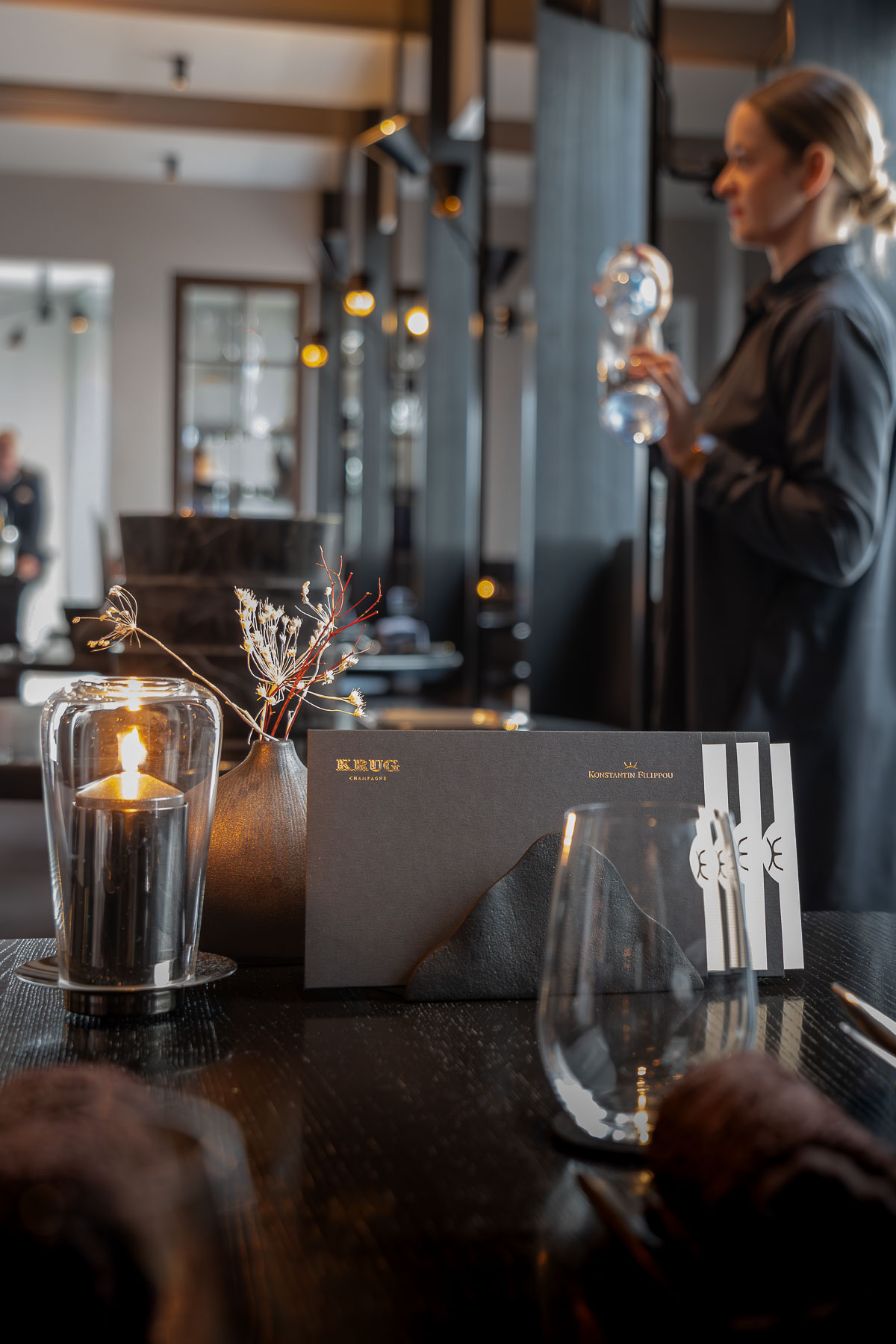 Between novelties and classics, Konstantin has preserved the character of his dining room. Dark walls, black-clothed tables, and glass subtly opening onto the kitchen where the brigade works with the precision of people fully aware they are being watched. During the day, however, the effect is different. The large windows flood the room with natural light, and the restaurant loses some of the nocturnal, faintly theatrical quality it had in 2015. It gains lightness. Above all, it gains the possibility of a lunch without the more agitated choreography of dinner service.
Beside us, a businessman alternates between his meal and the daily newspaper, a ritual that brings the Michelin-starred restaurant closer to the comfort of an almost domestic canteen.
The Year the House Was Tested
We visited the restaurant one year after the most difficult chapter in its history. In February 2025, former employees made allegations in the Wiener Zeitung about the sourcing of premium ingredients, a violent kitchen culture, and the use of unlicensed auxiliary spaces. Konstantin and his wife, Manuela, responded publicly, admitting isolated mistakes, contesting the broader picture, acknowledging a historically associated climate of pressure in Michelin-starred restaurants, and promising structural corrections.
At a time when accusations against chefs and fine-dining restaurants continue to multiply, and when the industry itself is being reshaped by new expectations, Konstantin Filippou did the same. There is no known formal complaint. No conviction. And while many expected, or wished for, action from the red guide, Filippou retained its two Michelin stars in both 2025 and 2026, Gault&Millau maintained its 19 points and five toques, and several other awards followed suit. With this text, I do not intend to absolve or condemn, only to describe our experience at the table.
The Opening
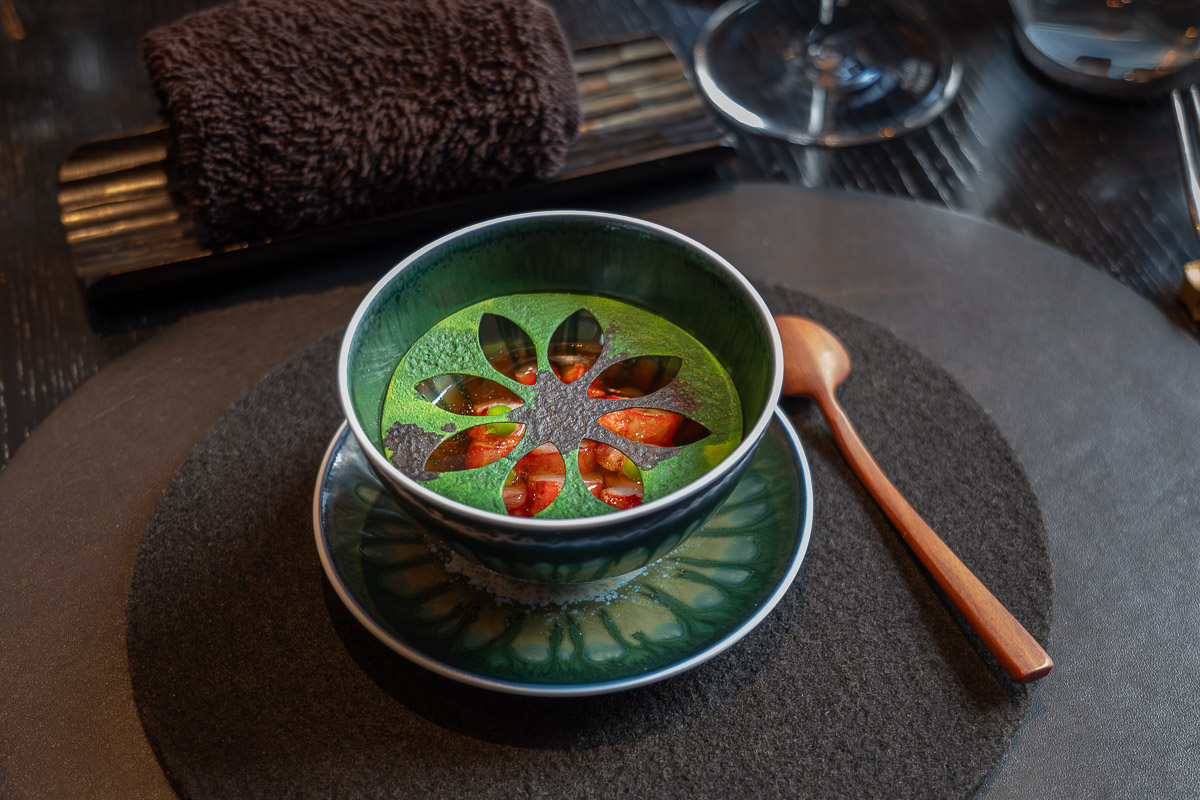
Red prawn, pea vichyssoise, duck jus, and filo crisp. The dish arrives shaped like a small flower, revealing glimpses of the prawn within while preparing us for an exercise in balance between four registers that, in another kitchen, could easily collide. The mineral sweetness of the prawn. The almost herbaceous freshness of the peas. The dark duck jus carried that richness so characteristic of Austrian cuisine. The filo is crisp enough to complete the missing texture. Elegant, concise, and precise. An opening parenthesis that slowly explains what kind of kitchen we are in.
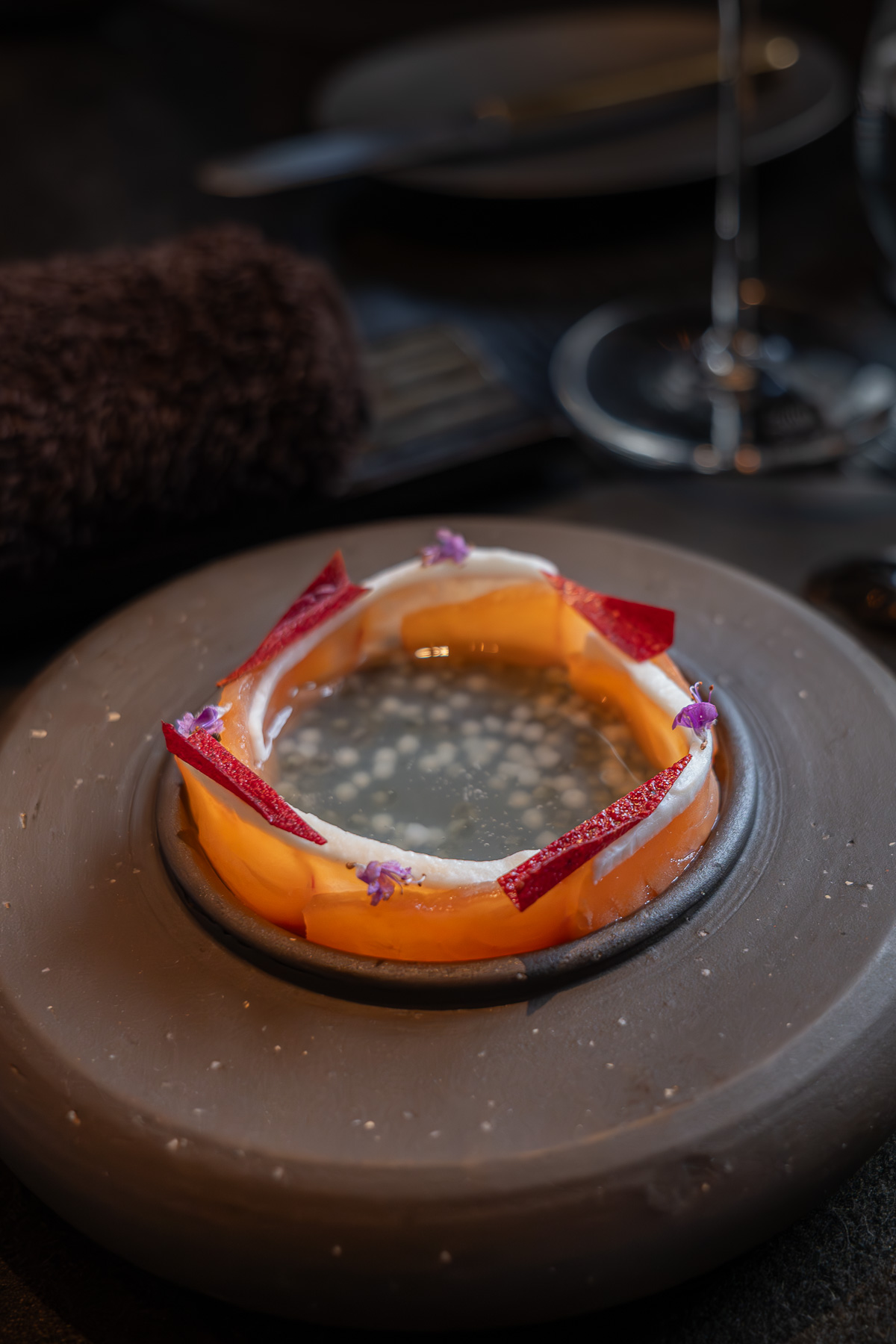
Arctic char followed, in the form of a contemporary chaud-froid. Bergamot delivered the strike of acidity and lightness over the fish, while beetroot crisps added a gentle crunch and sweetness. Another opening dish designed to envelop the palate in search of a very particular sensation.
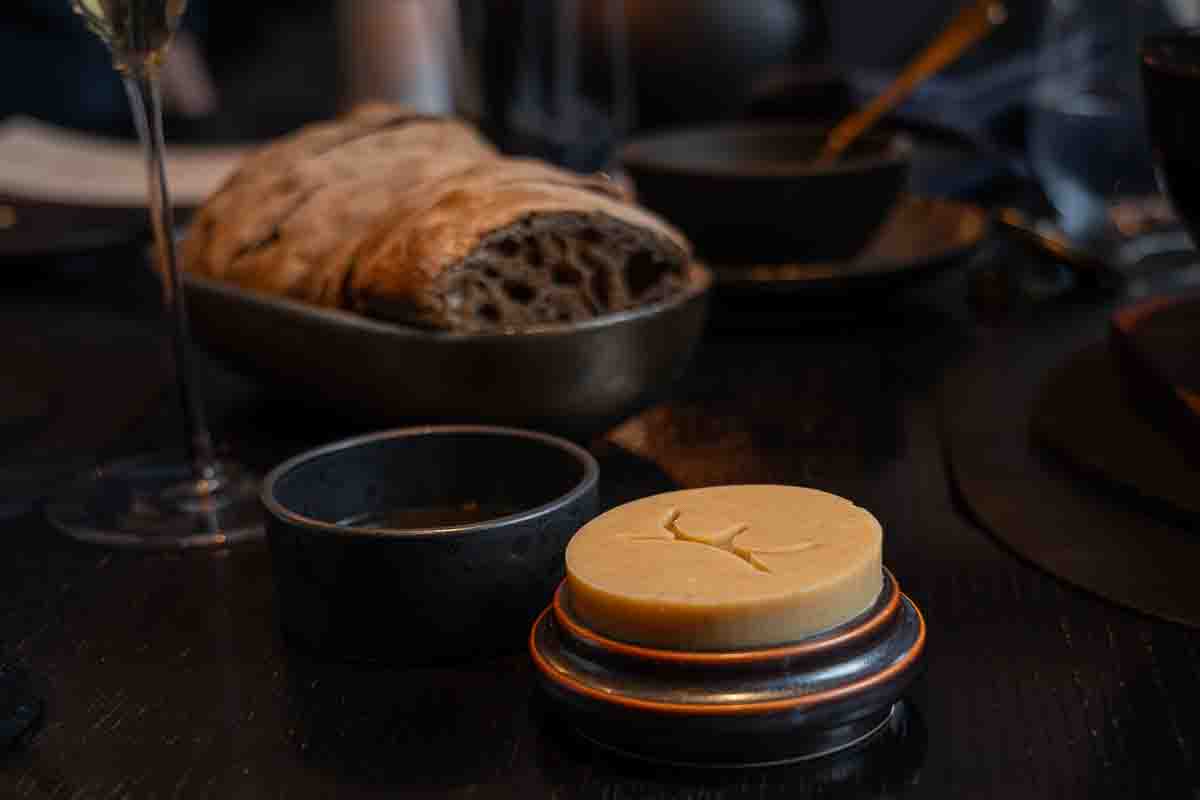
The bread is dark and robust, carrying aromas of toasted grain, and arrives alongside caramelized onion butter – the very same pairing I described in 2015 – and Mama Konstantina olive oil, the Greek olive oil the chef produces and sells through his third restaurant of the same name, a tribute to his Greek roots. Green, herbaceous, slightly peppery at the back of the throat. The duality works beautifully: the butter seduces, the olive oil perfumes. It is difficult to improve upon simplicity when it is done properly.
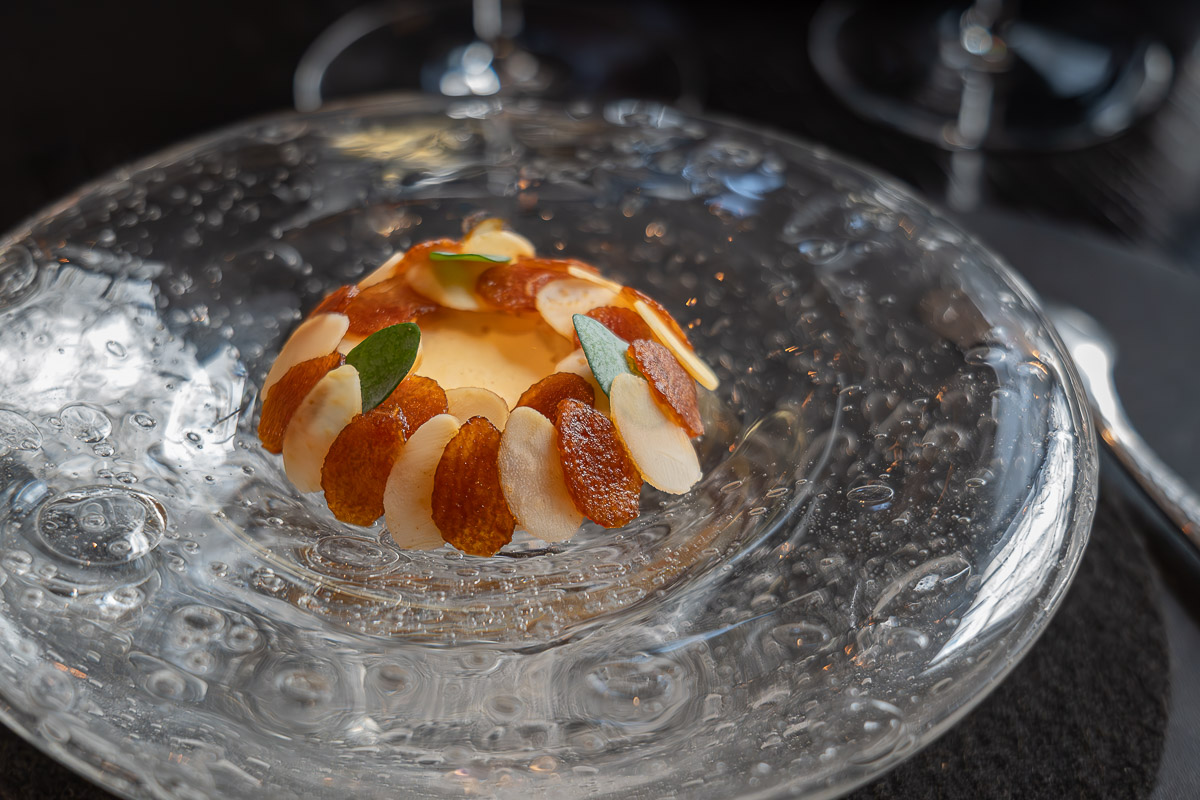
The Gillardeau oyster appears disguised beneath pear petals, artichoke, and an English cream built from fish stock and the oyster’s own liquor. The mollusk disappears and reappears on the palate. It is barely there, yet entirely present. Earth. Sea. The umami that has defined Filippou’s cuisine since the beginning of his solo journey.
Always Umami
The sardine was one of the surprises of the lunch. It arrives with horseradish, macerated in a mussel rémoulade. An unlikely combination – sardine, shellfish rémoulade, Bavarian-style horseradish – that works through acidity and balance. The sharpness of the horseradish cuts through the oiliness of the fish, the mussel binds everything together, and the dish lands with a saline freshness that is simultaneously delicate and dense.
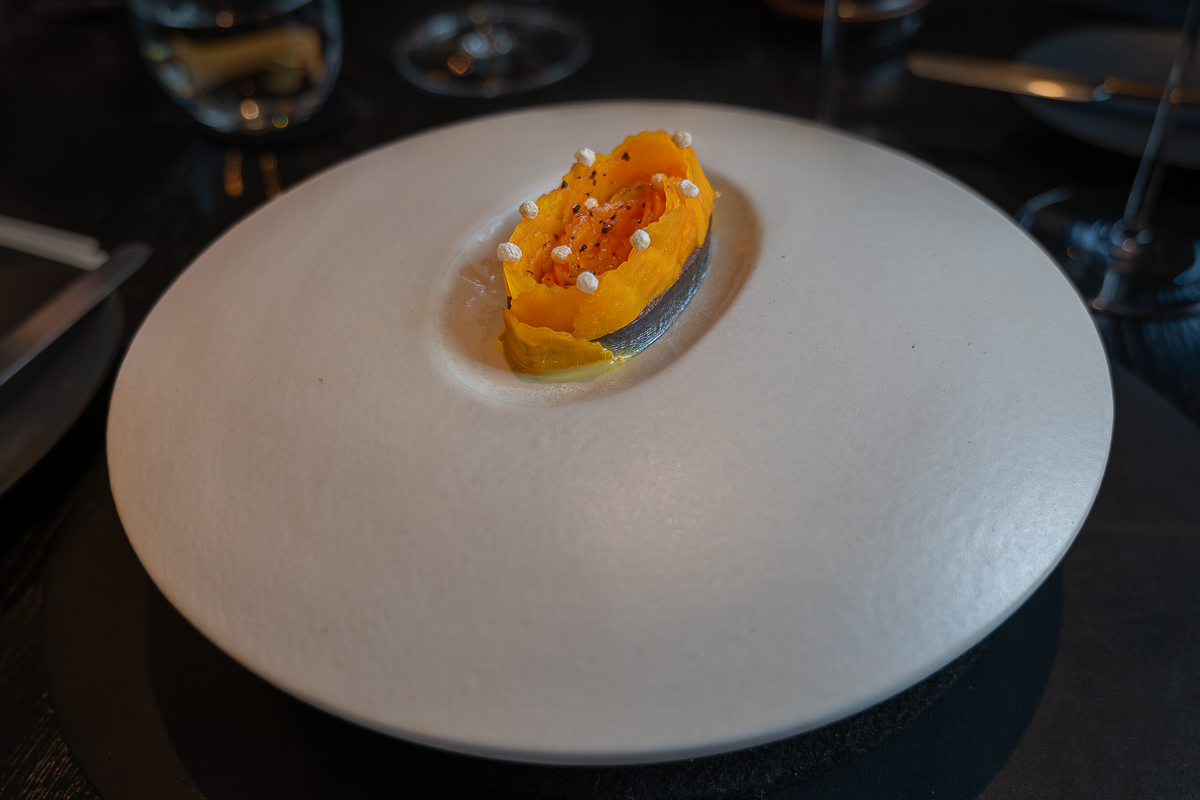
Cíntia remarked: “This is the modern version of a good tin of sardines on the table.” I suspect it was the greatest compliment of the lunch. In his book, the chef describes how sardines were always cooked at home, simply in olive oil, layered in a pan, finished in the oven, drained, and eaten by hand. Here, there is a polished translation of that gesture, one where home and family inheritance are never erased.
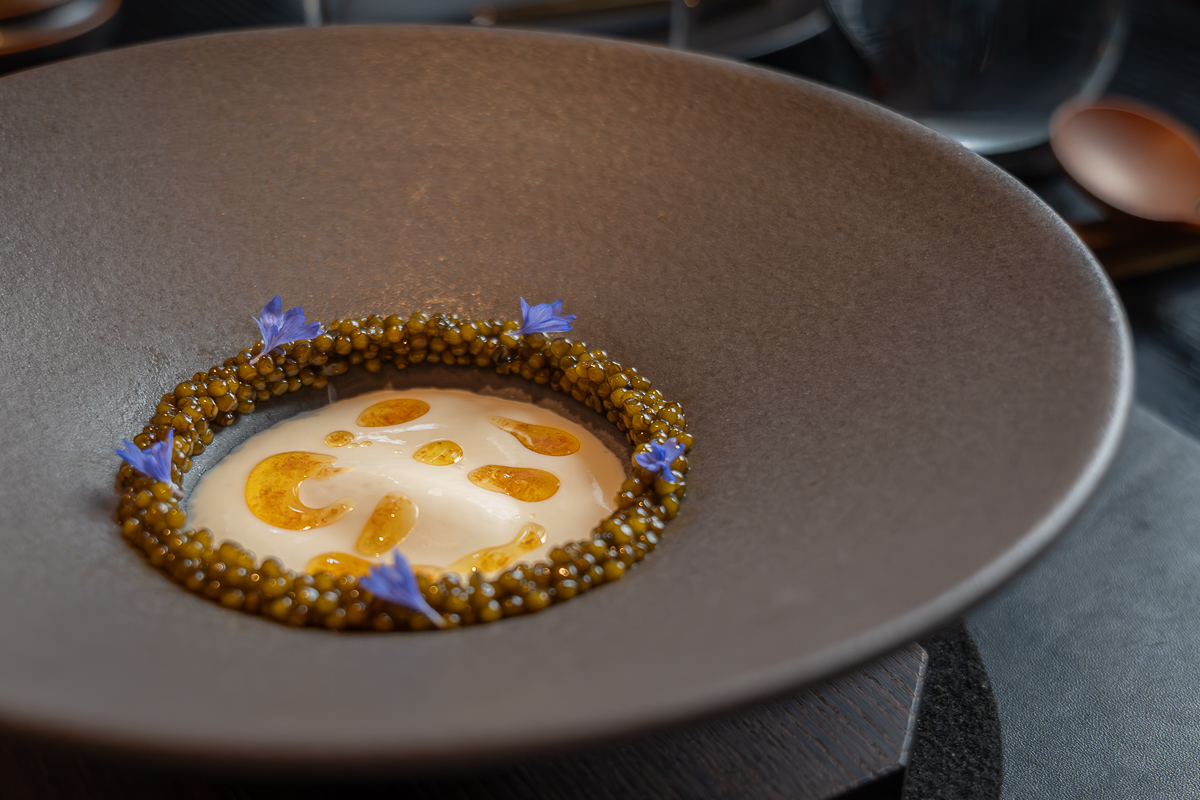
Then came frozen Amalfi lemon with black caviar, fermented rice, and beurre noisette. A fine, seductive foam where the cold acidity of the lemon gains richness and salinity through the butter and caviar. The fermented rice introduces aromas and flavor beyond creaminess itself, bridging citrus and brine. This is the Konstantin of 2026: fewer elements and textures than the Filippou of 2015, more focused, more mature.
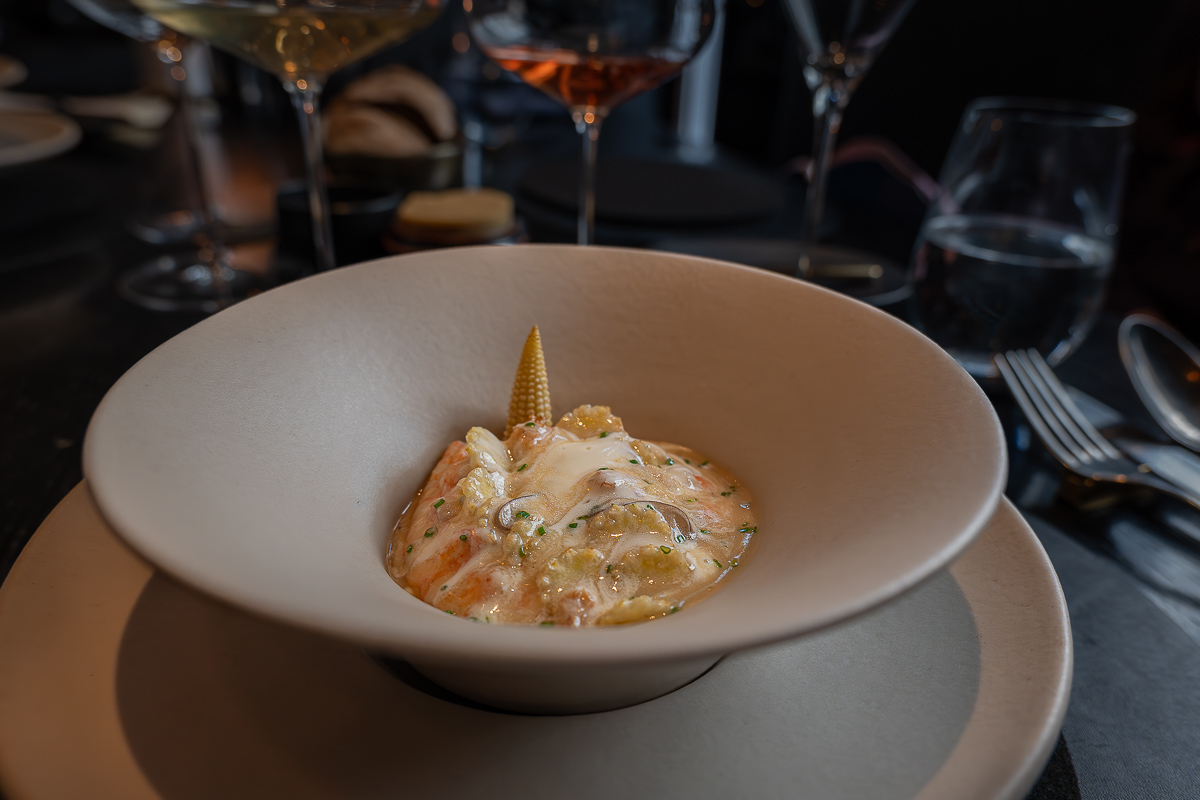
The langoustine arrives with corn and bisque, finished tableside with the sauces brought together at the last moment. It is the dish whose aesthetic feels least identifiable with the house style. The shellfish is almost hidden beneath the sauce, and its beauty is understated. The langoustine yields with minimal resistance, signaling perfect timing in heat, tense texture, and sweetness fully intact. The corn brings roundness. The bisque pulls the dish towards classical craft, while the notes of beurre noisette return. A dish invoking the sixth taste, where one senses an umami grammar born from Asia without ever announcing itself as such.
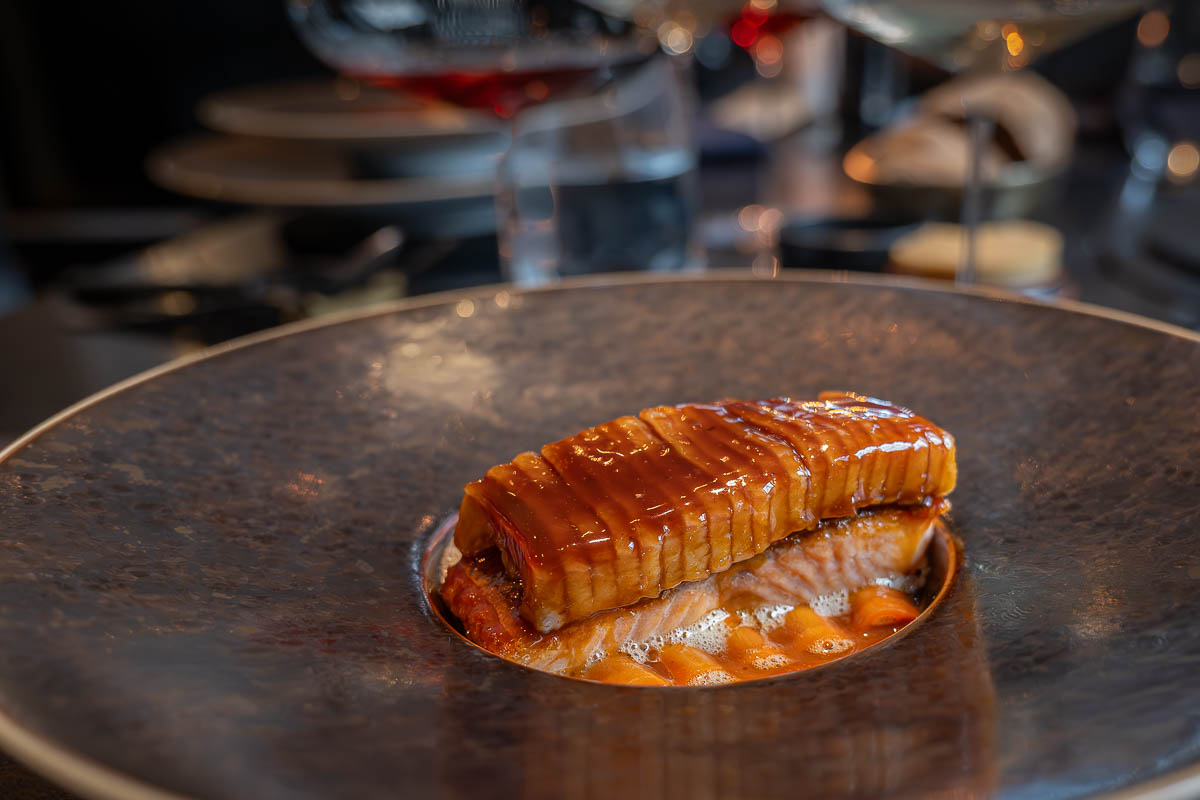
Local salmon trout, aged for several days and served with eel, salted carrot, and Albufera sauce. Here, Filippou returns to the intense, profound, smoky register of his denser cuisine. The trout was cooked precisely. The eel carried memories of embers. The carrots add sweetness while enhancing the eel’s caramelization. The Albufera sauce, the classical sauce attributed to Carême – reduced poultry stock, roux, butter, cream, and pepper – is one of those decisions that should not logically make sense with fish. Here, fortunately, it does. A dish where everything is happening at once and where, strangely, everything works.
Venison and Heritage
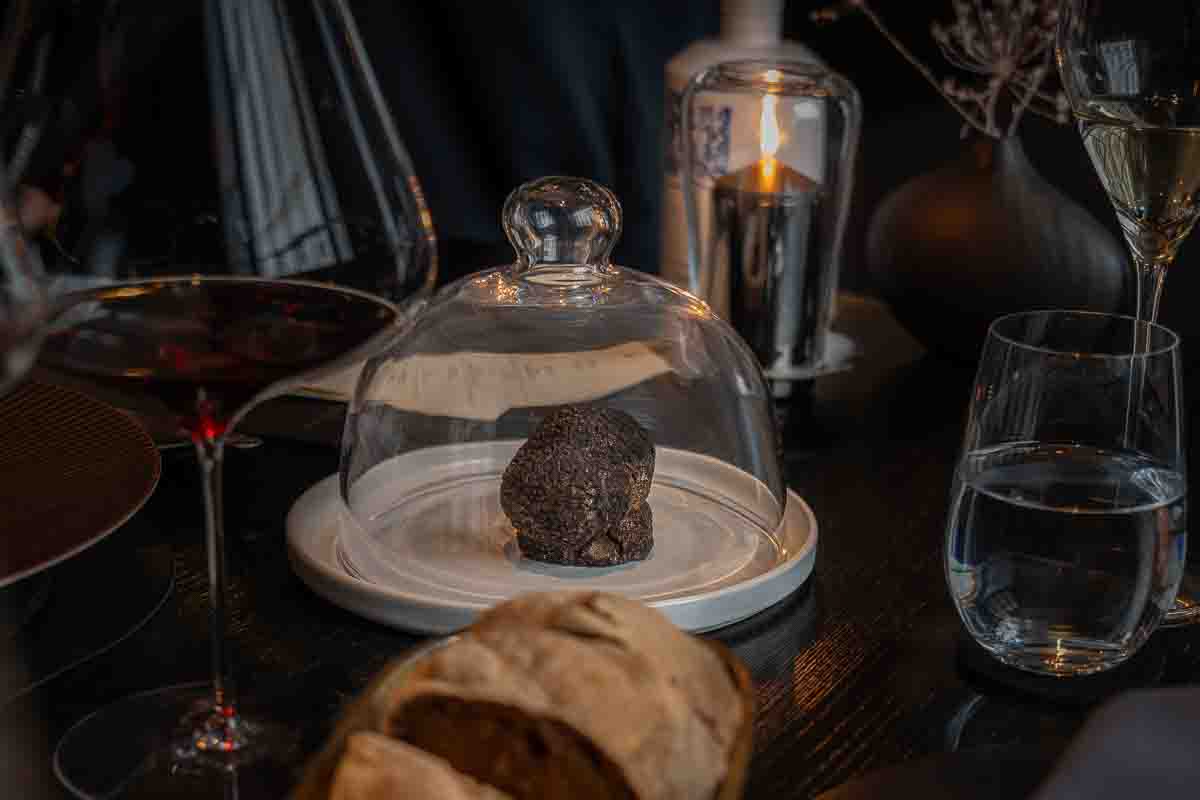
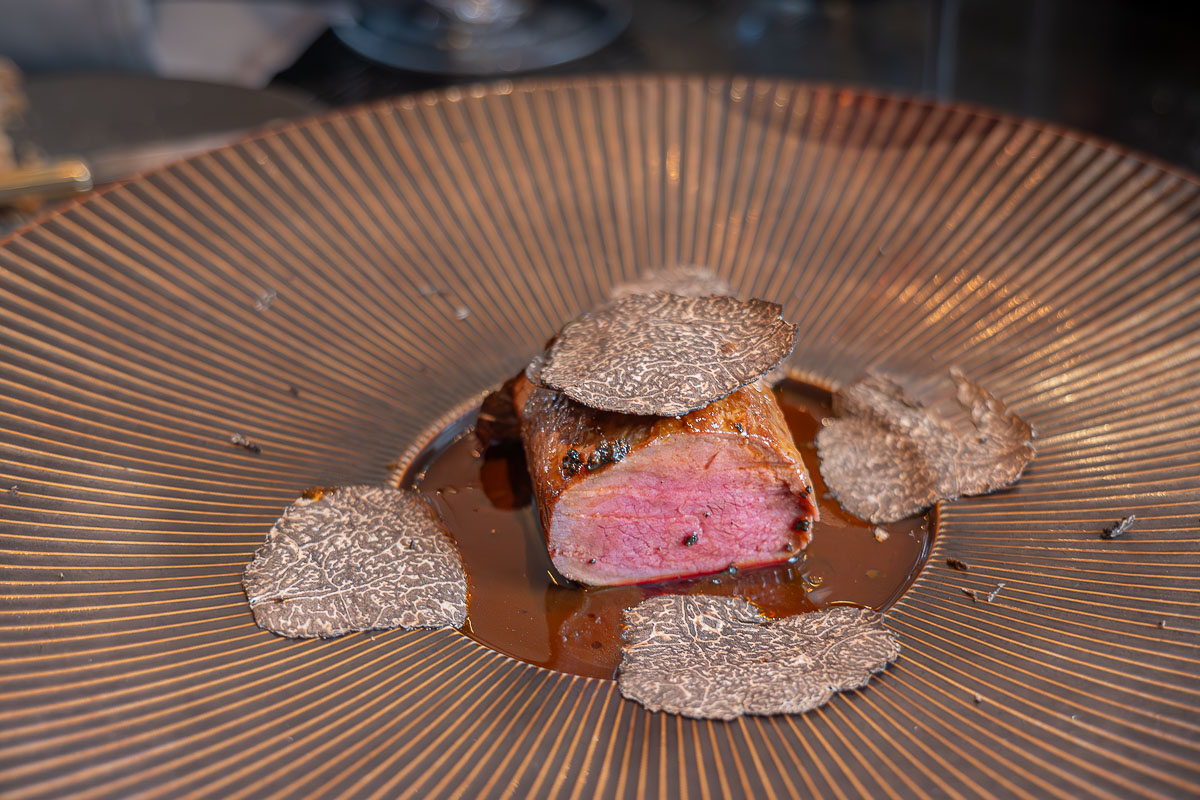
The saddle of venison is one of the two main courses of the menu. Anyone reading the restaurant’s official ethos, which announces a menu exclusively focused on fish and seafood, will find here a slight detour from the declared route. The meat is present, but entirely on Filippou’s own terms: vine shoots and grapes evoke his paternal Greece – Kassandra, Thessaloniki, the Aegean summers of childhood. The black truffle comes from Spanish fields. The shellfish is caramelized until it forms a toffee carrying the flavor of the sea. The game is served ruby-pink at the center, with the discreet smokiness the dish requires, unexpectedly combining with the earthiness of truffle and vine and the maritime notes of crustaceans. It is neither the most visually striking nor the most creatively explosive dish on the menu, but perhaps it is the most autobiographical and, simultaneously, the most delicious.
Closing the Circle
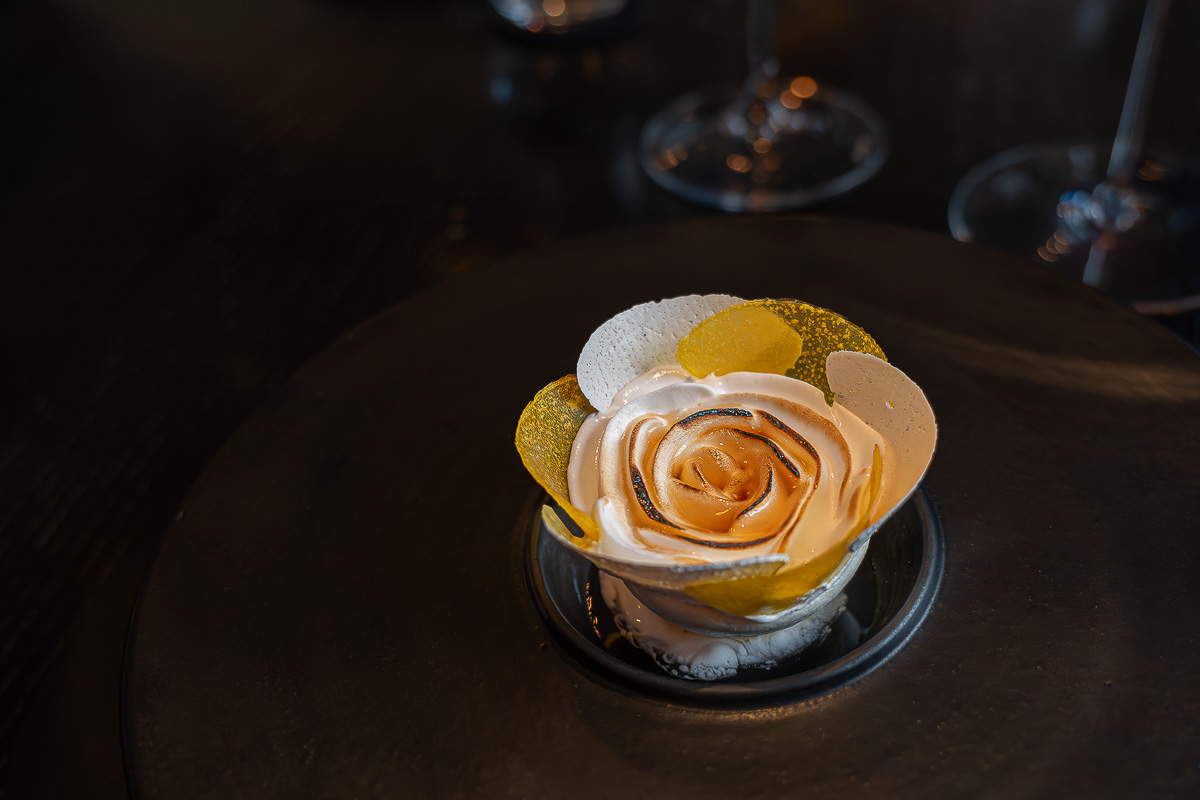
The first dessert is a pineapple flower with coconut and meringue, finished in the style of a baked Alaska, the alcohol flaming before Francisca, who responds with an approving clap. Aesthetically impeccable, with calibrated sweetness and flawless texture. It does not attempt to be more than what it delivers: an acidic, tropical interlude before the finale.
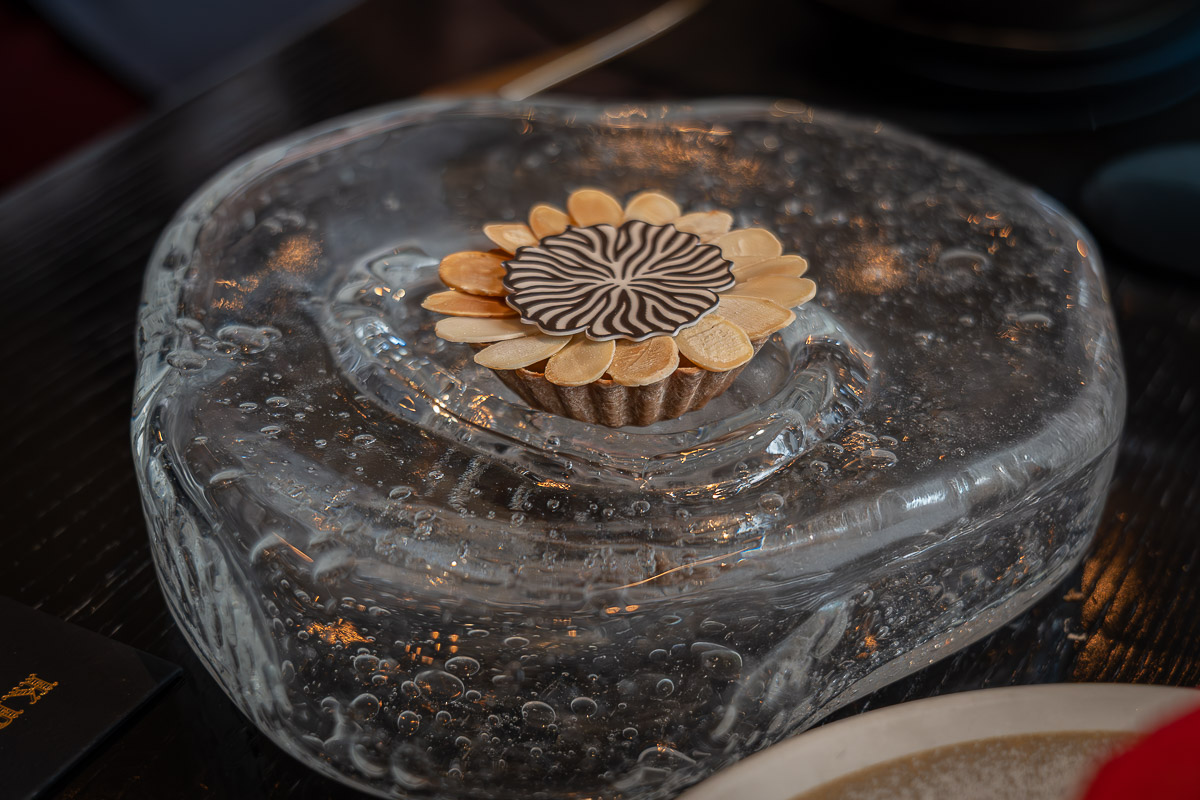
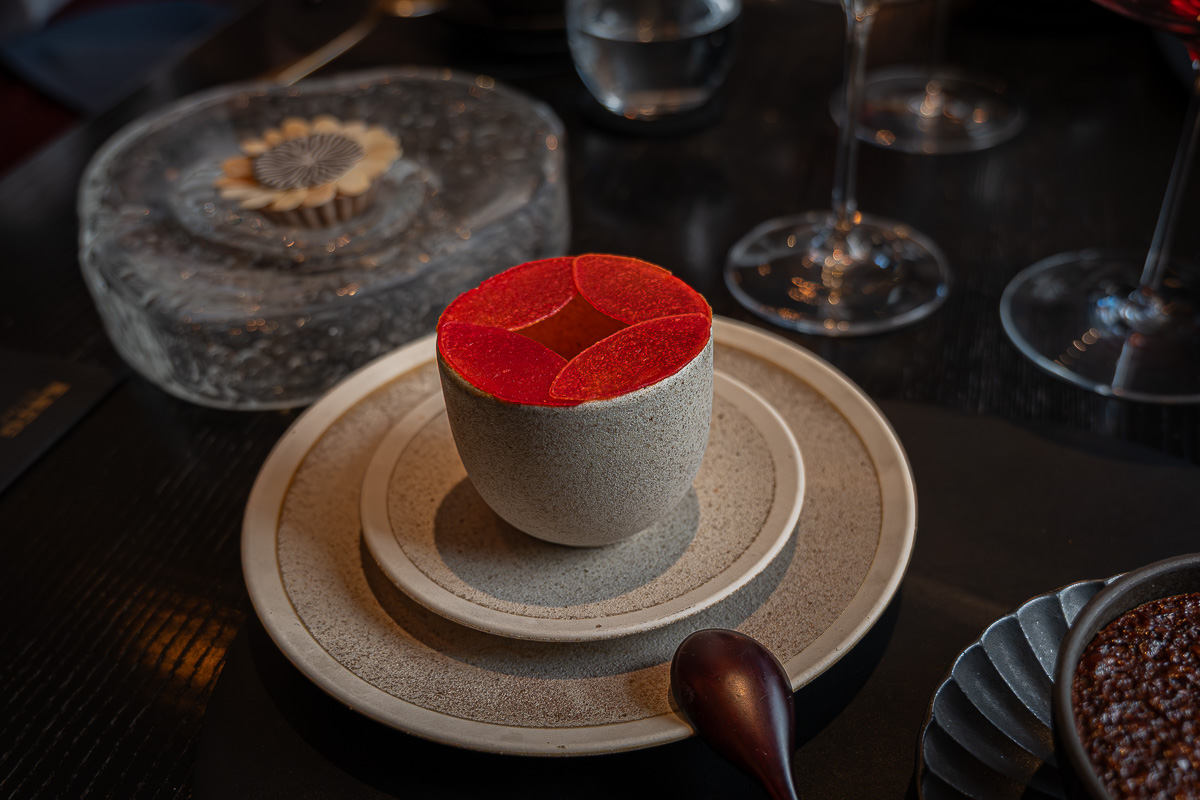
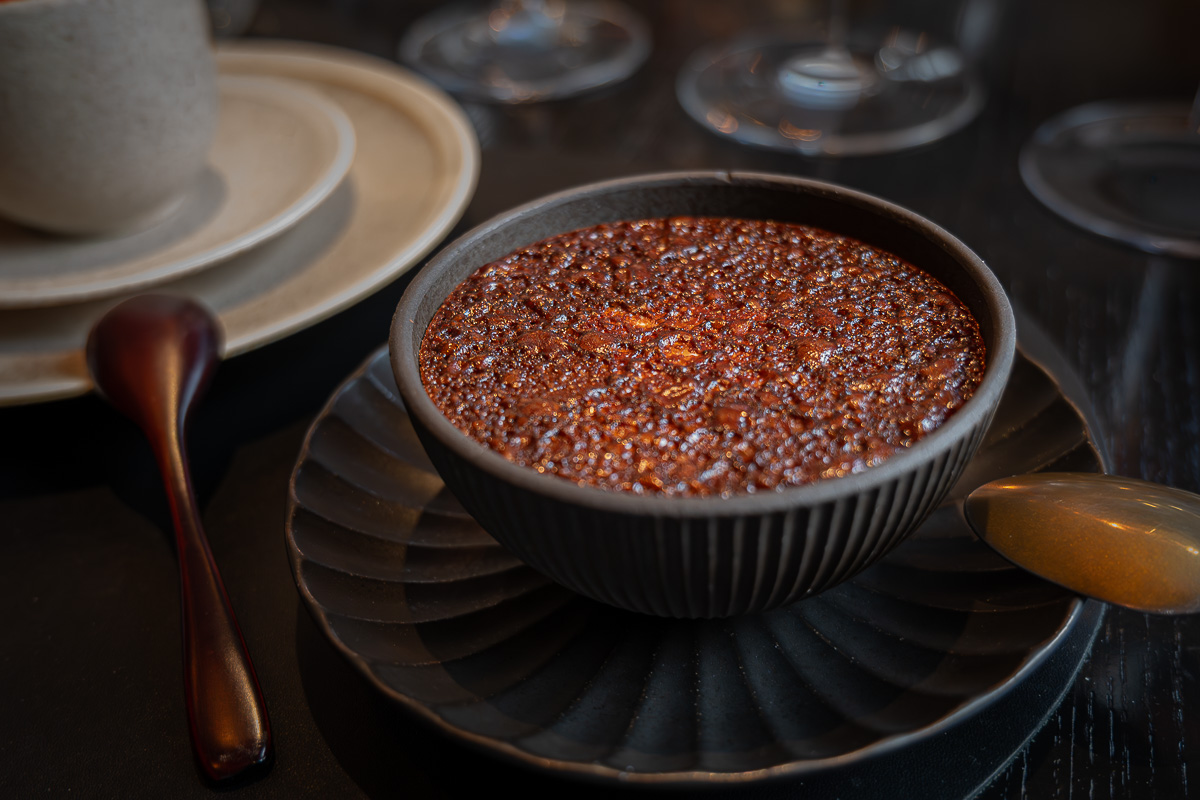
And the finale unfolds in three acts – halva in an elegant tartlet with almond, elderflower bringing herbal and floral freshness, and chocolate in a crisp register, with ice cream lowering the temperature of the trio. Halva is a sweet with Persian roots that became embedded across the eastern Mediterranean, particularly in Greece and Turkey, made from tahini, semolina, or almond, and which Filippou uses as another identity marker of his heritage. Somewhere within almost every one of his menus, there is this genealogical pull. This one ended precisely in that way.
The Dining Room and the Wines
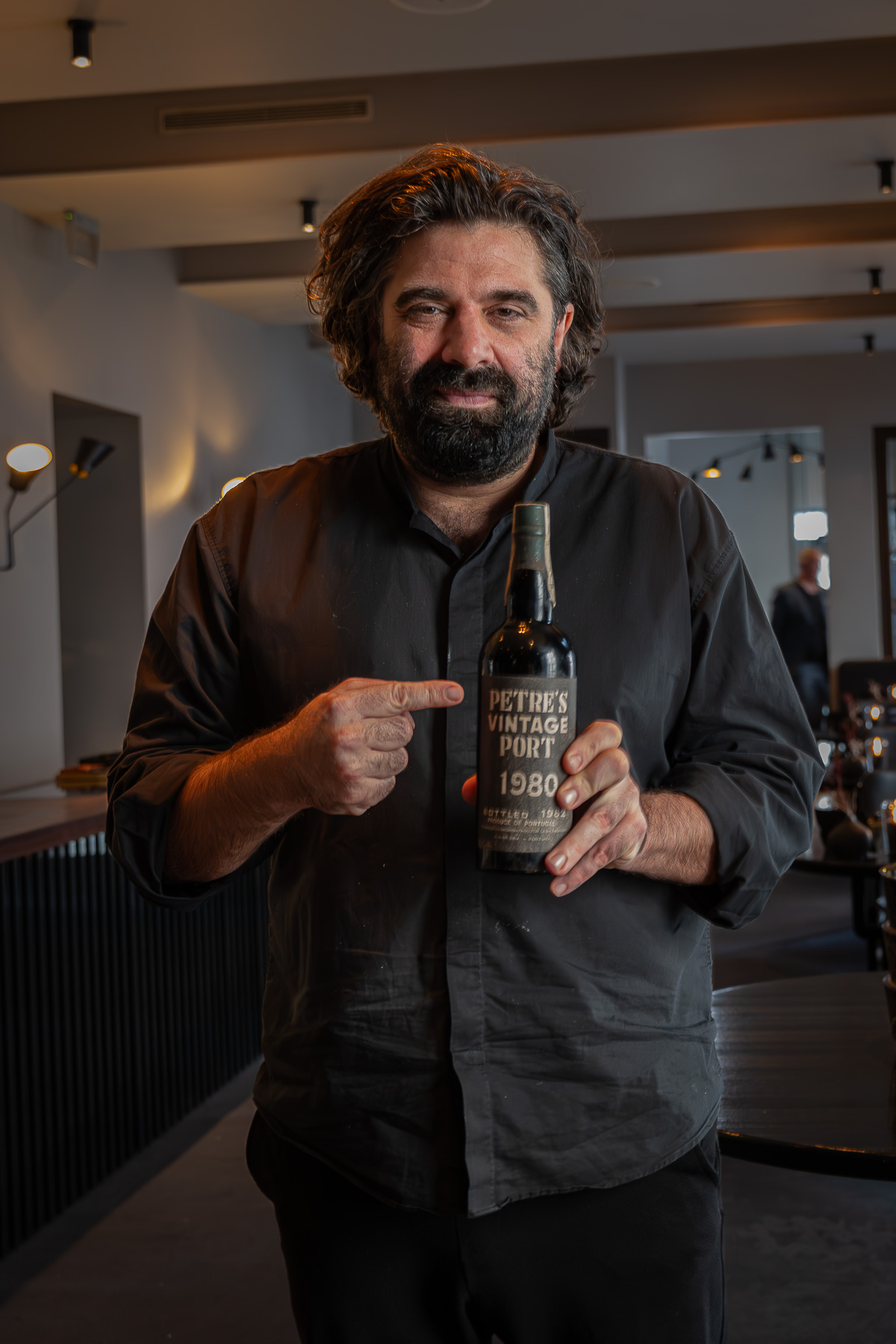
The very geometry of the dining room quietly states that people come here to eat. It is a restaurant per se, without tricks or sensory “experience” theatrics. The chef himself says, and fulfills it: “this is a place to eat. An elegant place to eat, but just a place to eat. You come here to feel good. You don’t come here to be overwhelmed by us.” There is no excessive presence of the chef in the room, nor any magic tricks performed by cooks, whom we glimpse busy at work while the chef watches through the glass with the expression of someone who knows exactly what he is seeing and what he is searching for.
Service and pairings were led by Leo Schneemann, head of front of house, with the precision demanded by a wine list that continues to favor small producers, biodynamic wines, and natural expressions without ever abandoning the classics. We began, naturally, with Krug, given the house’s ambassador status. The François Chidaine Les Bournais 2022 accompanied the oyster with the naked minerality the dish required. Andreas Tscheppe, one of Austria’s most exciting natural wine producers, appeared with his Schwalbenschwanz, a Goldmuskateller whose tropical notes and vibrant acidity linked beautifully with the richness of the sardine. The Christophe Mignon ADN de Meunier Rosé, seemingly improbable at first glance, unfolded over the Amalfi lemon with an elegance worthy of separate mention. Then came Trummer Ehrenhausen Morillon 2023, fresh and tense. The Tschida Himmel auf Erden Rosé 2024 accompanied the eel and trout, proving that rosé can be far more than a light and fruity wine, revealing the full excellence of Christian Tschida‘s work. The Marquis d’Angerville Bourgogne Pinot Noir 2021 brought a touch of Burgundian classicism to the venison. Finally, Tinhof Beerenauslese from Neuburger, an Austrian late-harvest wine with notes of orange peel, honey, and stone fruit, closed the sweet chapter. Every pairing felt considered. None existed by default.
The room held only a few occupied tables, characteristic of lunch service, and the pace flowed without ever becoming excessive. We had a child at the table, and we completed the full menu; at no point did the rhythm falter. The team adapted to Francisca as though she were a regular guest, which, in a two-Michelin-starred restaurant in a classical city like Vienna, is a small hospitality victory that does not go unnoticed.
A Final Note
Eleven years after my first dinner here, I find a Filippou that is technically more mature, aesthetically more restrained, and narratively simpler. The pursuit of umami – which I described in 2015 as the axis of his cuisine – remains its defining signature. The flavors are more delicate, the constructions less performative, and the confidence, certainly, greater. The past year was public and difficult. The house did not pretend nothing had happened, but neither did it collapse. It simply continued forward. The dishes still follow a clear direction, and the dining room still knows how to receive people. The gesture of placing a third identical glass for a five-year-old child to join the toast says more about hospitality than much of what has been written on the subject.
In his own book, the chef defends the idea that he cooks first for himself – “I trust my own palate” – because only then does he know what he can ask of the guest. I leave with the feeling that he still does exactly that.
The January afternoon had already closed in, the sun disappearing, and Vienna carried that dry cold that makes one want to walk. I thought that eleven years is a long time to return to a place where we were once happy. I thought that, one day, Francisca would herself be shaped by the memory of this lunch, just as Konstantin was shaped by his childhood holidays in Halkidiki.
Address: Dominikanerbastei 17, 1010 Wien, Austria
Reservations: +43 1 51 22 229 |restaurant@konstantinfilippou.com
Hours: Lunch and dinner — Monday and Thursday to Saturday, 12:00–15:00 and 18:30–23:30. Closed Sunday, Tuesday and Wednesday.
Price: From €265 (excluding wine).
Awards: 2 Michelin Stars; 5 toques / 19 points Gault&Millau 2026; 99 points À la Carte; 99 points Falstaff; Gault&Millau Chef of the Year 2016. Must-try dishes: Red prawn with pea vichyssoise and duck jus; Sardine with mussel rémoulade and Bavarian-style horseradish; Frozen Amalfi lemon with black caviar, fermented rice and beurre noisette; Aged salmon trout with eel and Albufera sauce.
Other projects by the chef: O boufés — wine bar and natural-wine bistro, adjacent to the restaurant. Mama Konstantina — Greek taverna in Döbling, Vienna, paying modern tribute to the chef’s paternal roots.
Nearby: Stephansdom (~5 min walk); Donaukanal (across the street); MAK – Museum of Applied Arts (~8 min walk); Albertina (~10 min walk); Café Central (~15 min walk); Naschmarkt, Vienna’s most famous open-air market (~20 min walk or 5 min by U-Bahn).