
In the morning I was in Slovenia. There was frost on the hotel windows and breakfast — magnificent as it was — ended up carrying that particular flavour of things eaten without hunger, simply because the journey demanded it and the produce was too good not to make the most of. Between car and plane, by early afternoon I was on a train in Rome bound for Orvieto. That is how it works when one travels deliberately for a restaurant — the day serves logistics, the night serves the reason for existence.
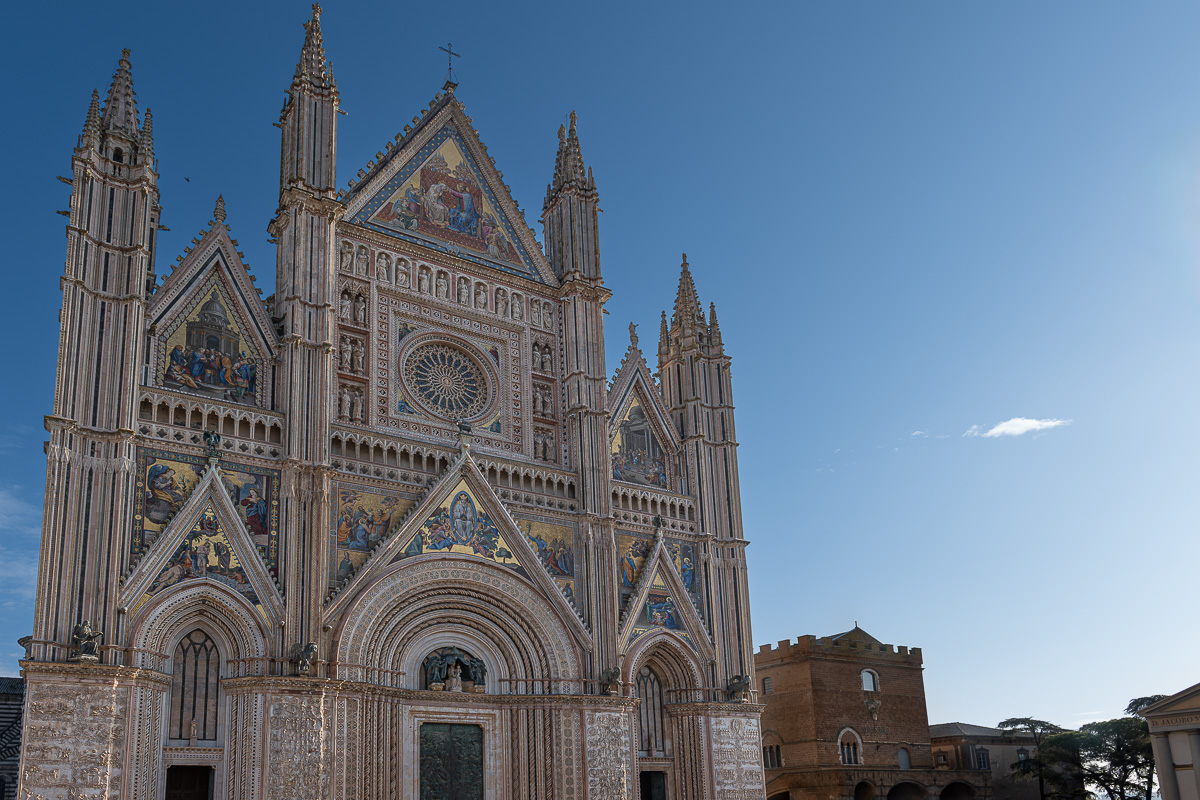
Orvieto is not on the way to anything. Those who go there, go on purpose. The city settled on top of a tufa cliff two thousand years ago, was once an Etruscan capital, and then descended and expanded — yet it is there, in the heart of its history, that what matters still beats. The train from Rome climbs the Tiber valley, with the late afternoon light gilding the fields of dried sunflowers, crosses the Umbrian plain, and then stops. The rest is done by car, through narrow streets between medieval walls. At one turn, without warning, the street opens into a vast square and there stands the Duomo, one of the most extraordinary works of Italian Gothic, its golden mosaics burning in the last light of day, just a few steps from the restaurant where I am about to dine.
There may well be better arrivals at a destination. I am still trying to think of one.
Before Everything
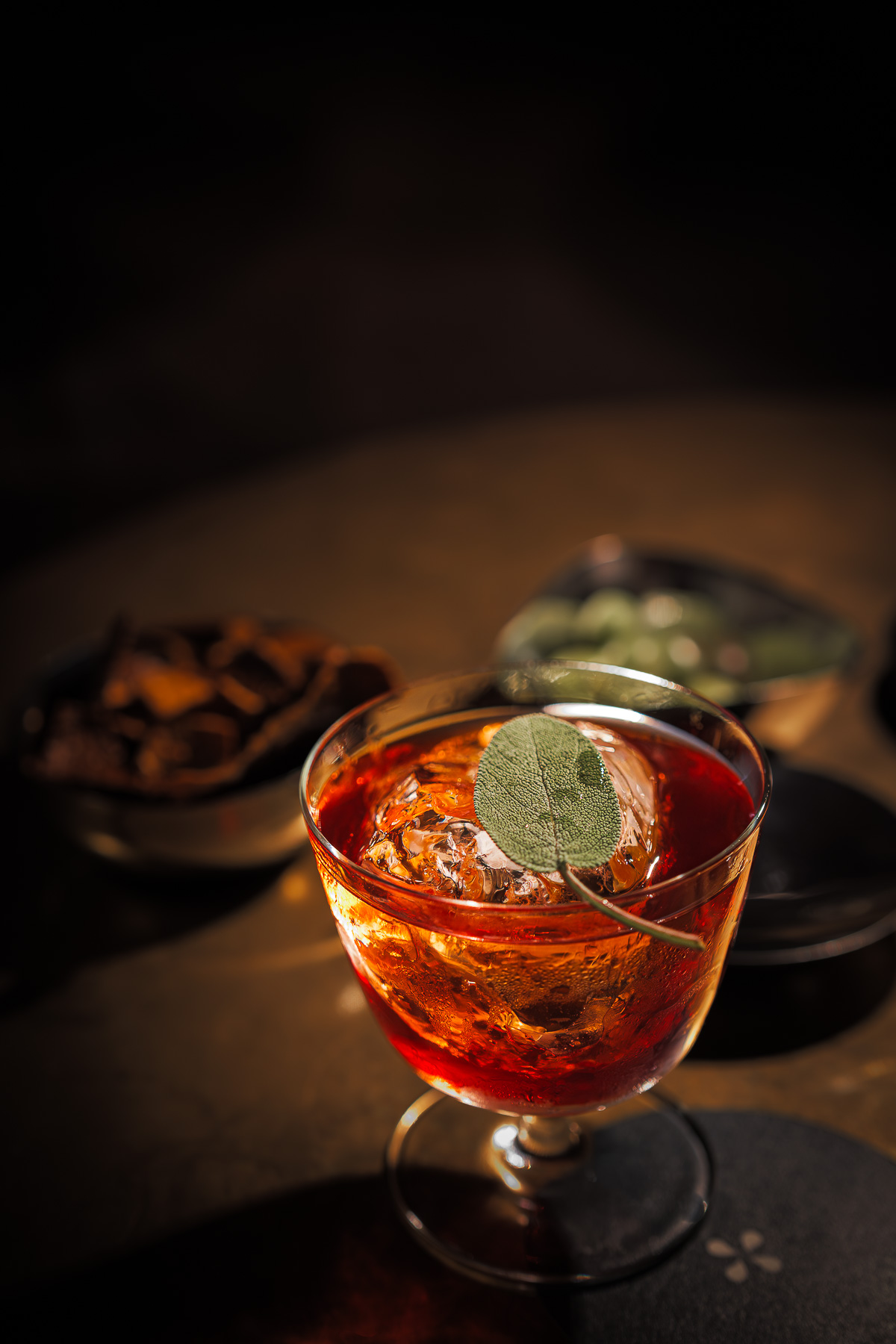
Gocce is the bar within the complex, set around a small internal courtyard shared with Palazzo Petrvs, the photogenic boutique hotel that anchors the whole project. Elegant, historic, with that balance between old stone and contemporary detail that Italians master without visible effort, which makes them impossibly enviable. Bar manager Francesco Cocco signs the L’Oraculo — mezcal, Campari, Punt e Mes, plum and sage shrub, palo santo, served with olives and rice-and-pumpkin crackers, equally addictive. A more complex riff on the Negroni, with bittersweet notes, a little smoke from the mezcal and an herbal freshness, delivering a Negroni the Negroni itself did not know it could become. I felt the weight of being alone at the bar while the team remained busy among themselves, absorbed in conversations and preparations — a shame they did not notice the empty glass, because the list was good, as the Negroni at the end of the meal would prove.
The Passage
From Gocce, one reaches the restaurant through an internal passage — a brief glimpse of the kitchen, two corridor steps, and then the scale changes completely.
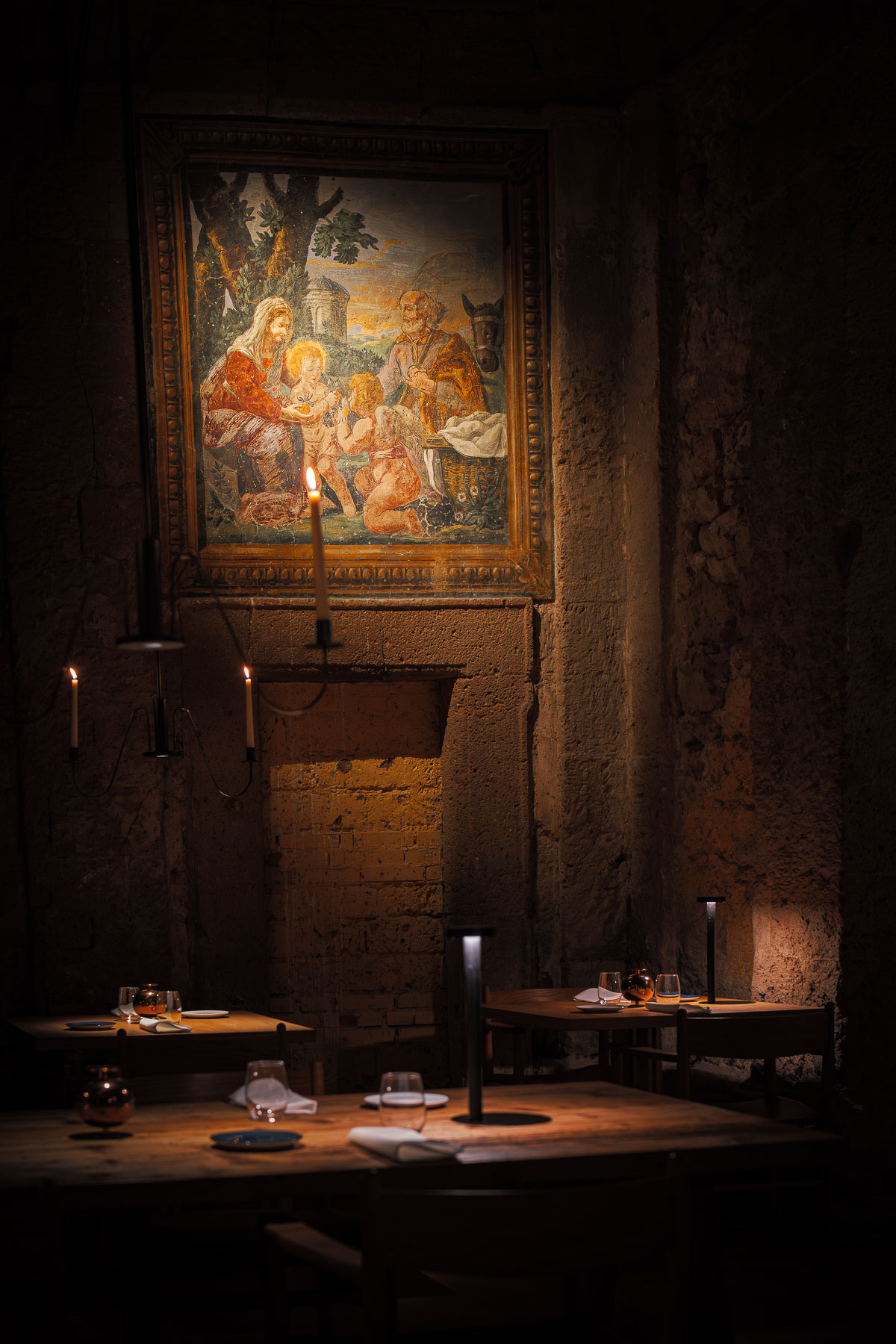
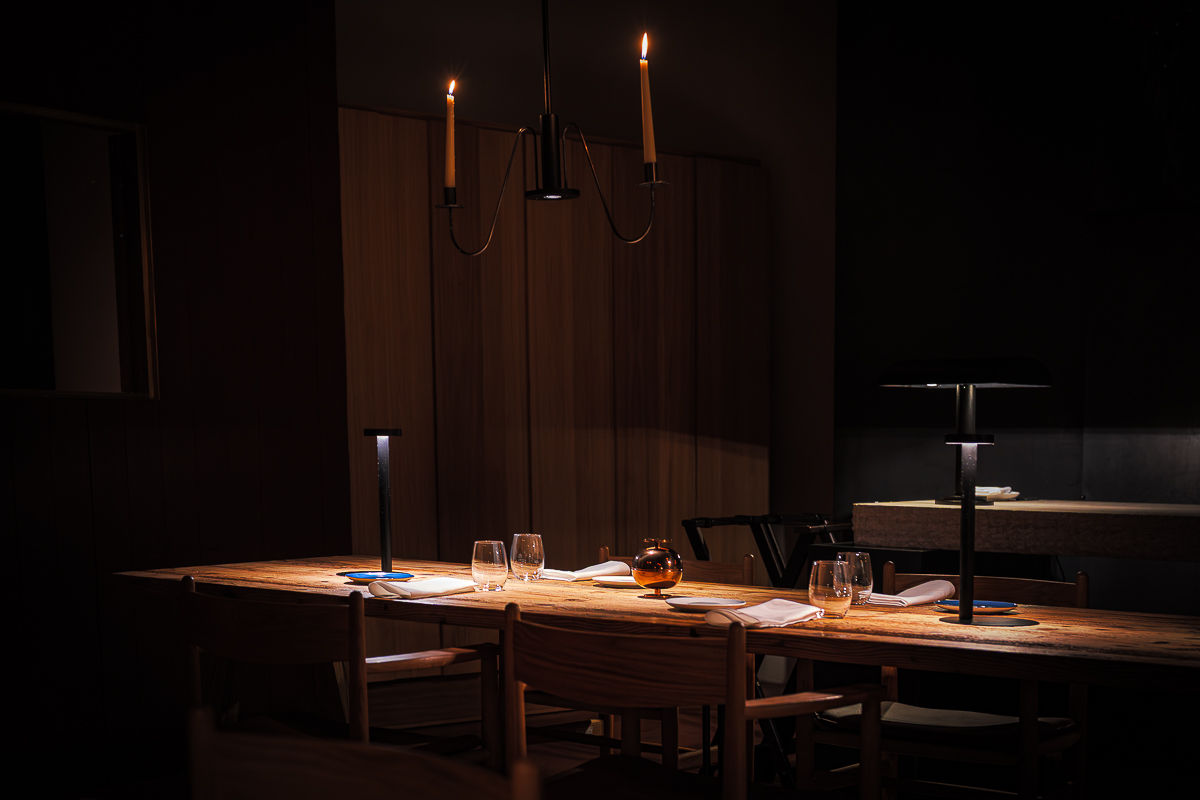
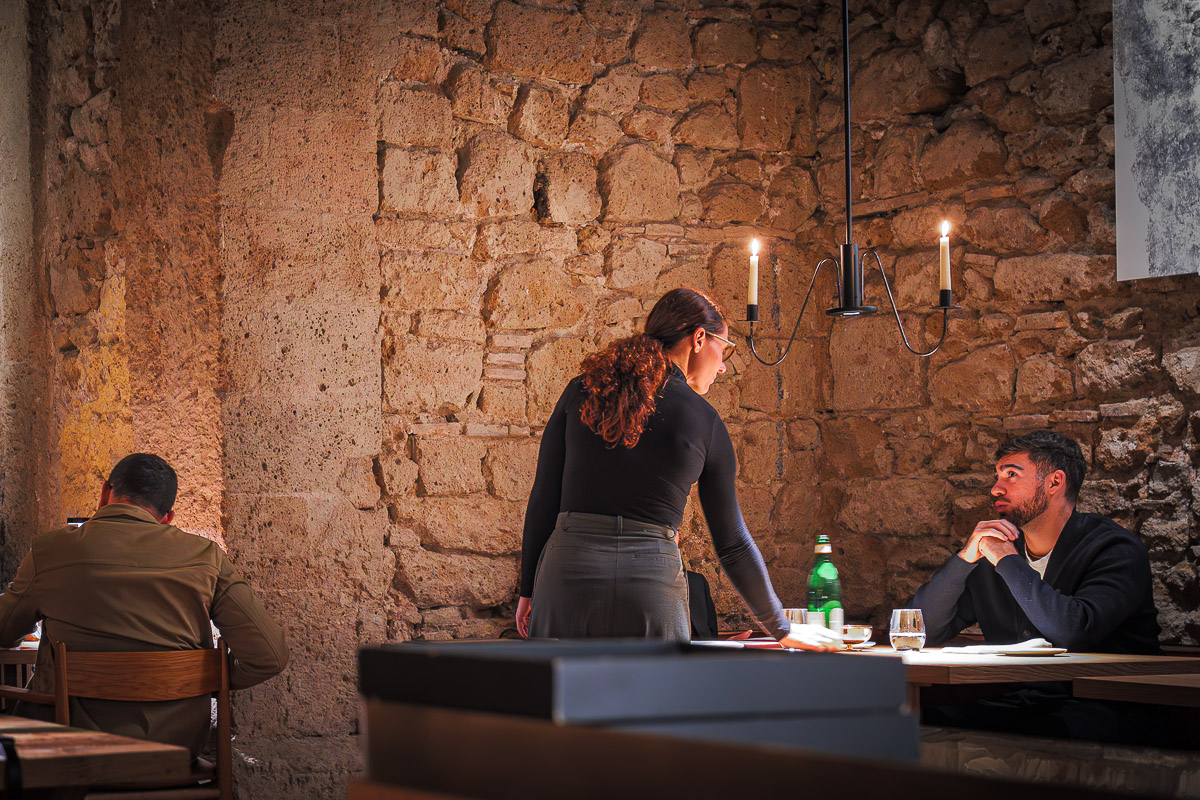
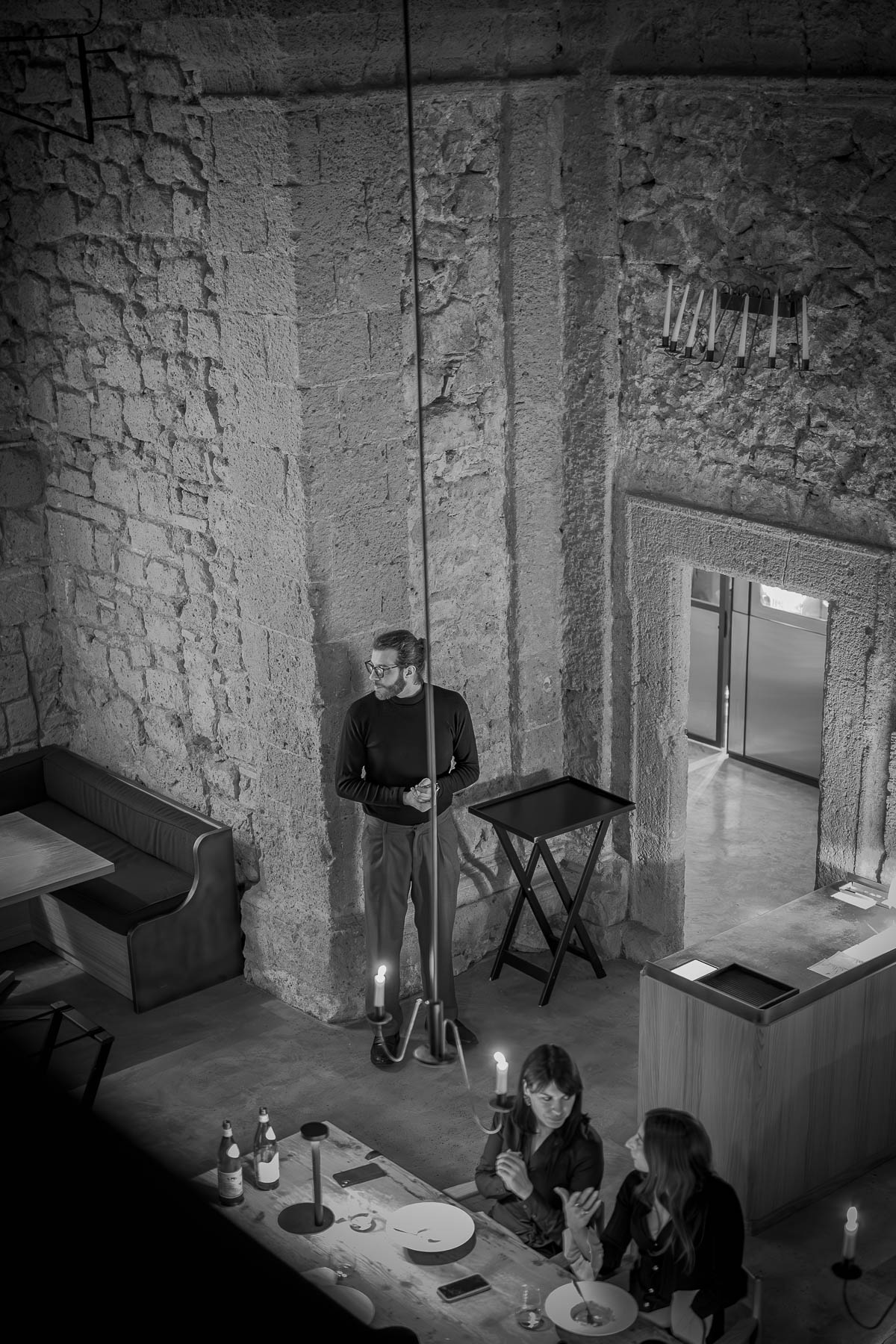
Architect Giuliano Andrea Dell’Uva has done something rare here: ancient stone and contemporary pieces coexist in full harmony — and in Italy, where restoration so often swings between museum and stage set, such restraint has particular merit. The wine wall rising to a height of nine metres is one of the room’s most impressive elements, imposing, almost sculptural, and at the same time functional: it conceals the private dining room above, revealed only to those who climb. Throughout the evening, as the team moved constantly up and down that staircase, I found myself growing in admiration for the wine wall and in sympathy for the team.
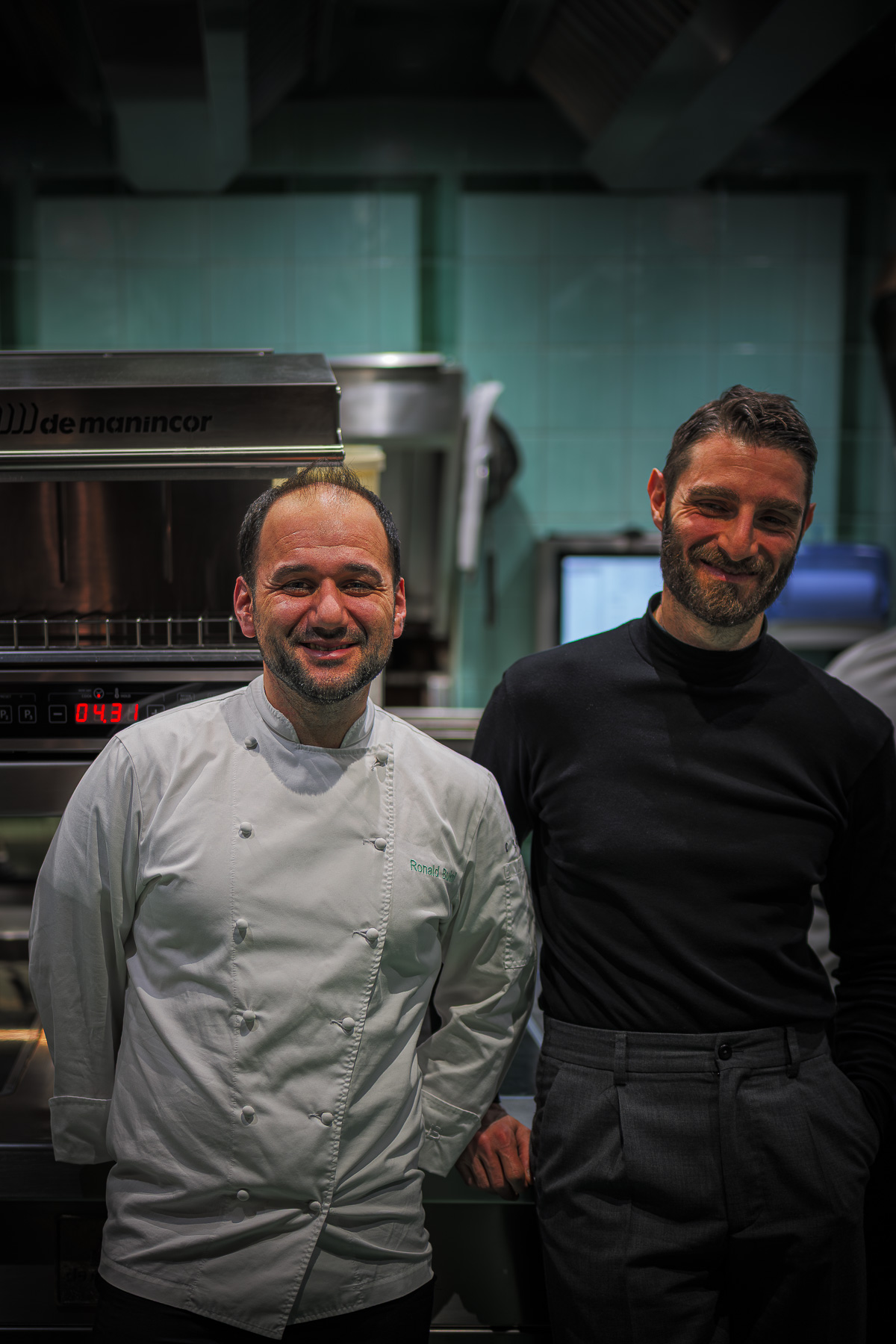
Coro is the project of two men who worked together in the past and whom time seems to keep wanting to reunite. Francesco Perali is from Orvieto — he studied Economics, learned the trade alongside Gianfranco Vissani, and returned to his home city with the determination and clarity of someone who knows he wants to do things differently. To make that happen, he convinced Ronald Bukri, chef, born in Durrës, Albania, but shaped into adulthood in Tuscany. The two met at Osticcio in Montalcino — one in the kitchen, the other in the dining room — and in 2024 they opened Coro. The name merges the final letters of Francesco with the first of Ronald. It is also the choir of the former church. And above all, it is the idea that two distinct voices can produce something neither could create alone.
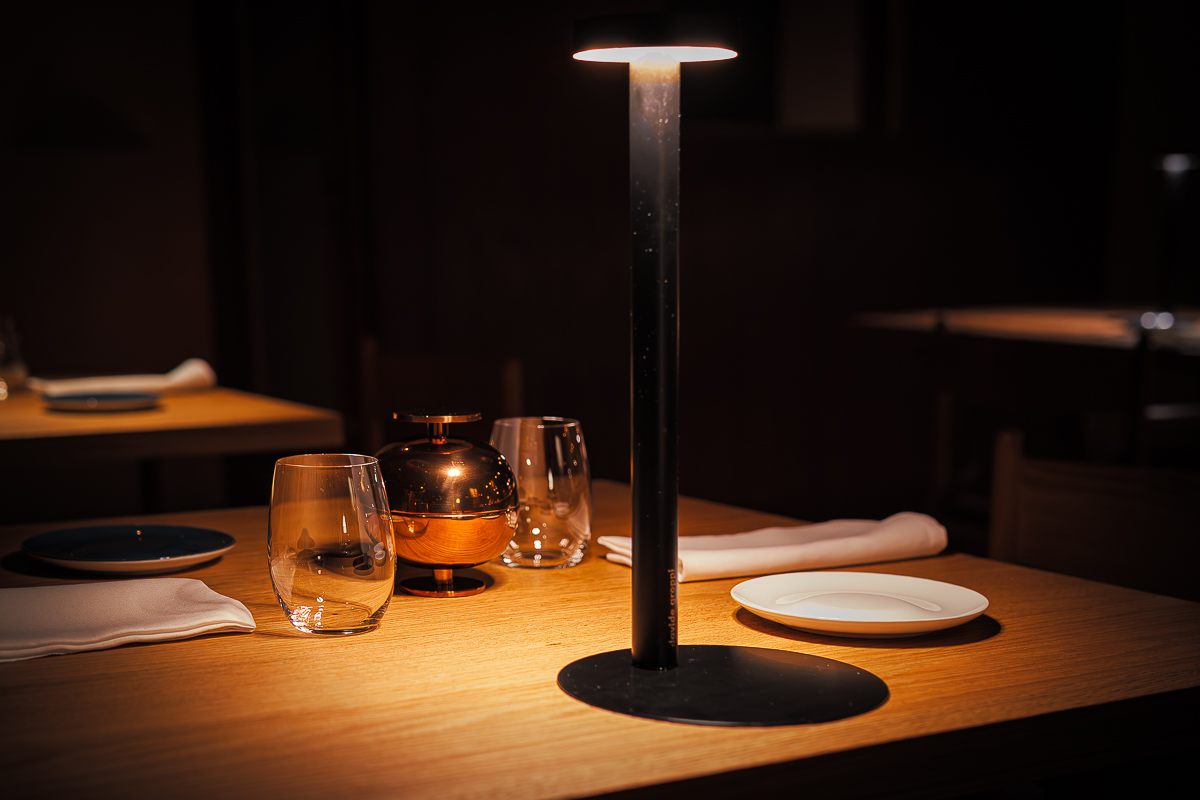
I sat down, with several tables already occupied, among couples, groups, industry professionals and one young man dining alone — me, like a penitent in the confessional.
The team lets you look. There is no rush. Contemplation is part of the choreography. And once the room has entered you, once the eyes have travelled the vaults enough times, someone approaches, lifts the lid of an elegant ciborium placed on the table, and inside there is a host. Made of corn powder and spices. The meal begins with communion. It could have been an obvious gesture, but the choice is perfect for this place.
At that moment I asked myself whether I had travelled to Orvieto because it was beautiful or because it was good. I kept the question for the end.
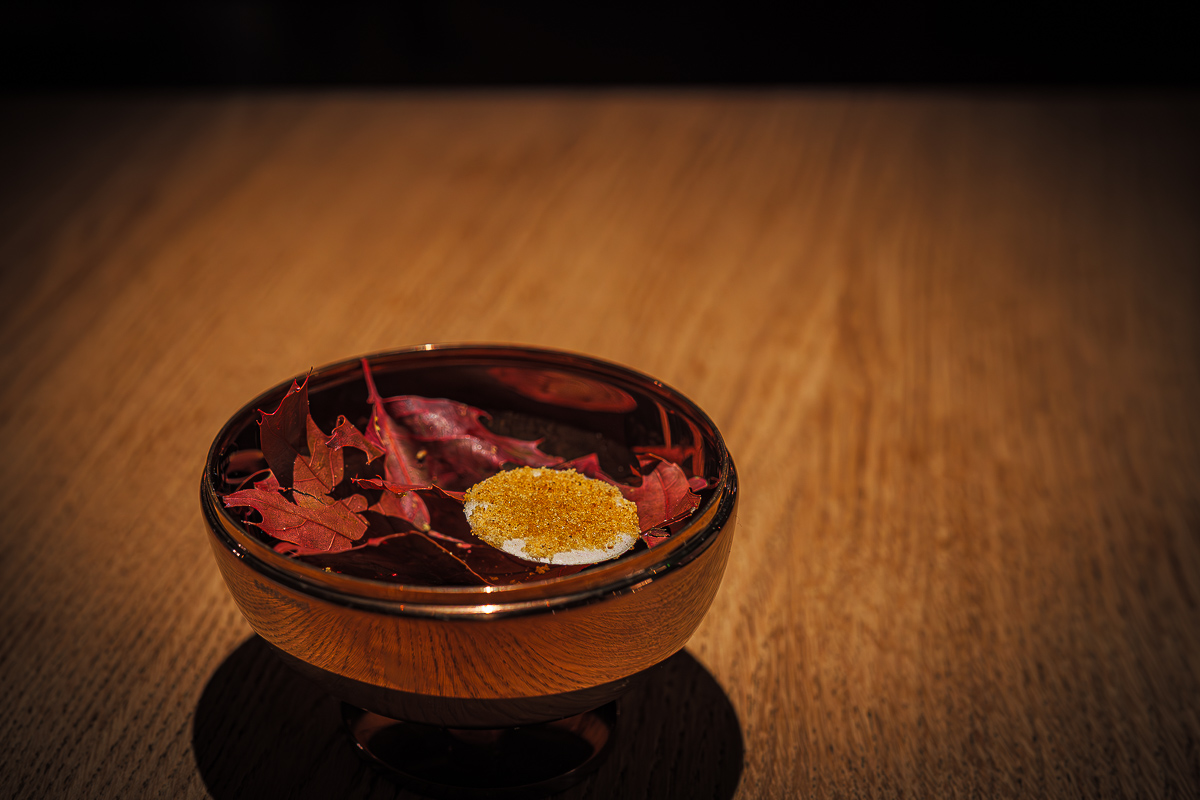
The Signature
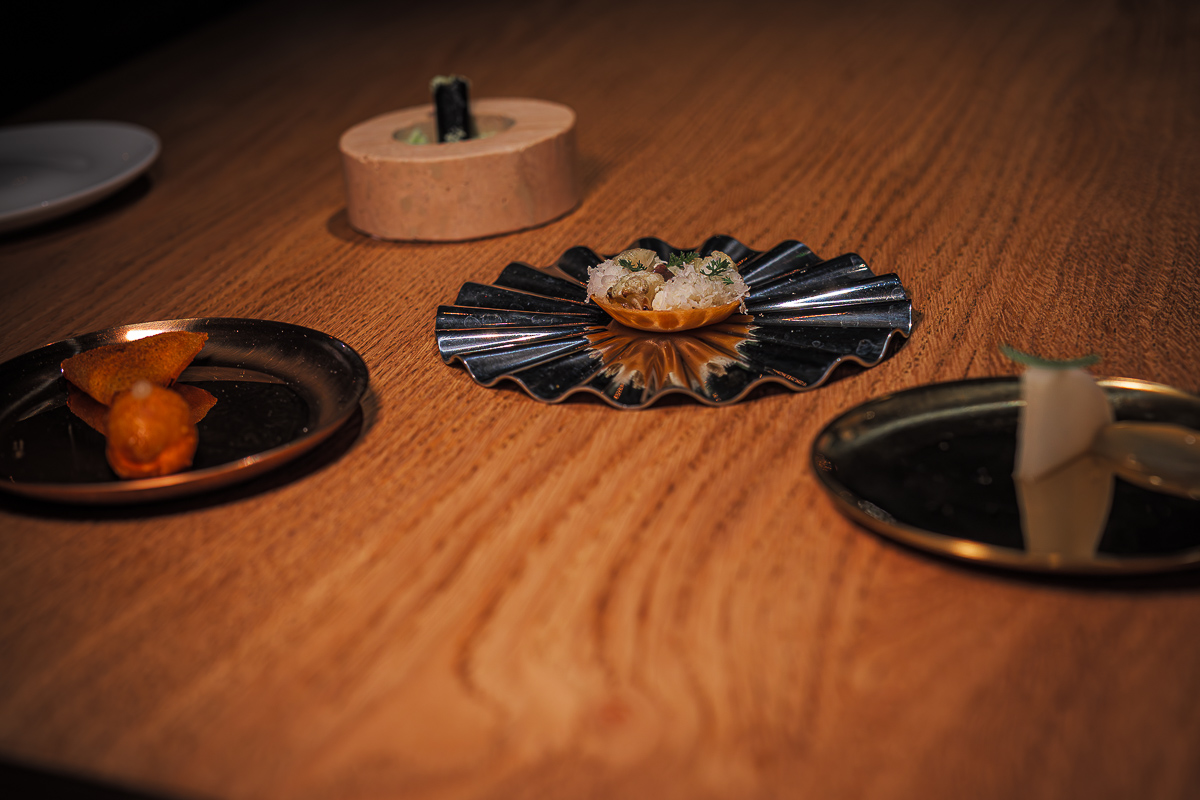
In the glass, Centopercento by Argillae — the only sparkling wine made from the native grapes of the Orvieto DOC, which paradoxically cannot use the name Orvieto on the label because the appellation rules make no provision for a sparkling version. The snacks arrive fresh, small and centred on the vegetable world — a deliberate and risky choice. What stayed with me was the aubergine “tube”, with its clean bitterness and contrasting textures, and the potato and curry samosa, light and spiced, travelling across other latitudes. Two gestures, two opposite snacks that tell more clearly than any list what this kitchen wants to be. Still, fewer pieces with more individual attention to each one would give this opening greater lift.
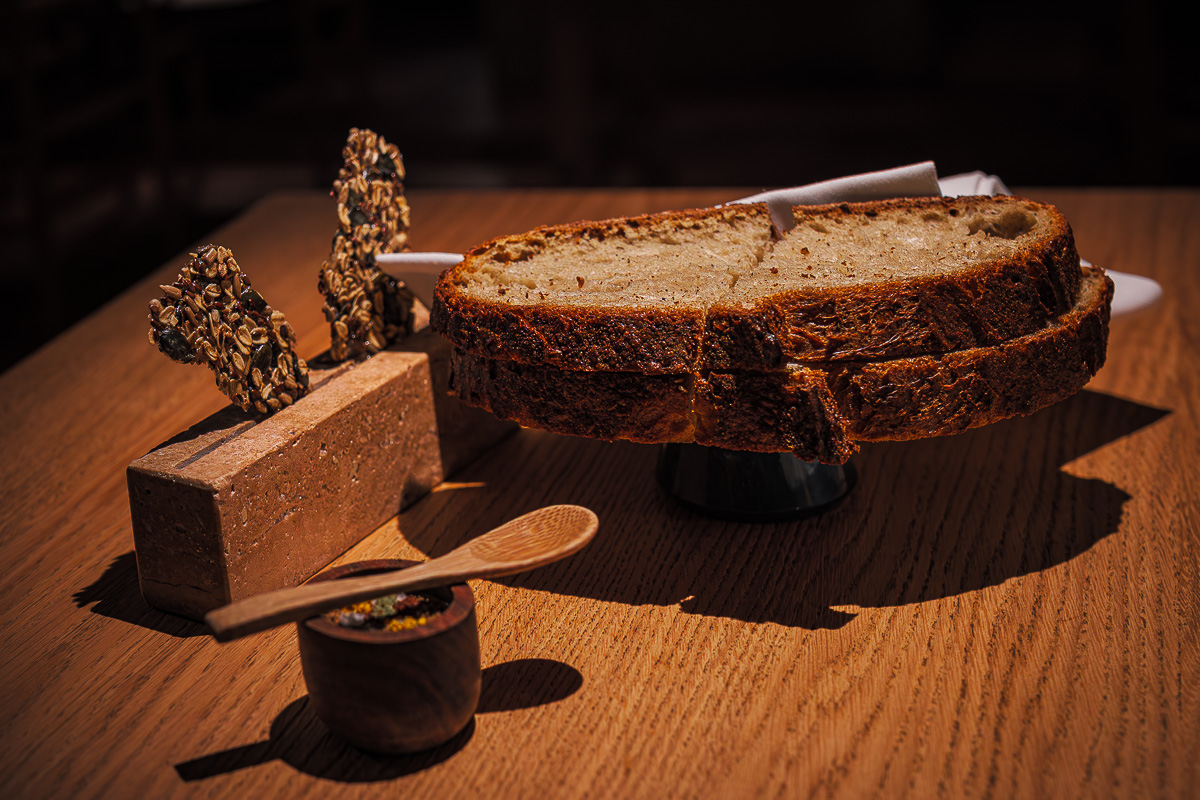
A different story came from the bread and crackers made with ancient grains and local seeds, of notable quality alongside a gelled olive oil covered with spices. A detail that confirms a trend: bread in Italian fine dining restaurants is no longer a forgettable accessory. Today, in many cases, it rivals the best produced anywhere in Europe.
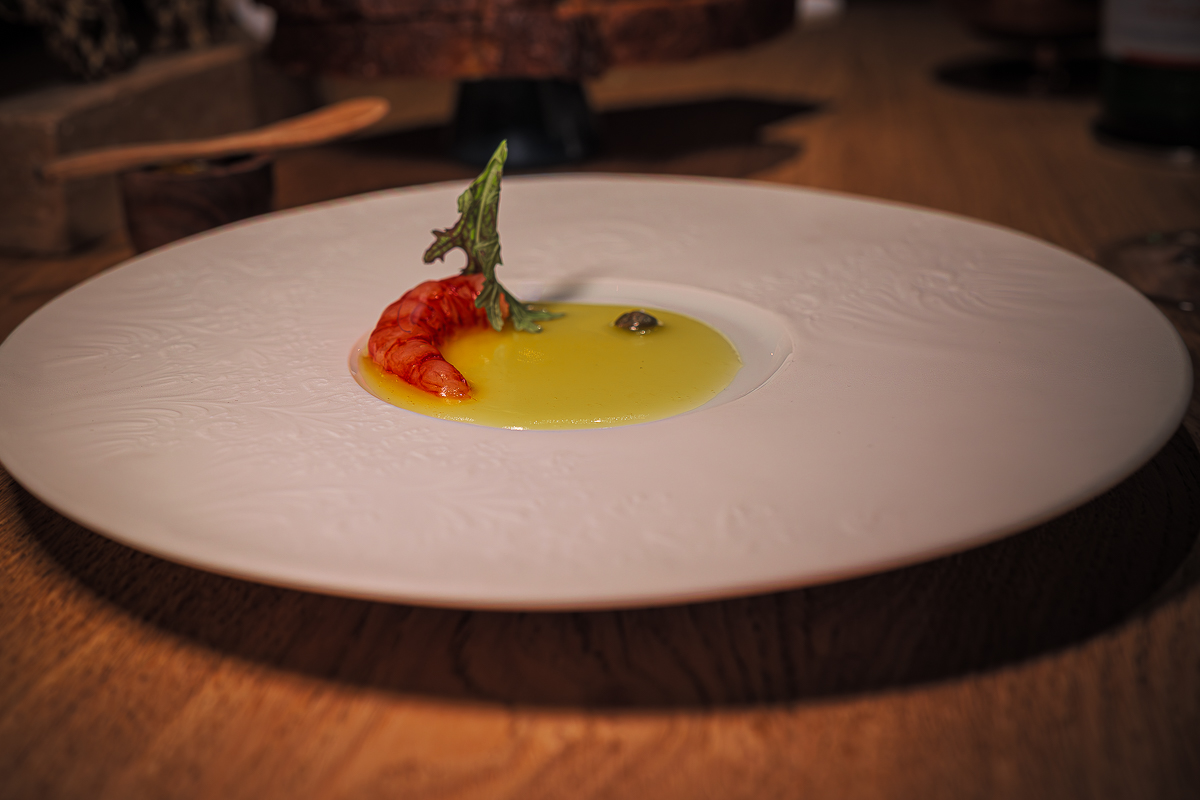
The red prawn from Porto Santo Spirito arrives by the chef’s own hand, served over an emulsion of honey, olive oil and green lime with Pantelleria capers and shallot. The colour of the emulsion, before a single bite, immediately brought to mind Alain Passard’s classic vinaigrette — the one I have made countless times in summer and served over beautiful tomatoes. On the palate, the impression held true: the sweetness of the honey meets that of the prawn, while the acidity of the lime sharpens without smothering the delicacy of the shellfish. Restraint and delicacy as a culinary line. The first of several references to Alain Passard‘s cooking that would recur throughout the evening, and which Ronald later confirmed as one of his greatest inspirations, alongside Lopriore, with whom he trained.
Memories of Home
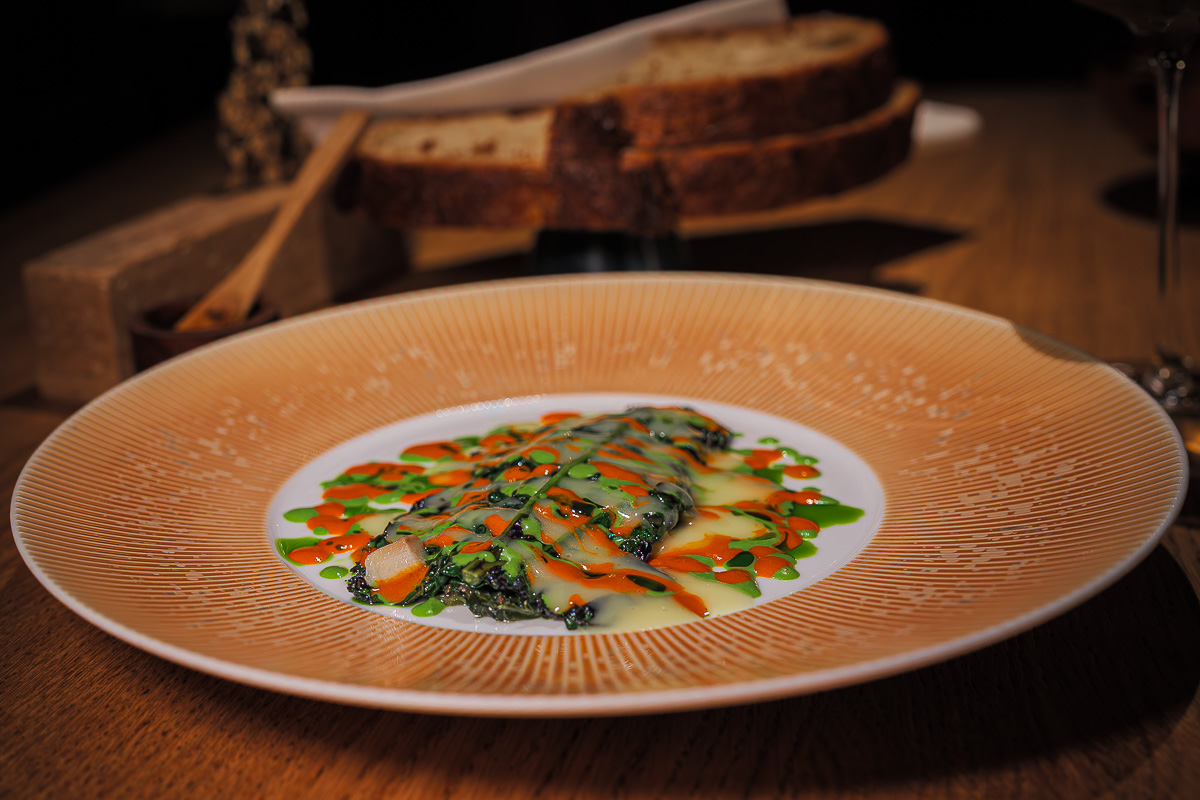
The lightly grilled cavolo nero comes with three sauces: red potato cooked over embers, almost like a vichyssoise, one of herbs, and one of smoked mackerel. At the first bite I thought of home — potato, smoke, dark cabbage, the three pillars of caldo verde. That was the first flavour to reach me. Then the mackerel created all the difference, while the herbs brought freshness and acidity to balance the whole. An Umbrian dish that spoke Portuguese for a second before continuing on its own path. There is something inevitable in that: an Albanian chef raised in Tuscany, cooking in Umbria, making a dish that smells of home to a Portuguese diner. Bukri does not quote territories or bind himself to them — he absorbs them. What reaches the table is always the result of that long digestion, not the imitation of any one place in particular.
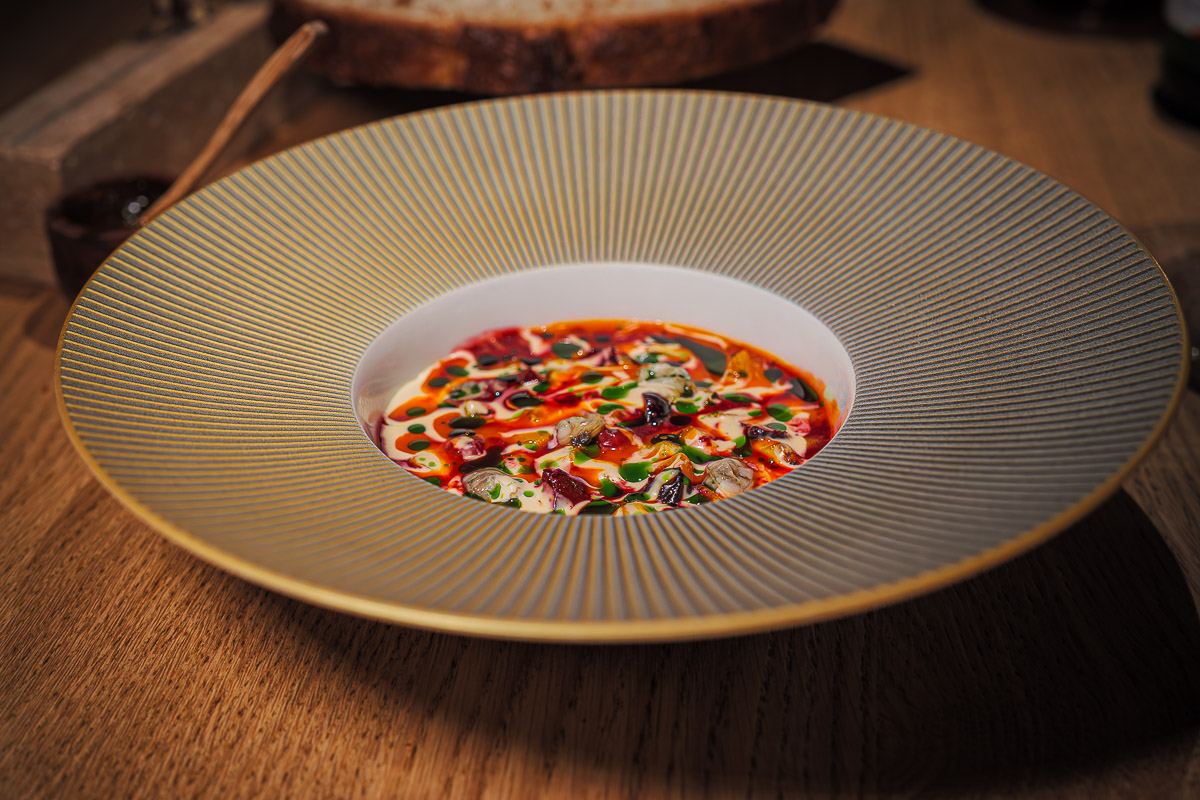
The roasted pumpkin cream with sea buckthorn, wild berries and cockles continues in the same register, with an explosion of colour and several opposing elements lifting one another. The sweetness of the pumpkin is worked by the berries and by the cockles’ natural juices, with the sea buckthorn doing important work — bringing that orange, slightly bitter acidity that cuts through the richness of the pumpkin without overwhelming it.
Pasta as Story
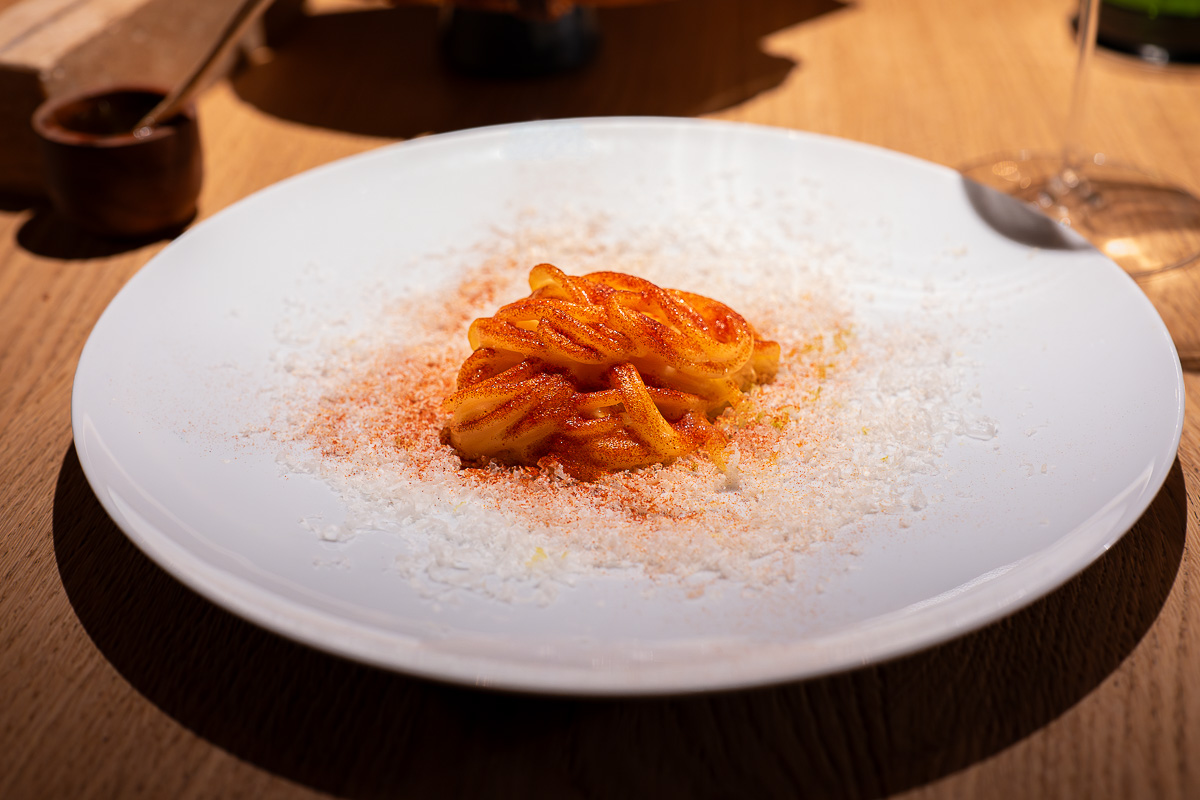
Spaghetto Gerardo Di Nola with French butter and 36-month Parmigiano is, according to Bukri himself, one of only two dishes present on every menu. It is easy to understand why. It smells of Parmigiano and Pimentón de La Vera before a single forkful. The pasta is cooked with exquisite precision, and then the lemon, discovered at the bottom as one turns the strands, transforms the whole — fresher, lighter, more refined. A transformation of a classic, a dish that carries the imprint of Ronald’s masters within it. Those who know, recognise it, and understand. Those who do not know, need not know — it is a brave new world built on the past.
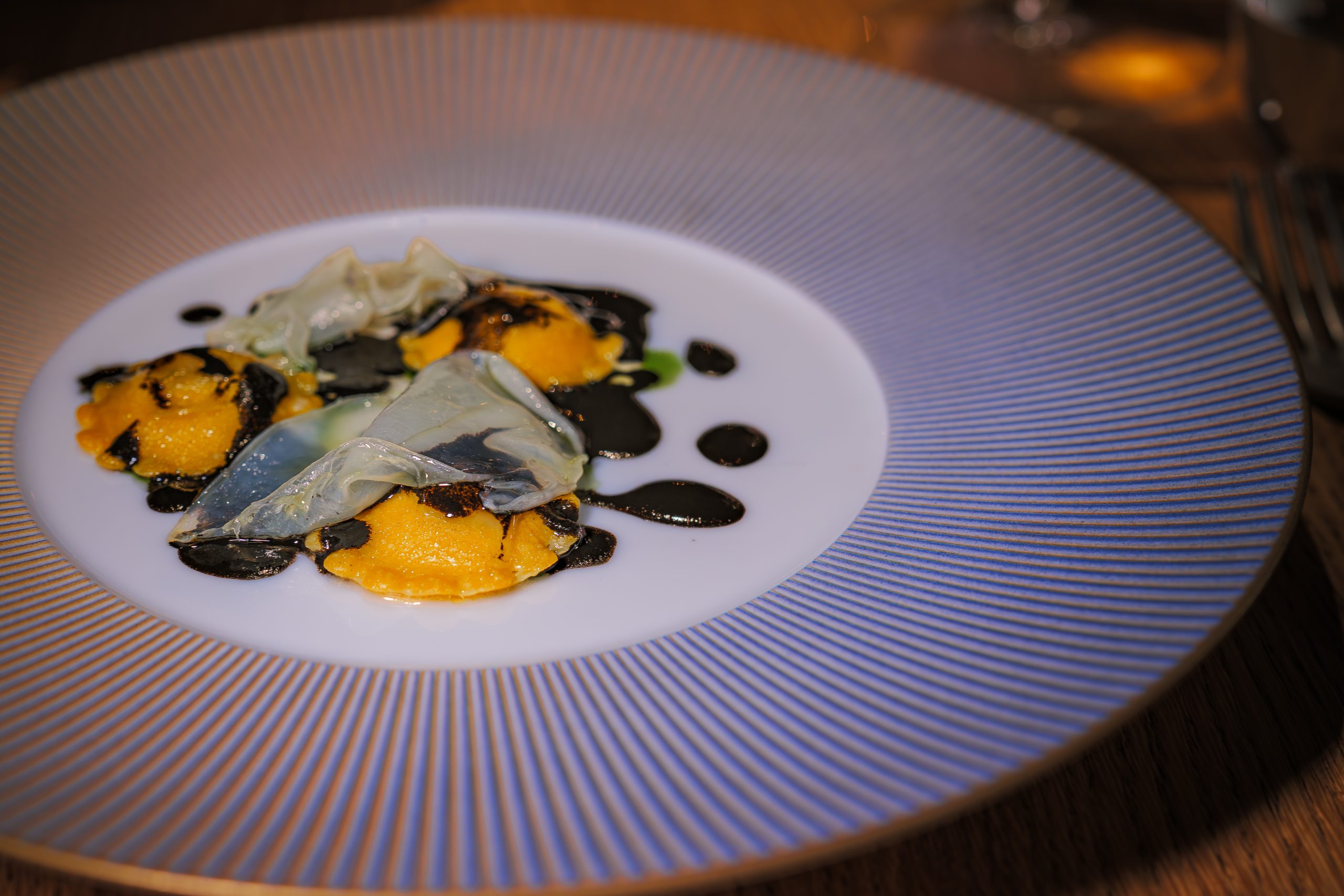
Around me, the room remains under its own quiet assessment — eyes moving between the plates, the conversation and the space, as if everyone were searching for some new detail. The fresh pasta bottoni filled with fagiolina del Trasimeno (the lake bean) with charred squid and sage extract arrive with the same aesthetic restraint. Thin pasta, a filling that is light yet marked, and squid that is almost translucent, barely cooked, bringing sea and texture with surgical precision. The sauce of ink and innards anchors everything with iodised depth. A great dish.
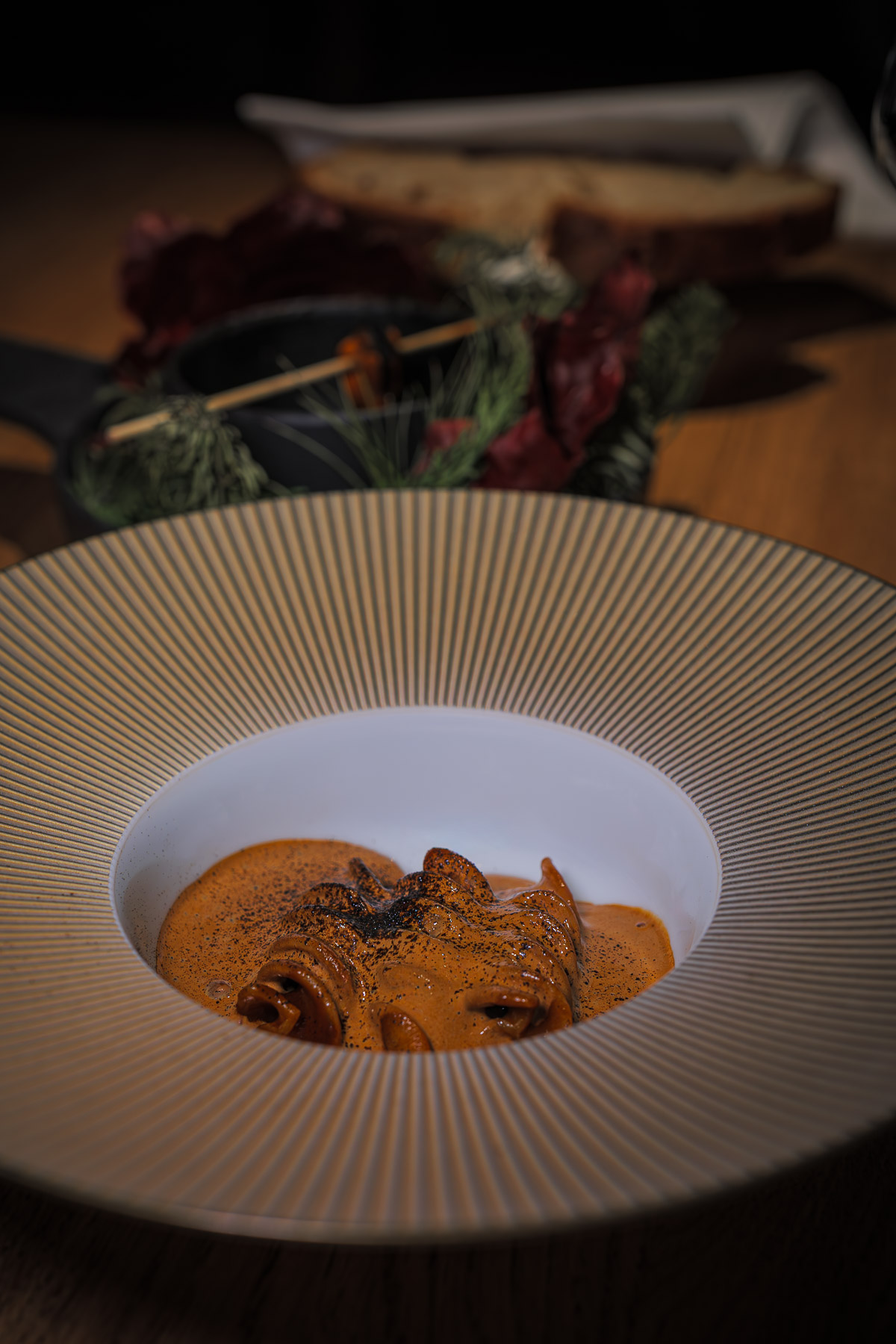
The large fusilli with Onano lentils, fermented black lemon powder and mussel sauce — a rich, concentrated zabaglione — is technically remarkable. The black lemon relieves the richness with freshness and singular notes of its own. The mussel at the side, under wood smoke, should not have been eaten on its own — it ought to have been integrated into the dish. One small unit for a sauce of this dimension felt too little. A large mussel, or a skewer of several pieces over the smoke, would have made all the difference. The dish is special, and deserves that.
The Lamb
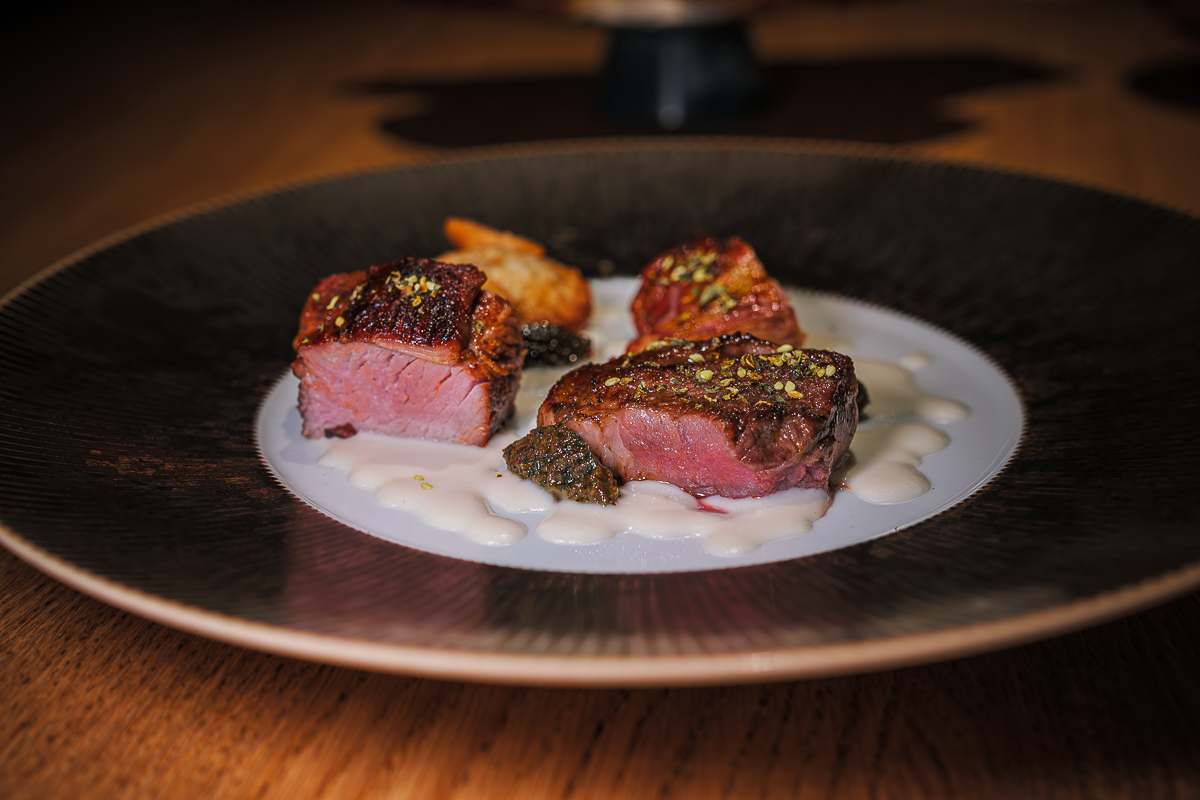
Marco Colognese, the well-regarded journalist at Reporter Gourmet, declared the lamb in textures his meat dish of the year in 2025. I understand him. Each cut — loin, leg, sweetbreads and a pie of offal — marinated and worked to show itself at its best, the final glazing with the animal’s own fat ensuring crispness outside and succulence within, the spices of Albanian and Middle Eastern origin bringing the dish a discreet but unmistakable signature. The sweetbreads, for those who love them — and I do love them — were a deeply personal moment of satisfaction. The technique comes close to irreproachable, but the dish lacks the element that would transform the whole: succulence and depth, given the size of the cuts served. A jus, or simply more sauce, would have completed what the technique had very nearly perfected. Colognese and I sat at the same imaginary table and arrived at different places. He found the dish of the year; I was left wanting to repeat it with something more. Both are valid ways of being right.
The Vegetable Gesture
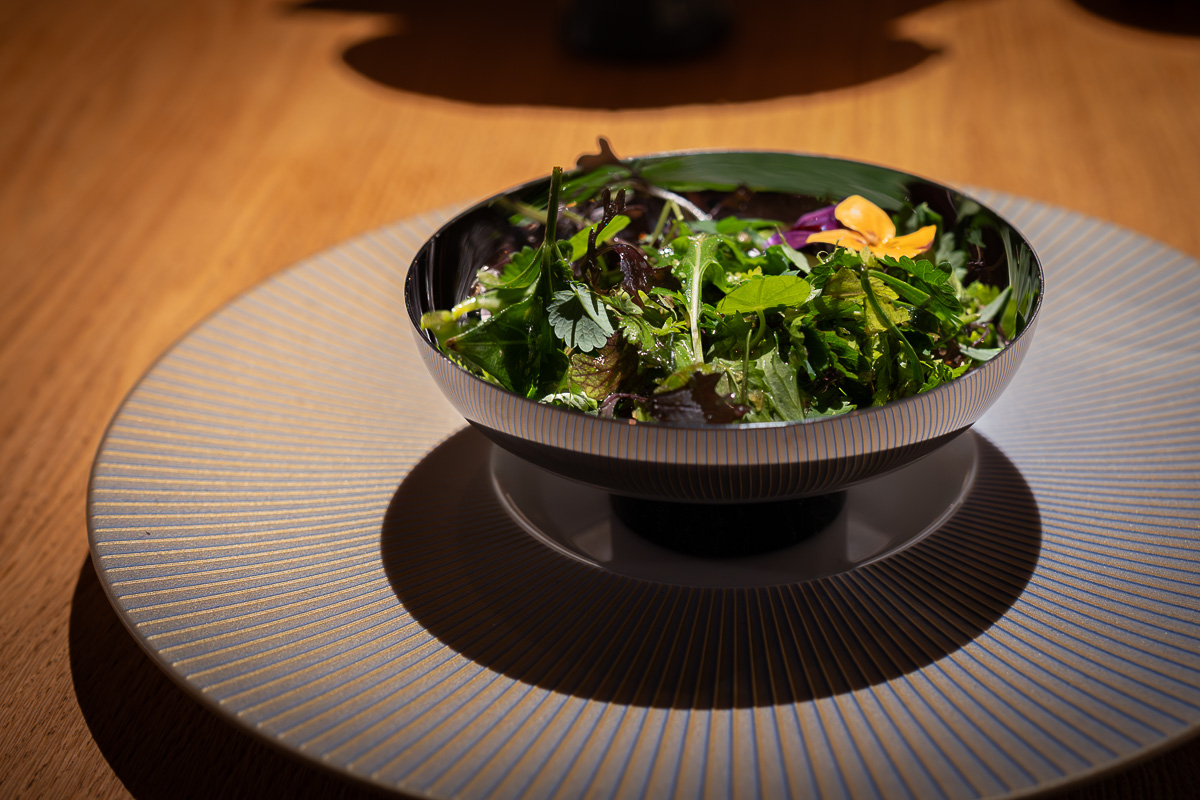
Between the meat and the desserts, an elegantly designed metal bowl arrives at the table. Inside, a salad of leaves and herbs full of freshness, heat and acidity. This is not a dish to analyse leaf by leaf. It is meant to be felt as a whole, with the clear function of cleansing the palate after a rich course. It works. In the lineage of Passard or Bras, Ronald Bukri treats the vegetable world as a declaration of authorship.
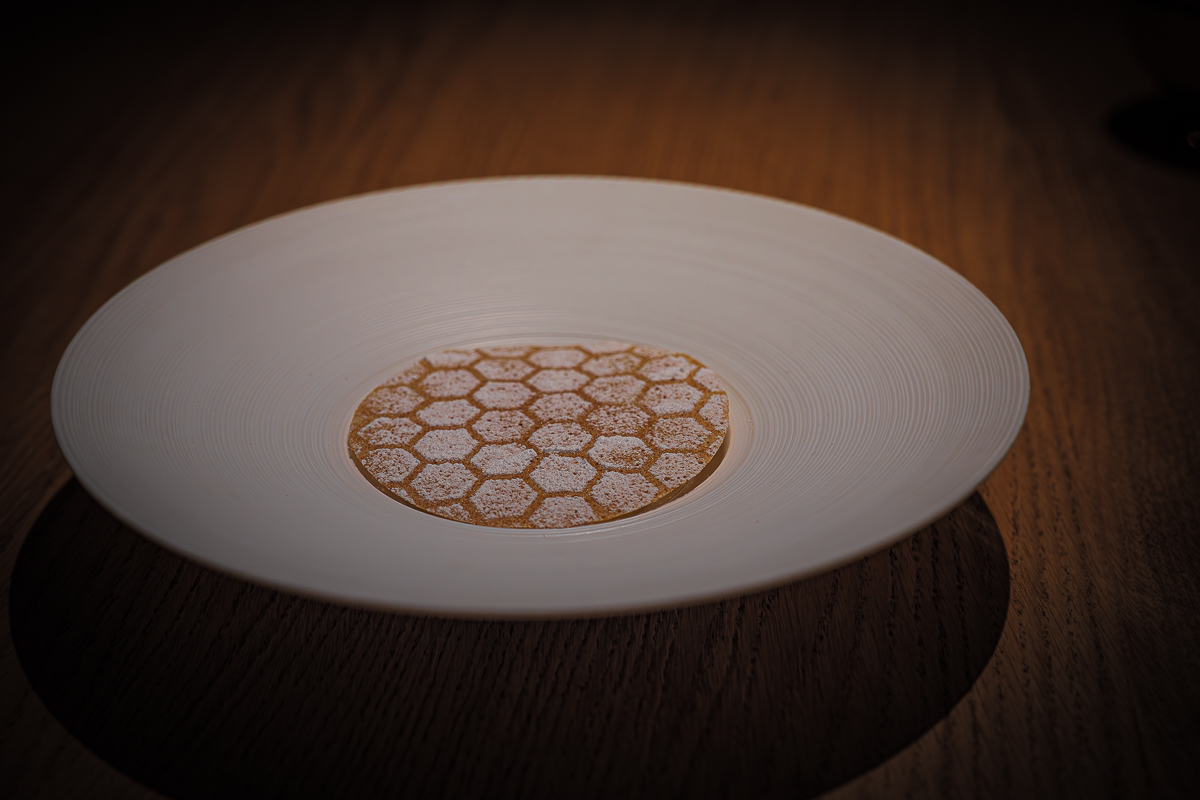
The desserts confirm the same rigour. Crème anglaise with local honey, fresh pollen and finger lime, finished with an ultra-light crisp topping in the shape of honeycomb hexagons. Simple and delicate.
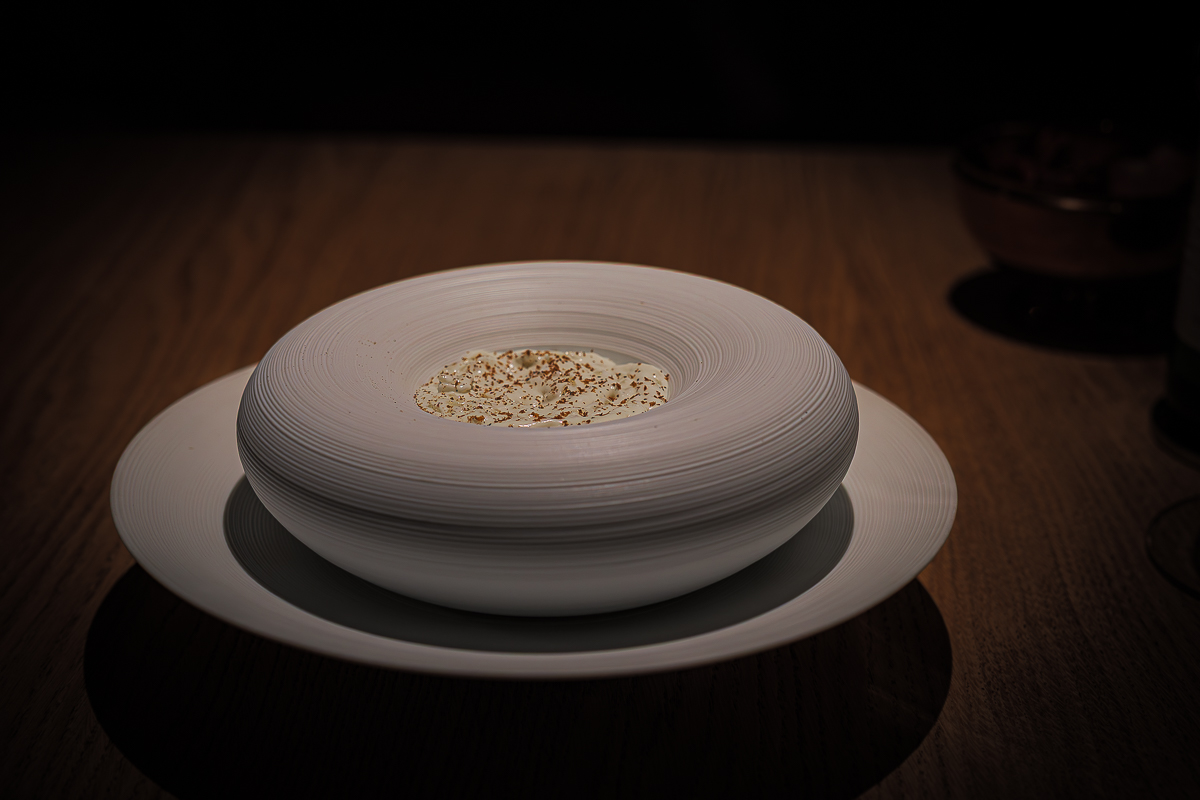
The jasmine rice pudding with tonka bean, banana and green curry is well executed, but it inhabits difficult ground for me — since childhood, rice pudding has never been something I take pleasure in eating.
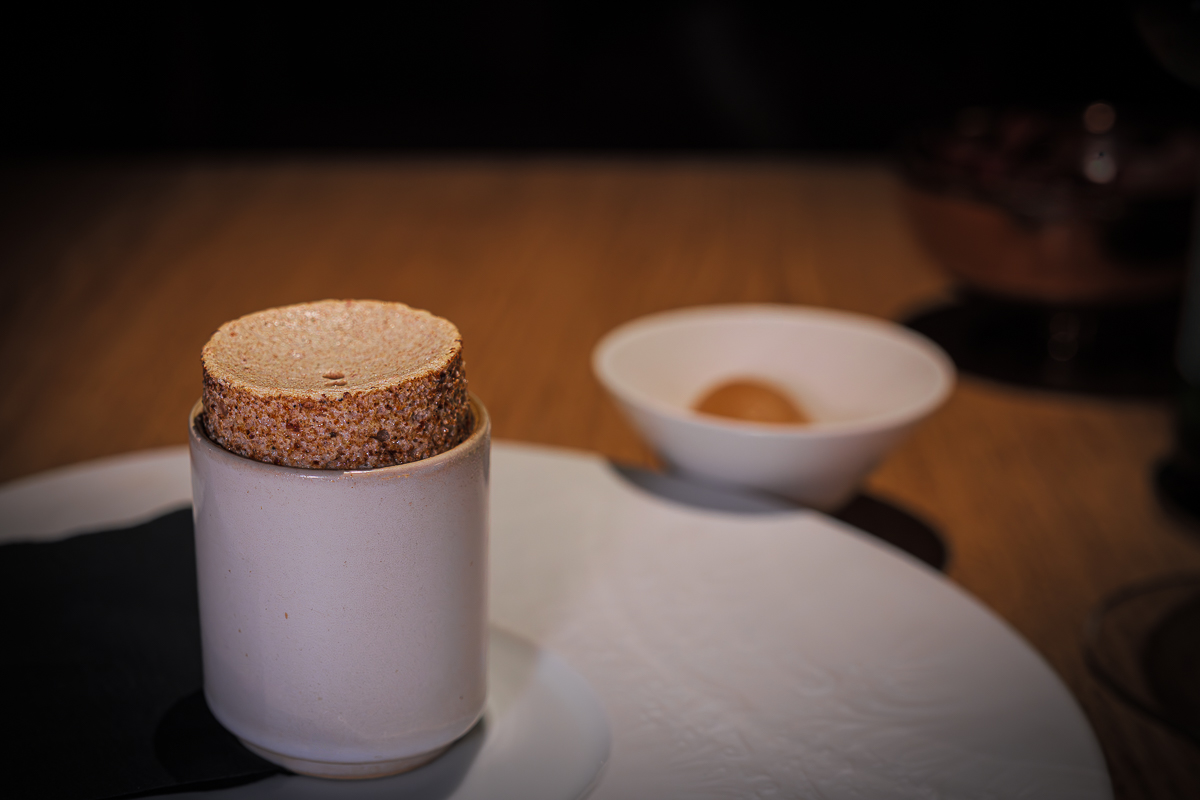
The charred persimmon soufflé with grape ice cream arrives tall and narrow, firm and still warm. Technically irreproachable, with the persimmon concentrated by the embers, the soufflé mixture delicate, and the ice cream bringing temperature contrast and an excellent flavour pairing. My favourite dessert of the night.
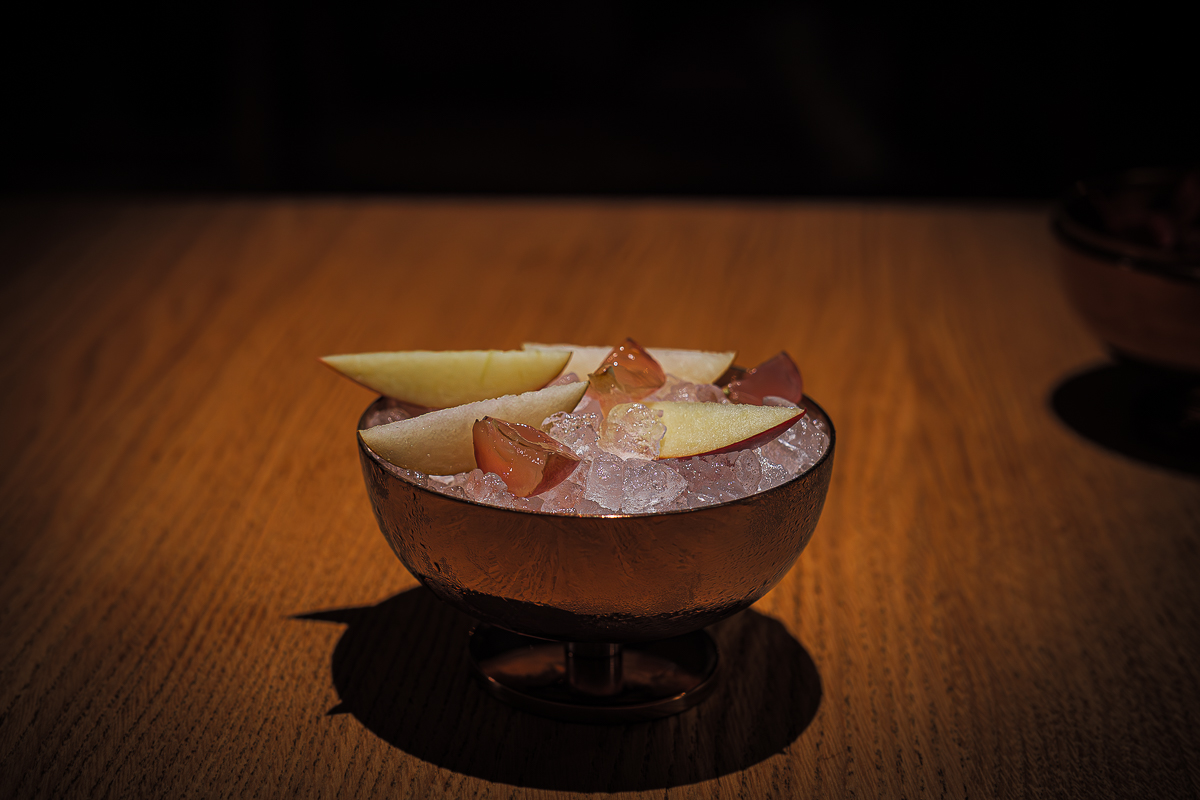
Instead of petits fours, fresh fruit over ice. Beautifully presented and following the same language and tacit protest as the herb salad: a refusal of formatted obligation. It is these small refusals that define a kitchen with character. Bukri’s masters did the same before him, and he knows the path he wants to draw.
Negroni and the Centuries
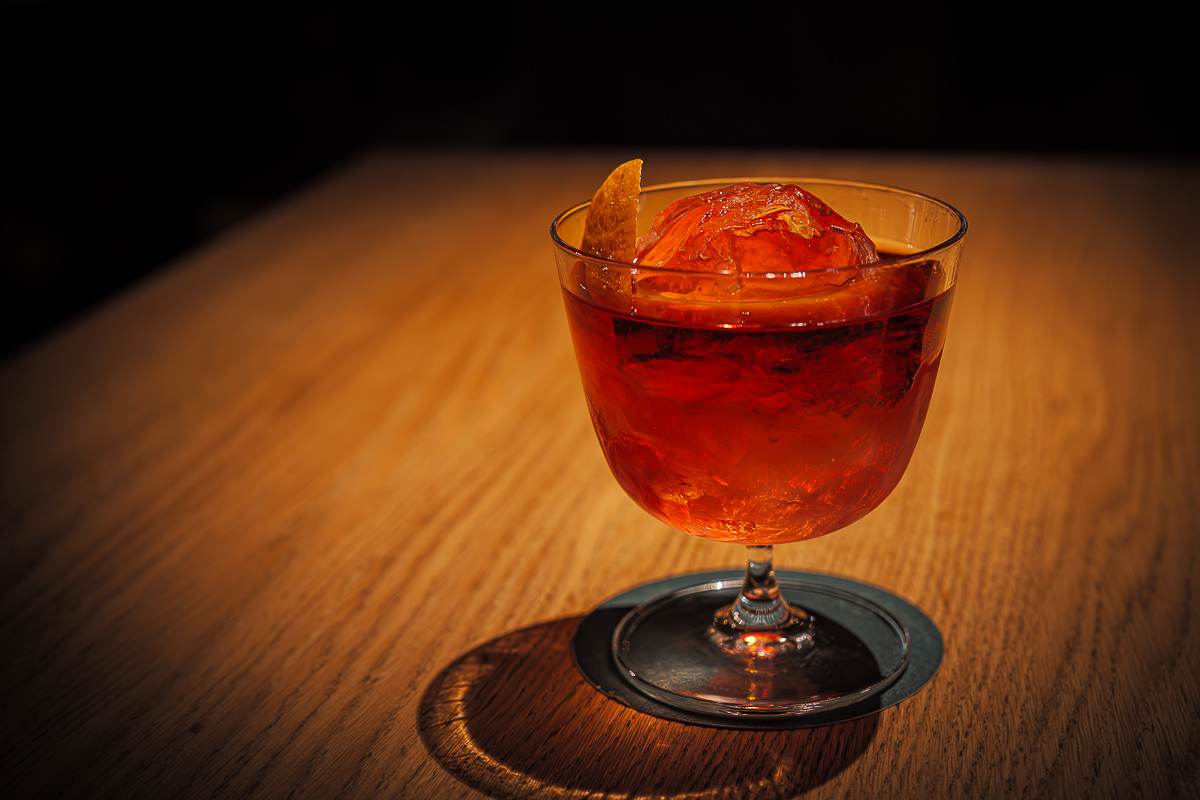
The meal closed with a classic Negroni. The ideal way to let everything settle slowly, while the eyes return to the vaults, the frescoes, the great wine wall and its staircase. An old church condemned to oblivion, now given new life. It seems right — that food, rather than liturgy, should now gather people beneath this roof. That the sacred should have yielded to conviviality without either losing dignity. In truth, I think the church came out the better for it.
The Choreography, and Its Gaps
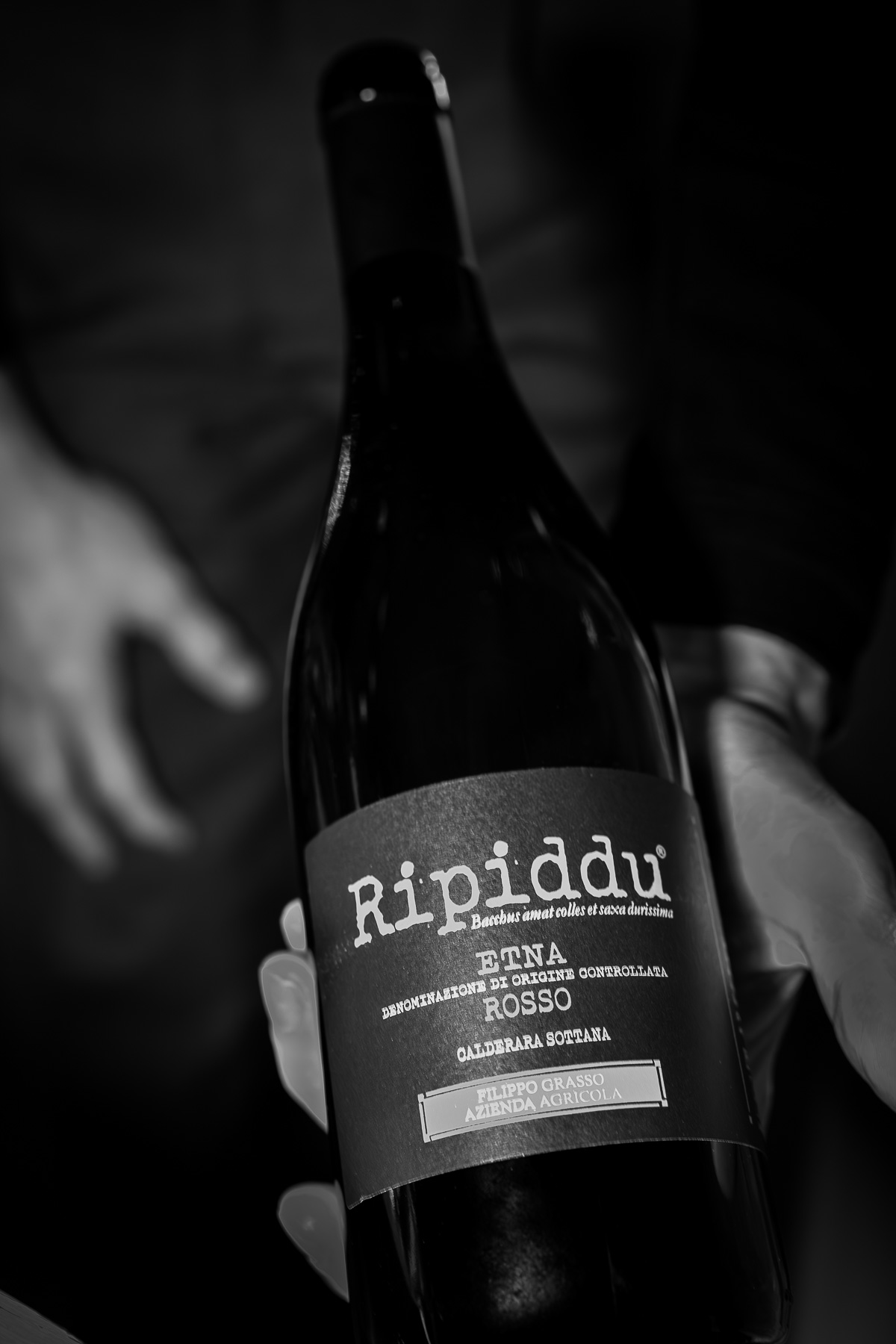
The service is, in general terms, at the level of starred restaurants: genuine warmth, careful and informed presentation of the dishes, flawless dress and movement in the room. Francesco Perali leads a young team with natural ease and without excess. The one flaw was specific, but repeated: I asked for a pairing that was not one wine per dish — in other words, I did not want a different wine with every course, but neither did I want to be left without wine in the glass. Twice the glass stood empty while I was still eating the dish. That is not what one expects.
A note nobody asked for, but which I shall offer anyway: in a room with so much visual identity, so much deliberate minimalism, so much aesthetic care in every detail, the bottles of water on the table assume a decorative prominence they probably do not deserve. Acqua Panna may be grateful. The room’s aesthetic is not.
A Final Note
Orvieto is worth the journey in itself — and not only because of Coro. It is a land of Etruscans that has endured in time in the finest Italian way, a city that holds its history so naturally it feels as though time has barely passed through it. The Duomo, the underground caves that have run through the tufa for centuries, the medieval streets that have not yet surrendered to mass tourism. And now, places like Coro, proving that it is possible to look towards the future without turning one’s back on the past.
The restaurant became known as one of the sixteen most beautiful in the world — the only Italian entry on the Prix Versailles 2025 list. Most people who fill its reservation book go because of that. But they come back for another reason.
I went in with high expectations for the space. I left with even higher expectations for the proposition and the work of these two friends. Ronald Bukri and Francesco Perali are young — not yet forty. Coro is barely more than a year old. Time, then, is on their side. Michelin has not yet given it a star — an omission that in Italy may well have stirred some discussion. It hardly matters. Stars document the present, and this duo is building something else.
As for the question I carried with me from the moment they lifted the lid of the ciborium — whether we go to a restaurant because it is beautiful or because it is good — I already know my answer. I always did. It is true that I went because of beauty. But I will return because of goodness. The space seduces on a first visit, but it is the cooking and the service that determine whether there will be a second. Here, there will.
But that is my answer. Yours may be different — and that, after all, is what makes a good table a place where two people with different opinions may still want to sit down together. And at Coro, you may make your confession.
Address: Via dei Gualtieri 1, 05018 Orvieto (TR), Italy
Reservations: +39 0763 967231 | cororistorante.it
Hours: Dinner — Monday and Thursday, 7:30–10:00 pm. Lunch and Dinner — Friday, Saturday and Sunday, 12:30–2:15 pm | 7:30–10:00 pm. Tuesday and Wednesday: closed.
Price: From €78 (excluding wine)
Hotel: Palazzo Petrvs — integrated boutique hotel, 9 suites | palazzopetrvs.it
Recognition: Michelin Guide; 2 Forks Gambero Rosso; Prix Versailles 2025 — the only Italian restaurant among the 16 most beautiful in the world
Must Order: Spaghetto with butter, 36-month Parmigiano and Pimentón de La Vera; Bottoni with fagiolina del Trasimeno and squid; Red prawn; Fusilli with mussel sauce and black lemon
Nearby: Orvieto Cathedral, Tufa underground caves, Lago di Corbara, Civita di Bagnoregio
Getting There: By train — Roma Termini ~1h15; by car — Rome ~1h30, Florence ~2h, Rome Fiumicino airport ~1h45. Note: The restaurant is located in the historic centre, accessible by car to Piazza Cahen and then on foot or by funicular.