
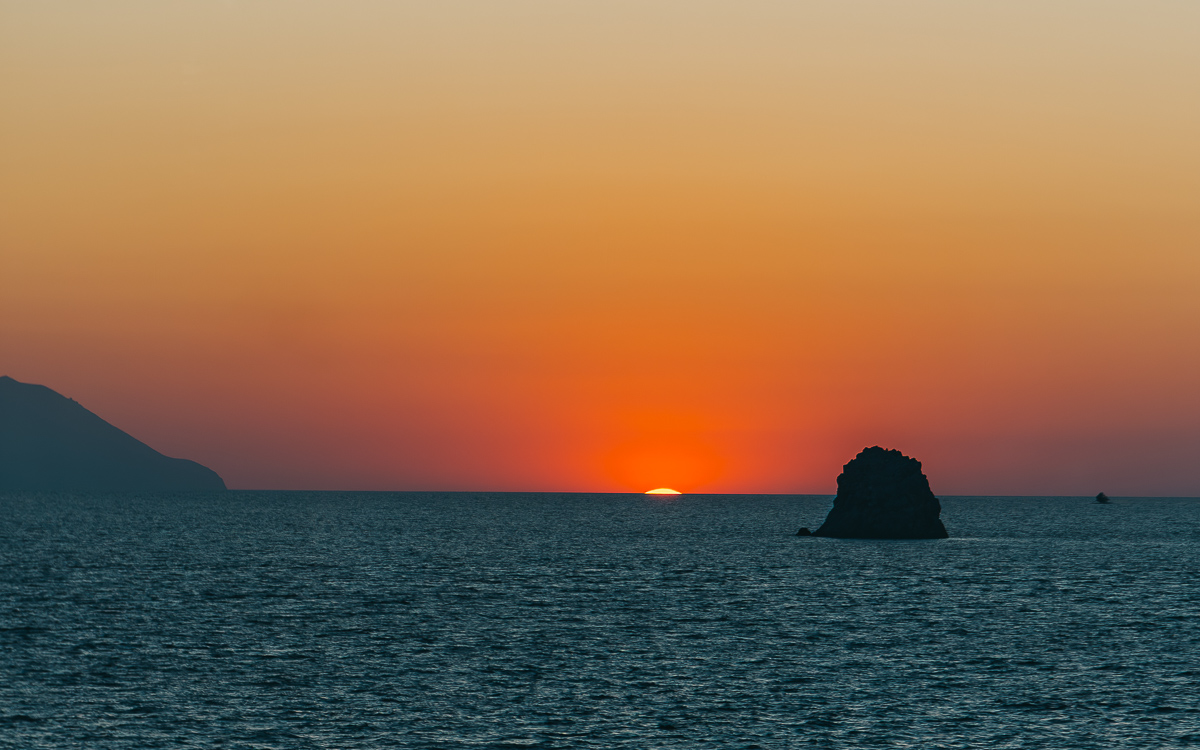
 Therasia Resort — Vulcano, Aeolian Islands
Vulcano is not an easy destination. There is no airport, no bridge, no shortcuts between journeys and mishaps, and my incursion began with a watch lost somewhere between Milan and Sicily. I know exactly where, on the plane, inside a nice black pouch under the seat — you may ask why it wasn’t on my wrist — I ask myself the same. I only noticed it was gone after two hours on Sicilian roads with an “F1 driver”, already on the ferry to Vulcano, when I looked down and felt an inner emptiness in seconds of retrospective thought. Part of me questioned why I put myself through these adventures, another spoke of a possible omen, perhaps that on this island, time obeys other laws. Forty-five minutes later, stepping onto the pier, the smell of sulphur confirmed my fears. It was dense, mineral, aggressive — the kind of smell that makes you rethink your choices. “It’s the volcanic pools,” said the driver, as if explaining something he does every day. At Therasia, that smell does not reach you. But the feeling of being out of time stayed with me all night.
I came to Vulcano with a simple question: how does a truly isolated resort on a volcanic island manage to sustain two Michelin-starred restaurants — both with a Green Star, both led by chefs who have not yet turned thirty? The answer turned out to be simpler than one might think and did not arrive only in the form of food. It is rooted above all in a vision of hospitality in which gastronomy has become the central axis, not merely an obligation.
Contemplation
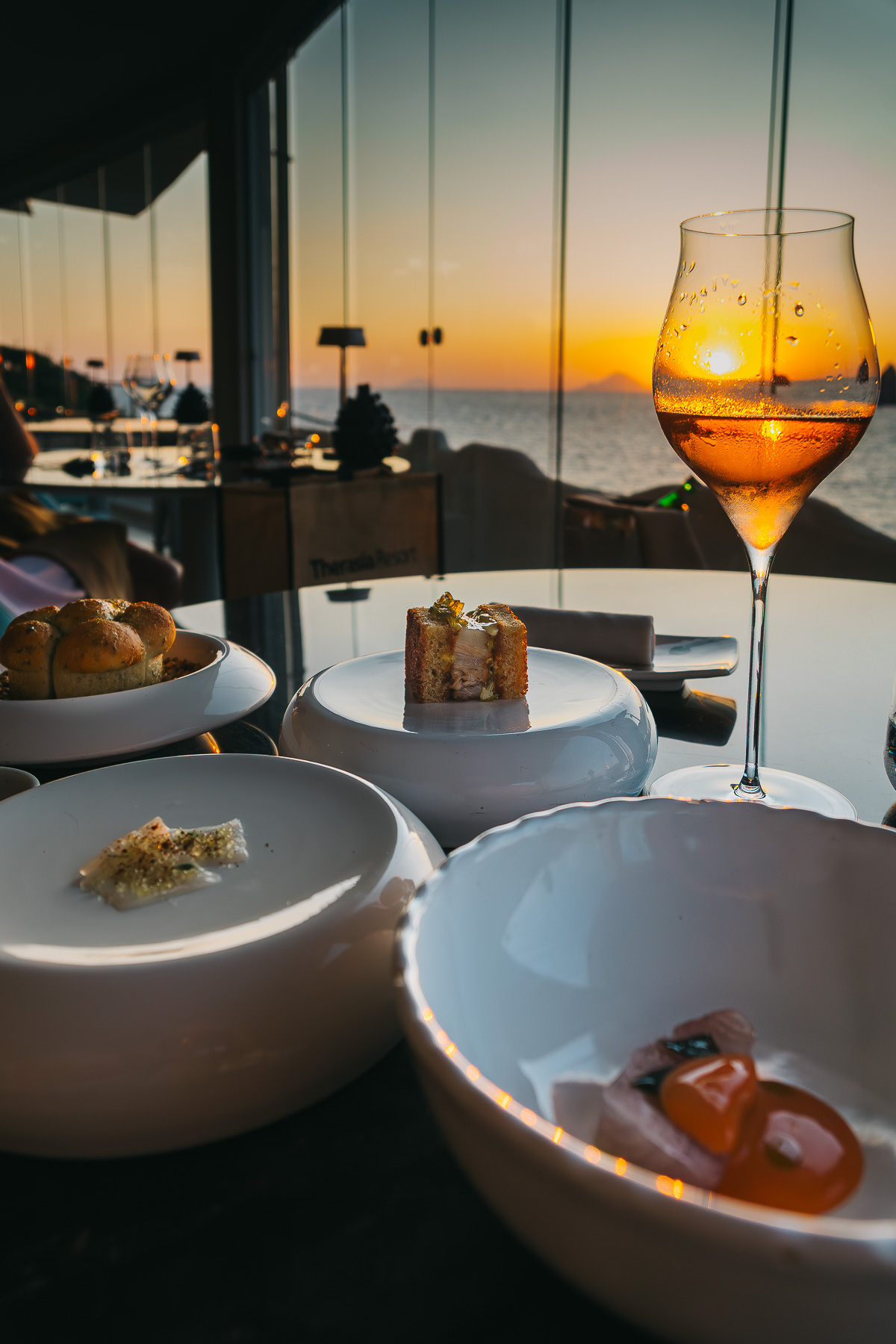
I sat by the window and, for the first few minutes, I couldn’t look at the menu. The sun was descending over the Tyrrhenian, slowly, as if it knew and wanted to be watched. The dining room at Il Cappero is a glass box suspended above the sea, with Lipari Island and two faraglioni in the distance like stone sentinels, guardians of a sunset that lasted forty minutes and passed through every shade. The décor is almost nonexistent: light walls, well-spaced tables, no artwork competing with the landscape. It is an intelligent choice for a place like this — here, any decorative object would be a redundancy, or worse, an act of arrogance.
The atmosphere is relaxed but elegant, with couples on holiday, mostly resort guests. Accommodation on Vulcano is scarce, so those who want to dine here also sleep here! A young, service-oriented team, easy-smiling and discreet. The technique is there, sincere and never condescending, striking a balance of informality without carelessness.
Onofrio Pagnotto: Youth with Roots
Onofrio Pagnotto was born in Vietri di Potenza, a village in Basilicata with fewer than three thousand inhabitants. At sixteen, he decided that world was too small. He went to Sardinia, then to Copenhagen — where, at Noma, he learned that an ingredient can be a question, not an answer. In the Basque Country, at Eneko Atxa‘s Azurmendi, he saw how technique can be invisible. He arrived in Sicily at eighteen, and it was there, at a restaurant called SUM, that he met Davide Guidara — another young chef trying to understand what he wanted to express through food. Seven years later, and still together at Therasia, the two of them hold three Michelin stars between them. Proof of a golden generation, the first to grow up with global fine dining as an accessible reference.
Pagnotto‘s “monoprotein” concept fits into a movement that has gained strength over the past decade: a reaction against the plate-as-composition, against the accumulation of techniques and ingredients that defined a certain era of fine dining. Here, a single ingredient becomes the absolute protagonist, with everything else playing a discreet supporting role.
Pagnotto and Guidara, as well, join this group with a particular distinction: they do so on an island where scarcity is not a stylistic choice, but a daily reality. When access is limited, simplicity stops being a philosophy and becomes a form of survival.
The Sea on the Plate
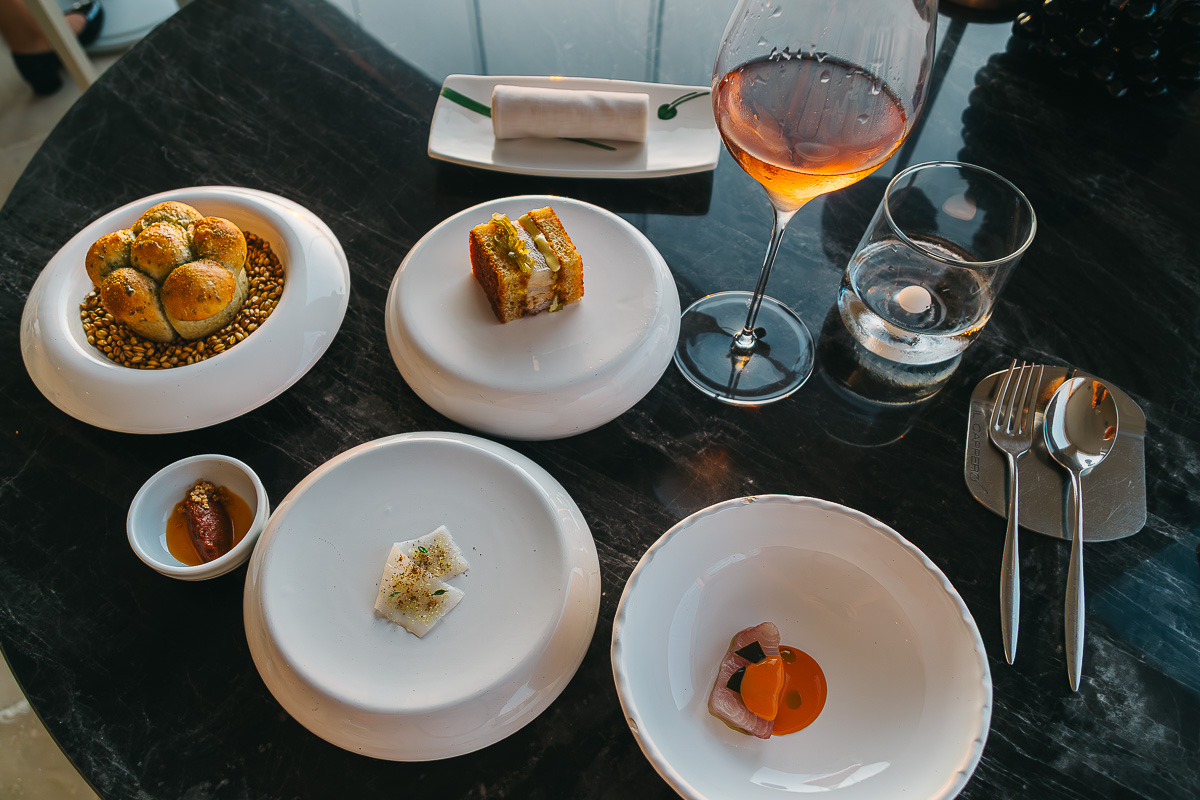
The longer menu opens with a sequence of snacks that immediately establishes the language: visual simplicity and intensity of flavour. An amberjack with caper leaf (the caper that gives the restaurant its name) and datterino tomato sauce opens delicately, vegetal bitterness balancing the fruit’s sweetness. A squid cured in salt, finger lime, and black lemon — the Italian answer to sashimi, with a citrus energy that wakes the palate. And then, a piece of fresh tuna enveloped in tomato oil and bottarga that became addictive: it was impossible not to spread that fragrant quenelle onto the focaccia, once, twice, three times, until nothing was left.
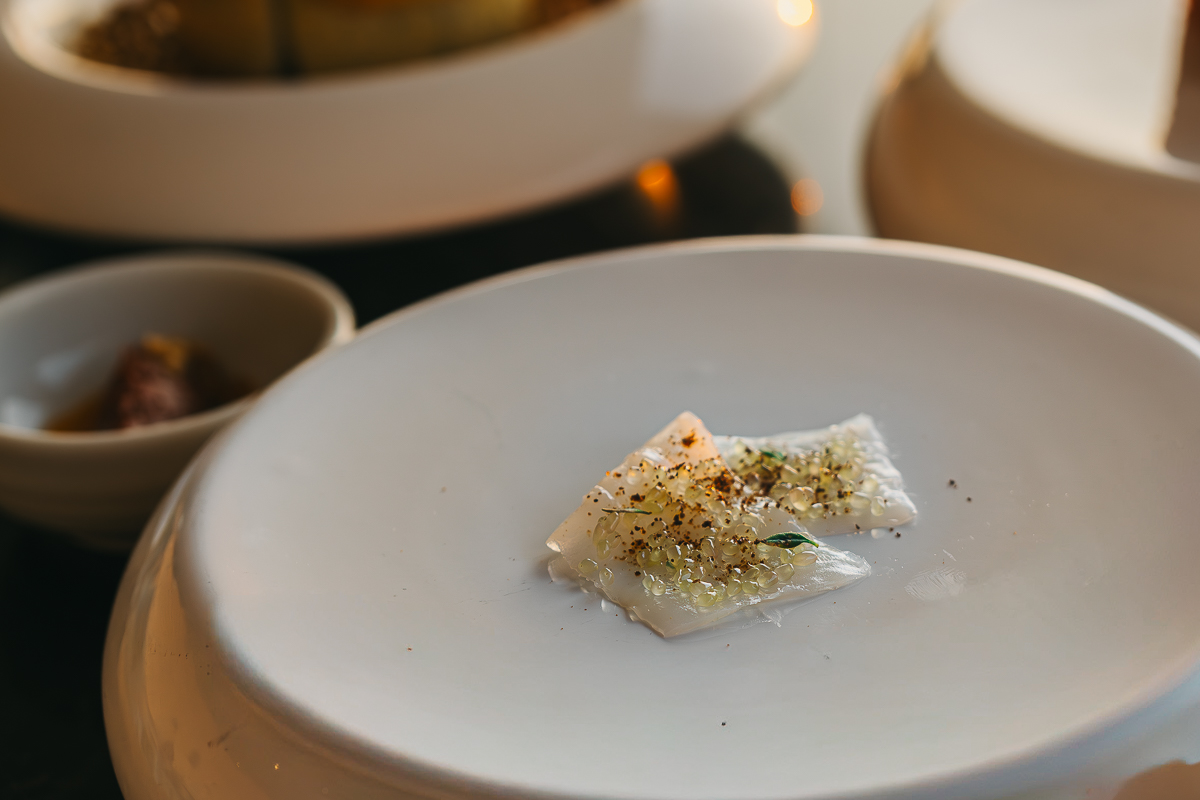
And then arrives a katsu sando-style brioche, filled with pork belly, which makes you think… well, I’m not exactly sure what it’s trying to say! Perhaps “the chef also likes comfort food”? Or “we needed something for guests who are afraid of fish”? It is tasty, I won’t deny it, but in a menu that seemed to be speaking a single language — sea, salt, and acidity — this snack appears like a cheerful guest who arrived at the wrong party.
Lessons in Restraint
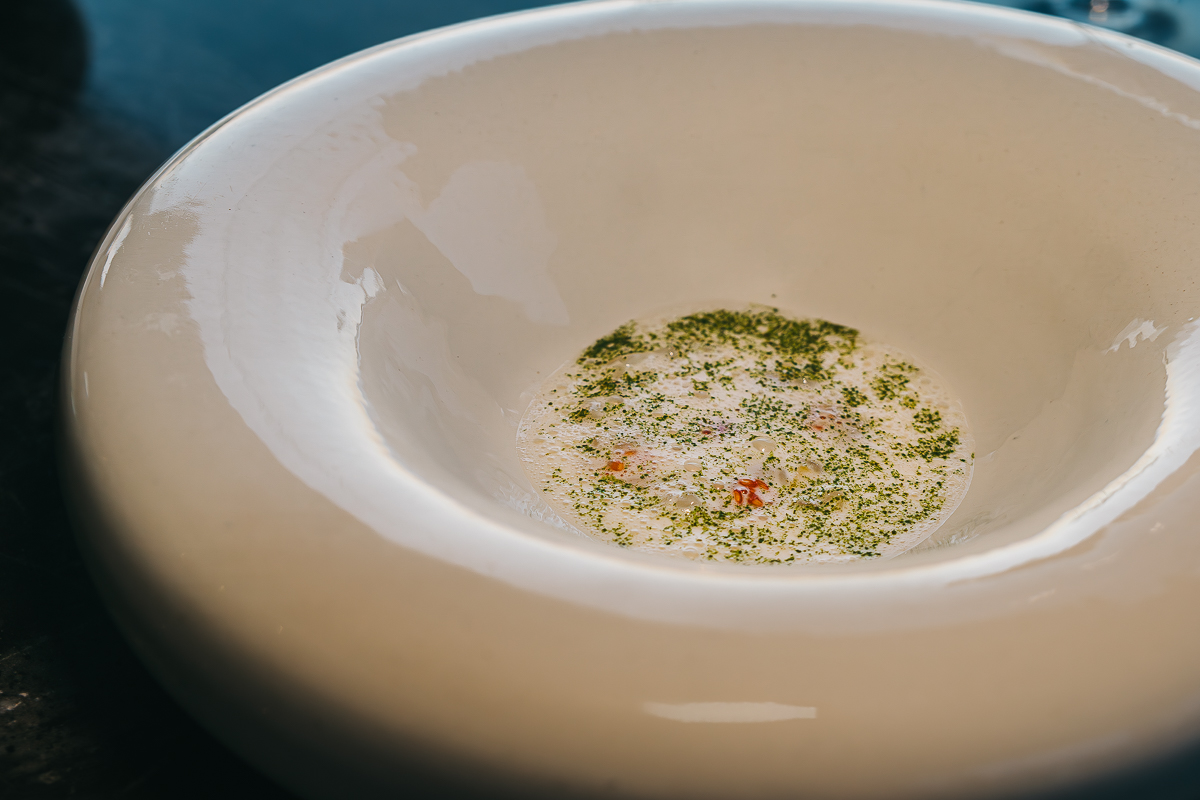
The raw cuttlefish arrives over an almond gazpacho, with fresh tomato and bay leaf powder. It is an absolute summer dish — light, elegant, each ingredient evoking holidays, heat, and travel. Nothing too much, nothing missing, one of those plates that transports you even before you taste it.
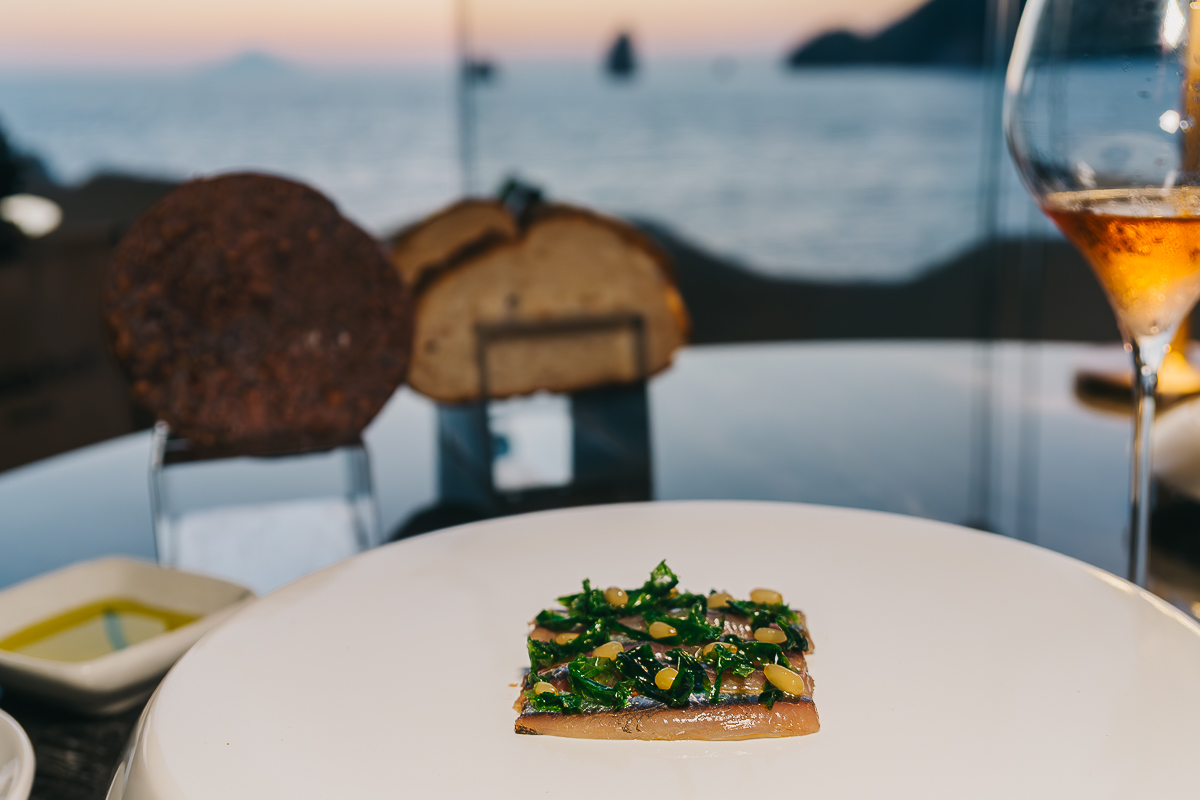
The anchovies, marinated in lime juice and olive oil, are served with house-made garum mayonnaise, seaweed salad, and pine nuts. It is a dish of apparent simplicity that reveals, with each bite, layers of flavour: calibrated acidity, the depth of the garum, and the crackle of pine nuts. Refined, but with a surprising kick I didn’t expect to enjoy so much. The mayonnaise had depth, the pine nuts brought texture, and the anchovies were at the exact point between raw and cured.
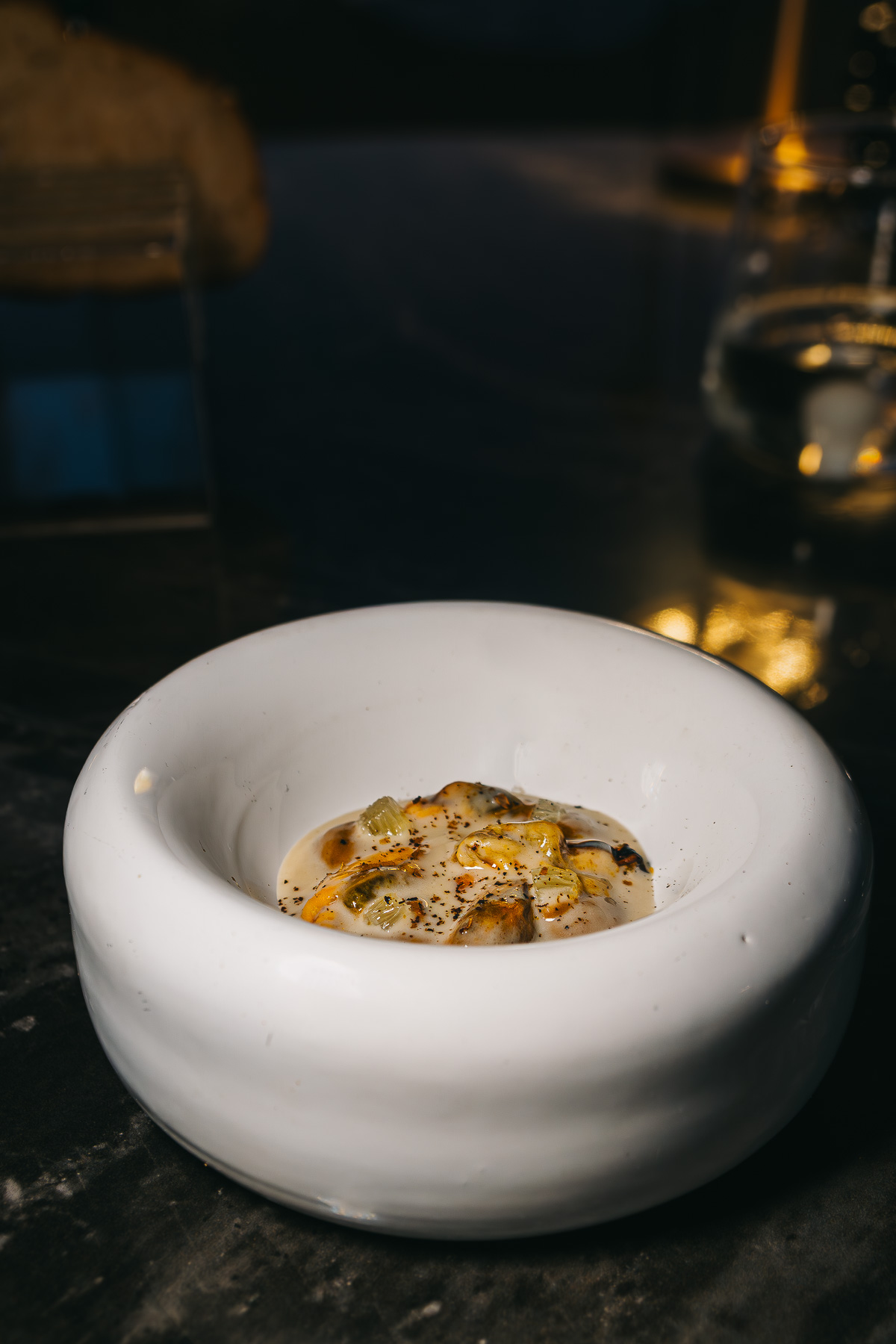
The escabeche mussel is succulent, generously sized, with lime supremes whose acidity lifts the dish without dominating it.
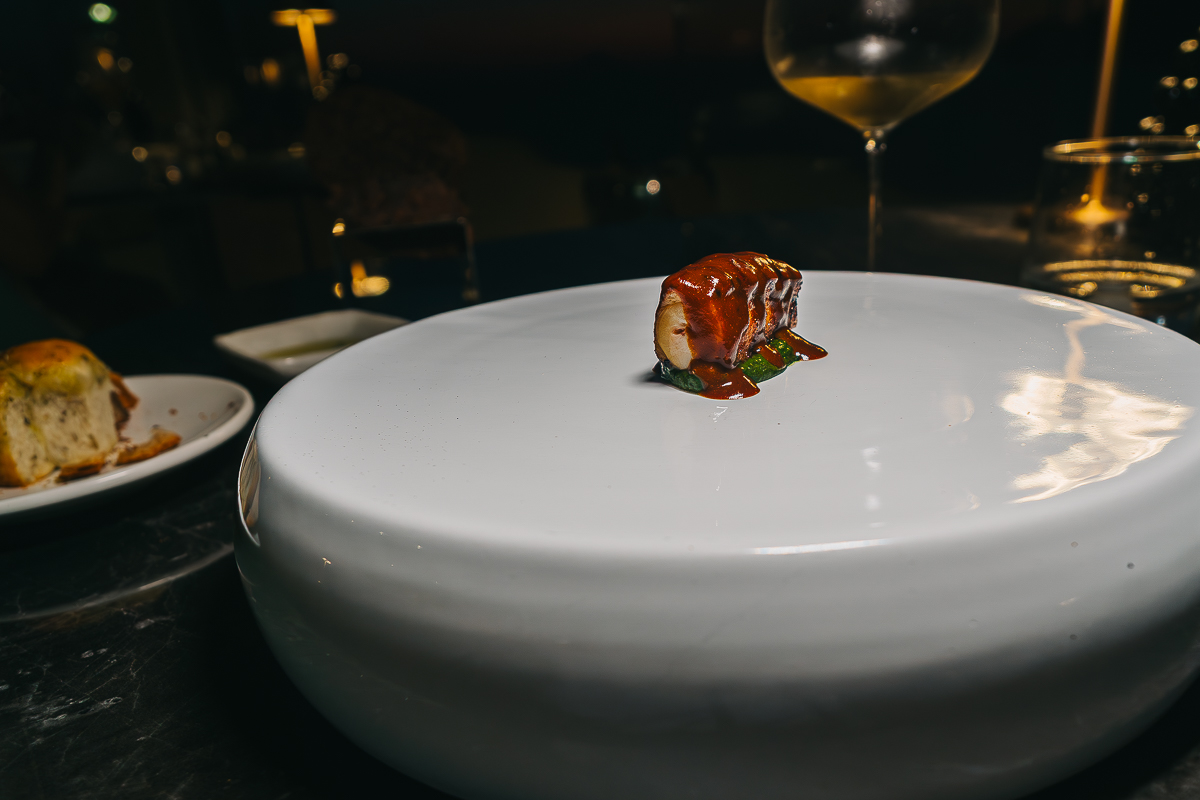
And the octopus — cooked in its own juices with thyme and bay, then grilled — arrives with impeccable texture, accompanied by an alla Luciana sauce (garlic, tomato, capers, and octopus water) which surprises with its depth. Simple, but soulful, and feeling like something new.
Land and the Flag
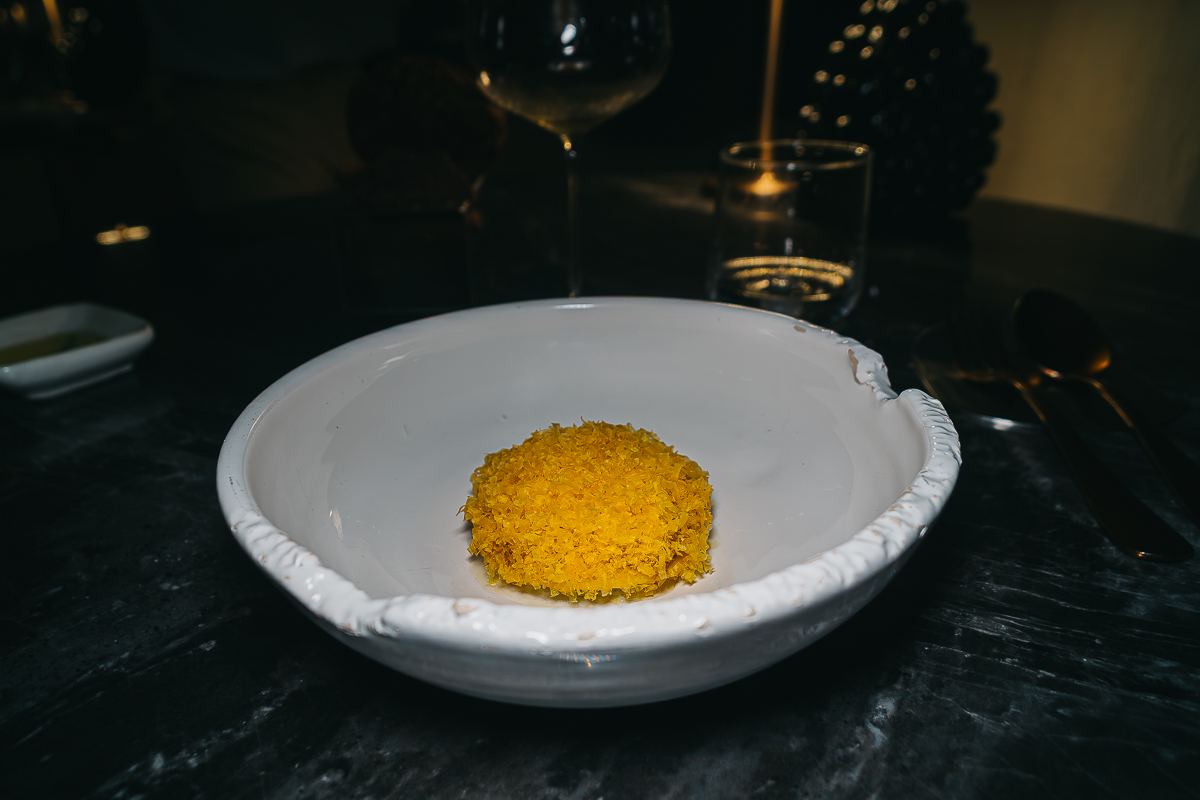
If the sea shines, the land hesitates. The Genovese tortello of local hen, with fermented butter and grated smoked egg yolk, is conceptually interesting and well thought through, but also heavy, failing to achieve the same gustatory impact as the previous dishes. The filling was dense, and the whole lost the elegance that characterises the rest of the menu.
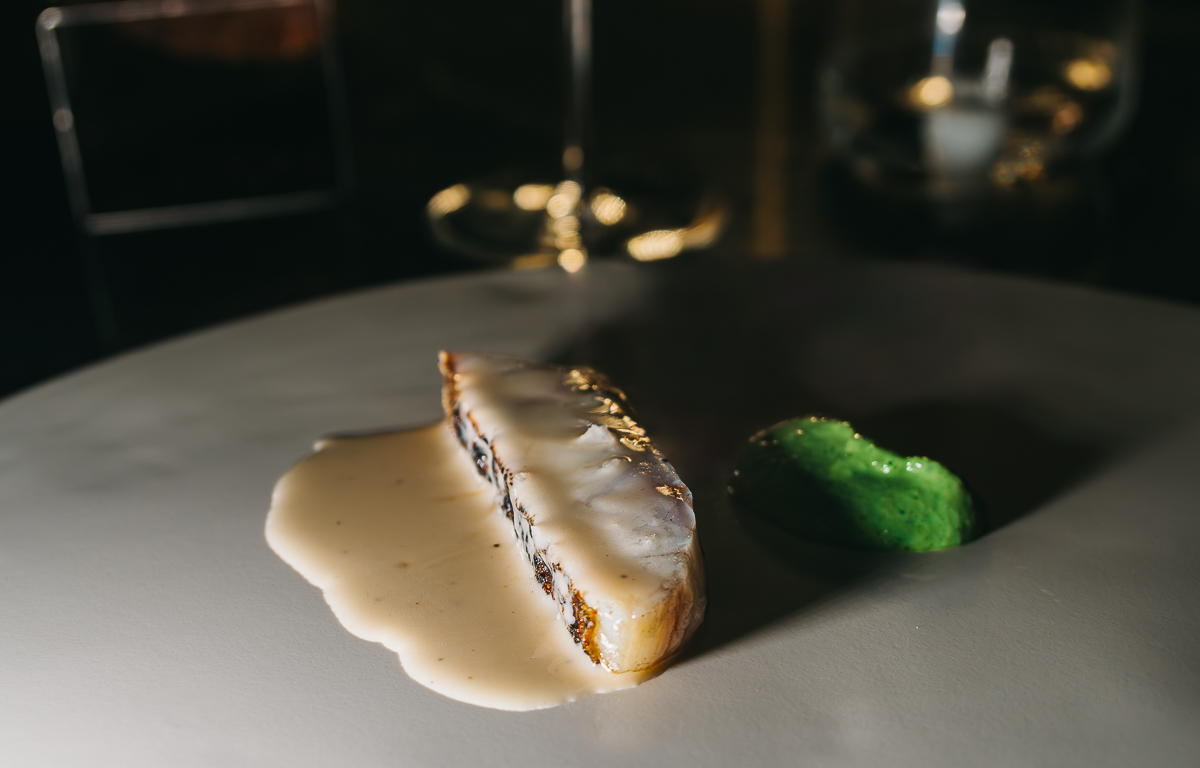
Then the sea bass arrived, and the menu suddenly made sense. Five days of maturation had transformed the flesh — no longer the translucent white of fresh fish, but a pearly opacity, dense, almost waxy. The skin was golden and crisp at the edges, with that sheen of well-rendered fat. Alongside it, a deep green parsley purée, and an emulsion made from the fish’s own belly — silky, iodised, with the shine of freshly decanted olive oil.
There was nothing here that didn’t need to be there. It was sea bass, and only sea bass, elevated to its most complete expression. If I were asked to explain what Pagnotto is trying to do, I would point to this dish and stay silent.
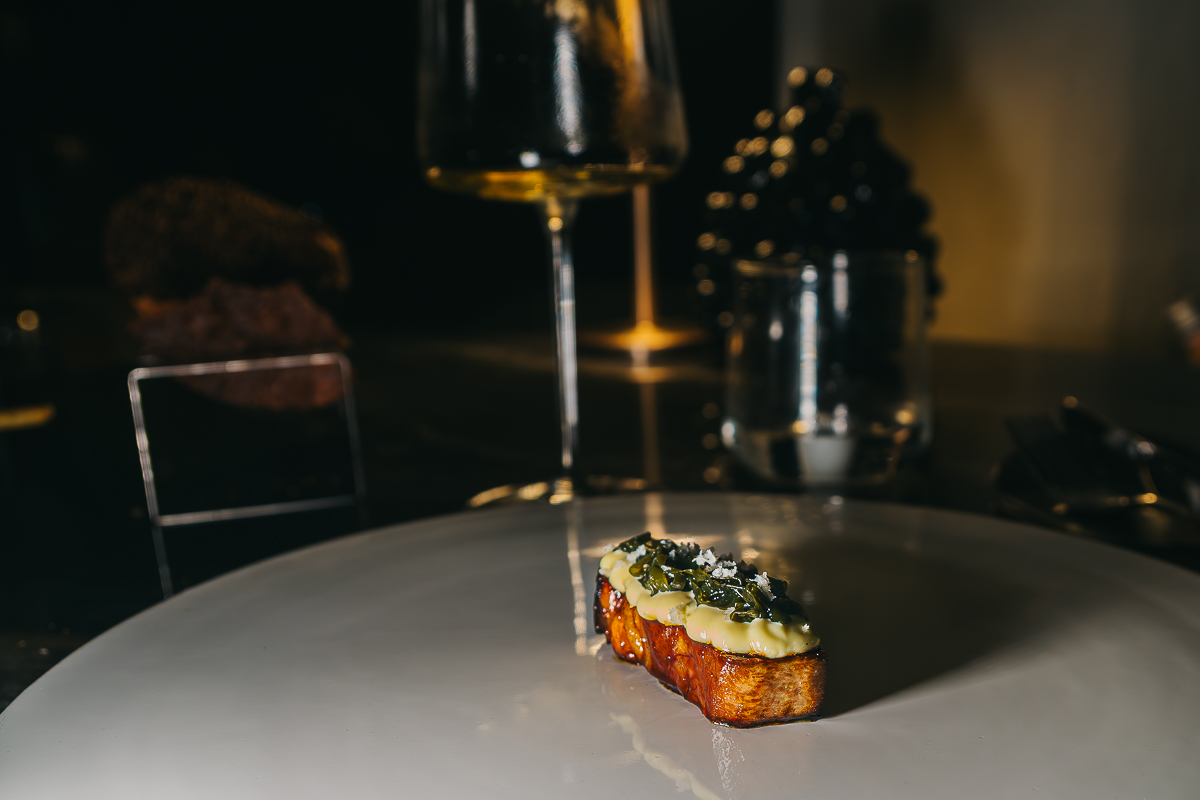
The grilled beef tongue with rosemary, horseradish, and wakame salad delivers without excitement. The aromatic heat of the horseradish complements the richness of the meat well, but the dish feels as if it belongs to another menu, more robust, less Aeolian.
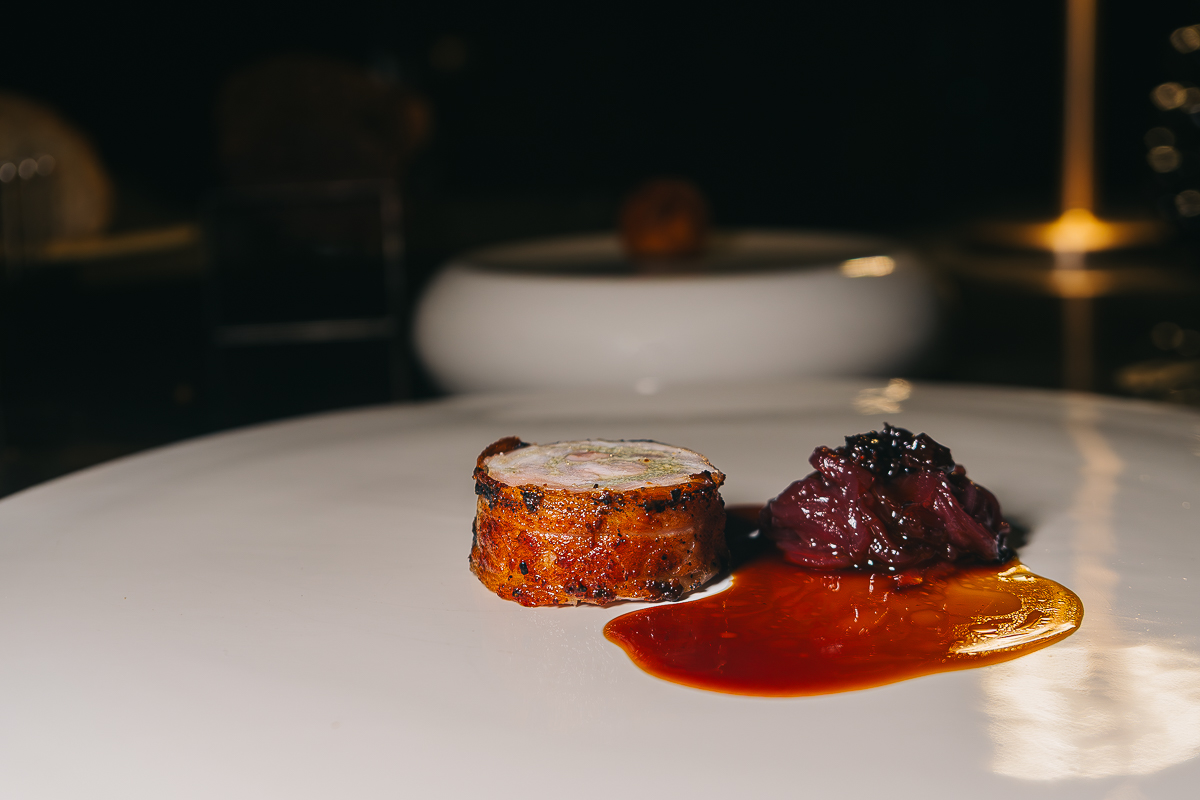
Where the land redeems itself is in the rabbit: a roulade with onion and oxidised wine sauce, accompanied by a bao filled with offal pâté and sumac. It is an intelligent move away from noble cuts, a dish with character that shows Pagnotto knows how to handle terrestrial protein when he wants to. The roulade is beautifully executed, the bao indulgent without being heavy, and the sumac provides the final acidic lift that brings balance.
But the truth is this: Il Cappero is, essentially, a restaurant of the sea, perhaps because the sea is what Vulcano truly has to offer. And there is nothing wrong with accepting that.
The Volcano and the Magic
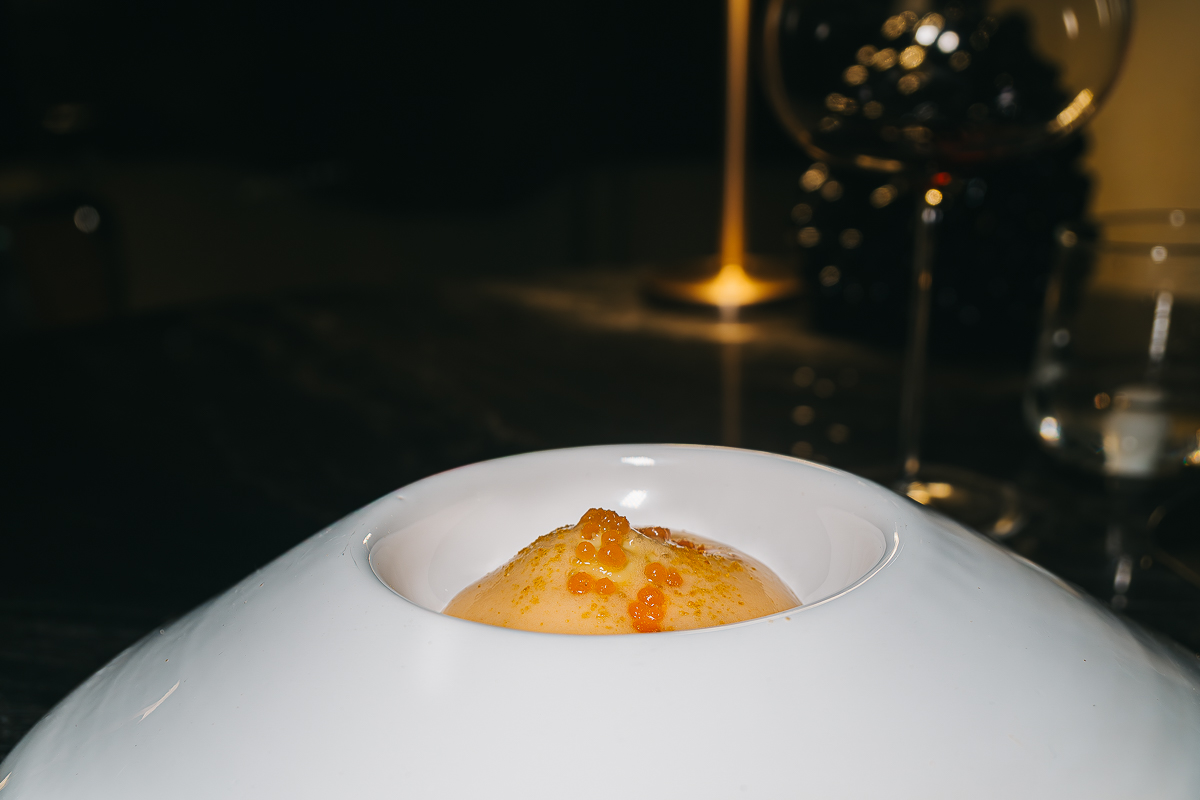
The pre-dessert was called Vulcano — grapefruit in multiple textures, with white chocolate and something that felt like acidic snow. It was an homage to the island, I suppose, but without the caricature such homages often fall into. Fresh, precise, a pause before the finale.
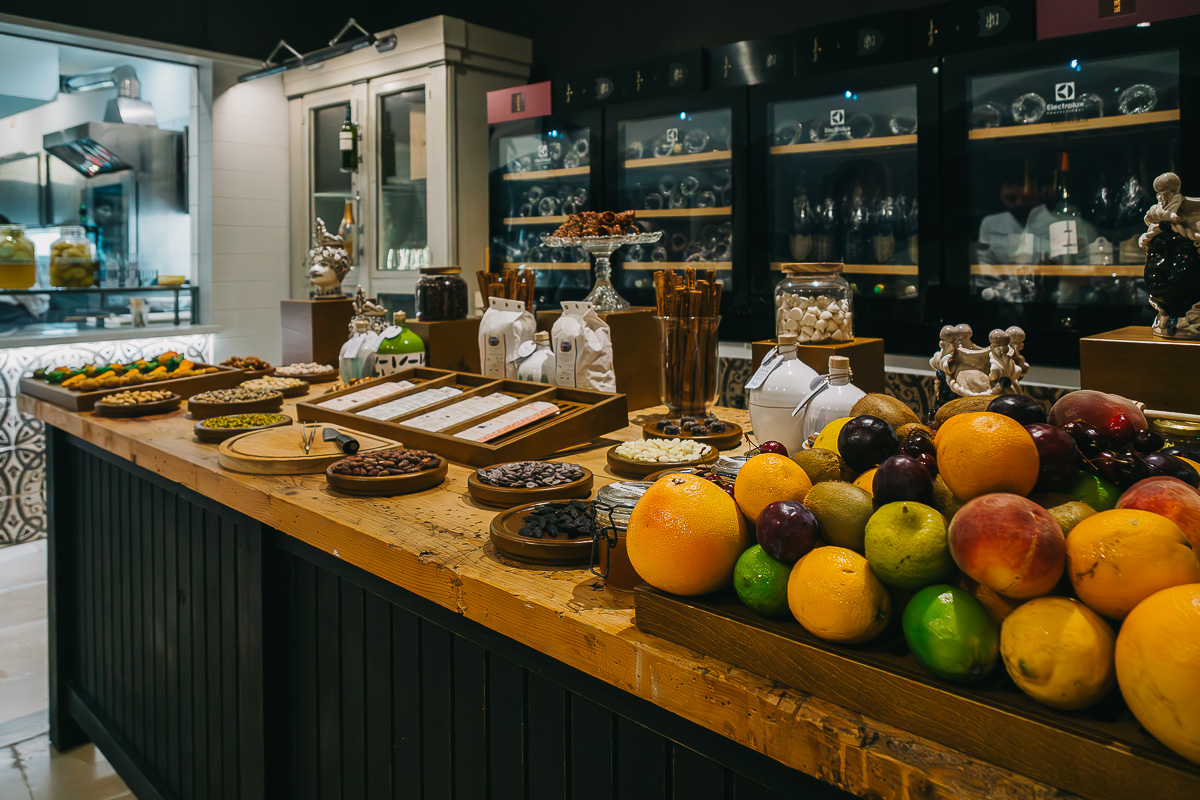
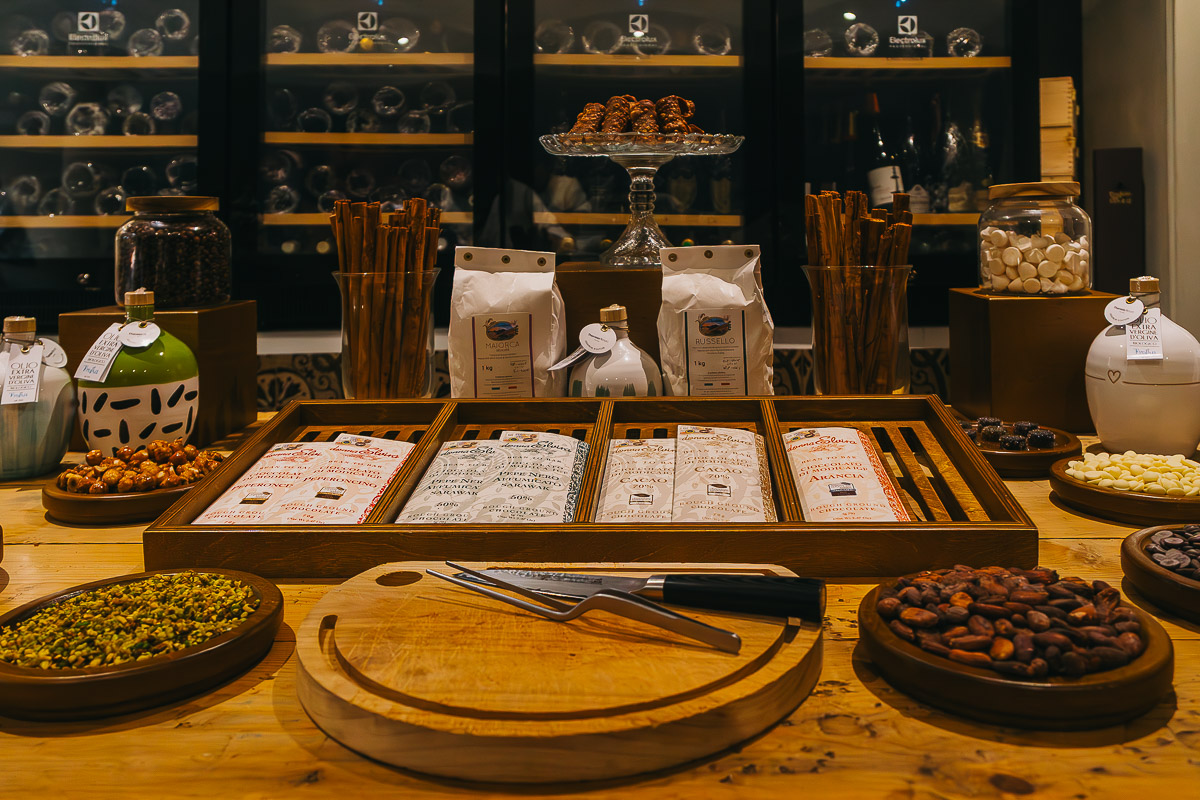
And then, the surprise: we are invited upstairs, where we see the kitchen and two tables covered with ingredients — Sicilian chocolate, fruit, dried fruits, mascarpone, and herbs. “Choose,” said the pastry chef, with a smile that suggested there was no wrong answer.
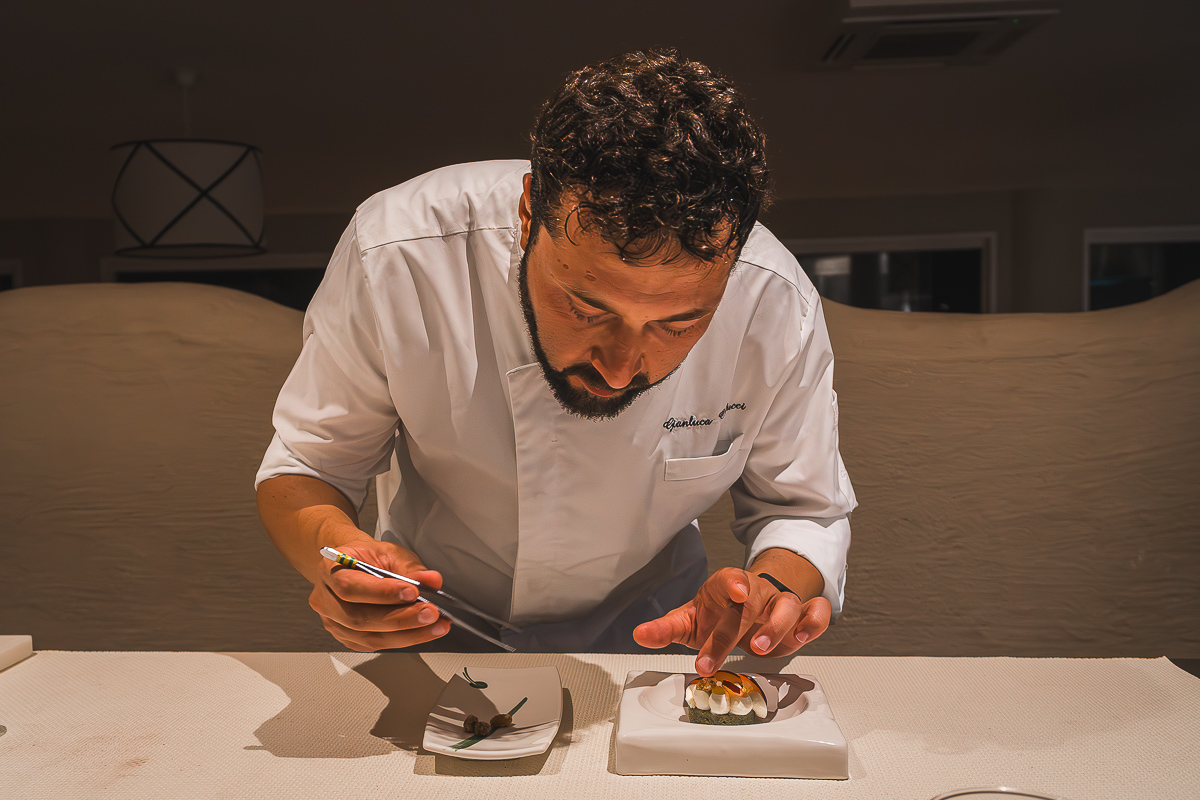
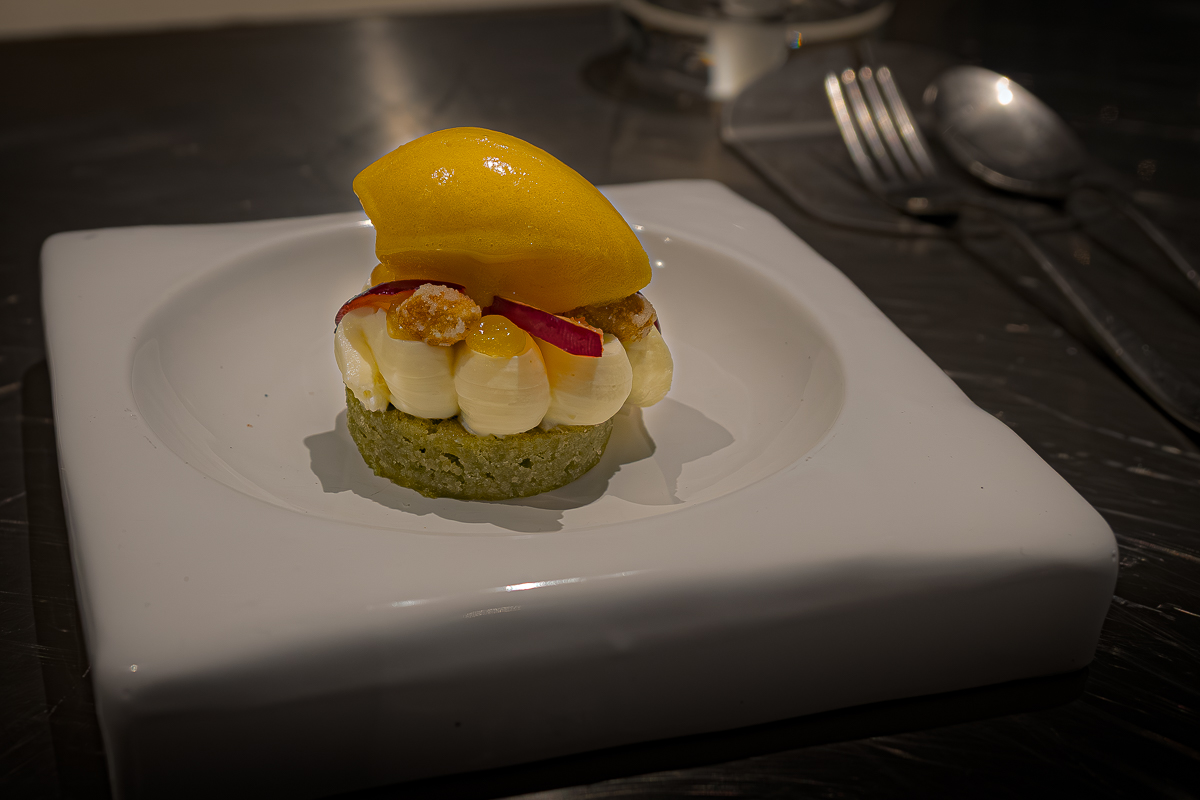
The challenge is to select what appeals to us, then the team builds a bespoke dessert right there. In my case: pistachio, mascarpone, and peach. It is a strange responsibility! Normally the chef decides for me, and I judge. Here, I was a co-author, but it worked: balanced, fresh, and personal. I wonder what the strangest combination a guest has ever asked for might have been!
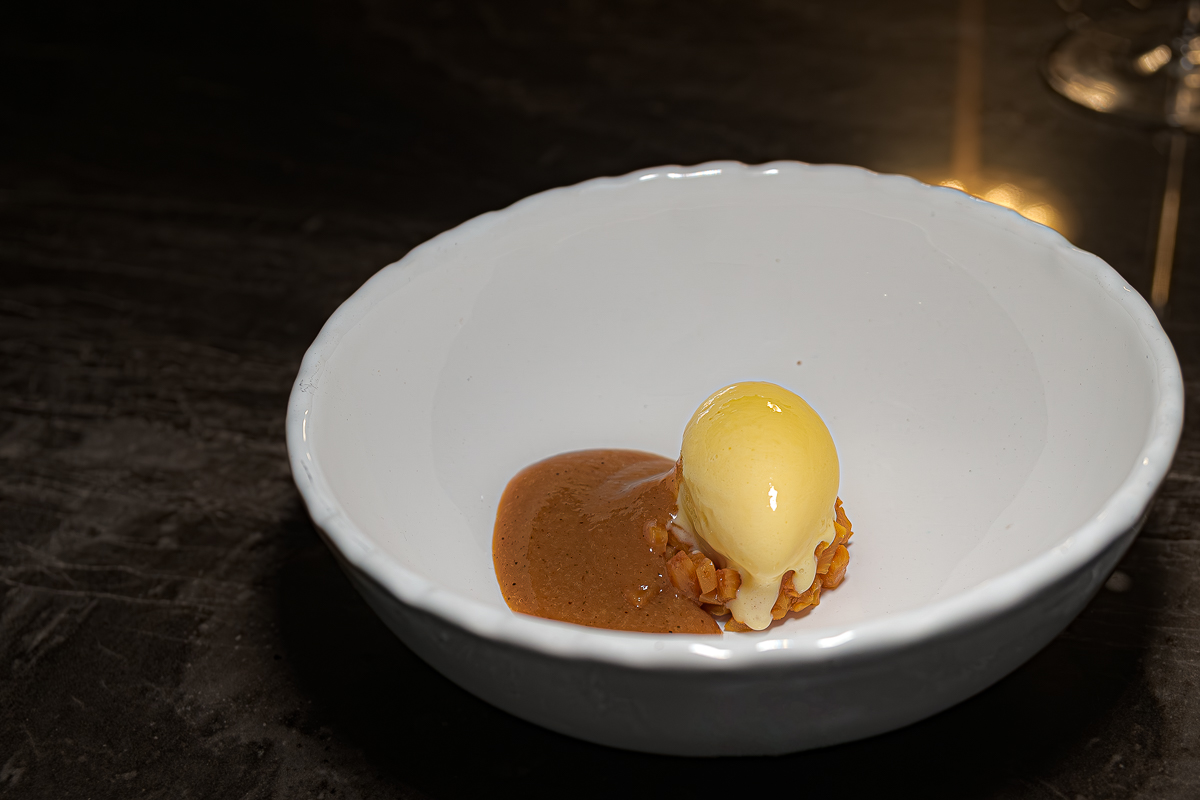
The official close is an apricot in multiple textures with zibibbo ice cream — confirmation that the pastry section, led by Gianluca Colucci, is on par with the rest. Simple presentation, complex flavours. The same signature of Pagnotto and Guidara, even in the sweet.
Territorial Coherence
The wine proposal is deeply Sicilian and Aeolian, with well-judged incursions. I began with Boizel Rosé Absolu Champagne — a festive concession. This was followed by wines from Etna and surrounding areas: Notturna Nerello Mascalese in bianco from Al-Cantàra with the seafood dishes, Cusumano Salealto 2021 with the tongue, La Fata Galantu Nerello Cappuccio again from Al-Cantàra, and a finish with fortified Malvasia from Cantine Amato, which embraced the dessert as it should.
The rhythm was generally fluid, with restrained portions allowing for quick pacing — but there were moments when the wine failed to reach the table, arriving after the dish and leaving the glass empty. In a tasting menu, synchrony is part of the experience. A minor flaw, but a noticeable one.
Final Note
As I said, the dining room at Il Cappero opens entirely onto the sea. Two islands in the distance, the faraglioni cut against the sky, and, on the night I dined there, a sunset that lasted the necessary eternity. In this context, Pagnotto‘s dishes do not compete with the view; they arrive, are eaten, and disappear at the right rhythm. Stripped back, direct, and almost shy in presentation, they leave flavour in the memory, not on the plate. A choice that reveals rare maturity in a young chef. And perhaps that is Il Cappero’s greatest surprise: not the technique (expected, given the résumé), not the sustainability (commendable but increasingly common), but restraint. Knowing what not to put on the plate is often harder than knowing what to put there, especially in youth.
No, Il Cappero is not a perfect restaurant. The meat dishes fall short of the seafood, as if the kitchen loses conviction when it leaves the sea. The hen tortello divides opinion, and the wine service could be sharper.
But. There is a big but.
Il Cappero is an honest and coherent restaurant. It does not pretend to be what it is not, it does not import techniques it does not master, it does not load plates with ingredients to appear sophisticated. It is connected to the place where it exists — a volcanic island that is almost inaccessible — and turns that limitation into a virtue. In a fine-dining world that grows increasingly generic, where tasting menus resemble one another regardless of latitude, that matters. It matters more than most restaurants are willing to admit.
And then there is Therasia as a project: a resort that invests in young talent, practises sustainability without using it as a slogan, and manages to sustain two-starred restaurants on an island almost inaccessible to the common eye. It is a case study in hospitality, and almost reason enough to lose a watch in a Sicilian airport.
Sometimes, losing a watch is the fair price to pay for gaining time.
Address: Via Vulcanello, Therasia Resort Sea & Spa, 98055 Isola Vulcano, Aeolian Islands, Italy
Reservations: +39 090 985 2555 | info@ilcapperoristorante.it
Hours: April–October (seasonal resort) 7:00pm–23pm
Prices: From €150 (excluding wine)
Must-try: Five-day matured sea bass, seafood snacks, octopus alla Luciana, interactive dessert
Chef: Onofrio Pagnotto | Executive Chef: Davide Guidara | Pastry Chef: Gianluca Colucci
Awards: 1 Michelin Star, Michelin Green Star
Nearby: I Tenerumi (2 Michelin Stars, vegetarian), black sand beaches, Gran Cratere, Lipari Island (5 min by boat)
Getting there: Ferry from Milazzo (~45 min) or Messina. The resort offers transfers from the port.